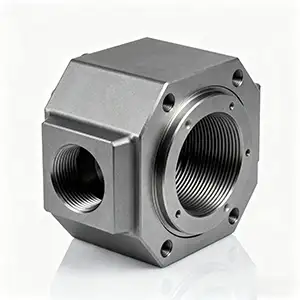
Nitriding is a heat treatment process that enriches the surface of steel with nitrogen, producing a hard,
wear-resistant layer while maintaining a strong and stable core.
CNC nitriding services enhance surface hardness, fatigue life, and corrosion resistance without compromising core toughness. Perfect for gears, shafts, molds, and high-performance parts in demanding industries.
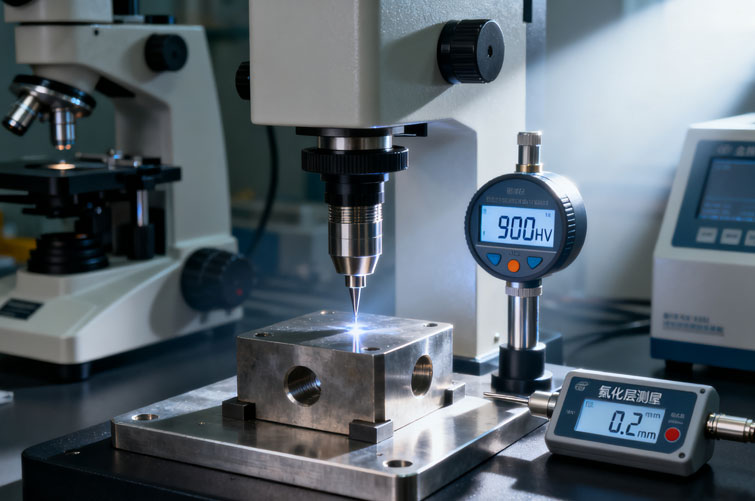
Nitriding is a thermochemical surface treatment in which nitrogen atoms diffuse into the surface of steel or alloy parts at relatively low temperatures (500–550°C). The process creates a hard nitride layer that significantly improves wear resistance and surface hardness.
Because nitriding does not require quenching, distortion is minimized, making it an excellent choice for precision CNC machined components. It also enhances fatigue resistance and provides some corrosion protection, especially when applied to alloy steels with nitride-forming elements such as chromium, molybdenum, or aluminum.
Produces a hard nitride surface layer that resists abrasion and extends part life.
Performed at lower temperatures, reducing distortion in precision CNC components.
Boosts fatigue life and provides added corrosion protection for demanding parts.
| Feature | Info |
|---|---|
| Case Depth | 0.1–0.6 mm, depending on process and duration. |
| Surface Hardness | Typically 900–1200 HV, providing excellent wear resistance. |
| Distortion Control | Low processing temperatures minimize dimensional changes. |
| Industries | Automotive, aerospace, tooling, precision engineering. |