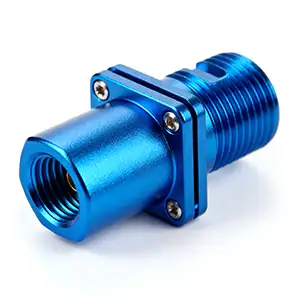
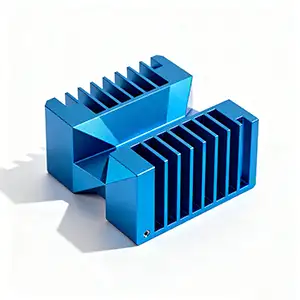
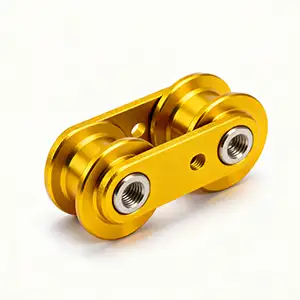
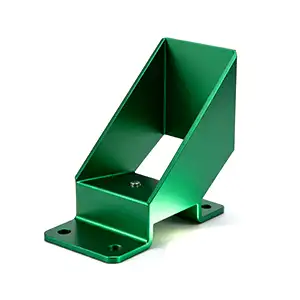
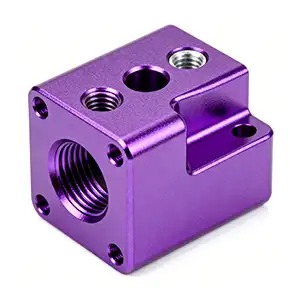
Enhance the durability and visual appeal of your components with our professional color anodizing services,
combining vibrant finishes with long-lasting protection.
Color anodizing adds vibrant dyes or electrolytic pigments into the anodized aluminum surface, delivering decorative appeal with enhanced protection. Its core idea is to merge aesthetics with durability, giving hardware and consumer products both long-lasting performance and striking appearance.
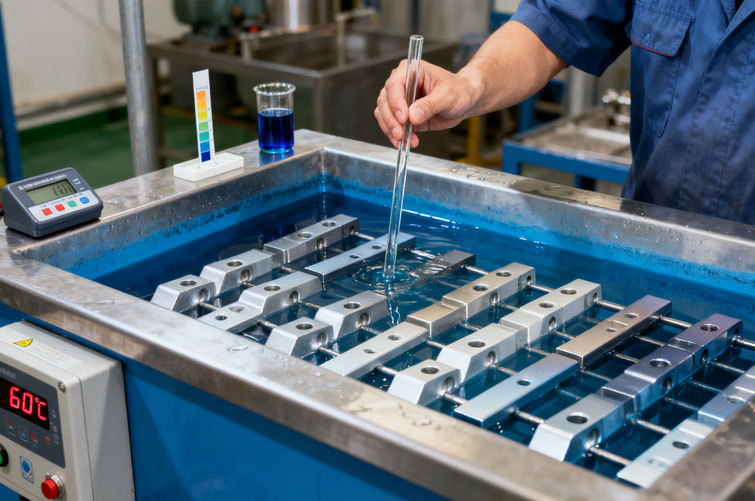
Color anodizing is a controlled electrochemical process where dyes or electrolytic pigments are introduced into the anodized oxide layer on aluminum. This creates decorative and highly durable finishes in a wide range of shades, from subtle metallic tones to vibrant colors, while maintaining the natural metallic luster. The oxide layer is then sealed to lock in color, increasing its resistance to fading and environmental exposure.
Beyond visual enhancement, color anodizing strengthens corrosion resistance, improves wear protection, and provides excellent adhesion for secondary coatings if required. It is widely used in consumer electronics, automotive trim, aerospace components, and industrial hardware where both durability and a distinctive appearance are desired.
Provides a variety of bold and subtle colors that enhance the product’s design and brand identity.
Protects aluminum parts against environmental exposure while retaining their decorative finish.
Ensures wear resistance and color stability over time, ideal for high-use hardware and consumer goods.
| Feature | Info |
|---|---|
| Color Options | Organic dyes (e.g., black, red, blue, gold) and electrolytic two‑step colors (bronze, gray). Custom shades available on request. |
| Finish Types | Matt, satin, or bright depending on alloy and surface preparation (brushing, bead blast, polish). |
| Typical Thickness | 5–25 μm for Type II; select higher thickness for harsher environments or deeper color hold. |
| Sealing | Hot water or nickel acetate sealing to lock in dye and maximize corrosion resistance and colorfastness. |
| Durability | Resists peeling and flaking; good abrasion resistance vs. bare aluminum. Color stability depends on dye and UV exposure. |
| UV / Outdoor Use | Electrolytic colors offer excellent UV stability; organic dyes vary—specify outdoor‑grade dyes when needed. |
| Compatible Alloys | 6000‑series (e.g., 6061, 6063) commonly used; casting alloys may yield more variation in color/appearance. |
| Applications | Locks & handles, branded hardware, decorative trims, consumer products, instrument panels. |
| Lead Time | Typically 3–7 business days after surface prep; add time for color matching and sample approval. |
| Quality Checks | Color uniformity, adhesion, thickness verification, sealing quality (dye fastness, corrosion tests). |