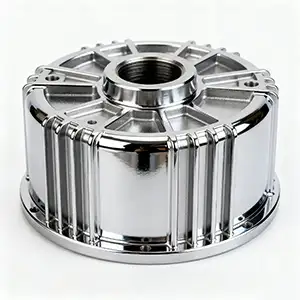
Nickel plating provides a durable, corrosion-resistant, and aesthetically pleasing finish,
making it one of the most versatile and widely used surface finishing methods in CNC manufacturing.
CNC nickel plating services deliver superior corrosion protection, hardness, and decorative appeal. Commonly applied to automotive, aerospace, electronics, and precision industrial parts.
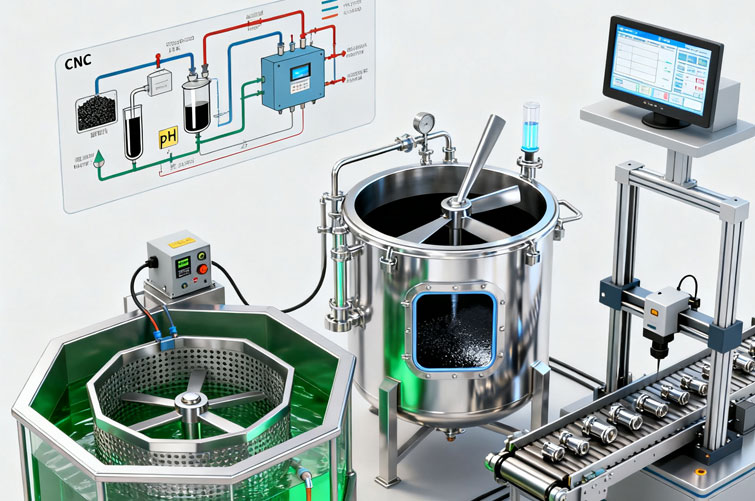
Nickel plating is an electrochemical (electrolytic) or electroless (autocatalytic) process that deposits a thin, controlled layer of nickel onto a metal part. The coating improves corrosion and wear resistance, adds a smooth, reflective finish, and can serve as an underlayer to block diffusion and boost adhesion for subsequent coatings. Thickness is tailored to the application to balance protection, appearance, and tolerance control.
There are two primary types: electroplated nickel, which uses electrical current and is well-suited for decorative and functional layers; and electroless nickel, which relies on chemical reduction to produce a uniform, conformal deposit—ideal for complex geometries and tight tolerances. Each offers distinct advantages depending on requirements for durability, lubricity, solderability, and dimensional precision.
Protects components against oxidation, rust, and chemical exposure.
Improves surface hardness and extends the life of high-friction parts.
Provides a bright, reflective surface suitable for aesthetic applications.
| Feature | Info |
|---|---|
| Coating Thickness | Typically 5–25 μm; thicker for heavy-duty protection. |
| Surface Finish | Bright, semi-bright, or matte appearance depending on process. |
| Hardness | Electroless nickel can reach 500–700 HV, suitable for wear resistance. |
| Industries | Automotive, aerospace, electronics, industrial machinery. |