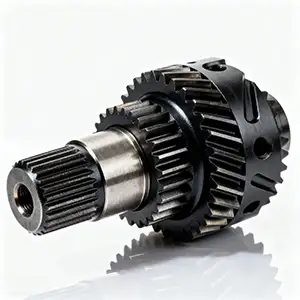
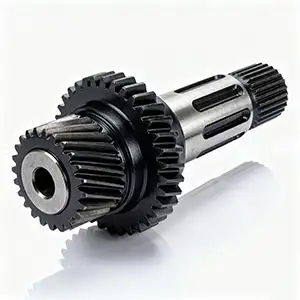
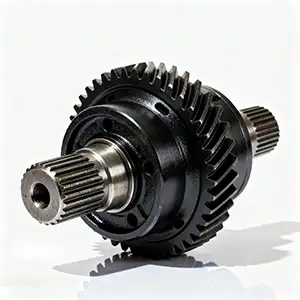
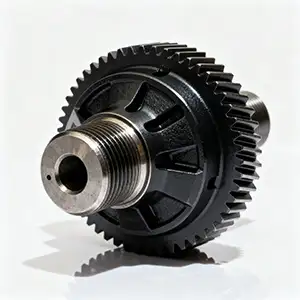
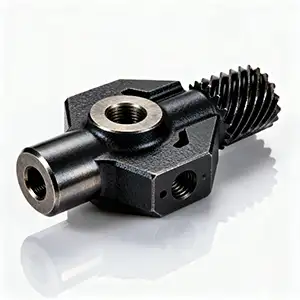
Carburizing hardens the surface of steel parts by diffusing carbon into the material, creating a high-wear, fatigue-resistant outer layer while preserving a ductile and tough core for impact strength.
CNC carburizing services enhance surface hardness and wear resistance while maintaining a tough core. Ideal for gears, shafts, bearings, and heavy-duty components across automotive, aerospace, and machinery industries.
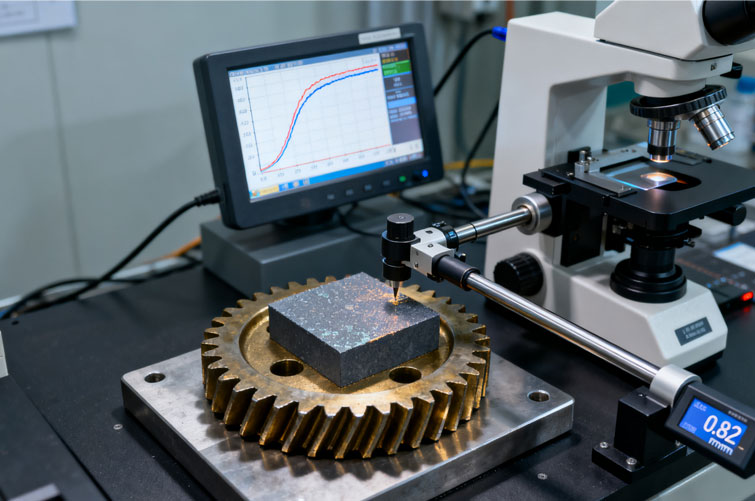
Carburizing is a thermochemical heat treatment where steel parts are heated in a carbon-rich environment, allowing carbon atoms to diffuse into the surface layer. This increases carbon content near the surface, enabling subsequent hardening while maintaining a tough core.
The process is widely used for parts that require excellent wear resistance, high fatigue strength, and long service life, such as gears, cams, and drive components. Carburizing may be followed by quenching and tempering to refine hardness and toughness balance.
Forms a hard, durable surface to resist abrasion and surface fatigue.
Improves load-carrying capacity and resistance to bending and contact stress.
Maintains a ductile core to absorb shock and impact without brittle failure.
| Feature | Info |
|---|---|
| Case Depth | Typically 0.3–3.0 mm depending on cycle time and application. |
| Core Hardness | Maintains ductile, impact-resistant properties in the core. |
| Surface Hardness | Achieves 58–62 HRC for maximum wear resistance. |
| Distortion Control | Vacuum carburizing minimizes distortion for precision parts. |
| Industries | Automotive, aerospace, industrial machinery, power tools. |