
Copper Busbars & Electrical Connectors
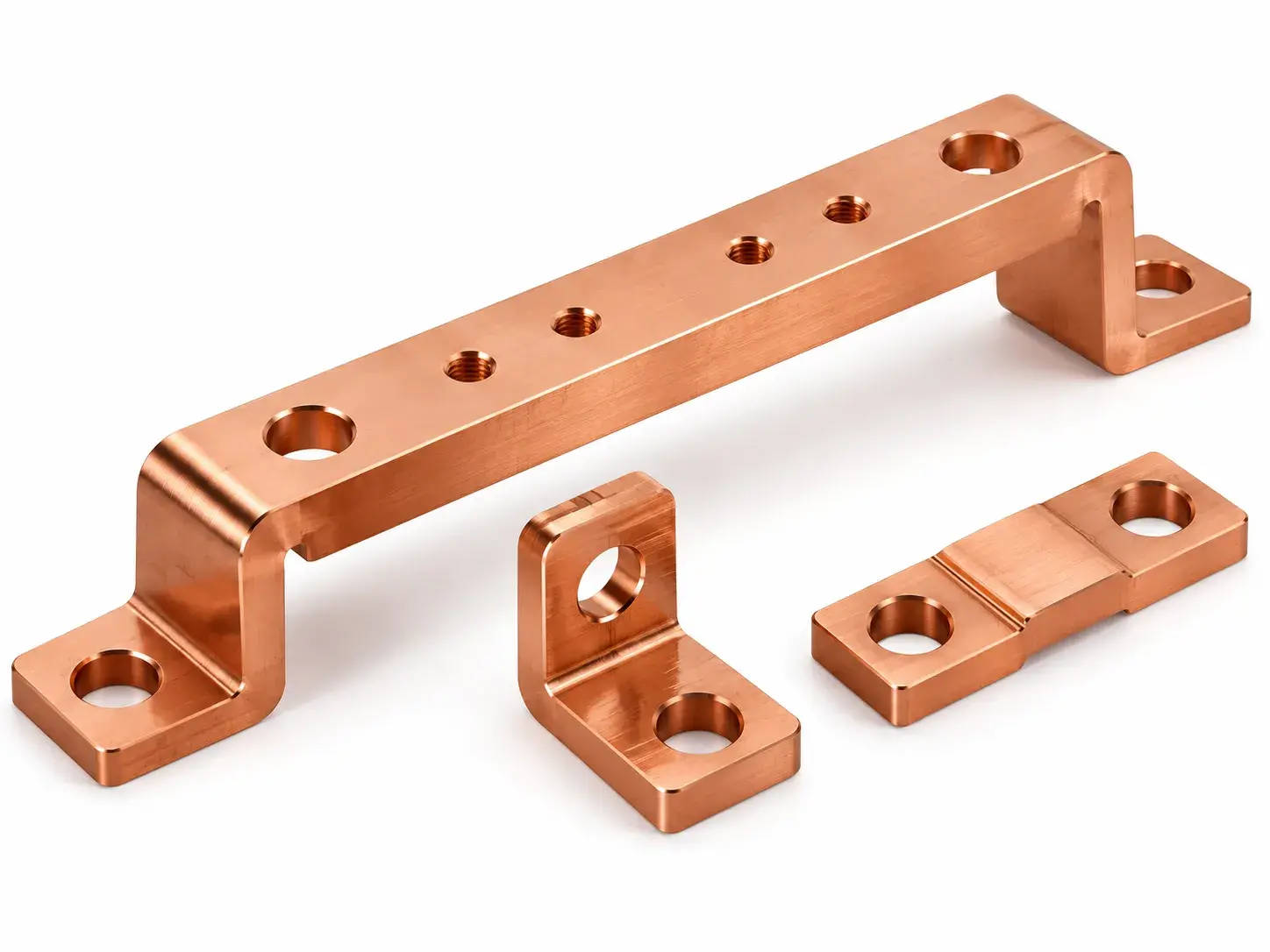
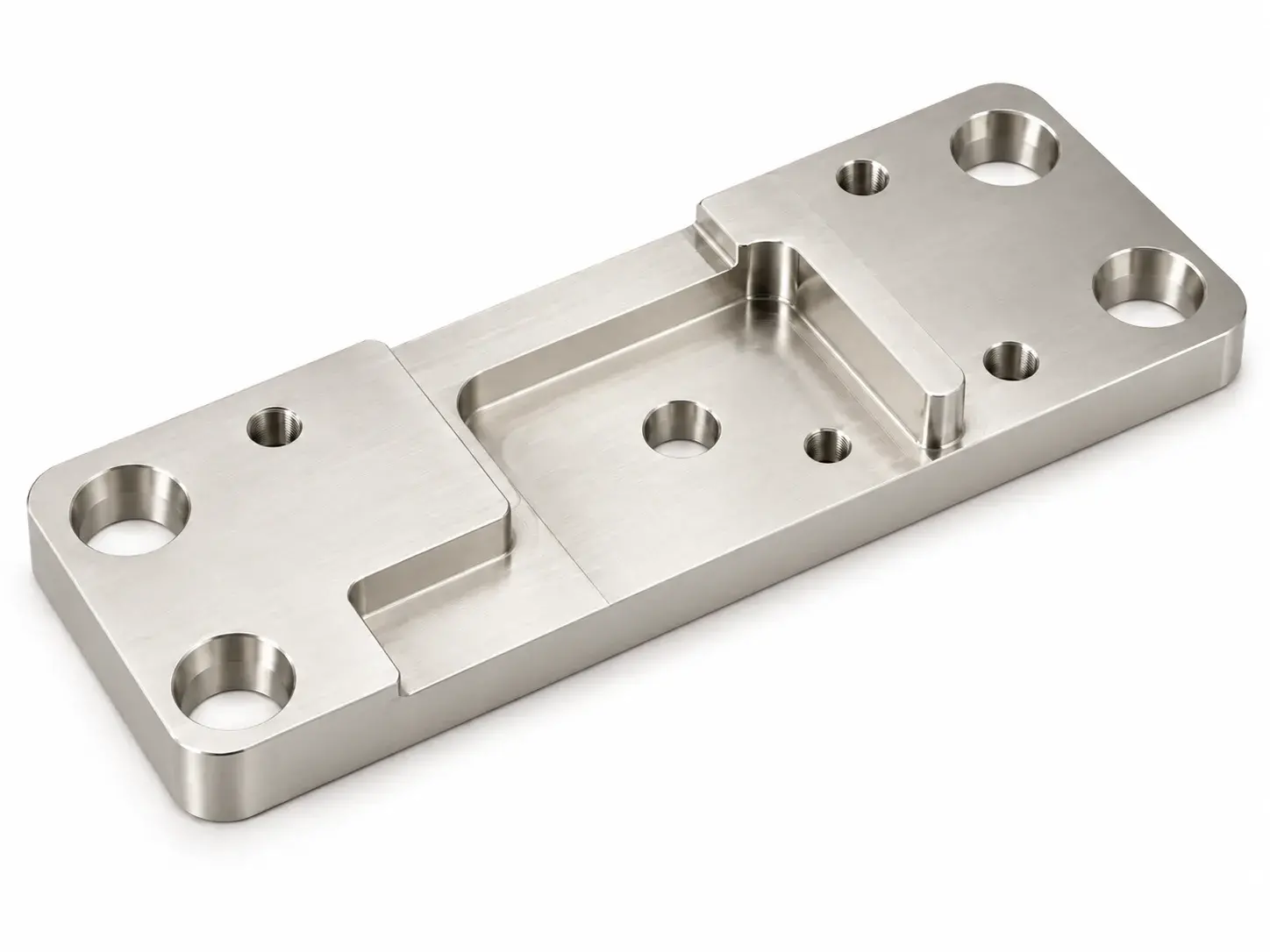
Precision copper connectors and busbars with mounting holes and conductive contact surfaces.

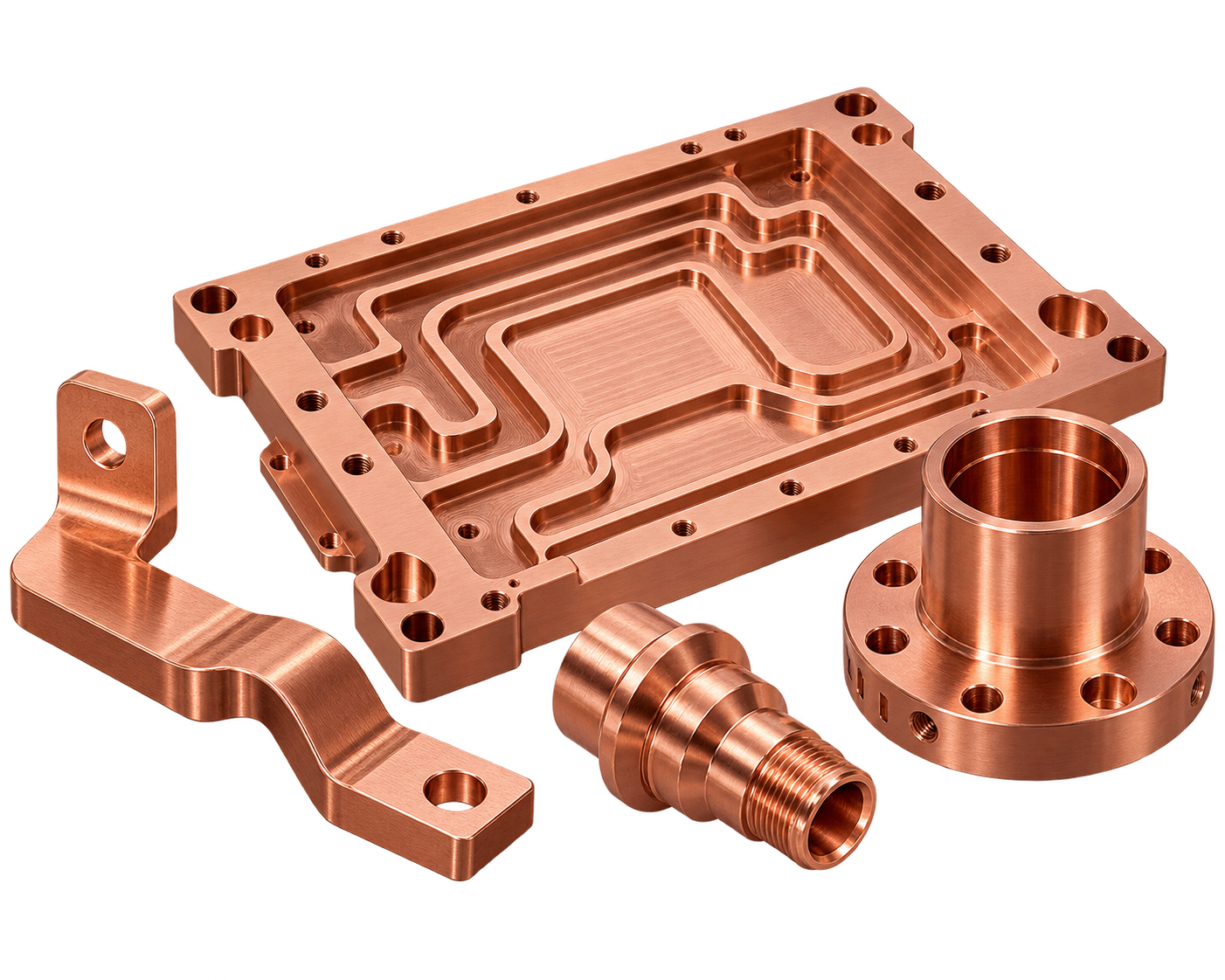
YUANYI provides precision copper CNC machining services for electrical connectors, busbars, heat sinks, electrodes, and other custom components. We support CNC milling and turning of C110 copper, from one-off prototypes to low-volume production, with engineering support to meet your drawing requirements.
Achievable Tolerance
Rapid Prototyping
Complex Titanium Parts
Quality Management
From complex geometries to tight tolerances, get the machining precision and engineering support your copper parts require. Find the right manufacturing approach for your design and production needs.
| Capability | YUANYI Copper Machining |
|---|---|
| CNC Processes | 3-, 4-, and 5-Axis Milling; CNC Turning; Mill-Turn |
| Copper Materials | C110 (ETP Copper); other grades upon review |
| Achievable Tolerance | ±0.005 mm for suitable features |
| Surface Roughness | Typically Ra 1.6–3.2 μm, depending on the process |
| Maximum Part Size | Subject to machine capacity, geometry, and fixturing |
| Production Volume | Single Prototypes to Low-Volume Production |
| Prototype Lead Time | Typically 3–5 business days for suitable projects |
| Quality Inspection | Dimensional Inspection, CMM, FAI Upon Request |
Choosing the right copper grade helps balance electrical conductivity, thermal performance, machinability, and cost. Compare common copper materials to find the best fit for your part’s functional and manufacturing requirements.
| Copper Grade | Key Properties | Typical CNC Machined Parts |
|---|---|---|
| C110 Electrolytic Tough Pitch (ETP) | High electrical and thermal conductivity; relatively soft and ductile. | Busbars, electrical terminals, conductive plates, heat spreaders. |
| C101 Oxygen-Free Electronic (OFE) | Very high purity and conductivity; extremely low oxygen content. | Electrical contacts, vacuum-related components, specialized conductive parts. |
| C102 Oxygen-Free Copper (OF) | Excellent electrical and thermal conductivity with low oxygen content. | Precision electrical connectors, thermal components, conductive fittings. |
| C145 Tellurium Copper | Improved machinability while retaining useful electrical conductivity. | Precision connectors, threaded electrical components, machined contacts. |
Explore custom CNC machined copper parts for electrical, thermal, and industrial applications, ailored to your design requirements.
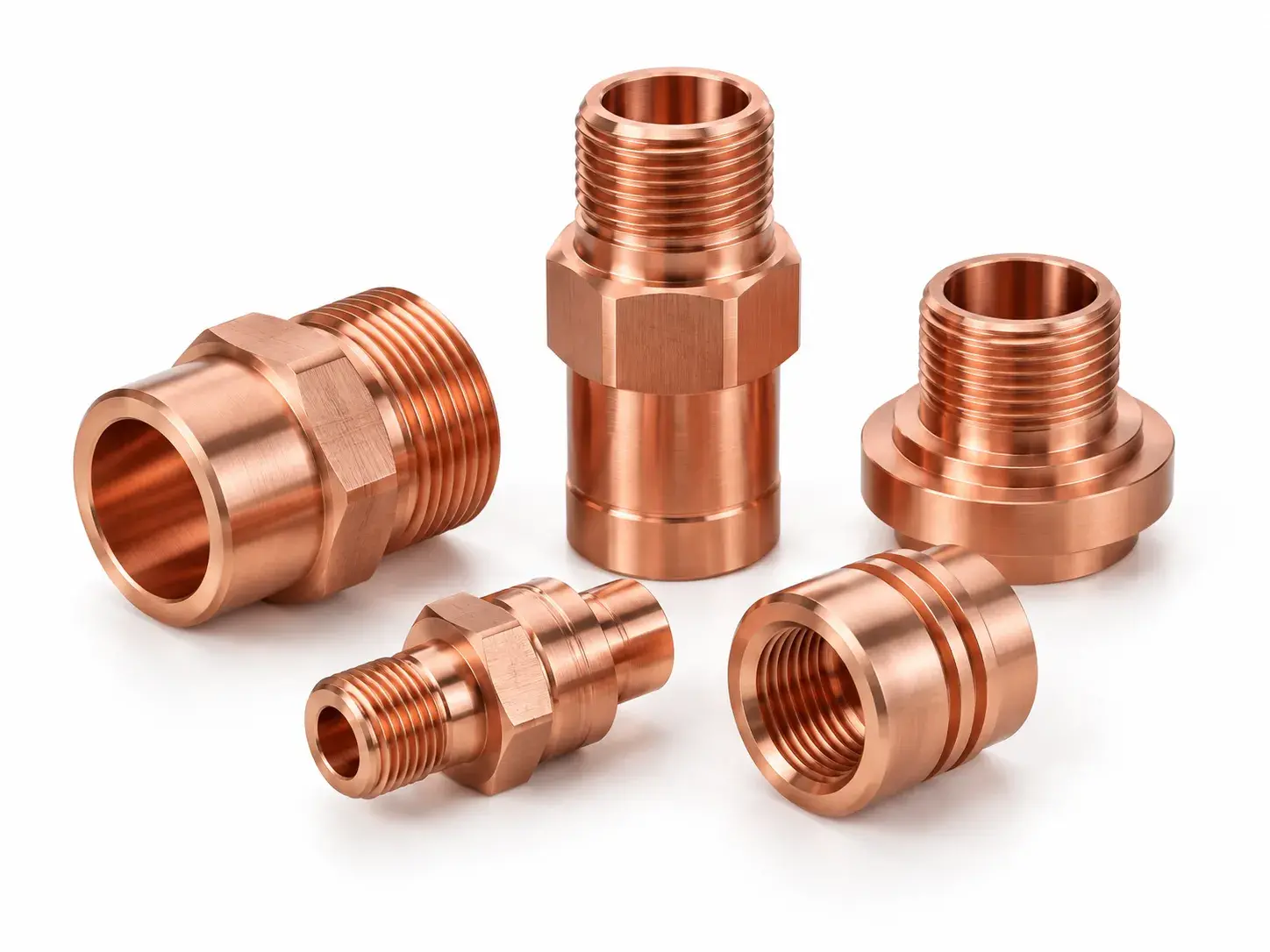
Precision copper connectors and busbars with mounting holes and conductive contact surfaces.
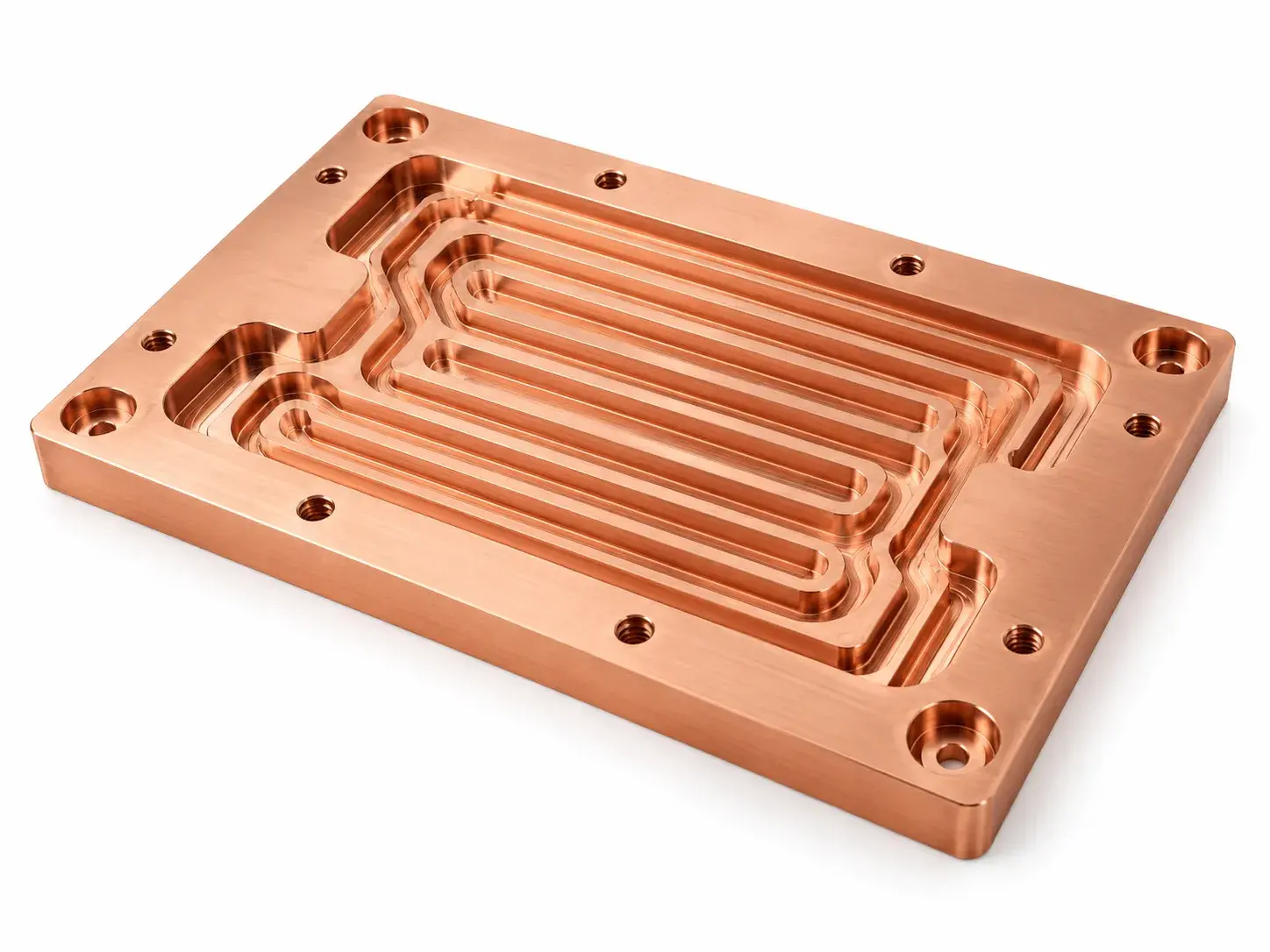
Custom copper cooling plates with machined channels, pockets, and flat contact surfaces.
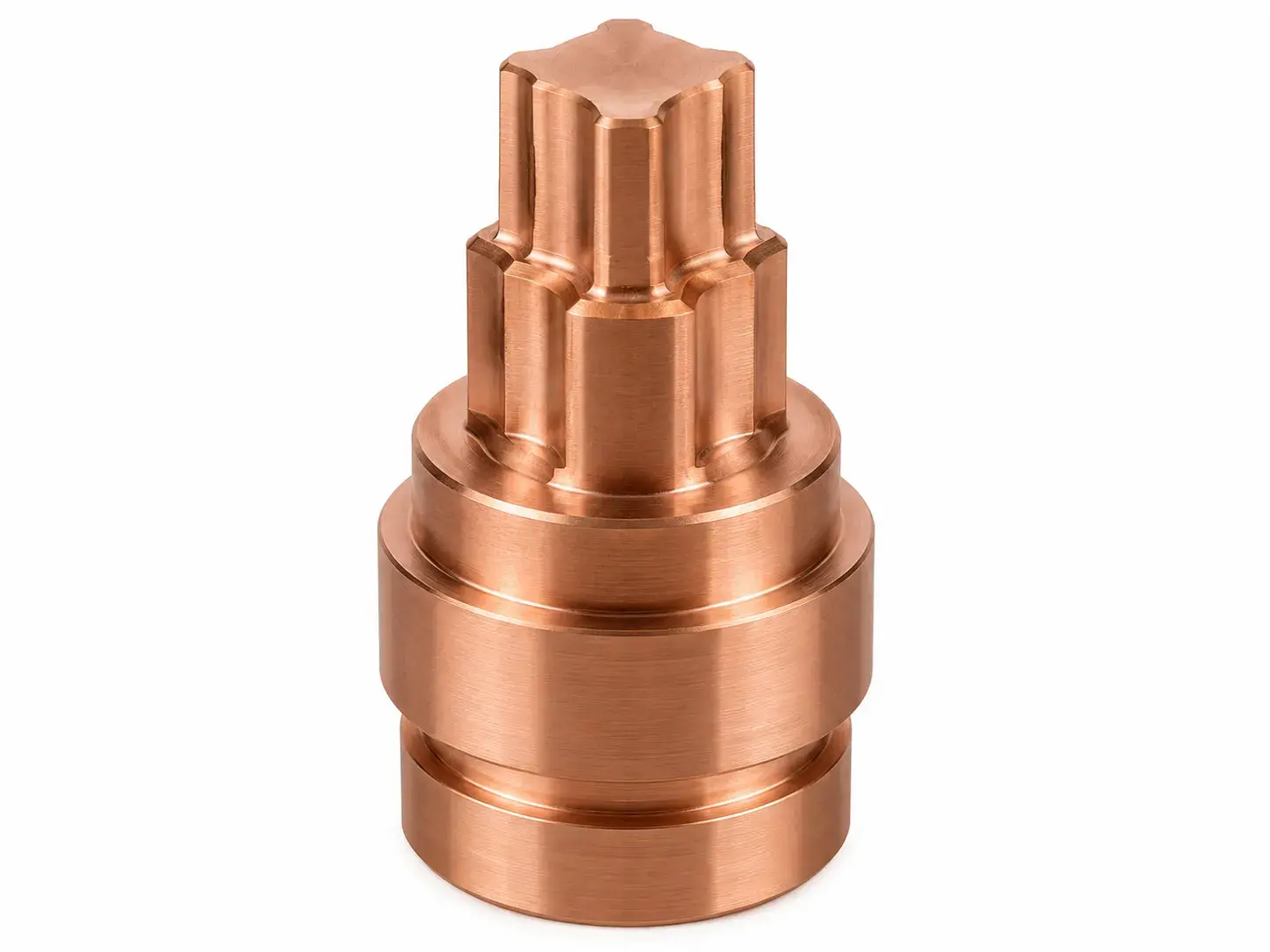
CNC machined copper electrodes with precise profiles and detailed features.
Precision turned copper parts with accurate diameters, bores, threads, and mating features.
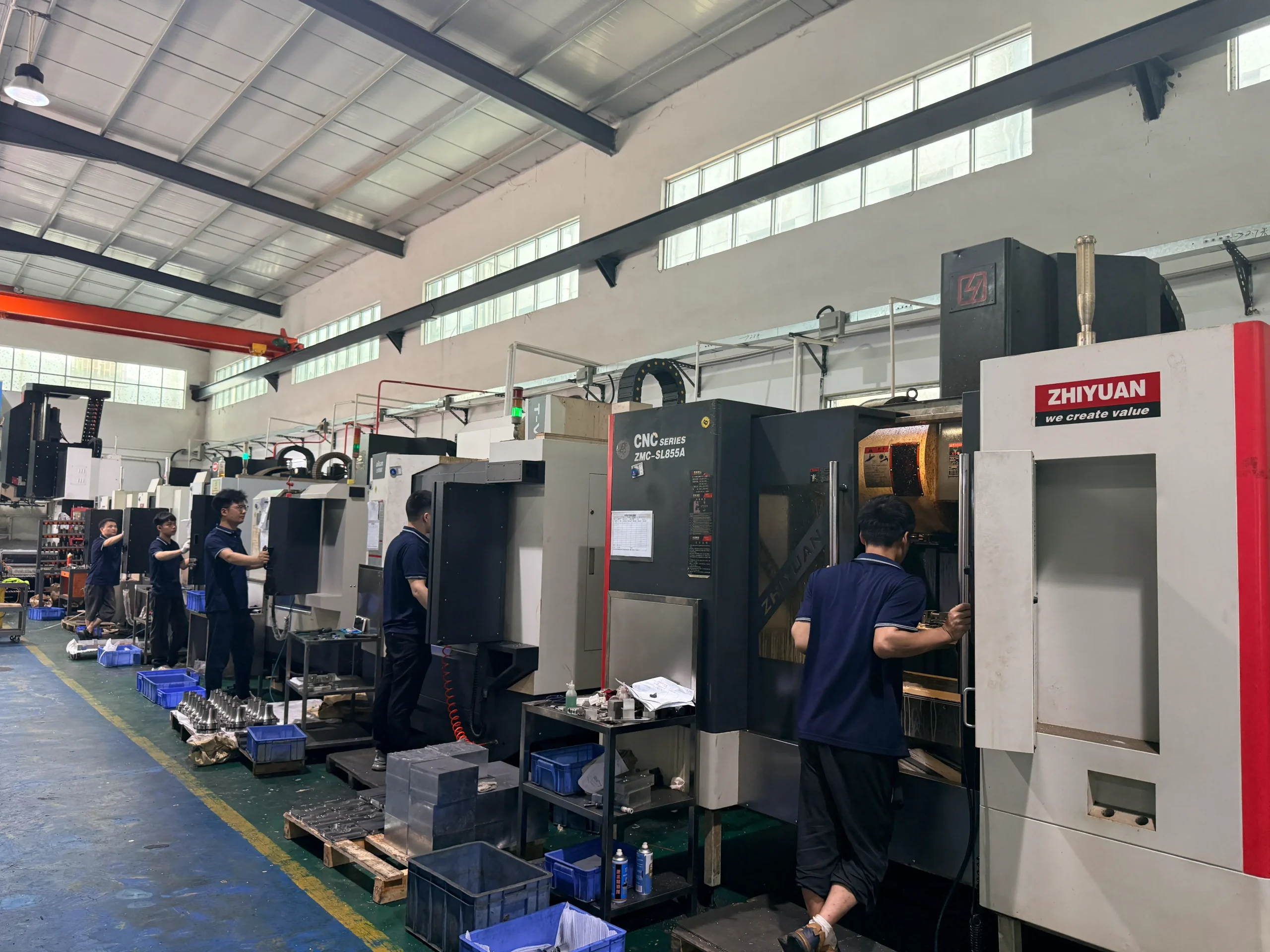
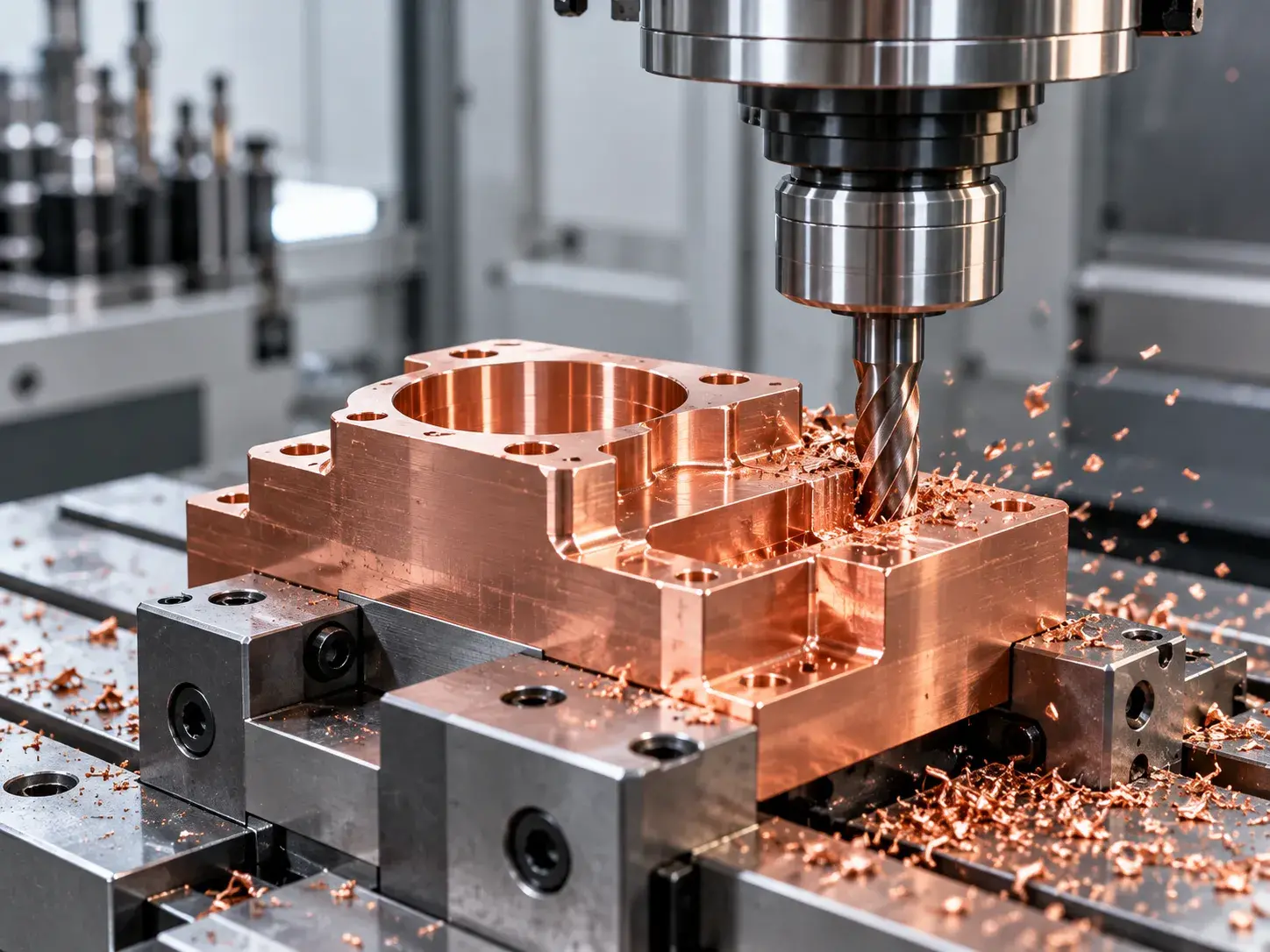
Suitable for copper plates, busbars, electrodes, and components with pockets, channels, holes, and multi-sided features. Tooling and cutting strategies help control burrs and maintain dimensional accuracy.
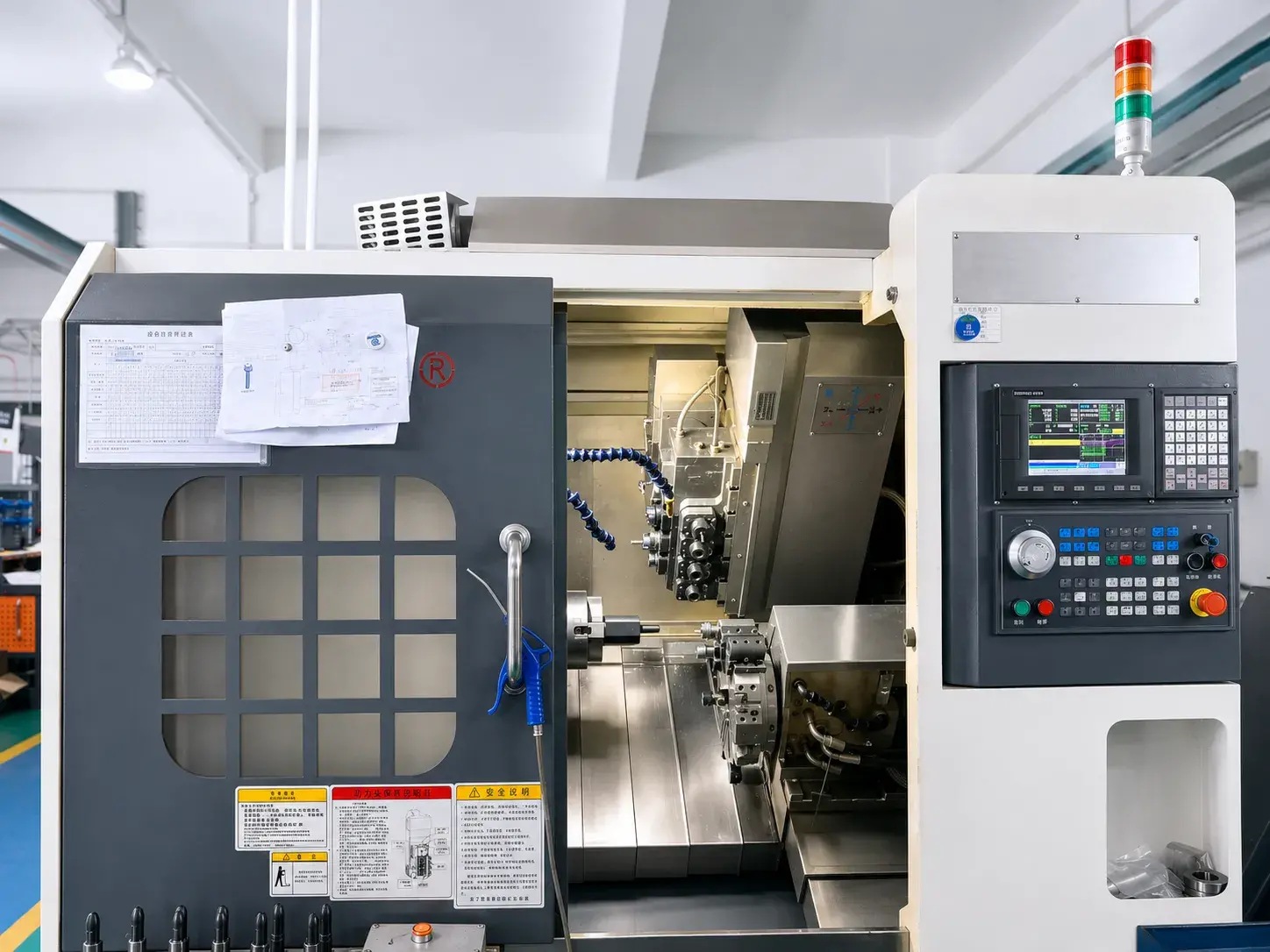
Ideal for cylindrical copper parts such as sleeves, bushings, pins, and threaded connectors. Produces accurate diameters, bores, shoulders, and concentric features.
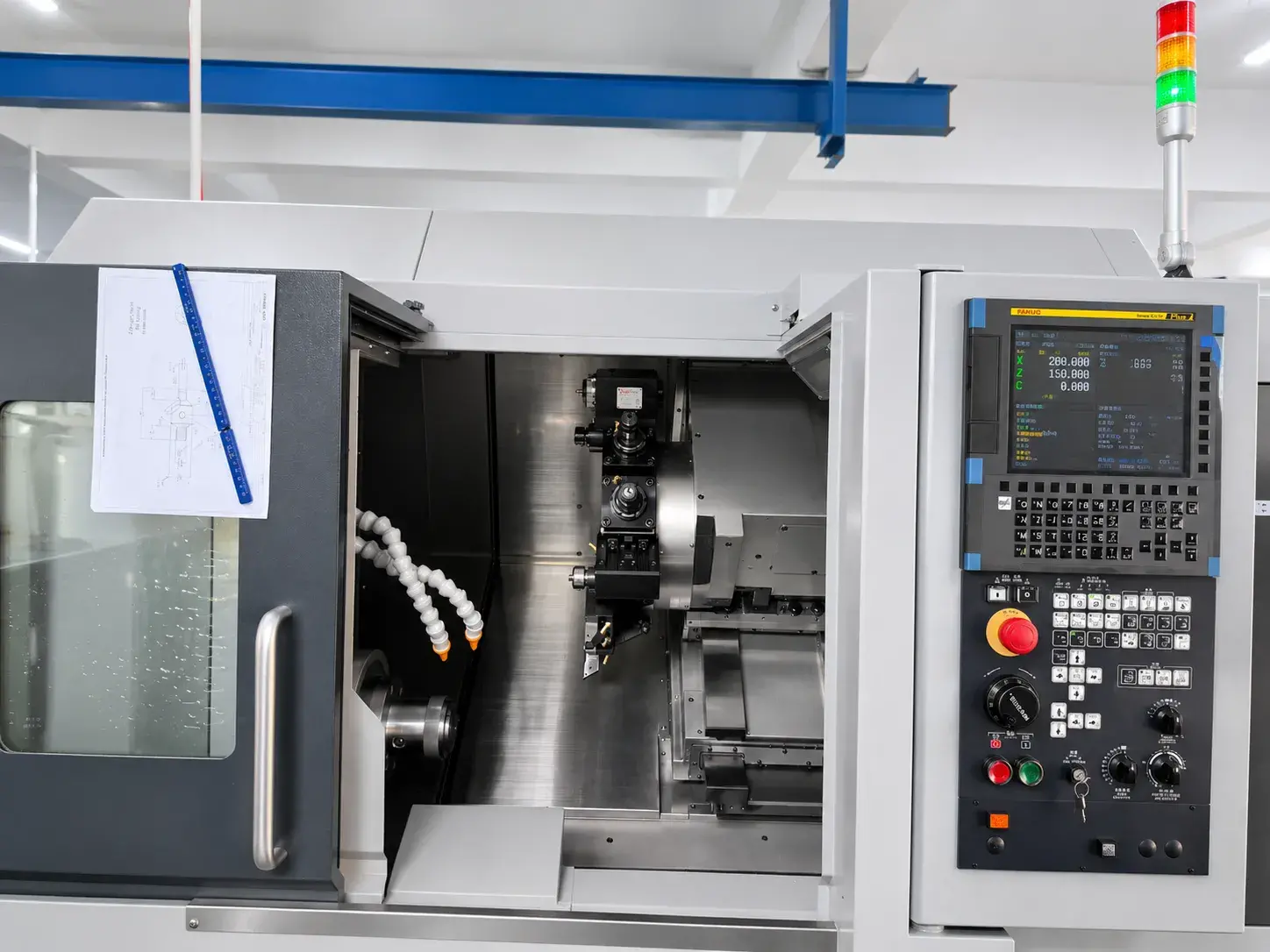
Combines turning and milling for copper components with both cylindrical and non-rotational features, potentially reducing setups and improving positional consistency.
Avoid burrs, surface damage, and dimensional issues in your copper parts. Understanding how copper behaves during CNC machining helps improve part quality and reduce manufacturing risks.
Soft, ductile copper may adhere to cutting tools and form continuous chips, affecting surface finish and machining stability.
Sharp tools, suitable cutting parameters, and effective chip evacuation help reduce material adhesion.
Copper can develop burrs around holes and machined edges, potentially affecting assembly and electrical contact surfaces.
Optimized toolpaths and controlled deburring help produce clean edges without damaging critical features.
Copper's relatively soft surface is susceptible to scratches and handling marks, especially on functional contact areas.
Careful fixturing, handling, finishing, and inspection help protect specified surface conditions.
Thin copper plates and slender features may deform during clamping or machining, affecting flatness and dimensional accuracy.
Suitable fixturing, machining sequences, and finishing allowances help reduce distortion.
Choose the right surface finish to protect your copper parts, maintain reliable electrical contact, and meet assembly requirements.
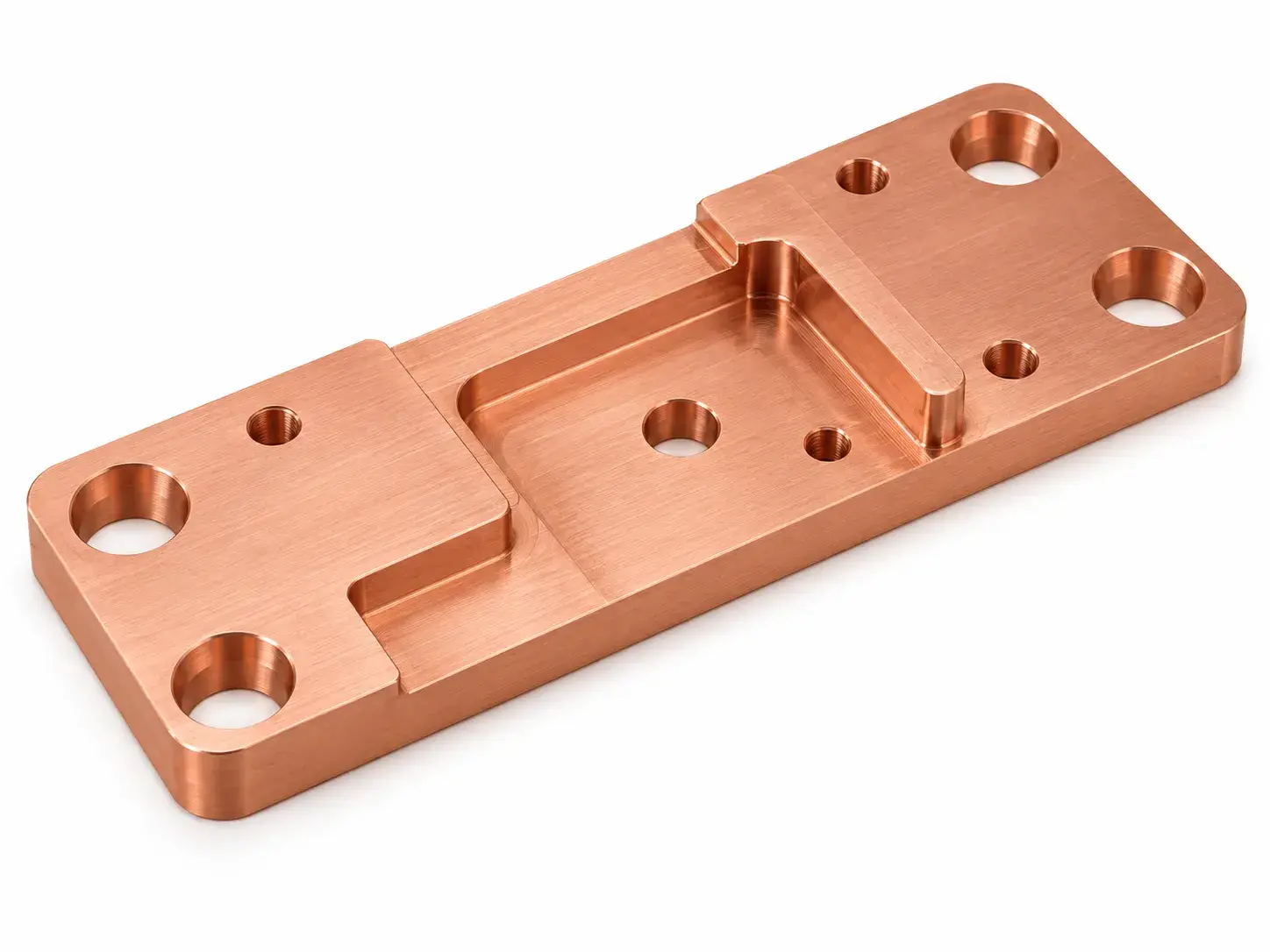
Clean machined surfaces with burrs removed for reliable assembly and functional contact areas.
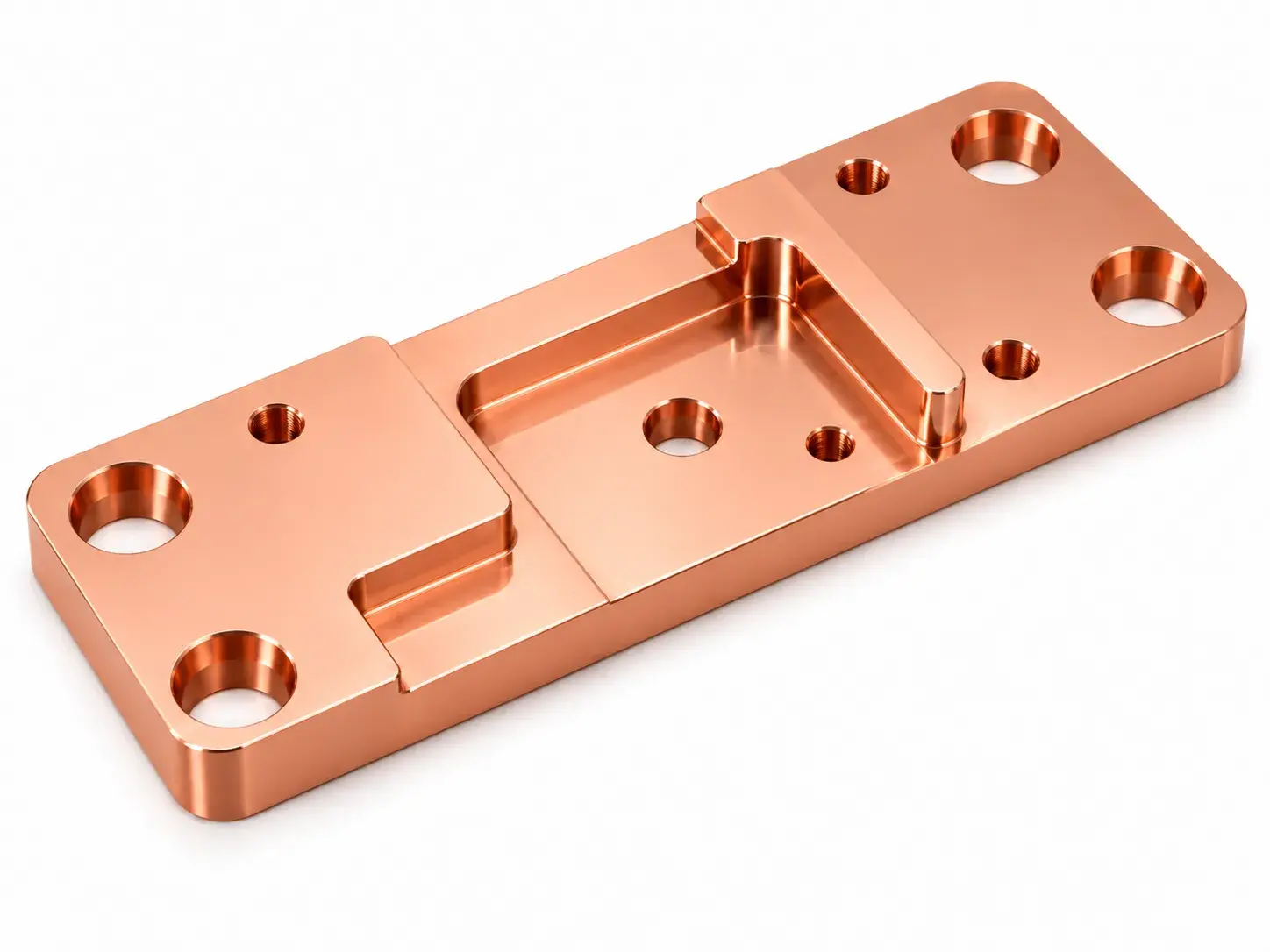
Improves surface appearance and smoothness for visible or specified contact surfaces.
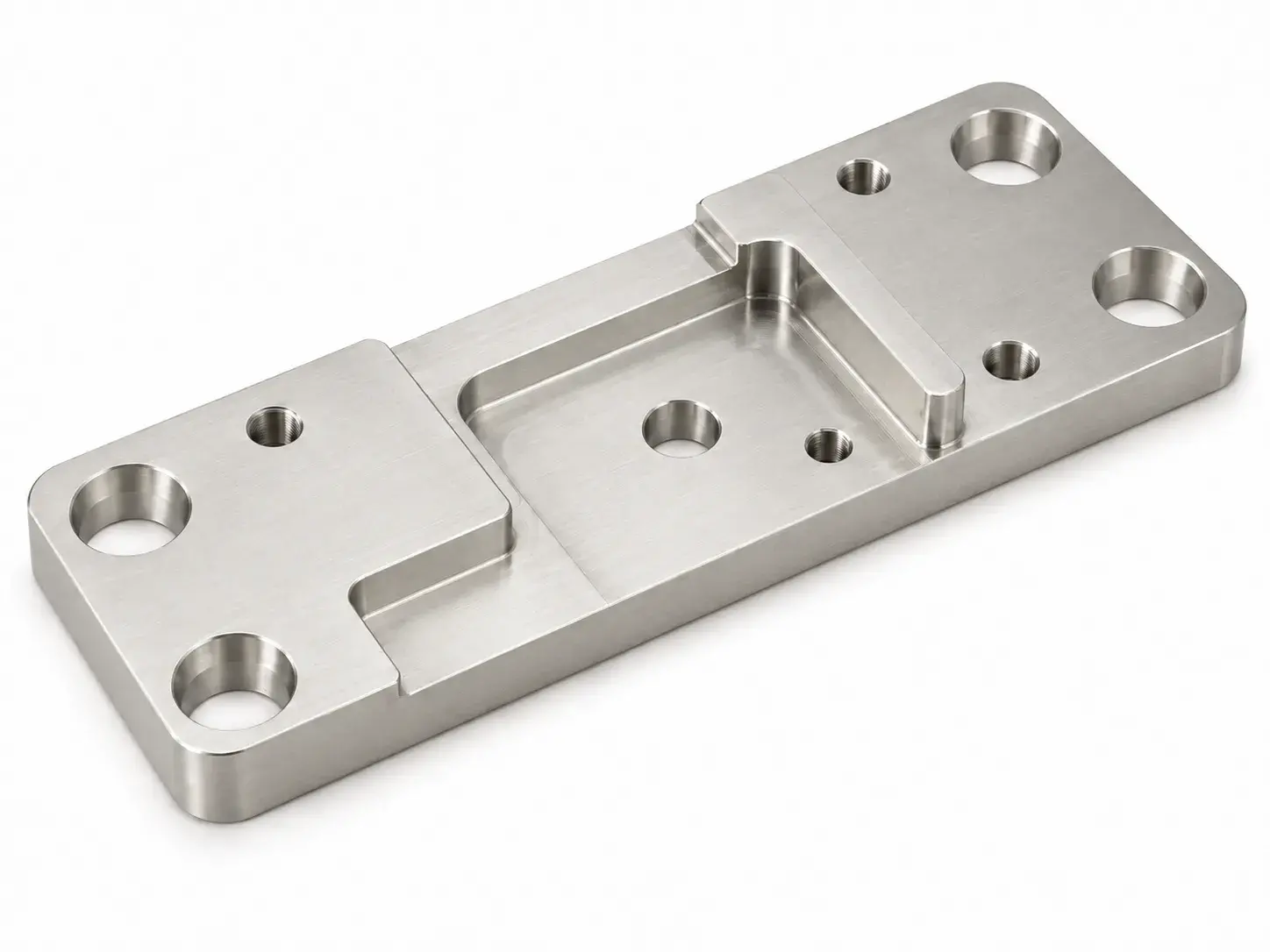
Helps reduce surface oxidation and supports solderability and electrical contact requirements.
Provides a protective barrier for copper components requiring corrosion resistance or wear protection.
Consider Plating Thickness Before Machining:Specify plating thickness, masked areas, and critical mating dimensions in your drawing. Coating buildup can affect fit, threads, and electrical contact performance.
Ensure your copper parts meet critical dimensions, surface requirements, and assembly specifications through careful inspection and documented quality control.
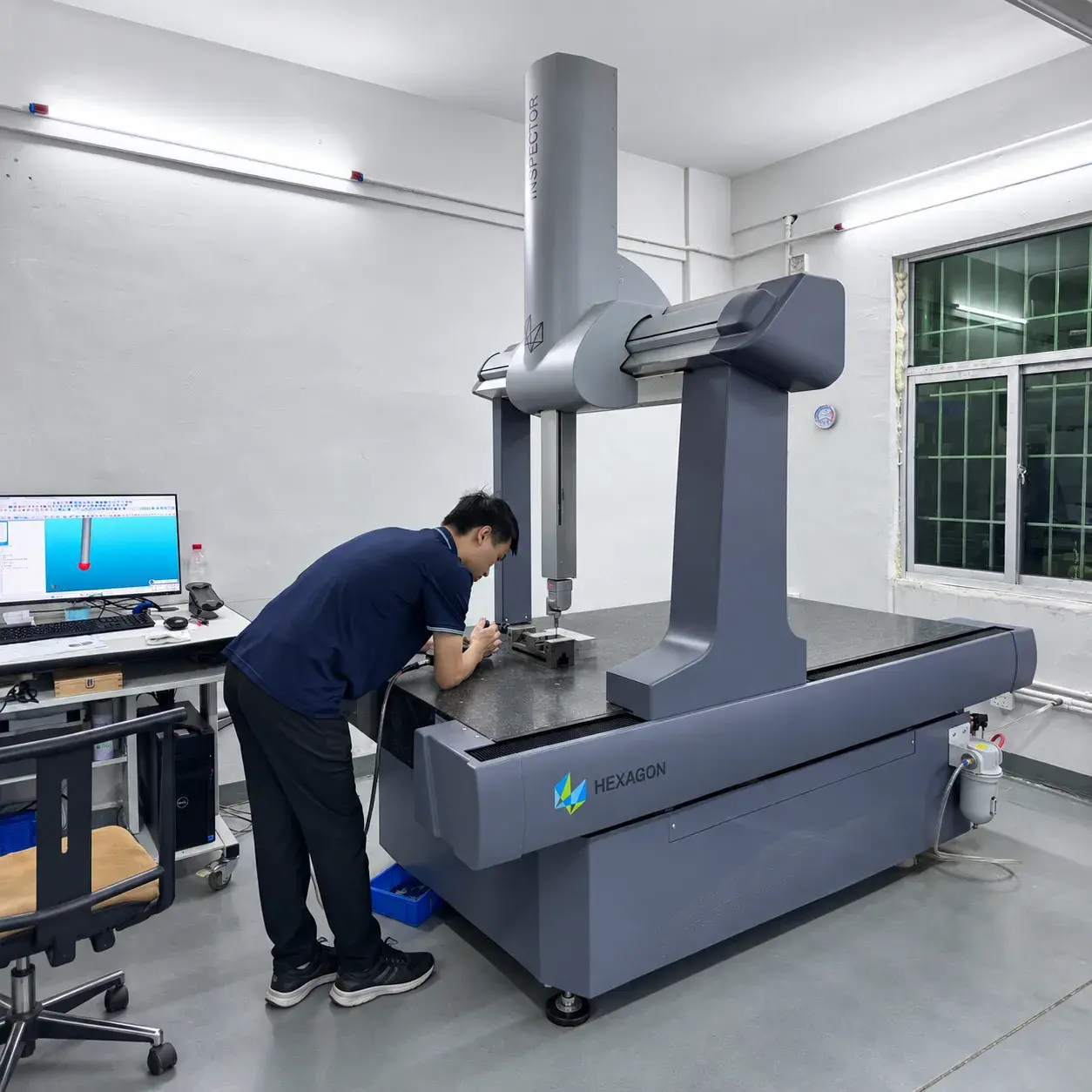
Critical dimensions, hole positions, diameters, and geometric tolerances are verified against approved drawings using CMMs and suitable measuring instruments.
Copper contact surfaces and mating faces are checked for specified flatness, surface finish, scratches, and other visible defects.
Machined edges, drilled holes, and electrical contact features are inspected for unwanted burrs and sharp edges that may affect assembly or performance.
Dimensional inspection reports, First Article Inspection (FAI), and copper material certificates can be arranged according to project requirements.
Copper can be challenging to machine because of its ductility, tendency to form burrs, and potential tool adhesion. Suitable tooling, cutting parameters, and fixturing help achieve accurate features and clean surfaces.
C110 is widely used for electrical and thermal components, while C145 offers improved machinability. Oxygen-free grades such as C101 and C102 may be suitable when purity and conductivity requirements are important. Material availability is reviewed for each project.
Tolerances as tight as ±0.005 mm may be achievable for suitable features. Actual capability depends on part geometry, material condition, dimensions, and inspection requirements.
Yes. Custom copper busbars and connectors can include mounting holes, pockets, contact faces, and other features based on your drawings and functional requirements.
Tin and nickel plating can be considered for copper parts depending on their electrical, corrosion, and assembly requirements. Specify coating thickness, contact areas, and critical dimensions so finishing feasibility can be reviewed.
No. Projects can range from individual prototypes to low-volume production. The most economical manufacturing approach depends on part complexity and order quantity.
Suitable prototype orders may be completed in approximately 3–5 business days. Lead time depends on material availability, part complexity, quantity, inspection, and surface finishing requirements.
Send your 2D drawing or 3D CAD model, copper grade, quantity, required tolerances, surface finish, and delivery requirements. Highlight any critical electrical or thermal contact surfaces.
Have a copper part ready for manufacturing? Share your CAD files, material requirements, and quantity. Our team will review your design and provide a tailored machining quote.