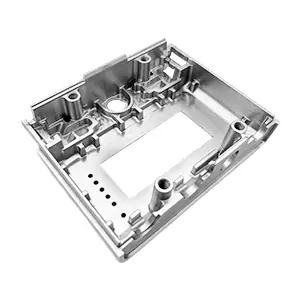
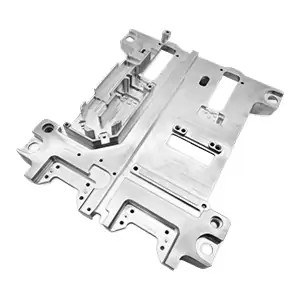
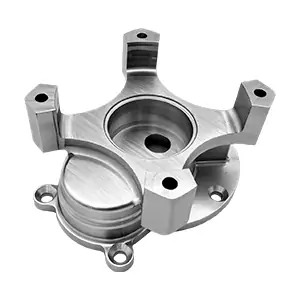
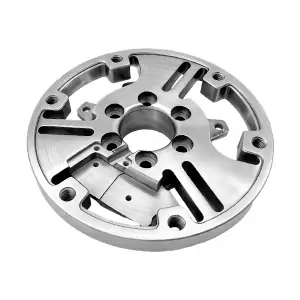
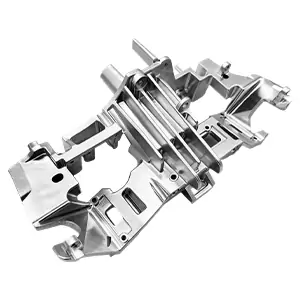
In the field of CNC machining, the primary differences between 3-axis, 4-axis, and 5-axis CNC machining lie in the number of axes the machine tool can control and the resulting variations in machining capabilities.
3-axis machining is suitable for simple planar and basic structural parts; 4-axis machining adds rotational capabilities, making it more suitable for cylindrical and multi-faceted parts; while 5-axis machining enables the efficient machining of complex surfaces and high-precision parts. However, a higher number of axes does not necessarily mean a better choice.
For many projects, selecting a machining solution that best fits the part’s geometry and budget is often more important than choosing a machine tool with the highest specifications. This article provides a comprehensive comparison of 3-axis, 4-axis, and 5-axis CNC machining in terms of machining capabilities, cost, precision, and application scenarios to help you identify the solution that best meets your project’s needs.
3 Axis vs 4 Axis vs 5 Axis CNC: Quick Comparison Table
| Comparison Factor | 3-Axis CNC Machining | 4-Axis CNC Machining | 5-Axis CNC Machining |
|---|---|---|---|
| Number of Axes | X, Y, Z Linear Axes | X, Y, Z + A Rotary Axis | X, Y, Z + A & C Rotary Axes (or B & C) |
| Rotary Motion | None | Indexed or Continuous Rotation | Dual Rotary Axes with Simultaneous Motion or Positioning |
| Setup Requirements | May require multiple setups | One setup can access multiple sides | One setup can complete the entire part |
| Machining Complexity | Simple to Moderate | Moderate | Very High |
| Accuracy Consistency | Depends on operator skill; multiple setups can introduce errors | Higher consistency by reducing repositioning errors | Best consistency with all features machined in a single setup |
| Production Efficiency | Lower due to repeated setups | Medium; fewer setups improve efficiency | High; single setup minimizes non-cutting time |
| Surface Finish | Good | Better, especially with continuous rotary machining | Excellent due to improved tool accessibility and tool orientation |
| Programming Difficulty | Easy | Moderate | Complex (tool-axis control, collision avoidance, and advanced toolpaths) |
| Typical Cost | $35–$120/hour | $50–$150/hour | $100–$250+/hour |
What Are 3-Axis, 4-Axis, and 5-Axis CNC Machines?
Understanding the differences between these three types of machines hinges on grasping the relative motion between the “cutting tool” and the “workpiece.”
A 3-axis CNC machine is the most basic configuration, in which the cutting tool moves along three linear axes (X, Y, and Z), while the workpiece remains stationary on the table. It excels at machining basic features such as flat surfaces, holes, and slots, and can cut the top and bottom surfaces as well as the sides of a part from above. However, it cannot tilt the tool to access angled walls or deep cavities. If the back or side of a part needs to be machined, the operator must manually re-clamp the workpiece, which introduces positioning errors and consumes additional labor hours.
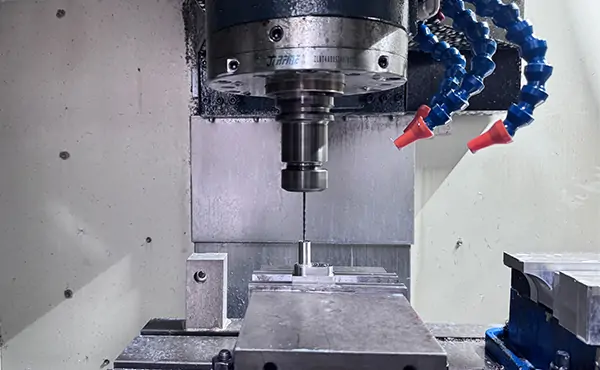
A 4-axis CNC machine adds a rotational axis—typically referred to as the A-axis—to the three-axis configuration, allowing the workpiece to rotate around the X-axis. This means that during a single setup, the cutting tool can access multiple surfaces of the workpiece—provided these surfaces are distributed around the same rotational axis. 4-axis machines have two operating modes: indexing rotation involves rotating the workpiece to a fixed angle, locking it in place, and then machining; this is suitable for machining polyhedral parts; Continuous rotation involves the workpiece rotating continuously during cutting, enabling the machining of complex rotational structures such as helical grooves, curved surfaces, and cam profiles—features that 3-axis machines simply cannot achieve.
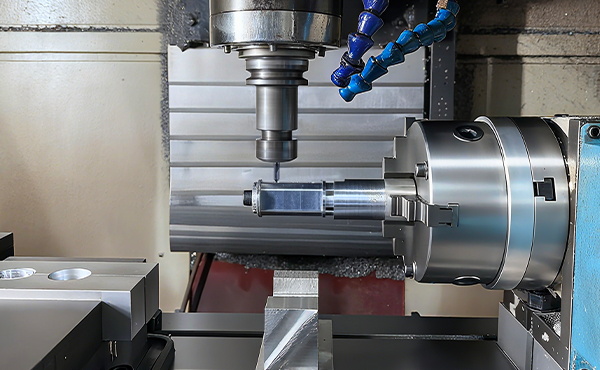
5-axis CNC machines add two rotational axes (commonly configured as A/C or B/C axes) to the three linear X, Y, and Z axes, thereby providing a full five degrees of freedom. This means the cutting tool can approach the workpiece from virtually any angle, solving challenges such as deep pockets, undercuts, and twisted surfaces that 3-axis and 4-axis machines cannot handle. More importantly, 5-axis machines can complete the entire machining of a part in a single setup—a capability that far outweighs the higher equipment cost for aerospace parts and medical implants, which demand high tolerance consistency.

It is worth noting that many 5-axis machines can actually operate in two modes: one is “3+2 positioning machining” (rotating the workpiece to a specific angle, locking the rotational axes, and then performing 3-axis cutting), which is suitable for machining features on multiple planar surfaces; the other is “continuous 5-axis interpolation” (where all axes move synchronously during cutting), which is suitable for machining free-form surfaces. For parts of moderate complexity, 3+2 is often more cost-effective than continuous 5-axis machining.
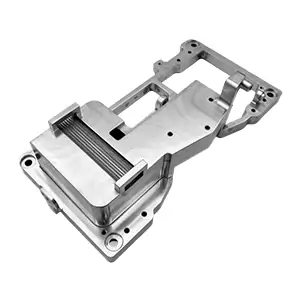
How Does 3-Axis CNC Machining Work?
3-axis cnc machining removes material by moving the cutting tool along three linear axes: X (left-right), Y (forward-backward), and Z (up-down). The workpiece remains stationary on the table. For flat structures or parts that require machining features on only one surface, this is the simplest and most reliable solution.
Typical Parts Made by 3 Axis CNC
- Brackets & Plates: Most brackets only require drilling, milling, and tapping on the top and sides. A 3-axis machine tool can easily handle these tasks while maintaining an accuracy of approximately ±0.01 mm, which fully meets general industrial requirements.
- Covers & Housings: Parts such as equipment enclosures and electronic chassis typically require only simple machining on the top and sides, with no complex curved surfaces or deep cavities.
- Fixtures: In-house fixtures used in factories are often more cost-sensitive and have relatively loose tolerance requirements, making 3-axis machining the most suitable choice.
- Spacers & Blocks: These parts have simple geometries without undercuts or inclined structures; 3-axis machining offers not only the lowest cost but also the fastest processing speed.


How Does 4-Axis CNC Machining Work?
4-axis cnc machining adds a rotational axis (commonly referred to as the A-axis) to the traditional 3-axis X, Y, and Z axes, allowing the workpiece to rotate around the X-axis. This additional degree of freedom solves one of the most challenging problems in traditional three-axis machining: how to machine multiple surfaces—including curved surfaces—in a single setup.
There are two methods of A-axis rotation.:
The first is indexing rotation: the workpiece rotates to a preset angle and locks in place, after which the cutting tool operates in 3-axis mode.
The second is continuous rotation: the workpiece rotates continuously while cutting. In this mode, it is possible to machine helical grooves, helical gears, cam profiles, screws, and other curved structures that cannot be achieved with traditional 3-axis machining.
Typical Parts Made by 4 Axis CNC
Shafts & Cylindrical Components:
Drive shafts require the machining of features such as keyways, splines, and radial holes, which are distributed at different angular positions on the cylindrical surface. A 4-axis machine tool can complete all these features in a single setup through rotary machining, precisely ensuring the relative positional relationship between the keyway and the shaft centerline. This is very common in parts such as automotive engine shafts and hydraulic valve spools.
Cam Parts & Rotary Components:
Cam profiles feature complex contour curves that typically require continuous rotation in conjunction with a milling cutter for precise machining. The continuous rotation mode of four-axis machines is specifically designed for this type of rotationally symmetric part.
Multi-Side Machined Parts:
Parts such as valve bodies and manifolds require milling and drilling on multiple mutually perpendicular surfaces. While 3-axis machining requires multiple setup changes, 4-axis machining utilizes A-axis indexing rotation to sequentially machine multiple surfaces within a single setup cycle, significantly reducing production time.


How Does 5 Axis CNC Machining Work?
5-axis machining adds two rotational axes (typically the A and C axes, or the B and C axes) to the three linear axes (X, Y, and Z), thereby enabling five degrees of freedom of spatial movement. This means that the cutting tool can approach the workpiece from almost any angle.
However, when referring to “5-axis,” it is essential to distinguish between two distinctly different operating modes:
3+2 positioning machining involves rotating the two rotary axes to a specific angle and locking them in place, then using the 3 linear axes for cutting. This mode is suitable for machining features on multiple planes, particularly parts that require approach from multiple inclined directions but where each direction itself is a flat surface. Programming is relatively simple, and the toolpath is stable and reliable.
Continuous five-axis simultaneous machining, on the other hand, involves all five axes moving simultaneously, with the tool continuously cutting at constantly changing angles of inclination. This is “free-form surface machining” in the truest sense, capable of producing geometries that 3+2 machining cannot achieve, such as twisted blade surfaces and complex mold cavities.
Typical Parts Made by 5-Axis CNC
Impellers & Turbine Blades:
These parts feature twisted free-form surfaces and dense blade arrays. 3-axis or 4-axis machining simply cannot cleanly machine the narrow flow channels between the blades. 5-axis machining allows the tool to be extended into the flow channels at an angle for machining, making it the standard process for precision manufacturing of impellers.
Aerospace Components:
Aircraft structural components are often machined as monolithic parts from a single blank, featuring deep cavities, steep walls, and multi-directional ribs. 5-axis machining completes the entire process in a single setup, eliminating reference inconsistencies caused by repeated flipping. According to data from an aerospace project, the blade pass rate increased from 85% with 3-axis machining to 99% after switching to 5-axis machining.
Robot Joints and Complex Curved Parts :
The contours of robotic joint components must meet precise kinematic requirements, with surface roughness typically controlled below Ra 0.8. 5-axis machining not only ensures geometric accuracy but also eliminates the need for secondary polishing by optimizing tool orientation.


Advantages and Limitations of 3 Axis, 4 Axis, and 5 Axis CNC Machining
| Evaluation Criteria | 3-Axis CNC Machining | 4-Axis CNC Machining | 5-Axis CNC Machining |
|---|---|---|---|
| Cost | Lowest machine investment and machining rate | Moderate machine cost; machining rates are typically 20–30% higher than 3-axis | Highest machine investment (often hundreds of thousands to over a million dollars) and highest machining rates |
| Setup Time | Requires multiple setups, resulting in longer non-cutting time | Can machine multiple sides in a single setup, reducing setup time | Completes complex parts in a single setup with minimal auxiliary time |
| Accuracy | Multiple setups may introduce positioning errors | Reduced repositioning errors provide better dimensional consistency | Eliminates cumulative setup errors and can achieve tolerances as tight as ±0.005 mm |
| Surface Finish | Surface quality may be affected by tool reach and tool deflection | Good surface finish for most multi-side components | Best surface finish due to optimized tool orientation and cutting angles |
| Production Efficiency | Frequent repositioning and alignment reduce productivity | Fewer setups improve overall machining efficiency | Optimized toolpaths and single-setup machining deliver the highest productivity |
| Programming Complexity | Lowest programming difficulty and software requirements | Requires understanding of rotary-axis toolpaths and indexing operations | Requires advanced CAM programming, collision avoidance, and multi-axis toolpath strategies; programming time can be 5–10× longer than 3-axis |
| Ideal Applications | Flat parts, brackets, covers, housings, and simple machined components | Shafts, cylindrical parts, valve bodies, and multi-side machined components | Impellers, turbine blades, deep-cavity aerospace parts, medical implants, and highly complex geometries |
3 Axis vs 4 Axis vs 5 Axis CNC: Cost Comparison
When comparing the costs of 3-axis, 4-axis, and 5-axis machining, one cannot rely solely on the hourly machine rate; factors such as programming, setup, and production efficiency must also be considered.
Machine Investment Cost
3-axis machining centers are the most common and least expensive machines. 4-axis machines require the addition of a rotary table and a fourth-axis drive system, so the capital investment is typically 30% to 50% higher than that of 3-axis machines. 5-axis machines utilize a dual-rotary structure and more complex control systems, resulting in the highest equipment costs—often several times that of 3-axis machines.
Programming Cost
3-axis programming is relatively simple, and programs for most parts can be completed in a short time. 4-axis programming requires consideration of rotary axis movements and machining sequences, increasing complexity. 5-axis programming involves tool axis control, collision detection, and post-processing optimization, typically requiring significantly more time than 3-axis or 4-axis programming.
Setup Cost
For parts requiring multi-surface machining, 3-axis machines often require multiple setups and fixtures. 4-axis machines can machine multiple surfaces by rotating the worktable, thereby reducing fixture costs and setup time. 5-axis machines can complete the machining of complex parts in a single setup, further reducing setup costs and human error.
Per-Part & Production Cost
In prototyping and small-batch production, programming and setup costs account for a significant portion of the total cost; choosing an inappropriate machining method may lead to increased overall costs. For mass production, while 5-axis machining has the highest equipment cost, it often reduces the cost per part due to fewer setups and higher machining efficiency.
Therefore, the most economical solution is not necessarily the one with the fewest or most axes, but rather the machining method best suited to the part’s geometry.
How We Help Customers Choose the Right CNC Machining Process
In actual projects, we do not automatically recommend 5-axis machining; instead, we conduct a comprehensive assessment based on part geometry, precision requirements, production volume, and budget. For simple parts, 3-axis machining often offers a better cost advantage; for multi-surface machining and cylindrical parts, 4-axis machining typically provides the optimal balance between efficiency and cost; while complex surfaces and high-precision parts are better suited for 5-axis machining.
With over 13 years of CNC machining experience and machining capabilities with a tolerance of up to ±0.005 mm, YuanYi helps customers select machining solutions that truly meet their project requirements, rather than simply choosing machines with more axes.
Ready to discuss your project?
Upload your drawings today and get expert machining advice and a fast quotation from our engineering team.
Get a Free CNC Machining QuoteFrequently Asked Questions
No, it depends on the part’s geometry. 5-axis machining offers irreplaceable advantages for complex surfaces and deep-pocketing operations, but for parts where features are distributed only around a single rotational axis, 4-axis is sufficient and offers lower costs and simpler programming.
Yes. A 4-axis machine is fully compatible with all the functions of a 3-axis machine—simply lock the rotary axis at the 0° position, and the 4-axis machine becomes a fully functional 3-axis machining center.
Yes. After reviewing your drawings or 3D files, our engineering team can evaluate the part geometry, tolerance requirements, and production volume to recommend the most suitable machining process. The goal is to achieve the required quality at the most cost-effective price rather than simply using the machine with the most axes.
For most CNC machined parts, we can maintain tolerances within ±0.01 mm. For critical features and high-precision components, tolerances as tight as ±0.005 mm can be achieved depending on the material, geometry, and inspection requirements.
We support both prototype and production projects with no minimum order quantity requirement. Whether you need a single prototype or large-volume production, we can provide machining support.