
6 Essential Wood Lathe Turning Tools and What They Are Used For

The six essential wood lathe turning tools are a spindle roughing gouge, spindle gouge, bowl gouge, parting tool, skew chisel, and scraper.

Each one has a different job. A roughing gouge removes material quickly, while a spindle gouge is better for smaller curves and details. Bowl gouges are designed for bowls and hollow forms, while parting tools, skew chisels, and scrapers are mainly used for sizing, finishing, and refining a workpiece.

Quick Comparison of the 6 Essential Wood Turning Tools

Wood Turning ToolMain UseCommon Applications
Spindle Roughing GougeRemoving material quicklyTurning square stock into a round spindle
Spindle GougeFine shaping and detail workBeads, coves, curves, decorative profiles
Bowl GougeShaping and hollowing bowlsBowls, platters, hollow forms
Parting ToolMaking narrow cuts and separating partsGrooves, tenons, sizing, cutting off
Skew ChiselSmooth finishing and detailed cutsSpindles, V-grooves, beads, shoulders
ScraperRefining shapes and smoothing surfacesBowls, curves, difficult grain areas
The tools you need most depend on what you plan to turn. Someone making table legs and pens will use a different combination from someone who mainly turns bowls.

What Are Wood Lathe Turning Tools?

Wood Lathe Turning Tools

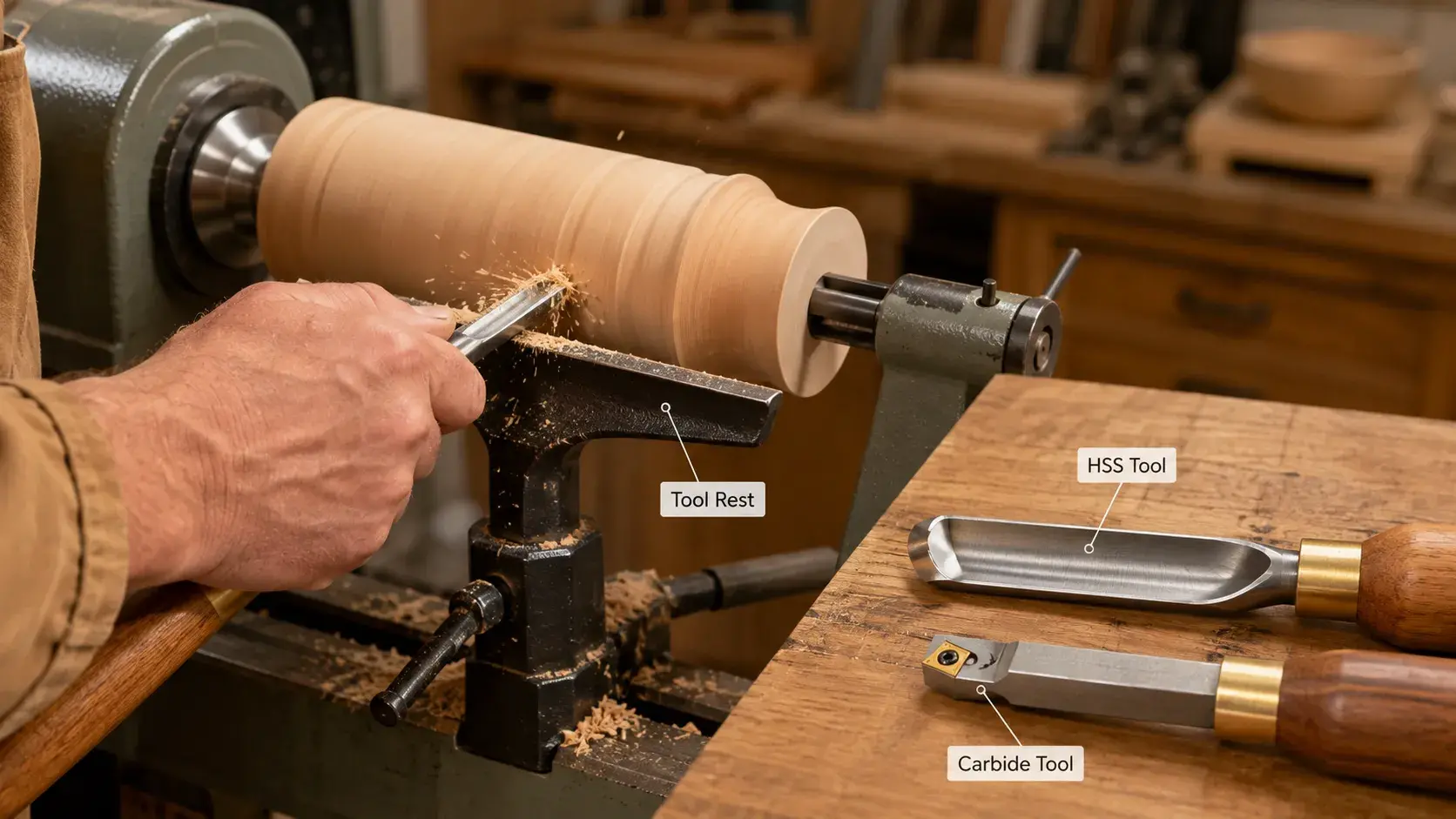
Wood lathe turning tools are handheld cutting tools used to shape wood while it rotates on a lathe.

The tool normally rests against the lathe’s tool rest, while the turner carefully moves the cutting edge into the spinning workpiece. By changing the tool angle, cutting edge, and direction of movement, you can remove material, create curves, cut grooves, hollow bowls, or produce a smooth finished surface.

Traditional woodturning tools are usually made from high-speed steel (HSS) because it holds a sharp edge well and can withstand the heat produced during cutting.

You may also see carbide woodturning tools. Instead of sharpening the whole cutting edge, carbide tools use small replaceable or rotatable inserts. They are often easier for beginners to use, although traditional HSS tools generally offer more control once you learn the correct cutting technique.

6 Essential Wood Lathe Turning Tools

1. Spindle Roughing Gouge
Spindle Roughing Gouge

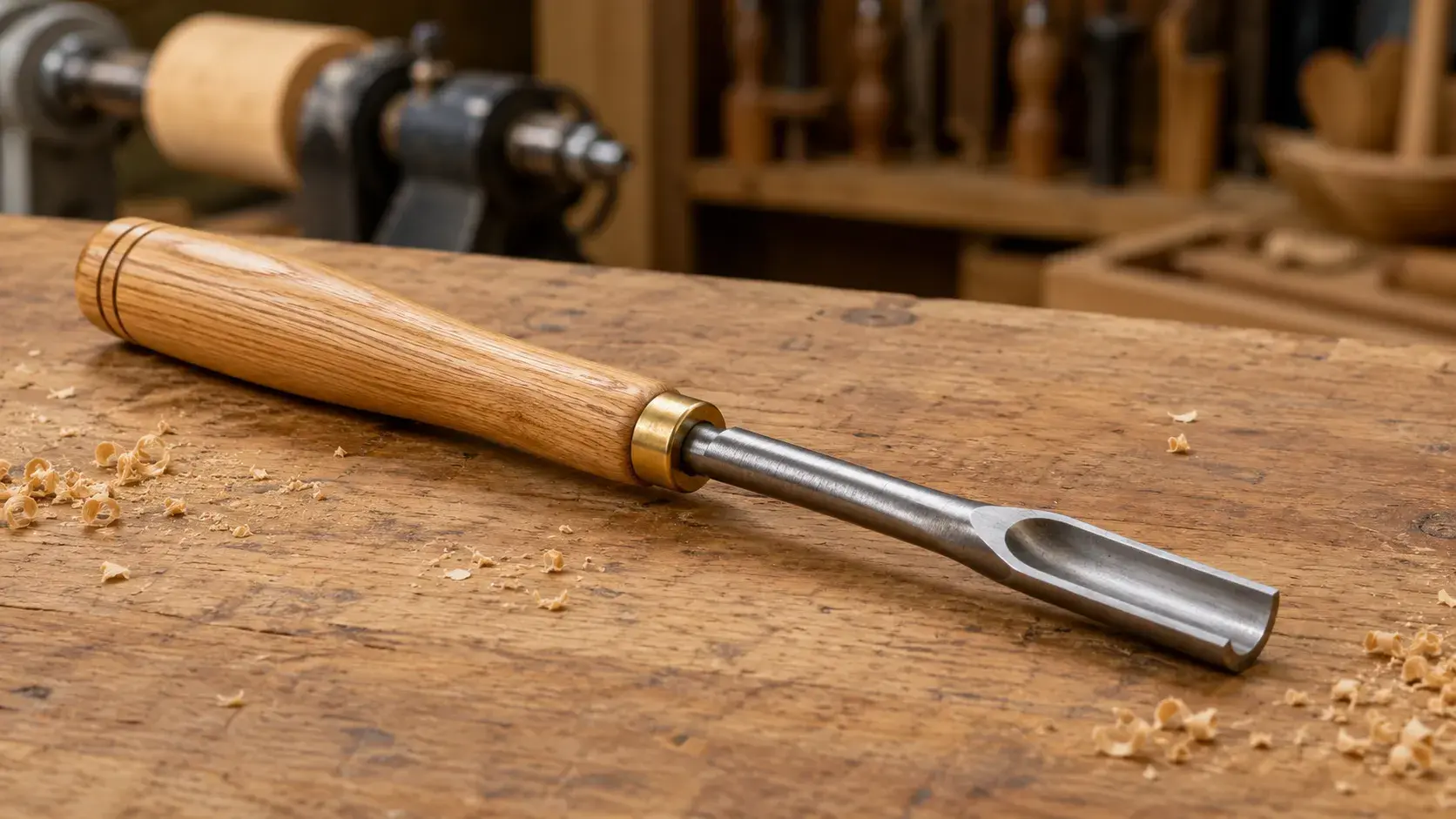
A spindle roughing gouge is usually the first tool used when turning square wood between centers.

Its main job is to quickly remove the corners of the blank and turn it into a round cylinder. This makes it useful for table legs, tool handles, chair spindles, and similar projects.

It is made for spindle work, not bowls. If you plan to turn bowls, use a bowl gouge instead.

2. Spindle Gouge
Spindle Gouge

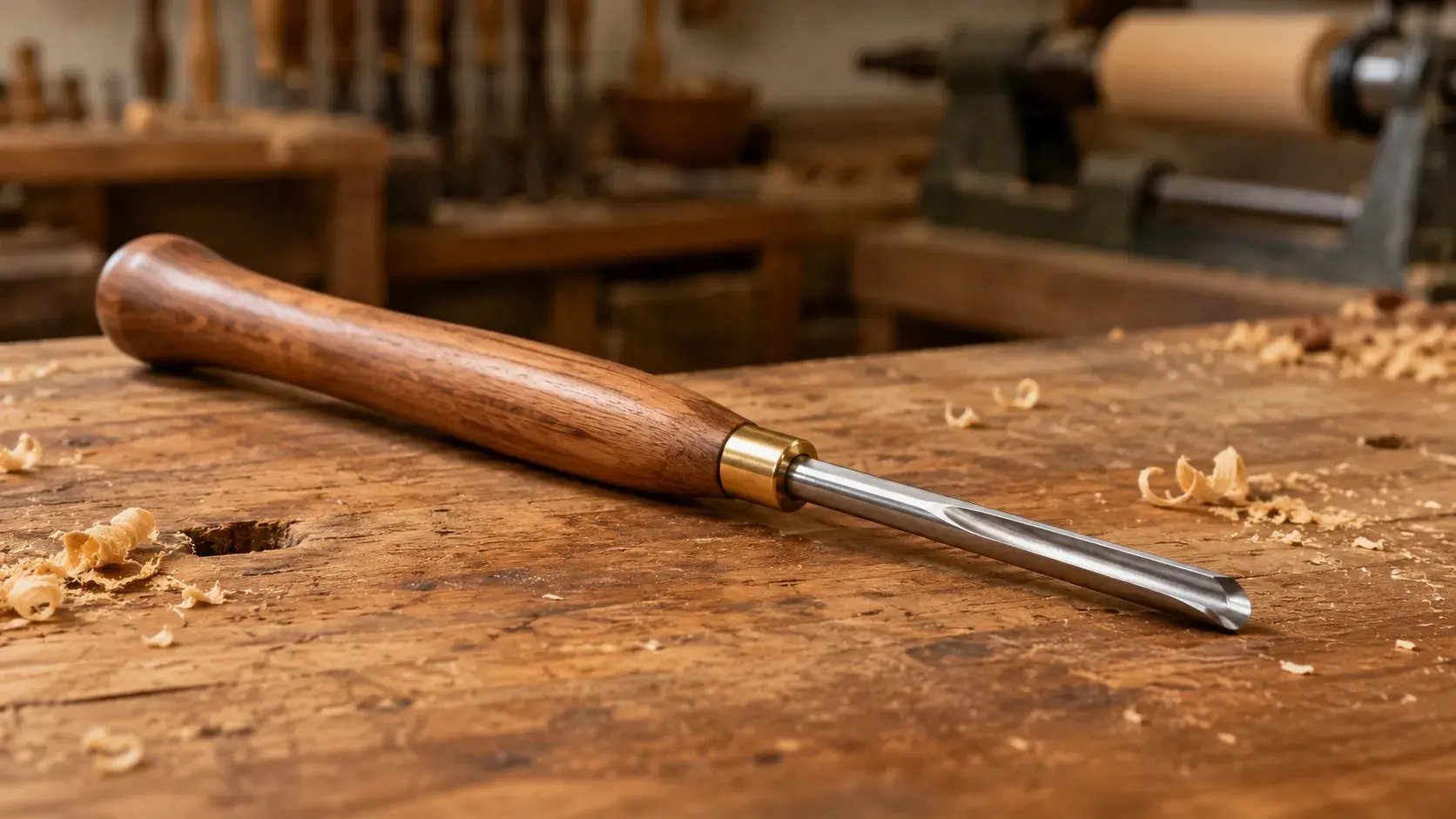
A spindle gouge is used after the basic round shape has already been created.

Because it is narrower and easier to control than a roughing gouge, it is good for making beads, coves, curves, and small decorative details.

For beginners, an easy way to remember it is: the roughing gouge creates the basic shape, while the spindle gouge adds the details.

3. Bowl Gouge
Bowl Gouge

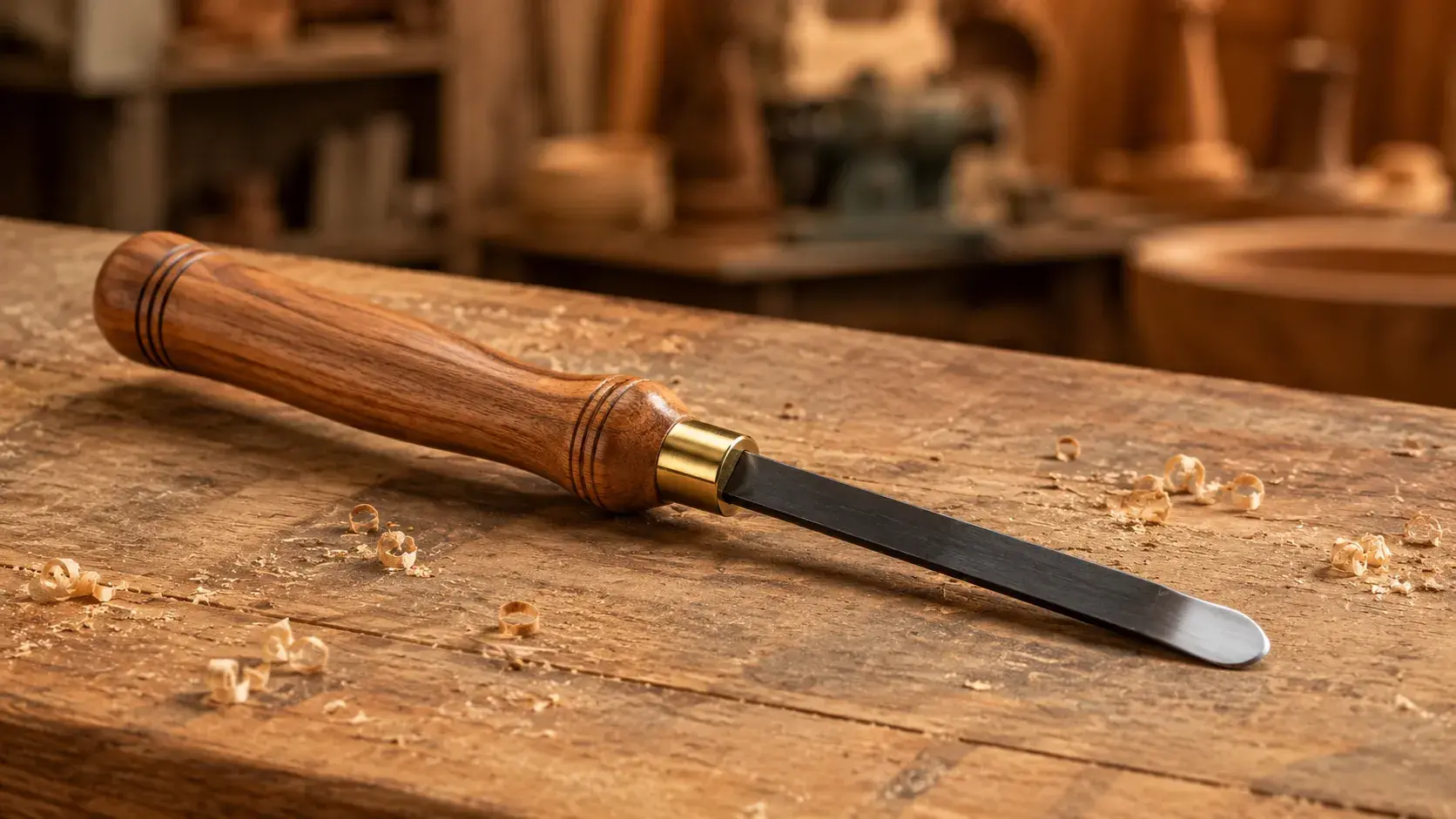
A bowl gouge is designed for turning bowls, platters, and other projects where the grain direction changes as the wood rotates.

It has a deeper flute and stronger body than a spindle gouge, so it can handle heavier cuts and reach into the inside of a bowl.

It can be used to shape the outside, hollow the inside, and refine the curved walls of a bowl.

4. Parting Tool
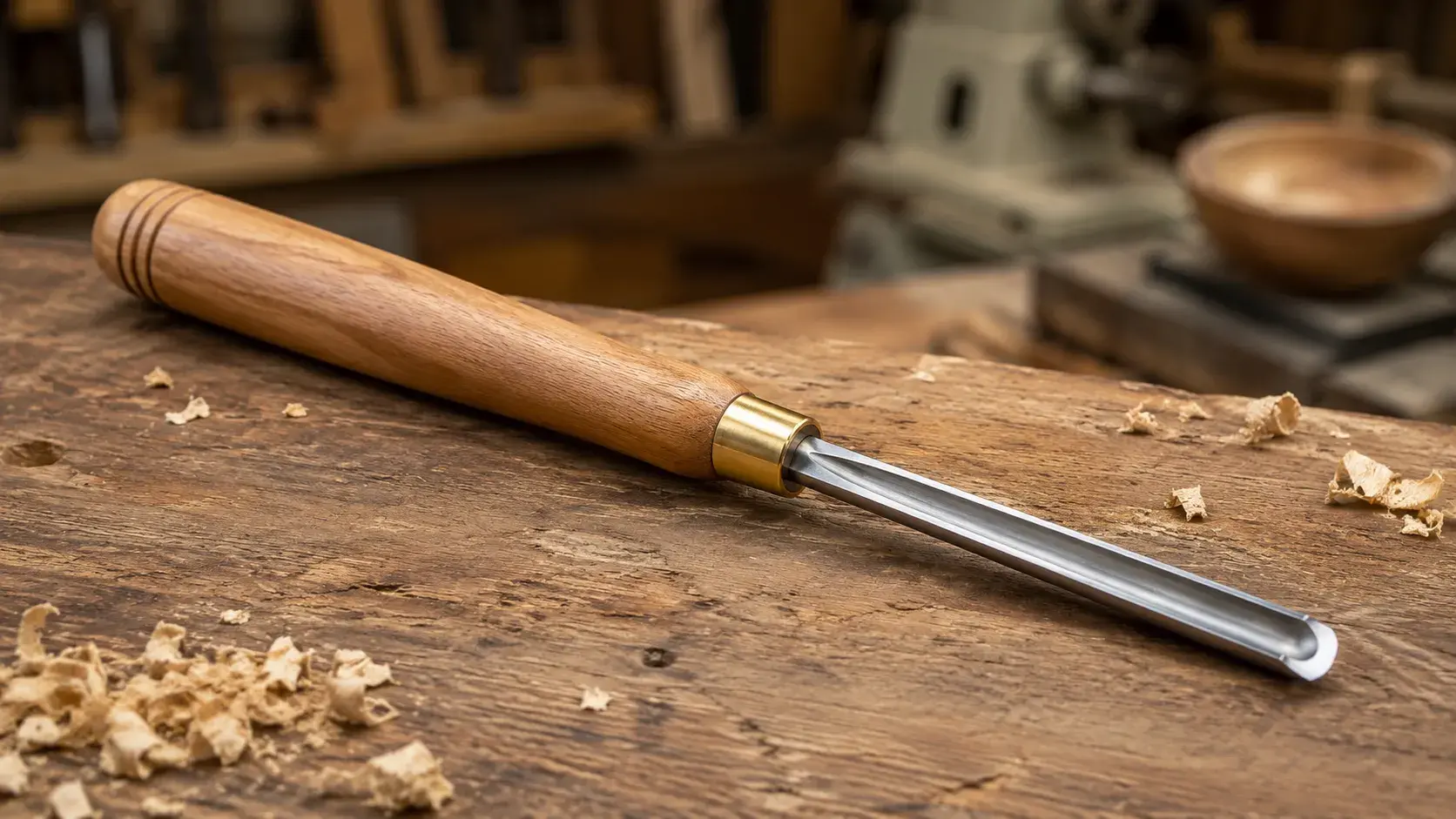
Parting Tool

A parting tool has a thin cutting edge and is mainly used for making narrow, straight cuts.

You can use it to cut grooves, check or reduce a diameter, form small tenons, or separate a finished part from the remaining wood.

It is a simple tool, but it is very useful whenever you need a clean cut in a specific position.

5. Skew Chisel
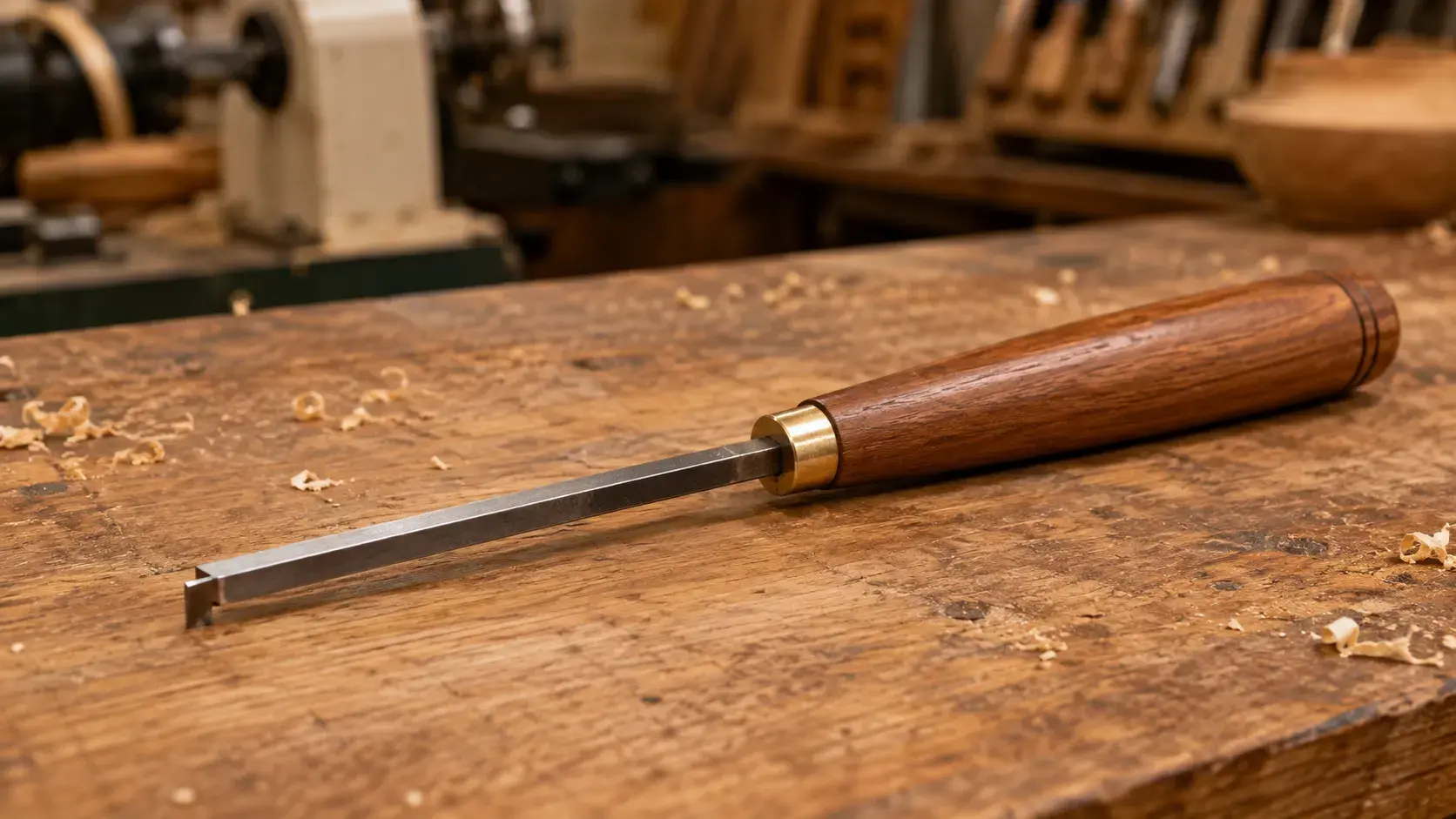
Skew Chisel

A skew chisel has a flat blade with an angled cutting edge. It is mainly used for smooth finishing cuts on spindle work.

It can also make V-grooves, beads, shoulders, and other fine details. When used correctly, it can leave a very clean surface that needs little sanding.

The main drawback is that it takes more practice to control, so beginners should start with light cuts.

6. Scraper
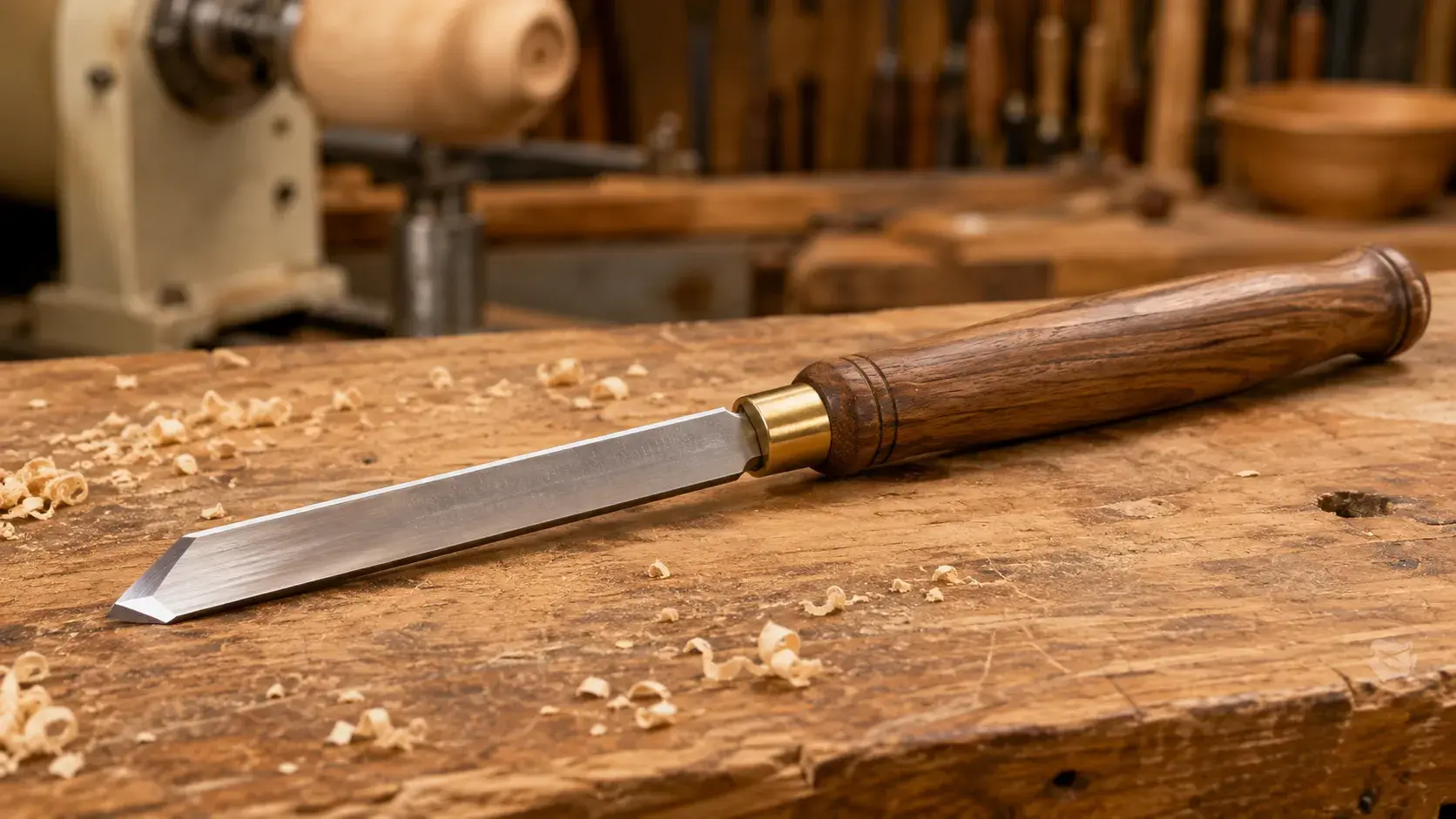
Scraper

A scraper is often used when you need to refine a shape or clean up an area that is difficult to cut cleanly with a gouge.

Common types include round-nose and square scrapers. They are useful for smoothing curves, shaping the inside of bowls, and removing small tool marks.

Scrapers are generally easy to understand, which makes them useful for beginners, although they usually do not leave as clean a surface as a well-used gouge or skew chisel.


Which Wood Turning Tools Does a Beginner Actually Need?

Beginners do not need to buy every woodturning tool at once. The best starting set depends on the type of work you want to do.

If you mainly plan to turn spindles, such as table legs, handles, pens, or decorative pieces, start with:

  • a spindle roughing gouge;
  • a spindle gouge;
  • a parting tool;
  • a skew chisel.

These four tools can handle most basic spindle work, from turning square stock round to creating curves, grooves, and a smooth finished surface.

If you also want to turn bowls or platters, add a bowl gouge. A scraper can also be useful for refining the inside of bowls and cleaning up difficult areas.

For a complete beginner, it is usually better to buy a few good tools and learn how to control and sharpen them properly rather than buying a large set that includes tools you may rarely use.

If you are not comfortable sharpening HSS tools yet, carbide turning tools can also be an easier starting point because their cutting inserts can be rotated or replaced instead of reground.

HSS vs Carbide Wood Turning Tools

Most woodturners choose between high-speed steel (HSS) tools and carbide turning tools.

HSS tools are the traditional choice. They can be sharpened many times and give you very good control over the cut, especially for detailed spindle work and bowl turning. The downside is that you need to learn how to sharpen them properly.

Carbide tools use small replaceable cutting inserts. When one edge becomes dull, you can rotate the insert or replace it. This makes them easier to maintain and often more beginner-friendly.

 
FeatureHSS ToolsCarbide Tools
SharpeningNeeds regular sharpeningInsert can be rotated or replaced
Learning CurveTakes more practiceEasier for beginners
Cutting ControlVery good once masteredSimple and predictable
Surface FinishOften cleanerMay need more sanding
MaintenanceRequires grinder or sharpening systemLow maintenance
Best ForTraditional woodturning and detailed workBeginners and easy everyday turning

So which one should you choose?

If you want to learn traditional woodturning techniques and get the best control over the cut, HSS tools are usually the better long-term choice.

If you want something easier to use with less sharpening, carbide tools are a good option for getting started.

Many woodturners eventually use both, depending on the project.

How to Choose Wood Lathe Turning Tools

Choosing the right woodturning tools is not just about buying the biggest set. A few well-chosen tools are usually more useful than a large collection you do not know how to use.

Start With the Type of Project

Think about what you plan to make most often.

For spindle work such as handles, legs, and decorative pieces, spindle gouges, roughing gouges, parting tools, and skew chisels are more important.

For bowls and platters, a bowl gouge should be one of your first tools.

Choose a Comfortable Tool Size

Larger tools can remove material faster, while smaller tools are easier to use for fine details.

Beginners usually do not need several sizes of the same tool. Start with a medium-size tool that can handle a wide range of projects, then add other sizes when you know what you actually need.

Decide Between HSS and Carbide

HSS is a good choice if you want to learn traditional turning techniques and do not mind sharpening your tools.

Carbide is easier to maintain and can be more convenient for beginners who want to start turning without learning sharpening right away.

Check the Handle and Balance

A turning tool should feel comfortable and stable in your hands.

A longer handle gives you more leverage during heavier cuts, while a shorter tool may feel easier to control for small or detailed work. If possible, hold the tool before buying it and check whether the weight and grip feel natural.

Think About Sharpening

This is easy to overlook.

If you choose HSS tools, you will also need a way to keep them sharp. A dull tool cuts poorly, creates more heat, and can make woodturning harder than it needs to be.

So when comparing tool prices, remember to include the cost of a grinder, sharpening jig, or other sharpening equipment if you do not already have one.

How Much Do Wood Lathe Turning Tools Cost?

Woodturning tool prices vary a lot depending on the steel, brand, size, handle quality, and whether you buy individual tools or a set.

For beginners, a basic HSS tool set may cost around $50 to $150. Individual HSS gouges and chisels often cost about $20 to $100 each, while higher-end professional tools can cost more. If you want to see a typical beginner setup, the WoodRiver Beginner’s 5-Piece HSS Turning Set includes several of the basic tools discussed in this guide.

Carbide turning tools are often sold individually or in small sets. Beginner carbide tools commonly fall in the $60 to $200 range depending on the handle, tool size, and insert quality. The Easy Wood Tools Easy Start Carbide Turning Tool is one example of the type of replaceable-insert tool available for beginners.

The tool itself is not the only cost to consider. HSS tools need regular sharpening, so you may also need a grinder and sharpening jig. Carbide tools require less sharpening equipment, but replacement inserts add an ongoing cost.

For most beginners, it makes more sense to buy a few useful tools first instead of a large premium set. Start with the tools that match the projects you actually want to make, then add more as your skills improve.

Wood Turning Tool Safety Tips

Woodturning tools are simple to use once you understand the basics, but poor setup or tool control can quickly cause a catch or damage the workpiece.

For safer turning, keep these points in mind:

  • Always wear eye protection or a face shield.
  • Keep the tool rest close to the workpiece.
  • Make sure the wood is mounted securely before starting the lathe.
  • Start at a lower speed when working with large or uneven blanks.
  • Keep HSS tools sharp instead of forcing a dull edge through the wood.
  • Use the correct tool for the job, especially when switching between spindle and bowl turning.
  • Move the tool rest only when the lathe is stopped.
  • Avoid loose clothing, jewelry, or anything that could catch on the rotating workpiece.

Beginners should also practice light cuts before trying to remove large amounts of material. Good control matters more than cutting quickly.

A sharp tool, stable setup, and correct cutting angle will usually make woodturning both safer and easier.

Frequently Asked Questions

No. A spindle roughing gouge is designed for spindle work, where the wood grain runs along the length of the workpiece.

For bowls and other faceplate work, use a bowl gouge. It has a stronger construction that is better suited to the cutting forces involved.

A bowl gouge has a deeper flute and a stronger round body. It is designed for shaping and hollowing bowls.

A spindle gouge is usually smaller and better for beads, coves, curves, and other detailed work on spindles.

A medium-size gouge is usually the most practical starting point because it can handle a wide range of projects.

For example, many beginners start with a roughly 3/8-inch spindle gouge and a 1/2-inch bowl gouge before adding smaller or larger tools later.

In many cases, yes. Carbide tools are easy to maintain because you do not need to reshape and sharpen the cutting edge.

They are a good choice if you want to start turning quickly, while HSS tools may be better if you want to learn more traditional cutting techniques.

There is no fixed schedule. Sharpen the tool when it starts requiring more pressure, produces rougher cuts, or no longer removes wood cleanly.

Many experienced woodturners touch up HSS tools frequently rather than waiting until they become completely dull.

It is not recommended.

Woodturning tools are designed with longer handles, stronger construction, and cutting profiles suited to rotating workpieces. Regular bench chisels are made for different types of woodworking and may be harder to control safely on a lathe.

A well-sharpened skew chisel can produce an extremely smooth finish on spindle work, sometimes requiring very little sanding.

For bowls, a properly sharpened bowl gouge with a light finishing cut can also leave a very clean surface.

Table of Contents
Discuss Your Complex Machining Requirements

Need Custom CNC Machined Parts?

From rapid prototypes to low-volume production, our engineering team can review your drawings and provide a manufacturing quote.

  • 24-Hour Quotation
  • DFM Engineering Support
  • No Minimum Order
  • ISO 9001 Certified
Request A Quote
Upload your drawing and get a quote within 24 hours.
