

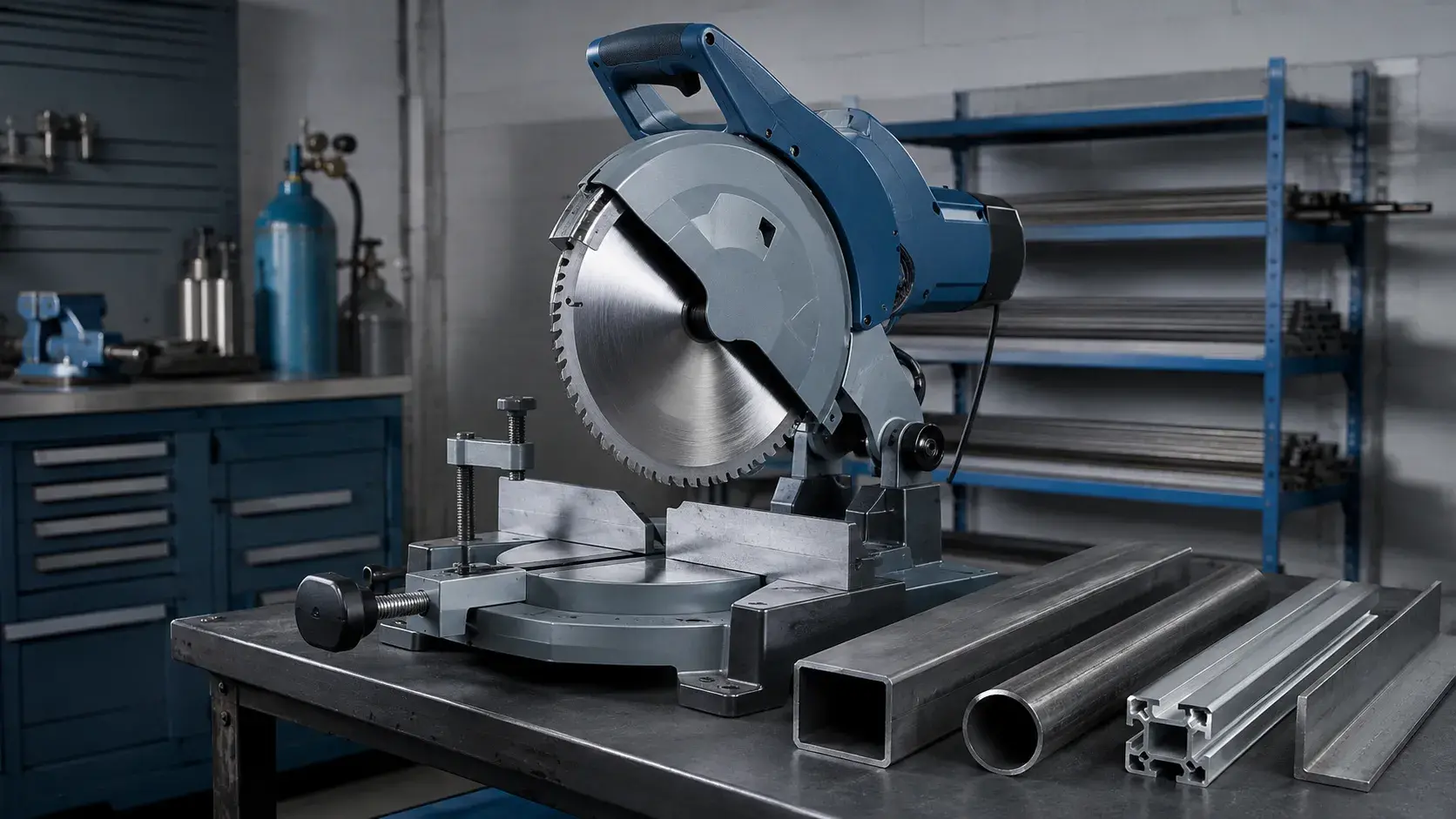
A 10 inch metal cutting blade for a miter saw can be used to cut certain metals, but the blade must match both the saw and the material. Before installing one, check the blade diameter, arbor size, maximum RPM, tooth design, and the type of metal it is rated to cut.
A standard woodworking blade should not be used to cut steel. For metal cutting, you normally need a carbide-tipped, cermet, non-ferrous, or abrasive blade specifically designed for the material.
Can You Put a Metal Cutting Blade on a Miter Saw?
Yes, some miter saws can be used with a metal cutting blade, but not all miter saws are suitable for cutting every type of metal.
The first thing to consider is whether the saw’s manufacturer approves the use of a metal cutting blade.Even if a blade fits a 10-inch saw, it may not be safe to use if its speed rating, arbor size, or cutting design does not match the machine’s specifications.
Before using a metal cutting blade, you should check the following:
- Blade diameter;
- Arbor size;
- Maximum blade RPM;
- Saw operating RPM;
- Blade guard clearance;
- The type of material the blade is designed for.
For occasional cuts in aluminum or thin mild steel, a compatible miter saw along with the right blade may perform adequately.
However, for regular steel cutting or heavy fabrication work, a dedicated metal-cutting saw is generally a more suitable and effective choice.
What 10-Inch Metal Cutting Blade Should You Use?
There is no single blade that is best for every metal.
The right choice mainly depends on whether you are cutting steel, aluminum, stainless steel, tubing, sheet, or solid stock.
| Blade Type | Best For | Cut Quality | Sparks |
|---|---|---|---|
| Carbide-tipped blade | Mild steel and some metal profiles | Clean | Low |
| Cermet blade | Steel and stainless applications | Very clean | Low |
| Non-ferrous carbide blade | Aluminum, brass, copper | Very clean | Low |
| Abrasive blade | General steel cutting | Rougher | High |
A carbide metal cutting blade is often preferred when clean edges and lower burr levels are important.
An abrasive blade is usually less expensive, but it produces more sparks, heat, dust, and edge cleanup.
Choosing a Blade for Different Metals
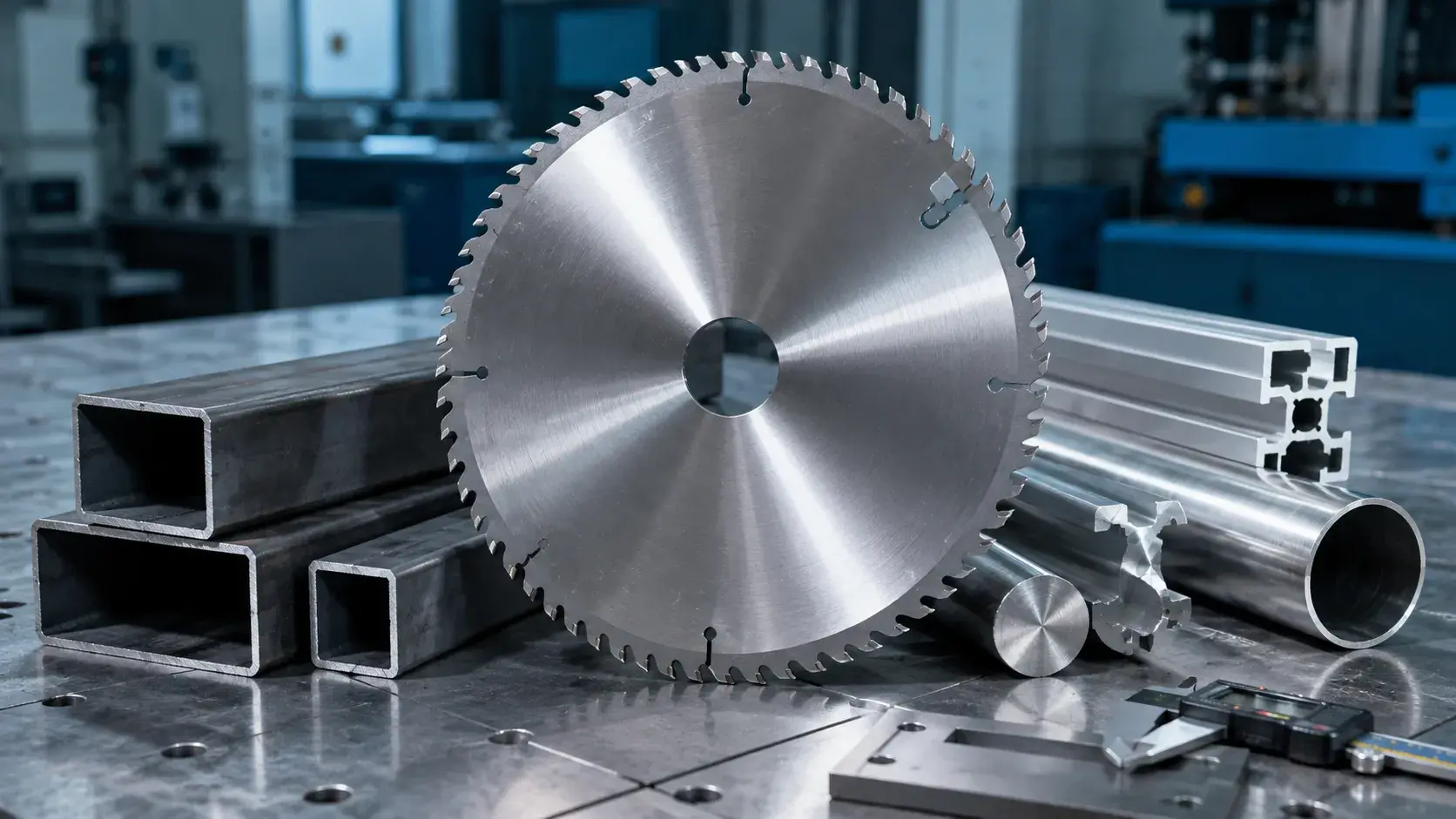
Cutting Mild Steel
For mild steel, use a blade specifically marked for ferrous metal or steel cutting.
Typical applications include:
- square tubing;
- round tubing;
- angle iron;
- thin-wall steel profiles;
- light structural sections.
Do not assume that every blade labeled “metal cutting” can cut steel. Many blades are designed only for aluminum and other non-ferrous metals.
The material thickness also matters. Thin-wall tubing and thick solid bar place very different loads on the teeth.
Cutting Aluminum
A 10 inch miter saw blade for aluminum normally uses a carbide tooth design intended for non-ferrous materials.
These blades often have more teeth than general steel-cutting blades because aluminum benefits from a smoother, more controlled cut.
They are commonly used for:
- aluminum extrusion;
- profiles;
- angle;
- tubing;
- plate;
- framing components.
When cutting aluminum, secure the workpiece carefully. Thin profiles can move or catch if they are not properly supported.
Cutting Stainless Steel
Stainless steel is more difficult to cut than mild steel.
It generates heat quickly and can wear unsuitable blades fast. If you need to cut stainless steel, choose a blade that specifically lists stainless steel among its approved materials.
Do not rely only on blade diameter or tooth count.
The tooth material, blade geometry, feed rate, and saw speed all affect cutting performance.
10-Inch Metal Cutting Blade Specifications to Check
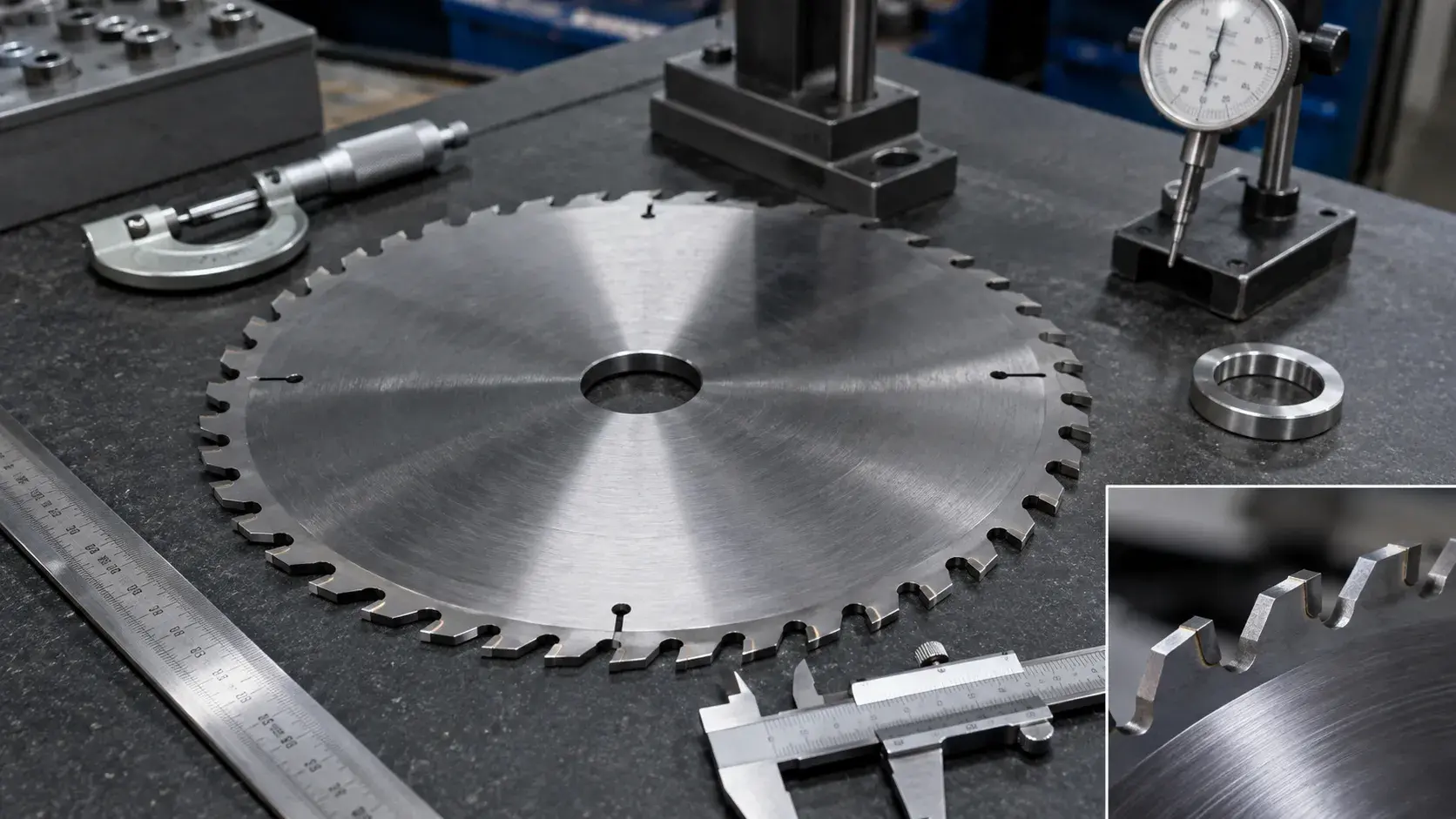
Before buying or installing a blade, compare its specifications with your saw.
| Specification | What to Check |
|---|---|
| Blade diameter | Must match the saw, usually 10 in / 254 mm |
| Arbor size | Must match the saw spindle |
| Maximum RPM | Must be equal to or higher than saw RPM |
| Tooth count | Depends on material and wall thickness |
| Tooth material | Carbide, cermet, or abrasive |
| Kerf | Affects cutting force and material loss |
| Material rating | Steel, aluminum, stainless, or non-ferrous metals |
| Blade thickness | Must be compatible with the saw and cut |
Blade Diameter
If your saw is designed for a 10-inch blade, use the blade diameter specified by the saw manufacturer.
Do not install a larger blade simply because it fits the spindle. It may interfere with the guard or operate outside the machine’s intended design.
Arbor Size
The arbor size is the center hole of the blade.
The blade arbor must match the saw spindle correctly. Many 10-inch blades use a common arbor size, but you should always verify your exact saw model instead of assuming.
Maximum RPM
This is one of the most important specifications.
The blade’s rated maximum RPM must never be lower than the operating speed of the saw.
For example, if the saw runs at a higher RPM than the blade allows, the blade may be used outside its safe operating range.
Always check both ratings before installation.
How Many Teeth Should a 10-Inch Metal Cutting Blade Have?
There is no universal tooth count for metal cutting.
The correct metal cutting blade tooth count depends on:
- material type;
- wall thickness;
- solid or hollow stock;
- blade geometry;
- tooth design;
- required surface finish.
In general, thinner materials need more teeth engaged in the cut. Thicker materials may require a different tooth pitch to prevent excessive heat and chip packing.
This is why a blade that works well on thin aluminum extrusion may not be suitable for thick steel bar.
Instead of selecting a blade only by tooth count, check the manufacturer’s recommended material thickness range.
Can a 10-Inch Miter Saw Cut Steel?
A 10-inch miter saw may be able to cut steel if:
- the saw manufacturer allows it;
- the correct steel-cutting blade is installed;
- the blade RPM is compatible;
- the workpiece is securely clamped;
- the material is within the blade’s cutting capacity.
It can be useful for cutting thin mild-steel tubing, angle, and profiles.
However, a normal woodworking miter saw is not automatically a replacement for a dedicated cold saw, metal chop saw, or bandsaw.
For repeated cutting, thick steel, hardened materials, or production work, a machine designed specifically for metal is usually more suitable.
Metal Cutting Blade vs Wood Cutting Blade
A wood blade and a metal-cutting blade may look similar, but their tooth geometry and operating requirements are different.
Wood blades are designed to remove relatively soft material quickly.
Metal-cutting blades must deal with much higher cutting forces, heat, and tooth loading.
Using the wrong blade can result in:
- damaged teeth;
- excessive vibration;
- rough cuts;
- overheating;
- workpiece movement;
- possible blade failure.
For this reason, never use a standard wood blade simply because it fits the saw.
Carbide Blade vs Abrasive Blade for Metal
Both can cut metal, but they behave differently.
Carbide Metal Cutting Blade
A carbide blade usually provides:
- cleaner cuts;
- fewer sparks;
- less heat;
- less burr;
- better dimensional control.
It is often better for precision cutting and repeat work.
Abrasive Blade
An abrasive wheel is commonly used for general steel cutting.
It is relatively inexpensive, but it usually creates:
- more sparks;
- more heat;
- more dust;
- wider kerf;
- rougher edges.
Abrasive wheels also wear down as they cut, so the effective diameter decreases over time.
How to Get Cleaner and More Accurate Metal Cuts
Blade selection is only part of the process.
For better results, the workpiece must also be held and cut correctly.
Keep the material firmly clamped and support long sections so they do not move during cutting.
Do not force the blade into the material. Excessive feed pressure increases heat and can damage the teeth.
You should also inspect the blade before use. Missing teeth, cracks, heavy wear, or visible runout are signs that the blade should not be used.
For parts that require precise dimensions, the cut may still need secondary machining, deburring, milling, or surface finishing.
Miter Saw vs Chop Saw for Cutting Metal
A miter saw is mainly designed for accurate angled cuts and is commonly associated with woodworking and aluminum fabrication.
A metal chop saw is designed specifically for cutting metal and generally handles tougher cutting conditions better.
For occasional aluminum or light steel cutting, a compatible miter saw can be practical.
For frequent steel cutting, a dedicated metal-cutting machine is normally the better option because it is designed around the cutting speed, clamping, guarding, and chip conditions of metalworking.
When Saw Cutting Is Not Accurate Enough
Saw cutting is useful for quickly separating raw material, but it is not always suitable for finished precision dimensions.
Parts that require tight tolerances, accurate hole locations, complex profiles, flatness, or fine surface finish usually need additional machining.
At YUANYI Precision Manufacturing, CNC milling and turning are used to bring cut material to final dimensions when tighter tolerances and more complex features are required.
Sawing is often only the first material preparation step.
Need Precision Metal Parts After Cutting?
YUANYI provides custom CNC machining for metal parts that require tighter tolerances, complex features, and reliable surface quality.
Upload your drawing and get a fast engineering review and quote.
Conclusion
A 10 inch metal cutting blade for a miter saw can be useful for aluminum, mild steel, tubing, profiles, and other materials when the correct blade and compatible saw are used.
The most important factors are not simply blade diameter or tooth count. You should also check the arbor size, RPM rating, tooth material, blade design, workpiece thickness, and the specific metal being cut.
For occasional cutting, a properly equipped miter saw may be enough. For frequent or heavy steel cutting, a dedicated metal-cutting saw is usually the better choice.
Frequently Asked Questions
No. The blade diameter may match, but you still need to confirm arbor size, maximum RPM, guard clearance, and whether the saw manufacturer allows metal cutting.
Yes. Many miter saws are used for aluminum profiles when fitted with a suitable non-ferrous carbide blade.
No. A standard woodworking blade is not designed for the heat, cutting force, and tooth loading involved in steel cutting.
For clean cuts, lower heat, fewer sparks, and better edge quality, carbide blades are often preferred. Abrasive blades remain useful for general-purpose steel cutting.
Only when the saw and blade are both suitable for stainless steel. Stainless is harder to cut and generates more heat than mild steel, so a blade specifically rated for stainless steel is recommended.
The blade can operate beyond its rated speed, which is unsafe. The blade’s maximum RPM should always meet or exceed the saw’s operating RPM.
No. Tooth count must match the material and thickness. Too many or too few teeth can increase heat, vibration, or poor chip removal.



