
What Is CNC Machining? How It Works, Types, and Applications

CNC machining is a subtractive manufacturing process in which a computer precisely controls machine tools to cut away excess material from a solid block, ultimately producing a finished part.

You can think of it as a highly automated, programmable carving robot. Instead of using hand chisels and hammers, it employs high-speed, sharp cutting tools to carve virtually any shape you can design into metal or plastic, following digital instructions.

This process is a cornerstone of modern manufacturing. When you need parts that are more precise and stronger than those produced by 3D printing, yet more complex than what can be achieved through manual machining, CNC machining is the solution.

How Does CNC Machining Work?

CNC Machining Process

CNC machining transforms digital designs into physical parts through a series of precisely controlled manufacturing steps.

The process begins with a CAD (Computer-Aided Design) model, which defines the part’s geometry and dimensions. This model is then imported into CAM (Computer-Aided Manufacturing) software; At this stage, the system generates machine instructions by programming the machining strategy, cutting tools, spindle speed, and toolpaths.

Next, the operator sets up the CNC machine: securing the raw material, loading the required cutting tools, and establishing the workpiece coordinate system. Modern CNC machines often use touch probes to automatically position the workpiece and tools with extremely high precision.

Once setup is complete, the machine begins executing the machining program. Guided by G-code, the cutting tool removes material layer by layer, while coolant controls heat and clears away chips. Depending on the part’s complexity, the entire machining process may involve operations such as milling, turning, drilling, or multi-axis machining.

Whether it is a simple aluminum bracket or a complex aerospace component, CNC machining enables high-precision, highly repeatable, and highly automated production with minimal human intervention.


Common Types of CNC Machining

“CNC machining” is a general term that encompasses many different automated cutting processes. Although there are dozens of specific subtypes, most of the work done in a machine shop falls into the following core categories. 

Each type uses unique cutting tools and motion patterns, making it suitable for machining different features. Choosing the right machining type for your project is the first and most critical decision.
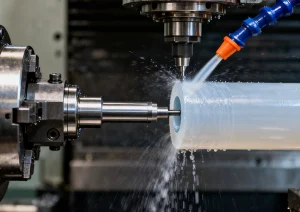
CNC Milling: 

CNC Milling

This is the most widely used and versatile method. Typically, the workpiece remains stationary while a high-speed rotating tool moves across multiple axes to perform the cutting. We use end mills to mill contours, cut grooves, and create pockets; face mills to produce perfectly flat surfaces; and ball-nose cutters to machine complex 3D surfaces. In actual production, milling is almost always the first step. For example, when manufacturing parts for a robotic arm, the first step is to use a face mill to machine an absolutely flat and perpendicular reference surface on the blank before proceeding with subsequent operations.
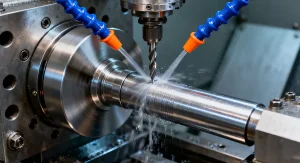
CNC Turning: 

CNC-Turning-Service-big

This process is performed on a lathe. The workpiece rotates at high speed while the tool remains stationary, moving along the workpiece to remove material. Turning is the most efficient method for machining any cylindrical parts, such as shafts, pins, and bushings.One of its major advantages is concentricity. Since all turned features are completed in a single setup around the same rotational axis, we can ensure that bearing seats and threads on a single shaft are absolutely concentric. This is much more difficult to achieve on a milling machine.

CNC Drilling: 

Although milling machines can also drill holes, dedicated CNC drilling emphasizes speed and precision—the hole position must be accurate, and the diameter must be precise. The key here is the pilot drilling process. An experienced programmer will always start with a pilot drill to create a small pilot hole before allowing the long drill bit to proceed. This small pilot hole prevents the subsequent, longer and more flexible twist drill from “drifting off course” due to slippage upon initial contact with the metal. 

For a press-fit hole intended for a locating pin, even a 0.1-millimeter deviation in the hole position could render the entire workpiece scrap, so this pilot drilling step is absolutely essential.

CNC Grinding: 

This is a finishing process used for high-precision surfaces and extremely tight tolerances. Instead of sharp cutting tools, it employs high-speed rotating grinding wheels. The purpose of grinding is not to remove material in large chunks, but to achieve a precise final dimension and a mirror-like smooth surface. 

We often send parts that have already been machined to a tolerance of ±0.13 mm to the grinding machine to achieve a final tolerance of ±0.005 mm and a mirror-like finish. This process is slow and more expensive, but for bearing seats or sealing surfaces, it is the only way to ensure precision and surface integrity.

CNC Electrical Discharge Machining (EDM): 

Electrical Discharge Machining (EDM) uses controlled electrical discharges to erode material. It can only machine conductive materials, which are essentially metals. There are two main types: die-sinking and wire cutting.

 It is best suited for jobs that rotating cutting tools simply cannot handle: deep, narrow cavities and sharp internal corners. Imagine a plastic gear mold where the root of each tooth has a sharp, right-angled corner. No matter how the milling cutter is positioned, it will always leave a rounded corner. 

We use a graphite electrode on a die-sinking EDM machine to “knock out” this sharp corner. Wire EDM is equally important. we guide a thin copper wire—similar to a band saw—along the workpiece to cut complex contours with absolutely no draft angle and an extremely high surface finish.
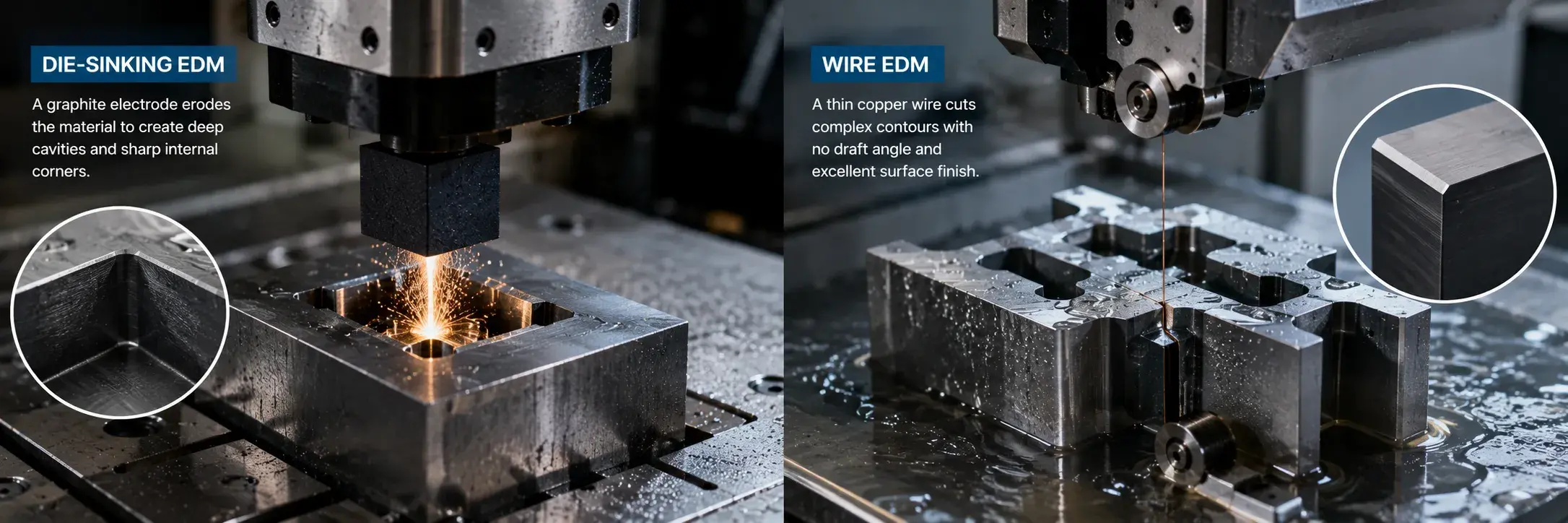
CNC Electrical Discharge Machining (EDM)

Common Materials for CNC Machining

The materials you choose determine almost everything about the machining process: cutting speed, tool geometry, and the type of coolant used. Ultimately, they also determine the cost and performance of the part. Machining stainless steel and machining aluminum are two completely different matters. Below are the materials we commonly machine, along with some practical insights I’ve gained from cutting them on the shop floor.

Material CategoryCommon GradesKey CharacteristicsMachining ConsiderationsTypical Applications
Aluminum Alloys6061, 7075, 5083Lightweight, corrosion-resistant, and easy to machine. 7075 offers higher strength than 6061.6061 is often the most cost-effective choice. 7075 provides higher strength but increases material cost.Housings, brackets, structural parts, aerospace components
Stainless Steel304, 316, 17-4PHExcellent corrosion resistance. 17-4PH can be heat treated for higher strength.Prone to work hardening. Sharp tools, proper cutting parameters, and coolant control are important.Medical parts, industrial equipment, corrosion-resistant components
Carbon & Alloy Steel1018, 1045, A36, 4140Strong, durable, and widely available. 4140 offers good strength and toughness.Chip control is important to prevent long chips from wrapping around the tool.Machinery parts, shafts, fixtures, structural components
Engineering PlasticsNylon, Delrin (POM), PTFELightweight, low-friction, insulating, and corrosion-resistant.Heat buildup can cause deformation. Sharp tools and proper clamping are essential.Wear parts, insulating components, low-friction assemblies
Titanium AlloysTi-6Al-4V / Grade 5High strength-to-weight ratio and excellent corrosion resistance.Low thermal conductivity concentrates heat at the cutting edge, requiring lower cutting speeds and rigid setups.Aerospace components, medical implants, high-performance parts

How precise is CNC machining?

The precision of CNC machining essentially depends on the level of control you have over the entire process. It measures the total deviation between the 3D model and the final physical part.

In standard production, features such as bolt hole positions and outer contours can consistently be achieved with a tolerance of ±0.13 without incurring additional costs.

For precision-fit features such as bearing bores and locating pin holes, tolerances of ±0.005 mm or even tighter can be achieved under controlled processes. However, this level of precision relies on far more than just a high-quality machine tool. Temperature fluctuations are the primary factor: for a 4-inch aluminum part, a 1°F change in ambient temperature results in a dimensional change of approximately 0.013 mm. Our approach is as follows: We ensure the part and machine are fully thermally stabilized before finishing, and maintain constant temperature control throughout the workshop. Secondly, regarding tool wear, when machining precision holes, we use a probe to measure and fine-tune tool offsets in real time, continuously tracking wear.

Additionally, insufficient machine rigidity can cause cutting vibrations, while improper fixture design can induce elastic deformation in the part, causing feature positions to shift once the fixture is released. This stress-induced deformation poses a significant challenge, particularly with thin-walled parts.

Advantages and Limitations of CNC Machining

Knowing when to use CNC machining is just as important as knowing how to do it. It is a remarkable process with significant advantages, but it also has inherent limitations. An objective assessment of both can save you a considerable amount of time and money.

Advantages:

The primary advantage is precision and repeatability. Once a program has been verified, we can produce tens of thousands of identical parts. This repeatability is the foundation of modern quality control. Second, it can produce parts with highly complex geometries. A five-axis machine can produce a monolithic aerospace structural component that would otherwise require dozens of parts assembled via sheet metal and riveting. Third, you achieve superior material properties. We start with solid blocks of aluminum or steel that have been forged or rolled—these offer better strength and internal grain structure than cast materials. The CNC machining process does not degrade these properties. rather, it “unlocks” the material’s inherent strength. Finally, it produces prototypes very quickly. No physical molds are required. Send us a 3D model, we’ll write the program, and within a few days, you’ll have a real, functional metal prototype in your hands—no need to wait months.

Limitations:

The most obvious limitation is part geometry. A closed internal cavity with sharp corners simply cannot be machined using a circular rotary tool. Tool geometry must be considered during the design process. Another issue is that costs rise with complexity. Although there are no tooling costs, machining a complex 3D surface can take a very long time, so for high-volume production, it can be significantly more expensive than casting. The nature of subtractive manufacturing also means that material waste is inherent. Starting from a solid block of material, you may need to remove 80% of it to reveal the final part shape. This is not a major issue for inexpensive plastics or aluminum, but for expensive metals like chromium-nickel-iron alloys, the “swarf” itself represents a significant cost. Finally, certain thin and deep features are extremely difficult to machine. A long, thin wall will vibrate and wobble during machining, making it very difficult to achieve tight tolerances.

Applications of CNC Machining

It’s hard to find an industry that doesn’t use CNC machining at all, but the reasons behind its use vary from industry to industry. Rarely is it simply “to make a part”; more often, it’s to solve a specific engineering challenge.

In the aerospace industry

The driving forces are lightweight, high-strength materials and the pursuit of zero-defect parts. We machine structural frames and engine components from solid blocks of titanium and aluminum alloy forgings—not because it’s cheaper, but because the internal metal flow lines in the forging follow the part’s contours, providing predictable and verifiable strength. In contrast, a casting or welded part has far greater variability in its internal structure. Every aerospace part must have complete material traceability, traceable all the way back to the specific furnace batch number from the steel mill, and must be accompanied by a First Article Inspection Report (FAIR). We assign a unique number to every dimension on the drawing and report its actual measured value one by one.

aerospace industry

In the medical industry

The driving factors are biocompatibility, resistance to repeated sterilization, and patient-specific geometries. We machine surgical instruments and orthopedic implants—such as hip stems—from cobalt-chromium-molybdenum or titanium alloys. The surface finish of the machined parts is critical. a smooth surface minimizes bacterial adhesion and reduces the risk of fatigue cracks caused by surface scratches. We also use CNC machining to produce custom polymer osteotomy guides based on patients’ CT scan data, enabling doctors to plan and execute a perfect knee replacement surgery with precision.
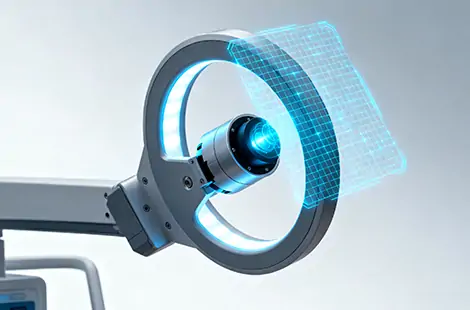
In the automotive industry

Two distinct models emerge. In prototype vehicle development and high-performance racing, CNC machining is indispensable. For an F1 team, a new suspension wishbone can be machined today, tested, and a revised version ready for further testing the day after tomorrow. In mass production, CNC is used to create rigid molds—such as injection molds for dashboards and dies for stamping body panels. As for the engine itself, components with extremely tight tolerances that cannot be produced by other processes—such as cylinder heads, cylinder blocks, and crankshafts—are all manufactured using CNC.
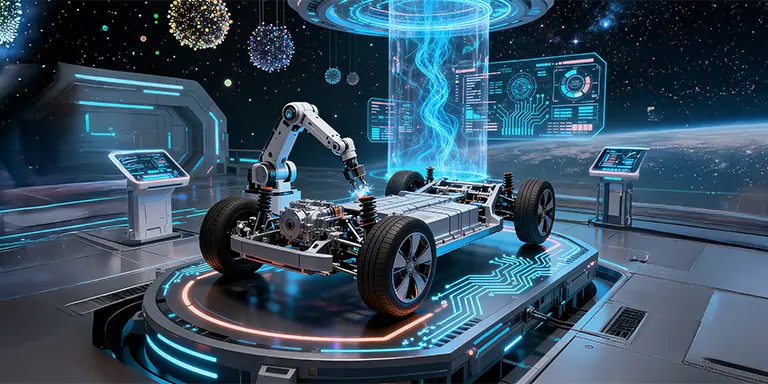
automotive industry

In general industrial and consumer electronics applications

The focus is often on functional integration. A robotic arm is the best example. We machine structural joints from aluminum alloy to provide a sturdy, precise framework, with all necessary bearing holes, motor mounting surfaces, and cable channels machined directly into this single part. This consolidates the functions of several components into one. In electronics, CNC is used to manufacture items like one-piece aluminum alloy enclosures, which serve multiple purposes: structural framework, heat sink, and aesthetic housing—all integrated into a single component.
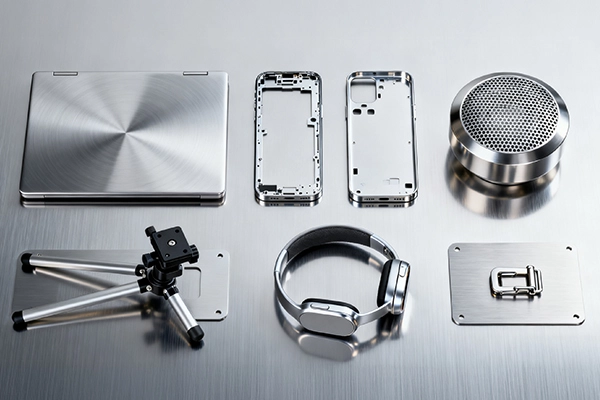
Consumer Electronics Full-Portfolio

What Factors Affect CNC Machining Costs?

Cost is a design parameter in itself; the total cost of a part consists of material, machining time, and overhead costs.

Material Costs: 

The price difference between 6061 aluminum and Grade 5 titanium alloy is an order of magnitude, but it’s not just about the purchase price. Machinability directly affects tool wear—a $50 stainless steel part might consume $30 worth of tools, while an equivalent aluminum part requires only $5.

Complexity and Machining Time:

This is the largest cost driver. A 3-axis part requiring two setups is far cheaper than one requiring five setups or a 5-axis machine. A 1-inch-deep cavity with a 0.030-inch internal corner radius can only be slowly cleared using a small-diameter, fine-tooth end mill; if the radius is increased to 0.125 inches, a larger, heavier-duty tool can be used, increasing speed by a factor of five. Machining time directly equates to machine tool labor costs.

Tolerances:

Standard tolerances (±0.13 mm) can be achieved with standard toolpaths. Precision tolerances (±0.013 mm), however, require reduced speeds, semi-finishing, measurement compensation, finishing, and rigorous inspection, significantly increasing the time required. Precision tolerances should only be specified for fit features that are functionally essential.

Quantity:

One-time NRE costs—such as programming, fixture design, and first-article debugging—must be amortized. When producing a single part, all costs are borne by that part. when producing 1,000 parts, the cost per unit becomes nearly negligible. This is why the unit price drops sharply from prototyping to mass production.

Surface Treatment:

Secondary processes such as sandblasting and anodizing are both costly and time-consuming. Coatings like hard anodizing add thickness to the surface. If holes have tight tolerances, they must be machined slightly smaller during processing to allow for the coating thickness, which requires precise upfront planning.

Common Challenges and Solutions in CNC Machining

Deformation of Thin-Walled Parts

For parts with a wall thickness of 0.5 mm, the cutting forces can directly push the thin walls apart, causing vibration, deformation, or even tearing. Solution: First, use “balanced material removal”—milling down in layers on both sides simultaneously to ensure the thin wall is always supported by material behind it, maintaining stress balance. Second, employ High-Speed Machining (HSM) toolpaths with high spindle speeds and shallow cuts to reduce cutting forces to nearly zero.

Deep Cavity Machining

In cavities deeper than 10 times the tool diameter, slender tools act like tuning forks and can snap at the slightest vibration. A phased approach: First, use a solid carbide drill to create a pilot hole, then use a series of progressively longer milling cutters with clearance necks to clear material layer by layer. The length-to-diameter ratio of each cutter determines its safe feed rate.

Machining Titanium Alloys and Superalloys

These materials have extremely poor thermal conductivity, causing heat to become trapped at the tool tip. It is essential to strictly adhere to the tool manufacturer’s recommended linear speed—exceeding the speed by 20% when machining aluminum alloys merely accelerates wear, but exceeding it by 20% when machining chromium-nickel-iron alloys renders the tool instantly unusable. We use high-pressure coolant at 1,000 psi, which flows through the tool’s interior directly to the cutting zone to flush away chips, preventing secondary cutting from “welding” the edge. At the same time, we employ smooth, cycloidal toolpaths to eliminate the impact on the cutting edge caused by abrupt turns.

Multi-Surface Machining and Clamping

Multiple setups inevitably result in loss of accuracy. The optimal solution is a five-axis machine, which machines all five surfaces in a single setup, maintaining near-perfect positional accuracy. When a five-axis machine is not available, use precision fixtures in conjunction with the reference surface from the first operation for positioning. In the second operation, use a probe to scan the part and compensate for minor misalignments—never assume the fixture is absolutely perfect.

CNC Machining vs. Other Manufacturing Processes

CNC Machining vs. 3D Printing

3D printing enables complex internal structures that CNC cannot achieve, while CNC delivers precision and material properties that 3D printing cannot match. You cannot print a part with the same strength as a piece of 7075-T6 aluminum, and the material properties of CNC parts are precisely verifiable. A hybrid approach is common: 3D printing is used for near-net-shape roughing, followed by CNC finishing of critical features.

CNC Machining vs. Injection Molding

Injection-molded parts have an extremely low unit cost, but mold costs ranging from $10,000 to $100,000 must be amortized. CNC startup costs are virtually zero. The break-even point is typically between 50 and 1,000 units. For new products, start with CNC prototyping to validate the market, then invest in molds to reduce costs and scale up production once the design is stable.

CNC Machining vs. Sheet Metal Fabrication

Flat sheets with bends and punch holes are sheet metal parts, while block-shaped brackets with deep, precision bearing seats are machined parts. Machined parts are heavier, stiffer, and more precise, made from solid blocks of material. sheet metal parts are lightweight enclosures that are cheaper in high volumes but lack the structural rigidity of machined parts.

Our CNC Machining Capabilities

YuanYi workshop was designed to address the machining challenges described above. Our core equipment includes multi-axis machining centers and turn-mill centers, enabling production capacity ranging from single-unit prototypes to medium-volume runs of thousands of parts.

Our team of engineers conducts Design for Manufacturability (DFM) analysis prior to machining, proactively identifying difficult-to-machine features such as thin walls, deep cavities, and unnecessarily tight tolerances, and providing optimization recommendations to help customers reduce machining costs and improve production efficiency.

Quality control is integrated throughout the entire production process, including in-machine inspection, Coordinate Measuring Machine (CMM) final inspection, and the provision of material certificates, dimensional reports, and First Article Inspection Reports (FAIR) upon request.
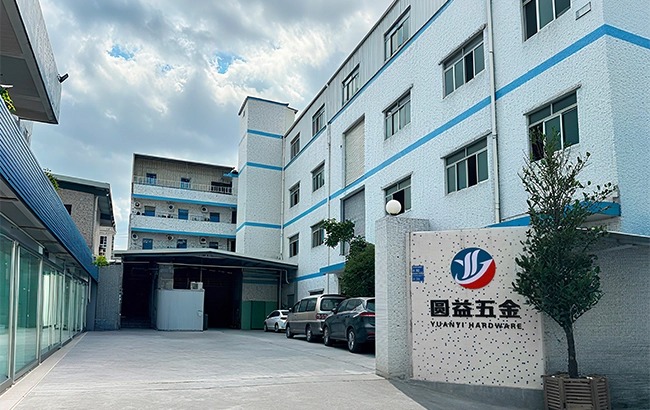

about yuanyi cnc

From Prototypes to Production, We’re Ready to Support Your CNC Machining Project

Send us your CAD files and our engineers will provide a manufacturing review and quotation.

F.A.Q.

On a 3-axis machine tool, the cutting tool moves linearly along the X, Y, and Z axes. Machining can only be performed from above the workpiece, and the machine must be stopped and the workpiece re-clamped to machine the sides. A 5-axis machine tool adds two rotational axes, allowing the tool or workpiece to tilt and rotate. This enables the machining of five surfaces in a single setup, significantly improving positional accuracy between features on different surfaces and allowing for the creation of complex 3D surfaces.

A 3D CAD model is required to provide an accurate quote. STEP (.step / .stp) is the industry-standard format, providing an exact mathematical model that serves as the basis for CAM programming. We strongly recommend providing 2D PDF drawings with dimensions, tolerances, and key features marked, as these serve as the basis for final inspection.

It depends on complexity, material, and quantity. Simple 6061 aluminum parts are typically ready for shipment within 3–5 business days; complex parts, those requiring multiple setups, stainless steel parts, or parts requiring post-processing have a lead time of approximately 7-10 days. Confirmed lead times are provided with every quote.

Yes. This is part of our DFM (Design for Manufacturing) service. We will flag issues such as insufficient clearance radii or unnecessary complex clamping setups, and suggest design modifications that do not compromise functionality. These minor adjustments can often cut part costs in half. Our goal is to help you create the best possible part, not just to machine it exactly as drawn.

Table of Contents
Discuss Your Complex Machining Requirements

Need Custom CNC Machined Parts?

From rapid prototypes to low-volume production, our engineering team can review your drawings and provide a manufacturing quote.

  • 24-Hour Quotation
  • DFM Engineering Support
  • No Minimum Order
  • ISO 9001 Certified
Request A Quote
Upload your drawing and get a quote within 24 hours.

