

Pure titanium is generally considered a non-magnetic metal. It is not strongly attracted to magnets in the same way that iron, nickel, or ordinary carbon steel is. However, under certain special circumstances, some titanium alloys may exhibit an extremely weak magnetic response.
This article will provide a detailed overview of the principles of titanium’s magnetism, the magnetic behavior of titanium alloys, testing methods, and the importance of non-magnetic properties in practical applications.
What Is Magnetism?
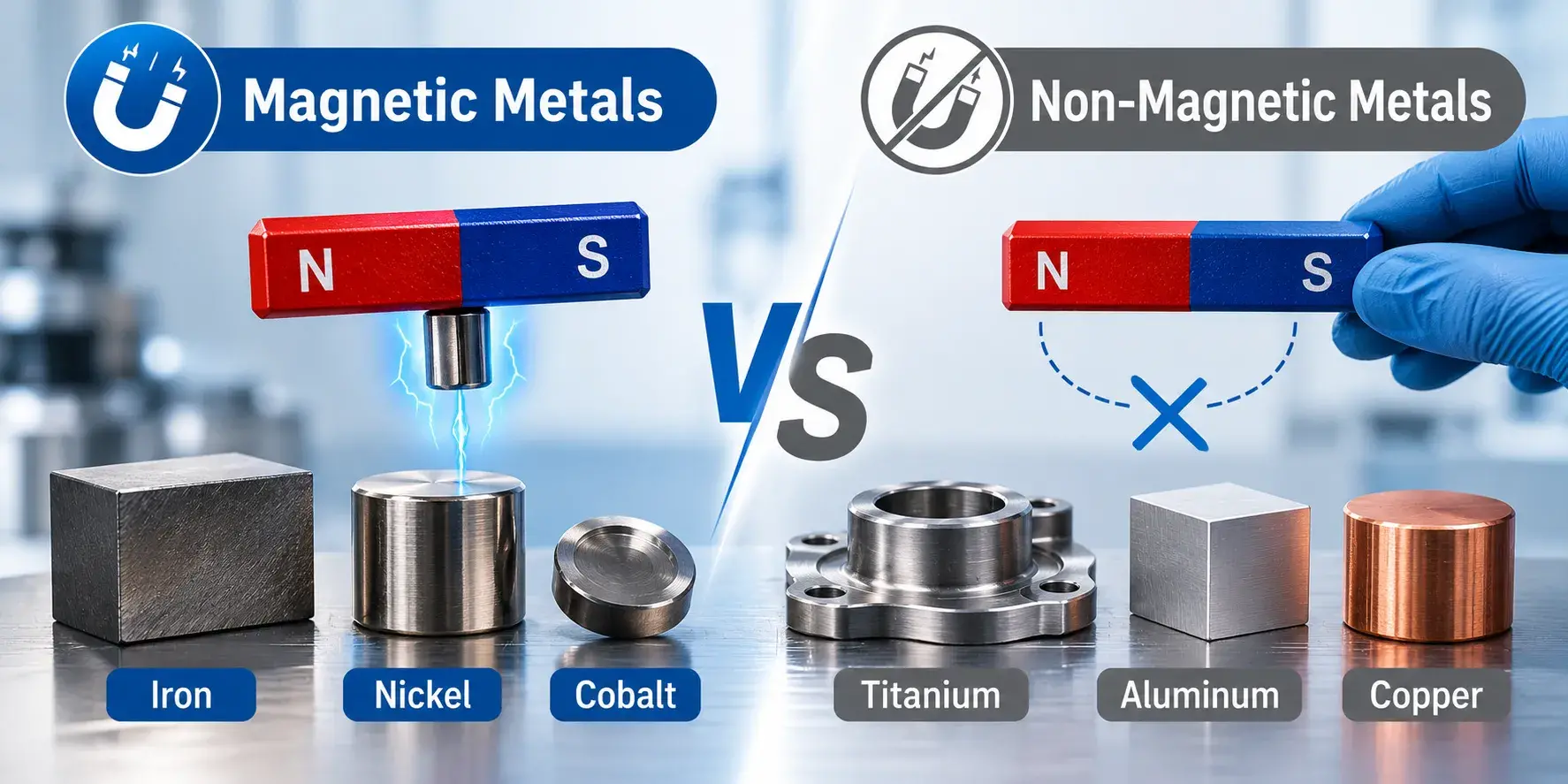
Magnetism is a physical property by which a material responds to a magnetic field.
In engineering, metals are generally classified into two major categories: magnetic metals and non-magnetic metals.
Magnetic Metals
The following materials exhibit significant magnetism:
- Iron
- Nickel
- Cobalt
- Certain grades of stainless steel
These materials are strongly attracted to magnets, and some of them can retain permanent magnetism.
Non-magnetic Metals
The following materials are generally considered non-magnetic:
- Titanium
- Aluminum
- Copper
- Brass
- Magnesium
Since titanium falls into this category, it is regarded as a non-magnetic material in most engineering applications.
Is pure titanium magnetic?
Commercially pure titanium (CP Titanium) is essentially non-magnetic.
When a standard magnet is brought near a pure titanium part, it typically does not exert a noticeable attractive force.
From a materials science perspective, titanium is a paramagnetic material, not a ferromagnetic material.
This means:
- Titanium may exhibit a very weak response under a strong magnetic field.
- It does not retain magnetism after the magnetic field is removed.
- It cannot be made into a permanent magnet.
Therefore, in the vast majority of practical applications, titanium is considered a non-magnetic metal.
Why is titanium non-magnetic?
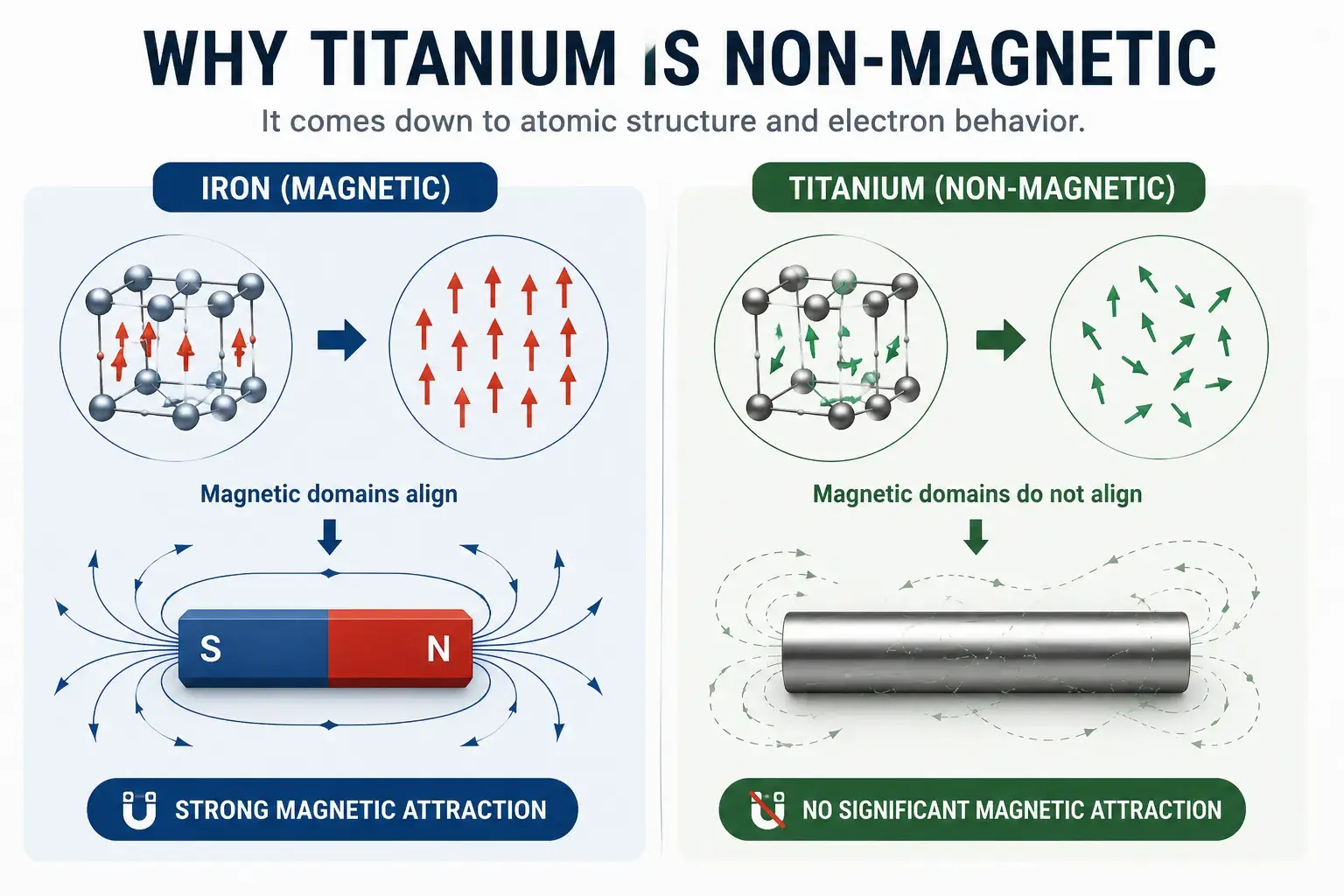
The fundamental reason titanium lacks noticeable magnetism lies in its atomic structure.
Magnetic materials such as iron, nickel, and cobalt contain a large number of magnetic domains.
When these magnetic domains are aligned in the same direction, the material exhibits strong magnetism.
However, the arrangement of electrons in titanium does not allow for the formation of stable magnetic domains, so it cannot retain a magnetic field like ferromagnetic materials do.
Simply put:
- Ferromagnetic materials can form and retain a magnetic field.
- Titanium cannot form a stable magnetic field.
- Therefore, titanium is not strongly attracted to magnets.
This is also a key reason why titanium has long been classified as a non-magnetic engineering material.
Are titanium alloys magnetic?
Most titanium alloys are still classified as non-magnetic materials, including the common Ti-6Al-4V (Grade 5) and Grade 2 titanium. Although certain titanium alloys may exhibit a very weak magnetic response after cold working, heat treatment, or iron contamination, this magnetism is typically extremely weak—far weaker than that of ordinary steel and ferromagnetic stainless steel.
Therefore, in most engineering applications, titanium alloys are still considered non-magnetic materials.
Why Are Some Titanium Parts Slightly Attracted to Magnets?
Many people have noticed the following when testing titanium materials:
“Why does a magnet seem to stick to titanium?”
In fact, in most cases, it is not the titanium itself that is magnetic.
Surface Iron Contamination
During machining, grinding, or assembly, steel tools may leave microscopic iron particles on the titanium surface.
These iron particles are attracted by magnets, leading people to mistakenly believe that titanium is magnetic.
Machining Residues
Iron-containing particles may become embedded during sandblasting, polishing, or grinding.
These particles can produce a localized magnetic response.
Influence of Strong Neodymium Magnets
High-performance neodymium-iron-boron magnets have extremely strong magnetic fields.
Even when exposed to paramagnetic materials, they may exert an extremely weak attractive force.
Therefore, slight attraction does not necessarily mean the material is not titanium.
How do you test whether titanium is magnetic?
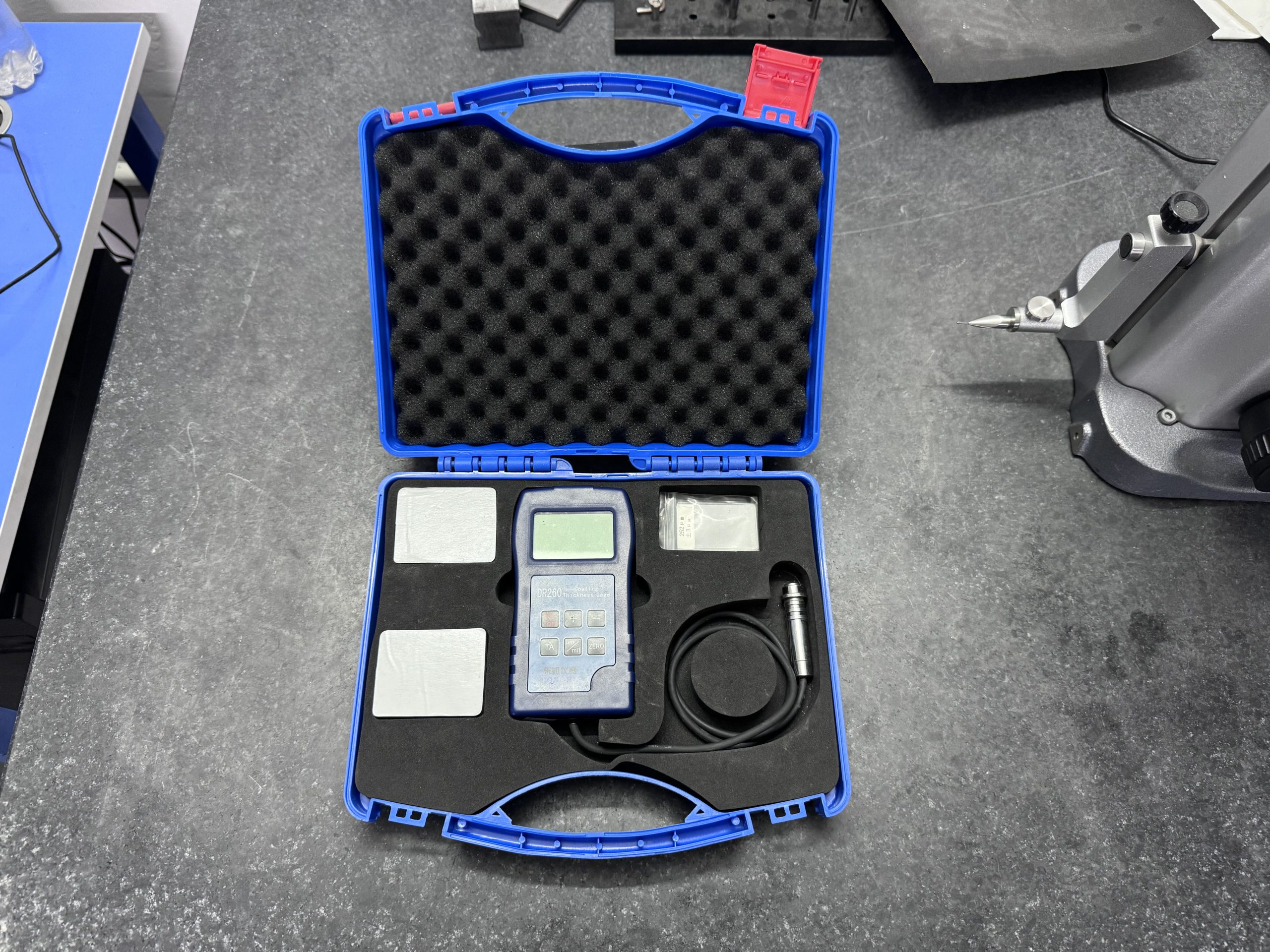
The simplest method is to use a strong neodymium magnet.
The testing steps are as follows:
Step 1: Clean the surface of the part
Make sure there is no oil, iron filings, or machining residue.
Step 2: Use a neodymium magnet
Slowly bring the magnet close to the workpiece.
Step 3: Observe the adhesion
If there is almost no adhesion, the material is most likely titanium.
If there is noticeable adhesion, it could be:
- Steel
- Ferromagnetic stainless steel
- Iron contamination on the surface
Step 4: Confirm using the material certificate
For critical applications, it is recommended to verify the material using a material certificate or spectroscopic analysis.
Comparison of the Magnetic Properties of Titanium and Stainless Steel
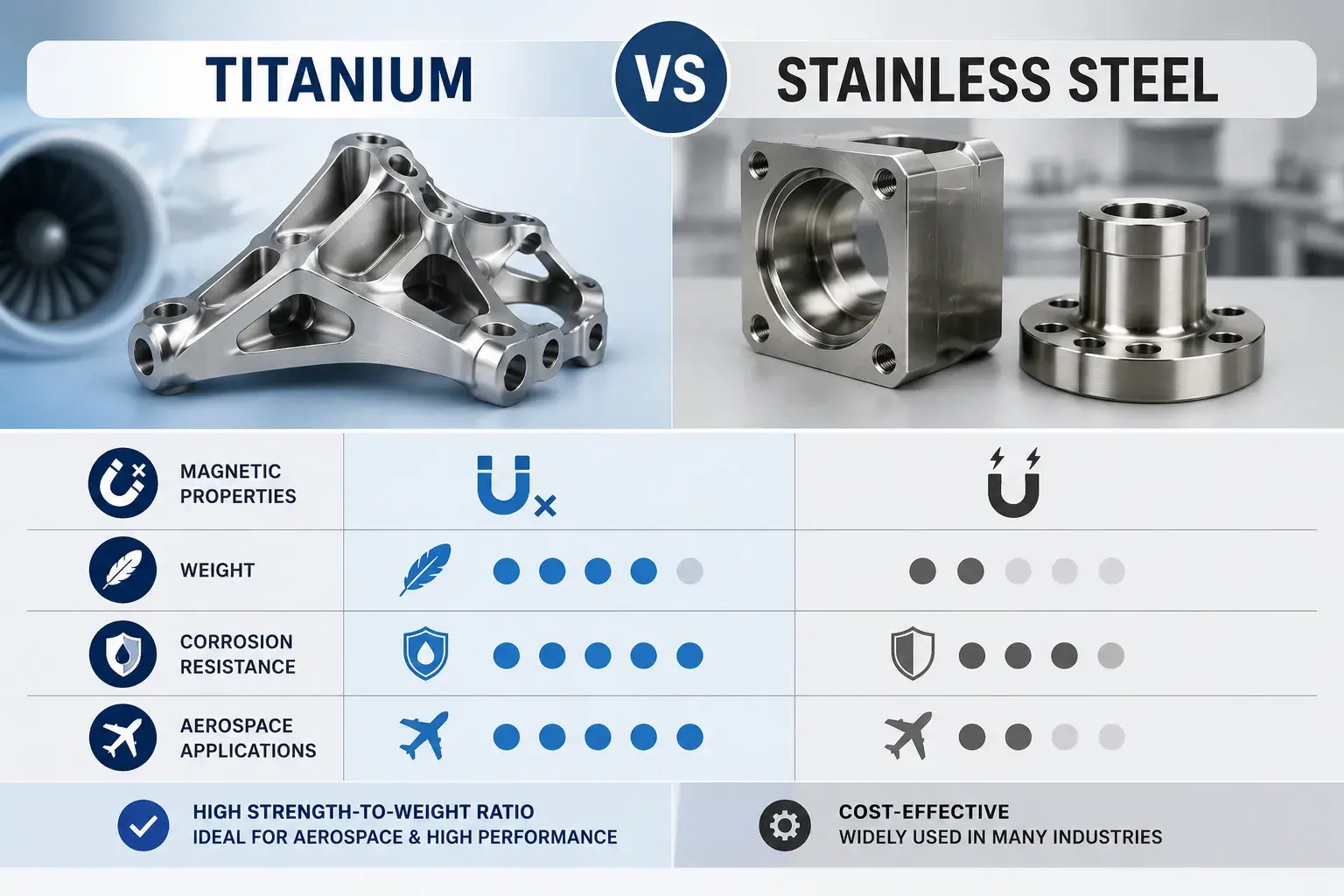
Many engineers compare the differences in magnetic properties between titanium and stainless steel when selecting materials.
| Property | Titanium | 304 Stainless Steel | 316 Stainless Steel | 430 Stainless Steel |
|---|---|---|---|---|
| Magnetic Properties | Essentially Non-Magnetic | Slightly Magnetic | Very Weakly Magnetic | Strongly Magnetic |
| Density | Low | Higher | Higher | Higher |
| Corrosion Resistance | Excellent | Excellent | Superior | Moderate |
| Strength-to-Weight Ratio | Excellent | Good | Good | Moderate |
| Medical Applications | Widely Used | Limited Use | Limited Use | Rarely Used |
| Aerospace Applications | Widely Used | Limited Use | Limited Use | Rarely Used |
For applications requiring an environment with low magnetic interference, titanium is usually the better choice.
Titanium in Practical Applications
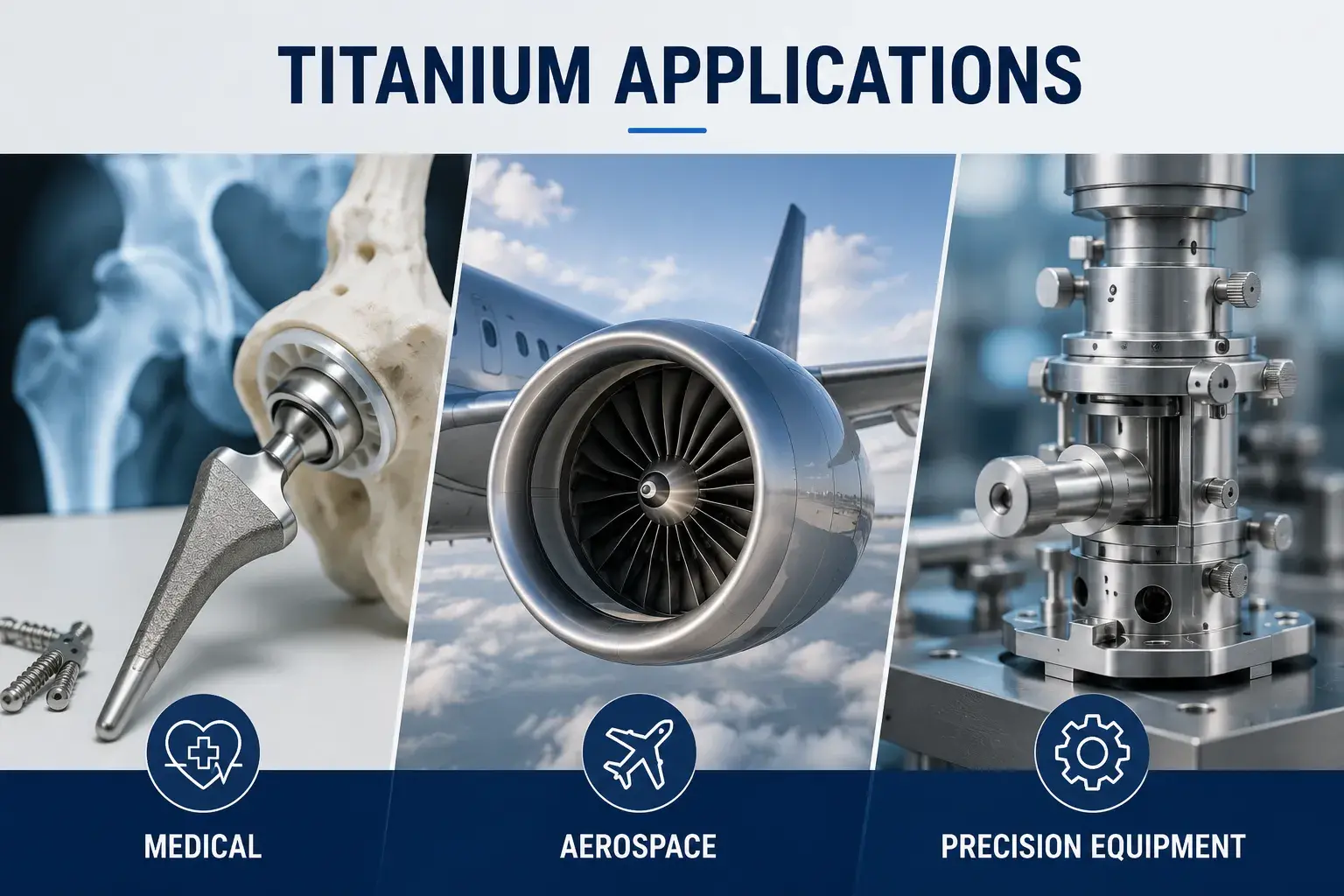
Titanium’s non-magnetic properties make it an ideal material for many high-end industries, particularly in applications where minimizing magnetic interference is essential.
Medical Field
Titanium is widely used in medical devices such as dental implants, bone screws, and artificial joints. Because it is virtually unaffected by magnetic fields, it is well-suited for medical implants and precision medical equipment applications.
Aerospace
In the aerospace industry, titanium combines high strength, light weight, and corrosion resistance with the ability to minimize magnetic interference, making it widely used in aircraft structural components, engine parts, and various critical components.
Electronics and Scientific Equipment
Many electronic devices and precision instruments require protection against magnetic fields that could affect measurement results. Titanium’s low magnetic permeability helps improve the stability and reliability of such equipment.
Does CNC machining affect the magnetic properties of titanium?
CNC machining does not alter the inherent material properties of titanium; therefore, titanium parts that have been milled, turned, drilled, or ground remain non-magnetic.
If a machined titanium part exhibits a slight magnetic response, it is usually not because the titanium itself has become magnetic, but rather due to iron swarf left over from the cutting process, contamination from contact with fixtures, or iron-containing particles adhering to the surface. This phenomenon typically disappears after proper cleaning.
How Do We Machine Titanium Alloy Parts?
Titanium alloys are characterized by high strength, low thermal conductivity, and a tendency toward work hardening, making them generally more difficult to machine than aluminum alloys and standard stainless steel. To ensure machining accuracy and tool life, it is necessary to properly control cutting parameters, tool selection, and heat dissipation conditions.
At YUANYI, we have extensive experience in CNC machining of titanium alloys and can process common titanium materials such as Grade 2 Titanium and Ti-6Al-4V (Grade 5). Leveraging our 3-axis CNC machining, 4-axis CNC machining, and 5-axis CNC machining equipment, we provide customers with one-stop machining services ranging from prototype development to mass production, consistently achieving machining tolerances as tight as ±0.005 mm.
Need Custom Titanium CNC Machining?
Send us your titanium part drawings and our engineering team will help review the material, machining process, tolerance requirements, and provide a fast quotation.
Get a Titanium CNC Machining QuoteConclusion
Titanium is generally considered a non-magnetic metal and is not strongly attracted to magnets in the same way that iron, nickel, or ordinary steel are. Although certain titanium alloys may exhibit a very weak magnetic response under specific conditions, in the vast majority of engineering applications, titanium remains a material with low magnetic permeability.
Frequently Asked Questions
A magnet test can be a quick initial check because titanium is generally non-magnetic. However, it should not be used as the only identification method, as some stainless steels are also non-magnetic and surface contamination can affect the result.
No. Titanium is non-magnetic, but it does not effectively shield or block magnetic fields. Materials such as mu-metal are typically used for magnetic shielding applications.
Titanium remains essentially non-magnetic across a wide range of operating temperatures. Normal heating conditions do not cause titanium to become strongly magnetic.
In many applications, titanium is preferred because of its very low magnetic permeability and excellent biocompatibility. However, suitability depends on the specific component design and medical requirements.
Titanium itself generally does not interfere with electronic equipment because it has very low magnetic response. This makes it useful for precision instruments and sensitive electronic applications.
Titanium offers an excellent combination of high strength, low weight, corrosion resistance, and low magnetic permeability, making it ideal for demanding aerospace environments.
Yes. Titanium generates heat quickly during machining and has relatively low thermal conductivity, which can increase tool wear and machining complexity. Proper tooling and cutting parameters are essential for achieving high-quality results.



