

If you are looking for “CNC Aluminum,” this typically refers to aluminum parts produced through CNC machining, or the process of machining aluminum alloys using CNC machining techniques. Due to aluminum’s characteristics—including its light weight, high strength, ease of machining, and corrosion resistance—it has become one of the most widely used metal materials in CNC machining worldwide.
This guide will cover what CNC aluminum is, common aluminum alloy grades, machining processes, advantages, design recommendations, and how to select the most suitable aluminum material for your project.
What Is CNC Aluminum?
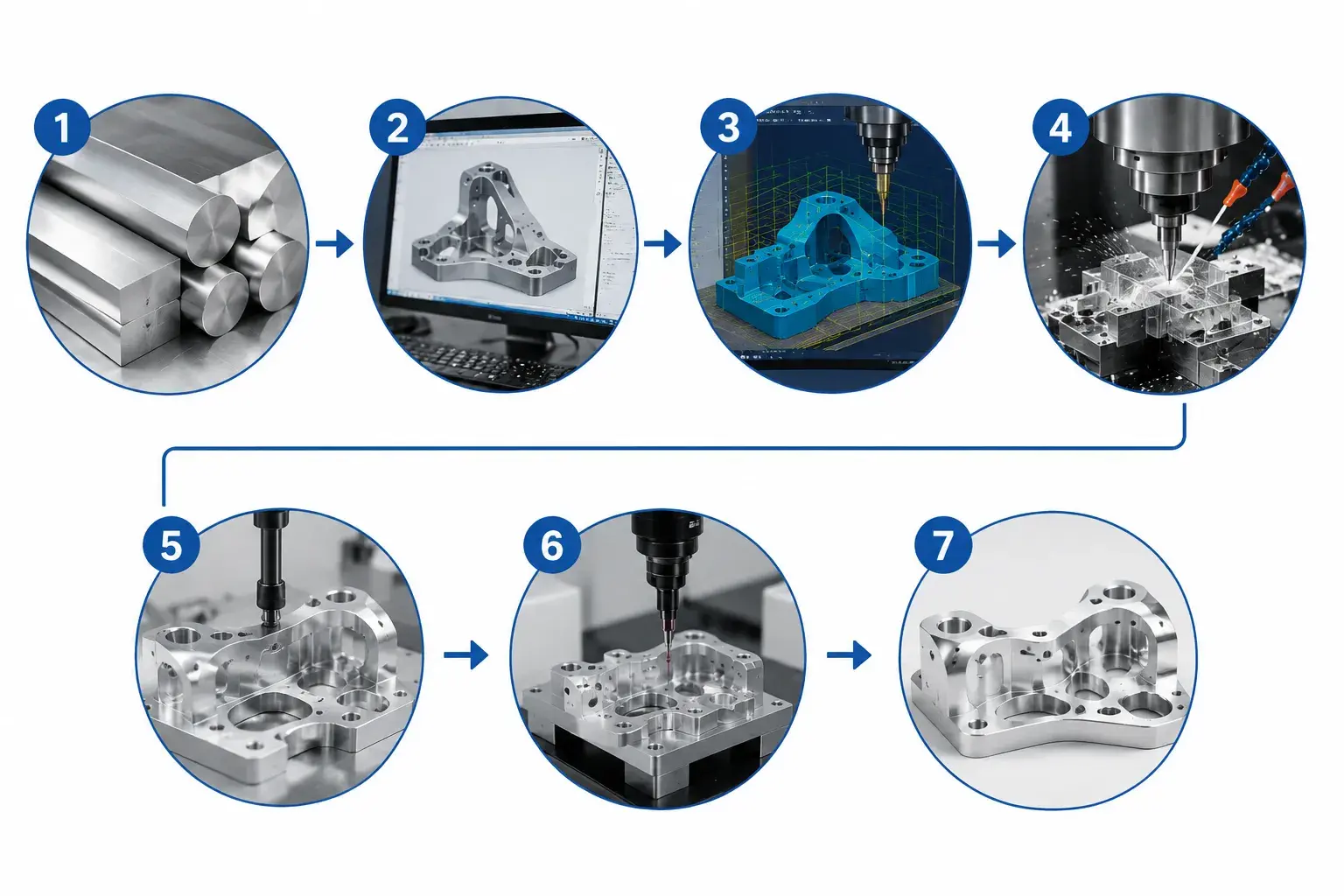
Strictly speaking, “CNC Aluminum” is not the name of a specific material, but rather a general term commonly used in the industry to describe CNC-machined aluminum or aluminum CNC machining.
It typically refers to the process of using machining techniques such as CNC milling, CNC turning, drilling, and tapping to transform various aluminum alloy blanks into parts with precise dimensions and complex geometries.
Compared to casting or stamping, aluminum CNC machining offers higher dimensional accuracy, better surface quality, and greater design flexibility, making it widely used in prototyping, small-batch production, and the manufacture of high-precision industrial parts.
Why Aluminum Is One of the Best Materials for CNC Machining
Among all engineering metals, aluminum has long been considered one of the most suitable materials for CNC machining.
Not only is it lightweight, but it also offers excellent machinability, with low cutting resistance during the machining process, allowing for higher cutting speeds, which in turn improves production efficiency and reduces machining costs.
In addition, most aluminum alloys offer good corrosion resistance, thermal conductivity, and a high strength-to-weight ratio, making them ideal for manufacturing parts that require both lightweight construction and mechanical performance.
Because of these advantages, aluminum CNC machining has become one of the most common machining solutions in the aerospace, robotics, automation equipment, automotive parts, and consumer electronics industries.
Common Aluminum Alloys for CNC Machining
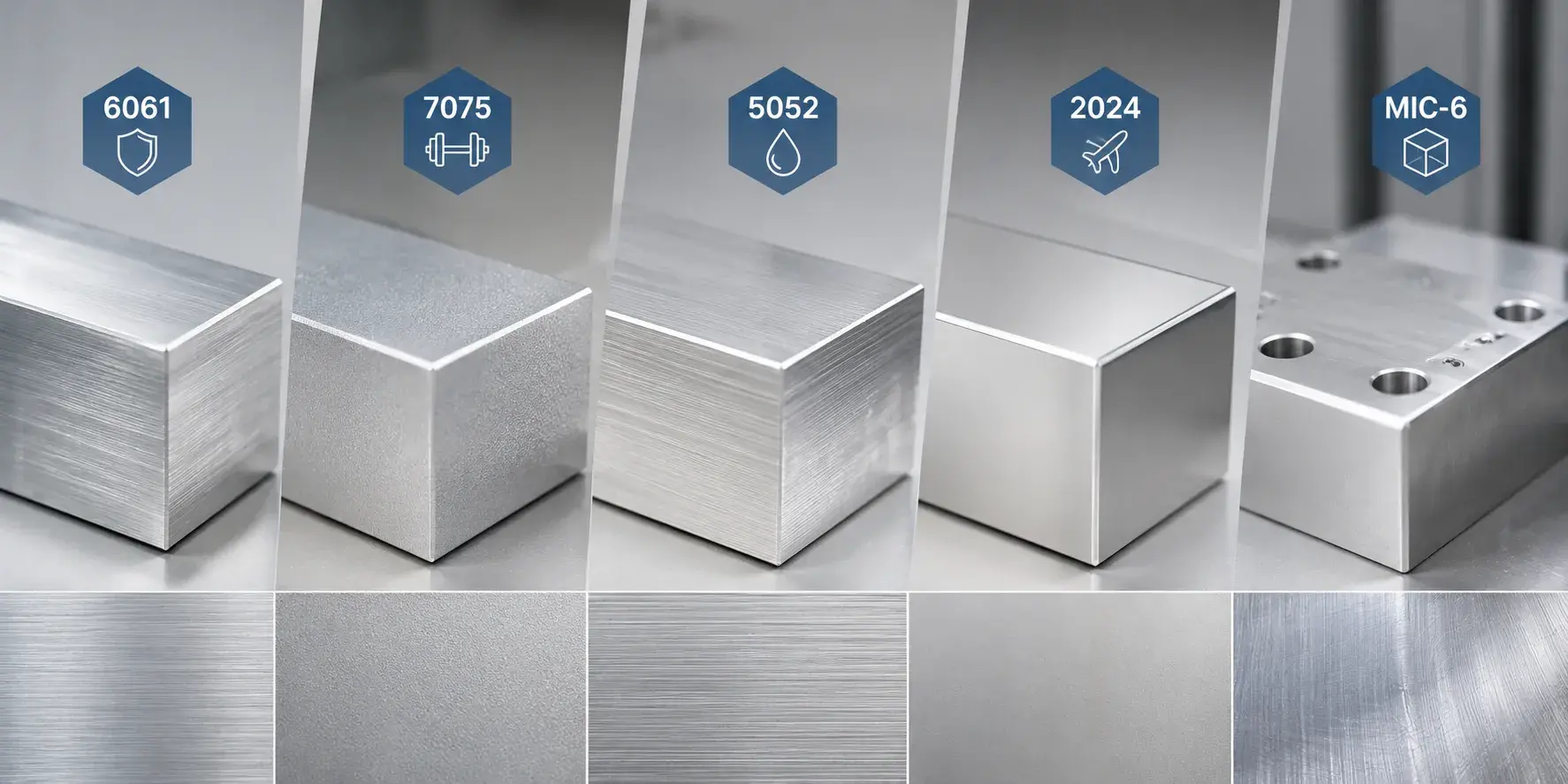
Different aluminum alloys have different mechanical properties, so selecting the right material is crucial in aluminum CNC machining.
Here are some of the most common materials used in machining.
| Aluminum Alloy | Key Features | Typical Applications |
|---|---|---|
| 6061 Aluminum | The most common CNC aluminum alloy. Offers excellent machinability, good weldability, and strong corrosion resistance. | Structural components, housings, automation equipment, general-purpose CNC parts |
| 7075 Aluminum | Higher strength than 6061, with excellent strength-to-weight ratio. Slightly lower corrosion resistance and higher machining cost. | Aerospace components, drones, racing parts, high-load mechanical components |
| 5052 Aluminum | Excellent corrosion resistance, especially in marine and chemical environments. Good formability. | Marine equipment, sheet metal parts, chemical processing equipment |
| 2024 Aluminum | Extremely high fatigue strength and good mechanical properties. Typically requires surface protection due to lower corrosion resistance. | Aerospace structural components, aircraft fittings, high-strength engineering parts |
| MIC-6 Cast Aluminum | Cast aluminum plate with high dimensional stability, low internal stress, and excellent flatness. | Precision fixtures, jigs, tooling plates, automation equipment base plates |
Common CNC Machining Processes for Aluminum
Depending on the part’s structure, aluminum CNC machining typically involves a combination of various machining methods.
- CNC Milling:Suitable for flat surfaces, cavities, curved surfaces, and complex 3D structures.
- CNC Turning:Primarily used for rotary parts such as shafts, sleeves, and flanges.
- Offers high machining efficiency.
- Drilling:Used to machine various mounting holes, locating holes, and through holes.
- Tapping:Used to machine internal threads.Typically performed in conjunction with the drilling process.
Advantages of CNC Machined Aluminum
Compared to other engineering metals, CNC-machined aluminum offers many distinct advantages.
- Lightweight, effectively reducing product weight
- High strength-to-weight ratio
- Fast machining speeds and high production efficiency
- Minimal tool wear
- Easy to achieve a high-quality surface finish
- Suitable for various surface treatments, such as anodizing, sandblasting, and powder coating
- Capable of machining complex geometries
- Ample material supply and relatively low machining costs
Challenges of Machining Aluminum
Although aluminum is a material that is easy to machine, there are still some issues that require attention.
For example, built-up edges are prone to form during high-speed machining, which can affect surface quality; thin-walled parts are susceptible to deformation caused by clamping forces or cutting forces; and poor chip evacuation during deep-hole machining can lead to accelerated tool wear.
Therefore, in aluminum CNC machining, it is typically necessary to select appropriate cutting tools, cutting parameters, and clamping solutions based on the specific material grade to ensure consistent machining quality.
Typical Surface Finishes for CNC Aluminum Parts
To further enhance their appearance, wear resistance, and corrosion resistance, CNC machined aluminum parts are typically subjected to post-processing.
Common surface treatments include:
| Surface Finish | Key Features |
|---|---|
| Anodizing | Improves corrosion resistance and is available in various colors. |
| Hard Anodizing | Improves wear resistance for more demanding applications. |
| Bead Blasting | Creates a uniform matte surface finish. |
| Powder Coating | Provides a thicker protective coating layer. |
| Polishing | Improves surface smoothness and visual appearance. |
| Brushing | Creates a linear brushed texture on the surface. |
Typical Tolerances for CNC Aluminum Parts
Due to aluminum’s excellent machinability, high machining accuracy can typically be achieved.
For standard industrial parts, aluminum CNC machining can generally achieve an accuracy of approximately ±0.01 mm.
For projects utilizing high-precision equipment and strict quality control, tolerances can be further controlled to ±0.005 mm, and some critical dimensions can even achieve higher machining accuracy.
The tolerances that can actually be achieved are also influenced by factors such as part dimensions, wall thickness, material condition, clamping methods, and inspection requirements.
How to Choose the Right Aluminum Alloy
Different aluminum alloys are suitable for different applications, so it is very important to select the right material before starting an aluminum CNC machining project.
| If You Need... | Recommended Alloy | Why It's Recommended |
|---|---|---|
| Best all-around performance | 6061 Aluminum | Excellent machinability, corrosion resistance, weldability, and cost-effectiveness. |
| Highest strength | 7075 Aluminum | Ideal for high-load applications requiring maximum strength-to-weight ratio. |
| Best corrosion resistance | 5052 Aluminum | Performs well in marine and chemically corrosive environments. |
| High fatigue strength | 2024 Aluminum | Commonly used in aerospace structural components subjected to cyclic loading. |
| High dimensional stability | MIC-6 Cast Aluminum | Low internal stress and excellent flatness for fixtures, jigs, and tooling plates. |
Aluminum vs Steel vs Stainless Steel vs Titanium
Different materials each have their own advantages; there is no single “best” material—only the one that best suits the project’s needs.
| Material | Weight | Strength | Machinability | Corrosion Resistance | Cost |
|---|---|---|---|---|---|
| Aluminum | Very Light | Medium | Excellent | Good | Low |
| Steel | Heavy | High | Good | Poor | Low |
| Stainless Steel | Heavy | High | Fair | Excellent | Medium |
| Titanium | Light | Very High | Difficult | Excellent | Very High |
For most precision parts, aluminum CNC machining strikes a good balance between weight, machining efficiency, and cost, making it one of the most commonly used materials in the fields of robotics, automation equipment, consumer electronics, and industrial equipment.
Design Tips for Aluminum CNC Parts
Good part design not only improves machining quality but also reduces the cost of aluminum CNC machining.
When designing, it is recommended to keep the following points in mind:
- Avoid excessively thin wall thicknesses to minimize machining deformation.
- Use larger fillets for deep cavities to facilitate tool entry.
- Standardize hole diameters and thread specifications as much as possible to reduce the number of tool changes.
- Avoid excessively deep blind holes to lower machining difficulty.
- Allow adequate machining clearance for cutting tools to reduce the risk of interference.
Avoid setting overly tight tolerances for non-critical dimensions to lower machining costs.
Thoroughly considering design for manufacturability (DFM) during the product design phase can typically significantly improve machining efficiency and shorten the overall delivery cycle.
Common Applications of CNC Aluminum

Thanks to its light weight, ease of machining, and excellent overall performance, CNC-machined aluminum has been widely adopted across multiple industries.
Common applications include:
- Aerospace Components
- Automotive Parts
- Robotics Components
- Industrial Automation Equipment
- Consumer Electronics Housings
- Medical Devices
- Semiconductor Equipment
- Optical Equipment
- Fixtures and Jigs
- Prototype Parts
With the advancement of lightweight design, more and more industries are adopting CNC-machined aluminum to replace traditional steel parts in order to improve product performance and reduce overall weight.
How YUANYI Machines Precision Aluminum Parts
At YUANYI, we provide Aluminum CNC Machining services for prototypes, low-volume production, and precision aluminum parts. With 13+ years of machining experience, we work with 6061, 7075, 5052, 2024, and MIC-6 aluminum, achieving tolerances up to ±0.005 mm with 100% inspection and quality reports.
Need Precision Aluminum CNC Machining Services?
Get high-quality Aluminum CNC Machining for prototypes and production. Upload your CAD files today and receive a fast quote from our engineering team.
Conclusion
“CNC Aluminum” does not refer to a specific type of aluminum material, but rather to the process of manufacturing aluminum alloy parts using CNC machining, or “Aluminum CNC Machining.” Thanks to its light weight, high machining efficiency, good corrosion resistance, and excellent overall performance, aluminum has become one of the most commonly used materials for CNC machining in industries such as aerospace, robotics, automation, medical devices, and consumer electronics.
If you are unsure which aluminum alloy is best suited for your parts, we recommend consulting with a CNC machining supplier early in the project to select the most appropriate solution based on the part’s structure, application environment, and performance requirements.
Frequently Asked Questions About CNC Aluminum
It depends on the application. Aluminum is lighter, easier to machine, and generally more cost-effective, while steel provides higher strength and wear resistance. The best choice depends on your part’s performance requirements.
Most aluminum alloys can be CNC machined, but their machinability varies. Wrought alloys such as 6061 and 7075 are commonly used, while some cast aluminum alloys may require different machining strategies.
Thin-wall or large aluminum parts can deform due to internal stress, clamping force, or heat generated during machining. Proper fixturing and machining strategies help minimize deformation.
Yes. Aluminum is one of the most popular materials for CNC prototypes because it machines quickly, offers good dimensional stability, and closely represents the performance of production parts.
Yes. Many aluminum alloys, especially 6061, have good weldability. However, welding may affect mechanical properties, so additional heat treatment or finishing may be required depending on the application.
Lead time depends on part complexity, quantity, and surface finishing requirements. Simple prototype parts can often be completed within a few days, while production orders generally require more time.



