
What Is a CNC Machine Shop?

A CNC machine shop is a manufacturing facility that uses CNC machine tools to produce custom parts. Based on 2D drawings, 3D files, samples, or technical specifications provided by customers, these shops can machine metal, plastic, or other engineering materials into parts that meet specific dimensional and precision requirements.

However, a CNC machine shop is more than just “a few machine tools.” A truly reliable machining facility typically also needs to possess capabilities in engineering evaluation, programming, fixturing design, machining, surface treatment, inspection, and delivery.

What Does a CNC Machine Shop Do?

The primary function of a CNC machine shop is to transform customers’ designs into actual parts.

Customers typically provide drawings, 3D models, material specifications, quantity requirements, surface treatment methods, and tolerance specifications. Based on this information, the machine shop evaluates whether the part can be machined, what equipment to use, how many setups are required, and whether there are any challenging features such as thin walls, deep cavities, undercuts, threads, or precision holes.

If the drawings are in order, engineers will arrange CNC programming, select cutting tools, design clamping methods, and establish an appropriate machining process. Operators will then prepare the materials, calibrate the machine tools, perform the actual machining, and conduct dimensional inspections.

Therefore, the core value of a CNC machine shop lies not merely in “cutting away material,” but in consistently translating design requirements into parts through appropriate machining methods.

Common CNC Machine Shop Services

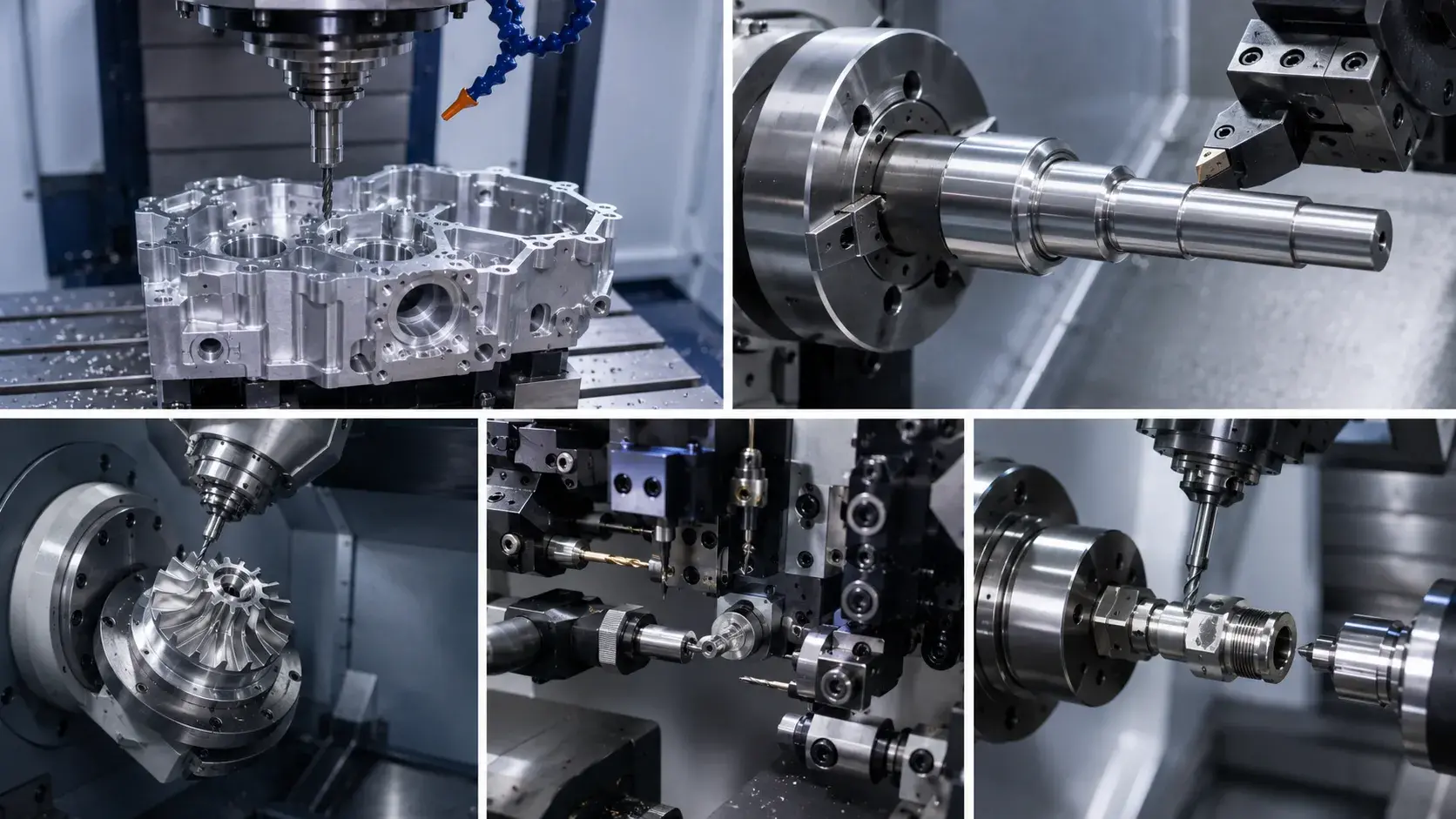
Common CNC machine shop services including milling turning 5-axis Swiss and mill-turn machining

The scope of services varies among CNC machine shops. Some shops only perform simple milling or turning, while others can handle complex parts, multi-surface machining, precision small parts, and small-batch production.

Common CNC machine shop services typically include the following categories.

ServiceBest ForTypical Parts
CNC MillingFlat surfaces, pockets, holes, slots, complex profilesHousings, brackets, fixtures, plates
CNC TurningRound or cylindrical partsShafts, pins, bushings, threaded parts
5-Axis CNC MachiningComplex geometry and multi-side machiningAerospace parts, medical parts, robotic components
Swiss MachiningSmall, slender, high-precision partsPrecision pins, micro shafts, connectors
Mill-Turn MachiningParts with both turning and milling featuresConnectors, valve parts, complex round components
Rapid PrototypingDesign testing and functional verificationPrototype housings, test parts, sample components
Low-Volume ProductionSmall batch manufacturing before mass productionCustom parts, pilot runs, early production orders

What Equipment Does a CNC Machine Shop Use?

The machining capabilities of a CNC machine shop depend largely on its equipment configuration.

Common equipment includes CNC milling machines, CNC turning centers, 5-axis machining centers, Swiss-type lathes, mill-turn machines, EDM machines, grinding machines, and auxiliary inspection equipment.

However, the number of machines is not the only criterion. What matters more is whether the shop knows how to use this equipment properly.

Even with the same 5-axis machine tool, the results produced by different shops can vary significantly. Factors influencing the results include engineering experience, CNC programming skills, tool selection, clamping methods, machine condition, machining parameters, and inspection procedures.

Therefore, when selecting a CNC machine shop, don’t just look at the equipment list; also consider whether the shop has a track record of successful projects, inspection capabilities, and stable machining processes.

What Materials Can a CNC Machine Shop Machine?

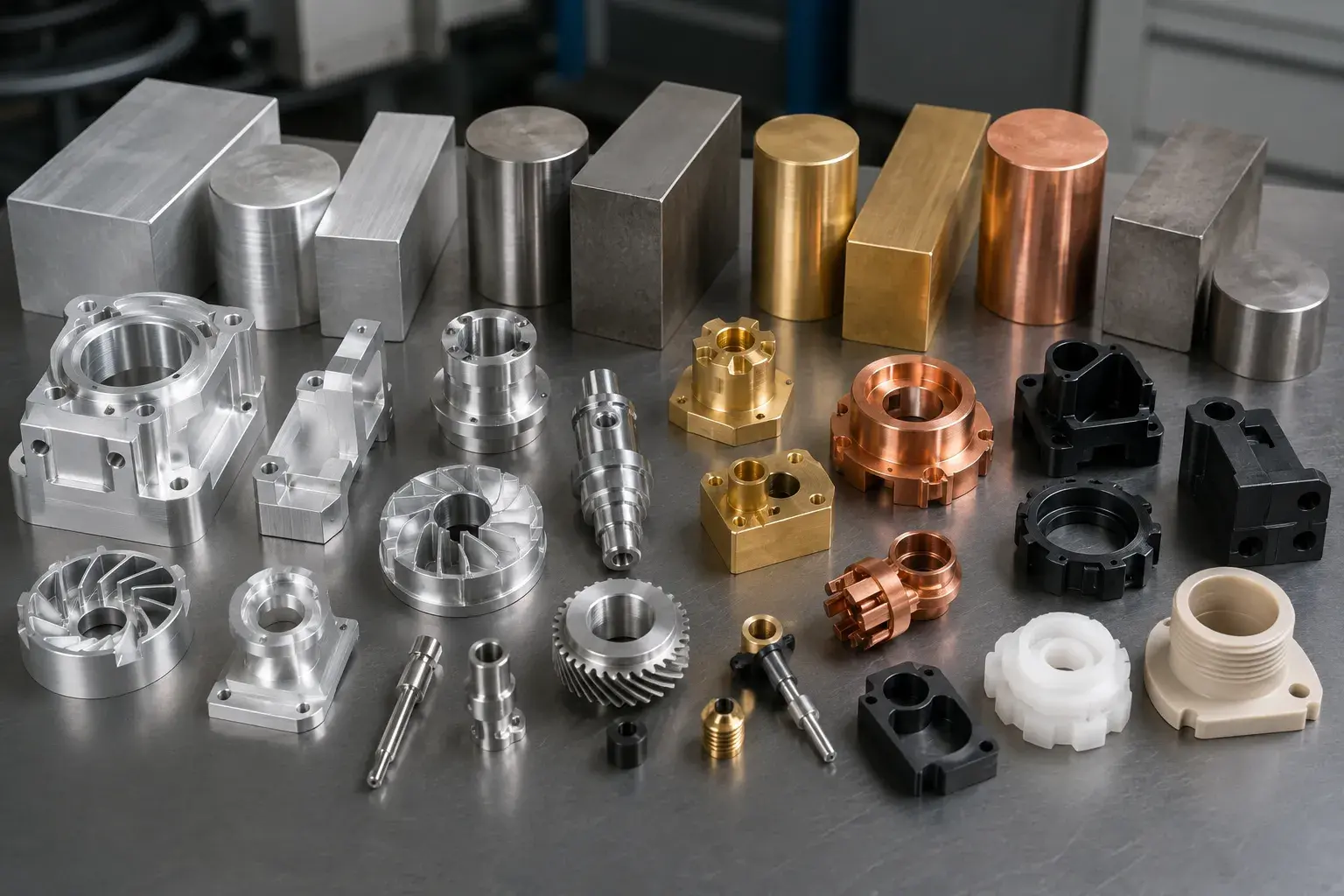
Common CNC machining materials and precision machined sample parts

A CNC machine shop can work with a wide range of metals and engineering plastics.
The right material depends on strength, weight, corrosion resistance, heat resistance, cost, and the final application.

Material TypeCommon MaterialsTypical Applications
Aluminum6061, 7075, 5052Lightweight housings, brackets, prototypes, structural components
Stainless Steel304, 316, 17-4PHMedical parts, shafts, corrosion-resistant components, precision hardware
Brass & CopperBrass, C110 copperElectrical parts, fittings, connectors, conductive components
TitaniumGrade 2, Grade 5Aerospace parts, medical components, high-strength lightweight parts
Engineering PlasticsPOM, PEEK, Nylon, PTFE, ABS, PCInsulators, bushings, lightweight parts, wear-resistant components
Carbon & Alloy Steel1045, 4140, tool steelMechanical parts, fixtures, shafts, wear-resistant components

How to Choose a Reliable CNC Machine Shop

When choosing a CNC machine shop, price is certainly important, but it shouldn’t be the only factor.
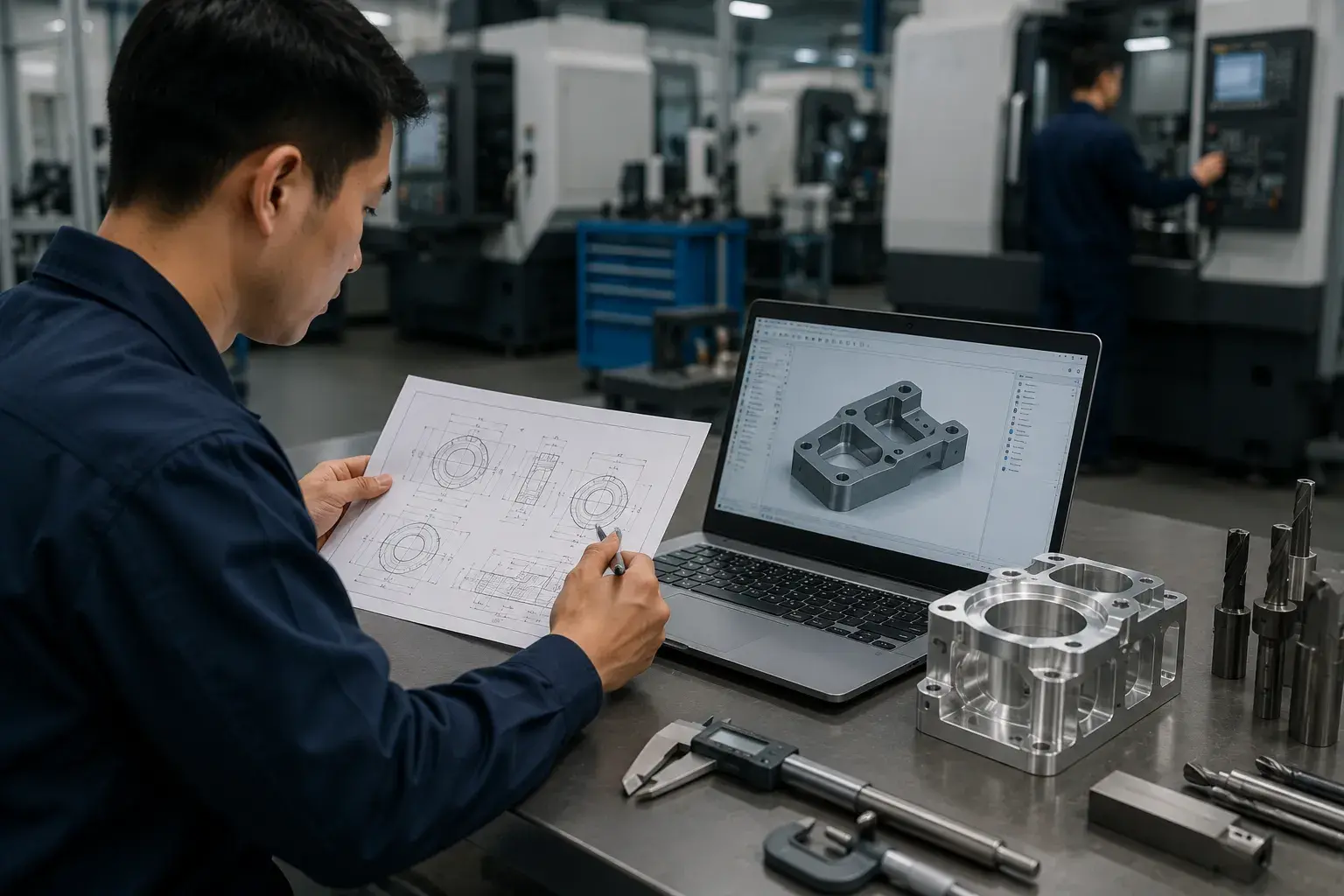
Manufacturing engineer reviewing CNC part drawing and CAD model

If the part has a simple design and low precision requirements, a low-cost supplier may be able to handle it. However, if the part has tight tolerances, a complex design, multiple mating surfaces, or specific surface finish requirements, the supplier’s engineering and quality control capabilities become crucial.

You should focus on the following aspects.

  • Can this shop interpret drawings and tolerance requirements?
  • Can they provide DFM recommendations?
  • Do they have the appropriate equipment to machine your parts?
  • Do they have experience machining similar parts?
  • Can they provide inspection reports?
  • Can they maintain consistent communication regarding delivery schedules and technical issues?
  • Do they support prototyping, small-batch production, and follow-up production?

For overseas customers, communication efficiency is also crucial. A CNC machine shop that responds quickly and explains issues clearly is typically more reliable than a supplier that offers low prices but has chaotic communication.

A truly reliable machining shop will help you identify potential issues before machining begins, rather than waiting until parts are damaged to offer explanations.

CNC Machine Shop vs CNC Machining Factory

The terms “CNC machine shop” and “CNC machining factory” are often used interchangeably, but their focus differs slightly.

“CNC machine shop” places greater emphasis on the machining facility or machining services and is typically used to describe a provider of CNC machining services. It can refer to a small machining shop or a specialized precision machining company.

“CNC machining factory” leans more toward the concept of a “manufacturing plant,” typically evoking associations with more comprehensive production capabilities, batch machining capacity, quality inspection processes, and delivery systems.

For customers, the name isn’t the most important factor. What really matters is whether the supplier can machine your materials and meet your structural and precision requirements, and whether they can consistently deliver parts that meet specifications.

Some small machine shops have strong technical capabilities and are well-suited for complex one-off parts and prototyping; some large factories are better suited for stable, high-volume production. The specific choice ultimately depends on your project requirements.

CNC Machine Shop or Factory?

What Matters Most Is Reliable Machining Quality

Whether you need a prototype, small batch, or precision production part, YUANYI can review your drawing, suggest the right machining process, and provide a clear quote for your project.

Send Your Drawing

Why Choose YUANYI Precision Manufacturing?

YUANYI is a precision manufacturing facility specializing in custom CNC machining, supporting prototype, small-batch, and precision parts production.

We offer CNC milling, CNC turning, 5-axis machining, through-spindle machining, turn-mill combination, and surface treatment services, capable of machining aluminum alloys, stainless steel, brass, copper, titanium alloys, as well as engineering plastics such as POM and PEEK.

Prior to machining, our engineering team can provide DFM recommendations based on your drawings to help you assess machining risks and select the most suitable machining solution.
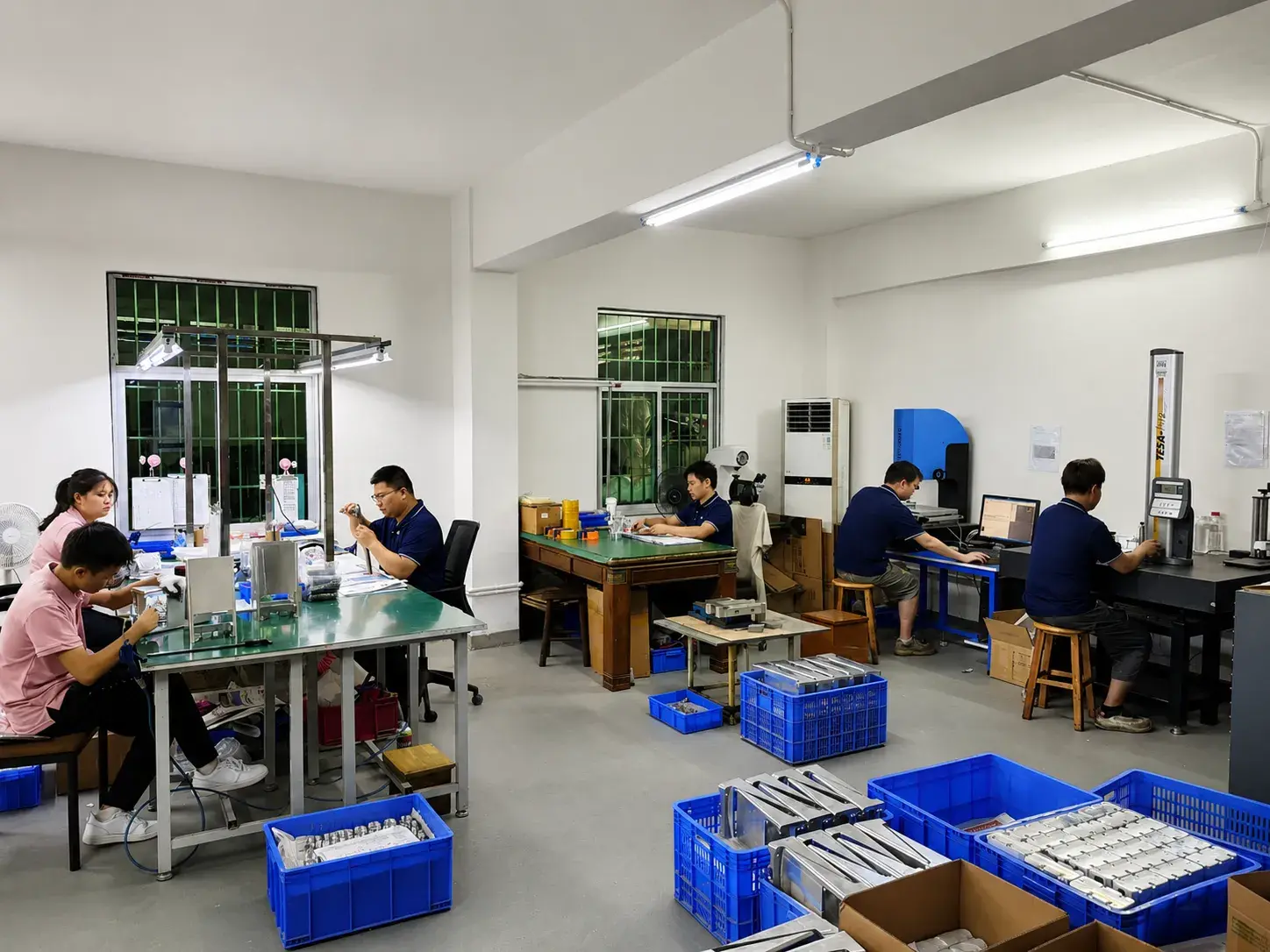
Quality Inspection Center

In terms of quality control, we conduct first-piece inspection, in-process inspection, final inspection, and provide inspection reports to ensure parts meet drawing specifications.

If you are looking for a CNC machine shop that can support custom precision parts, YUANYI can provide machining solutions and quotes based on your drawings.


FAQ About CNC Machine Shops

For an accurate quote, it is best to send 2D drawings, 3D CAD files, material requirements, quantity, surface finish, tolerance requirements, and any special notes. If you only have a sample or rough idea, the shop may still help review it, but the quote may need more confirmation.

For precision parts, it is better to provide both. A 3D CAD file helps the shop understand the full geometry, while a 2D drawing shows tolerances, threads, surface finish, material, and inspection requirements.

Yes. Many experienced CNC machine shops can provide DFM feedback before production. This may include suggestions about corner radii, wall thickness, hole depth, tolerance adjustment, material selection, and surface finish choices.

Quotes can vary because of machine type, material cost, tolerance requirements, setup time, machining time, inspection needs, surface finishing, quantity, and the supplier’s experience with similar parts. A very low quote may not always include enough inspection or process control.

It depends on the supplier. Some CNC shops focus on high-volume production, while others accept prototypes and small batches. For custom CNC machining, many projects start with one prototype or a small trial order.

Lead time depends on part complexity, material availability, quantity, tolerance, finishing, and inspection requirements. Simple prototype parts may be completed faster, while complex precision parts or surface-finished parts usually need more time.

Many CNC machine shops can provide surface finishing directly or through trusted partners. Common finishes include anodizing, bead blasting, polishing, passivation, black oxide, nickel plating, zinc plating, and powder coating.

Table of Contents
Discuss Your Complex Machining Requirements

Need Custom CNC Machined Parts?

From rapid prototypes to low-volume production, our engineering team can review your drawings and provide a manufacturing quote.

  • 24-Hour Quotation
  • DFM Engineering Support
  • No Minimum Order
  • ISO 9001 Certified
Request A Quote
Upload your drawing and get a quote within 24 hours.
