
5-Axis Titanium Machining: Cost, Quality and Lead Time Guide

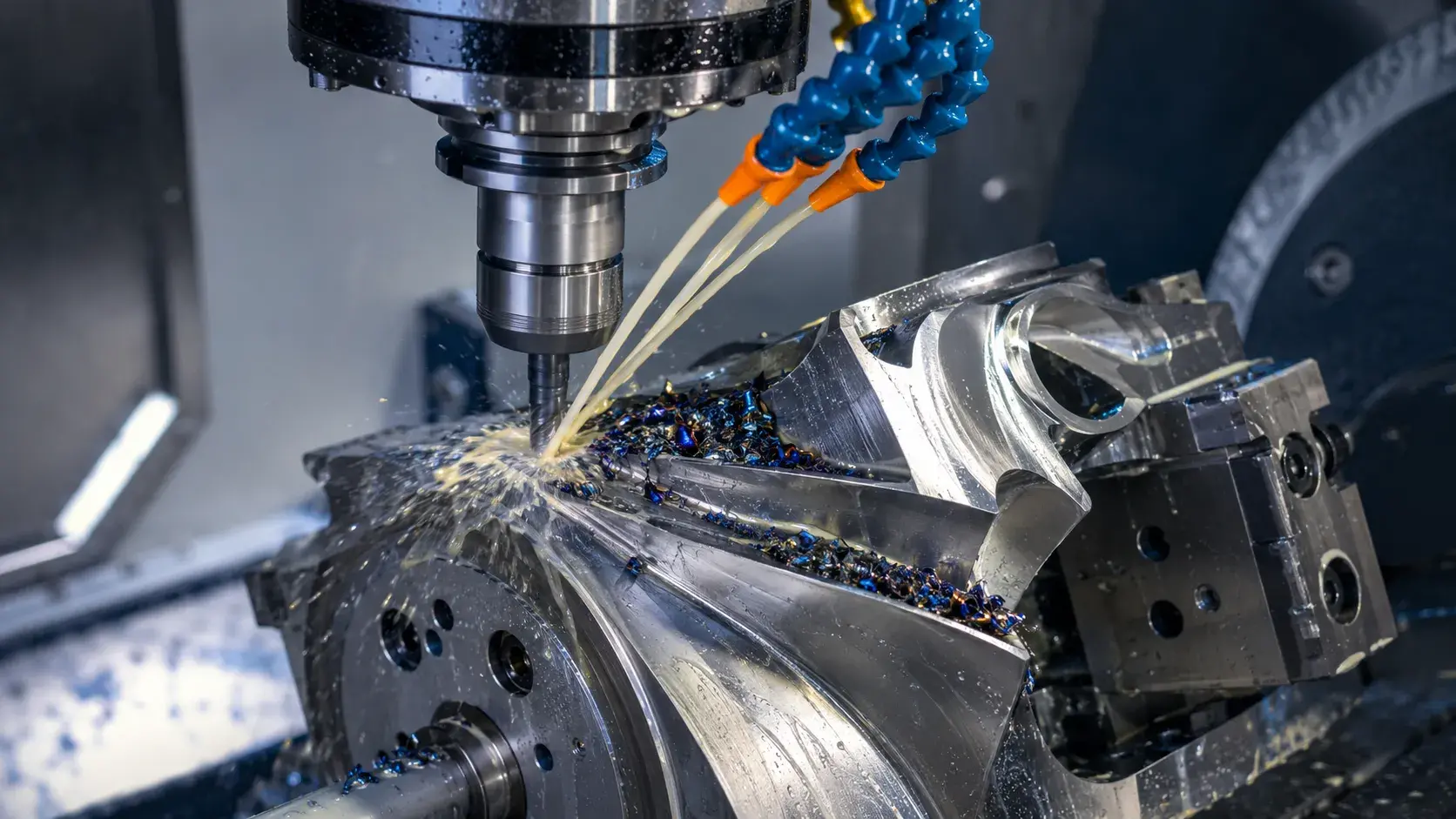
CNC machining titanium with coolant and heat-resistant cutting tools

Titanium is strong, lightweight and corrosion-resistant, but its poor heat dissipation and high cutting forces make it difficult to machine. 5-axis titanium machining reduces setups, improves access to complex features and helps maintain accuracy.

This guide explains the process of titanium CNC machining, the benefits of using 5-axis machines, factors that influence machining costs, and how to choose a reliable supplier for custom, complex titanium components.

Why Is Titanium Difficult to CNC Machine?

Titanium can be machined, but it behaves differently from materials like aluminum, brass, or mild steel.
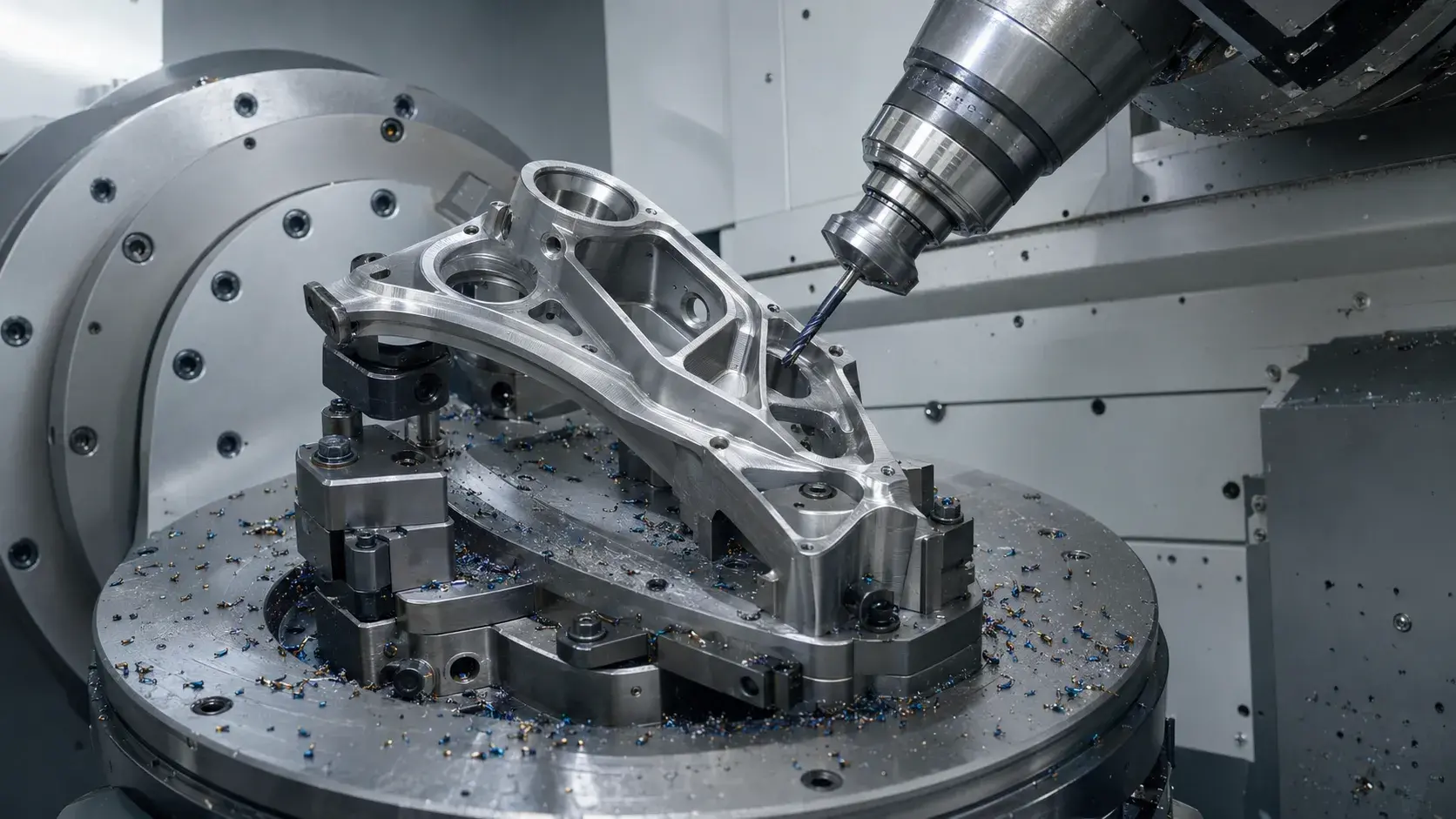
5-axis titanium machining of a complex aerospace bracket

A machining approach that works well for these materials may result in quick tool wear, chatter, or dimensional issues when used on titanium.

Several material properties make precision machining of titanium more challenging.

Heat Remains Close to the Cutting Edge

Titanium has low thermal conductivity.During the cutting process, much of the heat generated stays near the cutting edge rather than transferring into the workpiece or chips.

This concentrated heat can soften the cutting edge, damage the tool coating, and reduce tool life.It is important to manage heat through suitable cutting parameters, sharp tools, stable tool engagement, and reliable coolant supply.

Titanium Can React with the Cutting Tool

At high cutting temperatures, titanium can stick to the cutting edge.This can lead to the formation of built-up material on the tool and affect the quality of the finished surface.

The adhered material may break off and carry part of the cutting edge with it.It is important to ensure consistent chip removal and avoid unnecessary recutting of chips during CNC machining titanium.

High Cutting Forces Can Cause Vibration

Titanium maintains its strength during machining.
These high forces can cause chatter if the workpiece, fixture, spindle, or cutting tool lacks sufficient rigidity.

This becomes more noticeable when machining deep pockets, narrow slots, thin ribs, and features that require long-reach tools.Vibration affects the surface finish and can lead to dimensional inaccuracies.

Thin-Walled Parts Can Distort
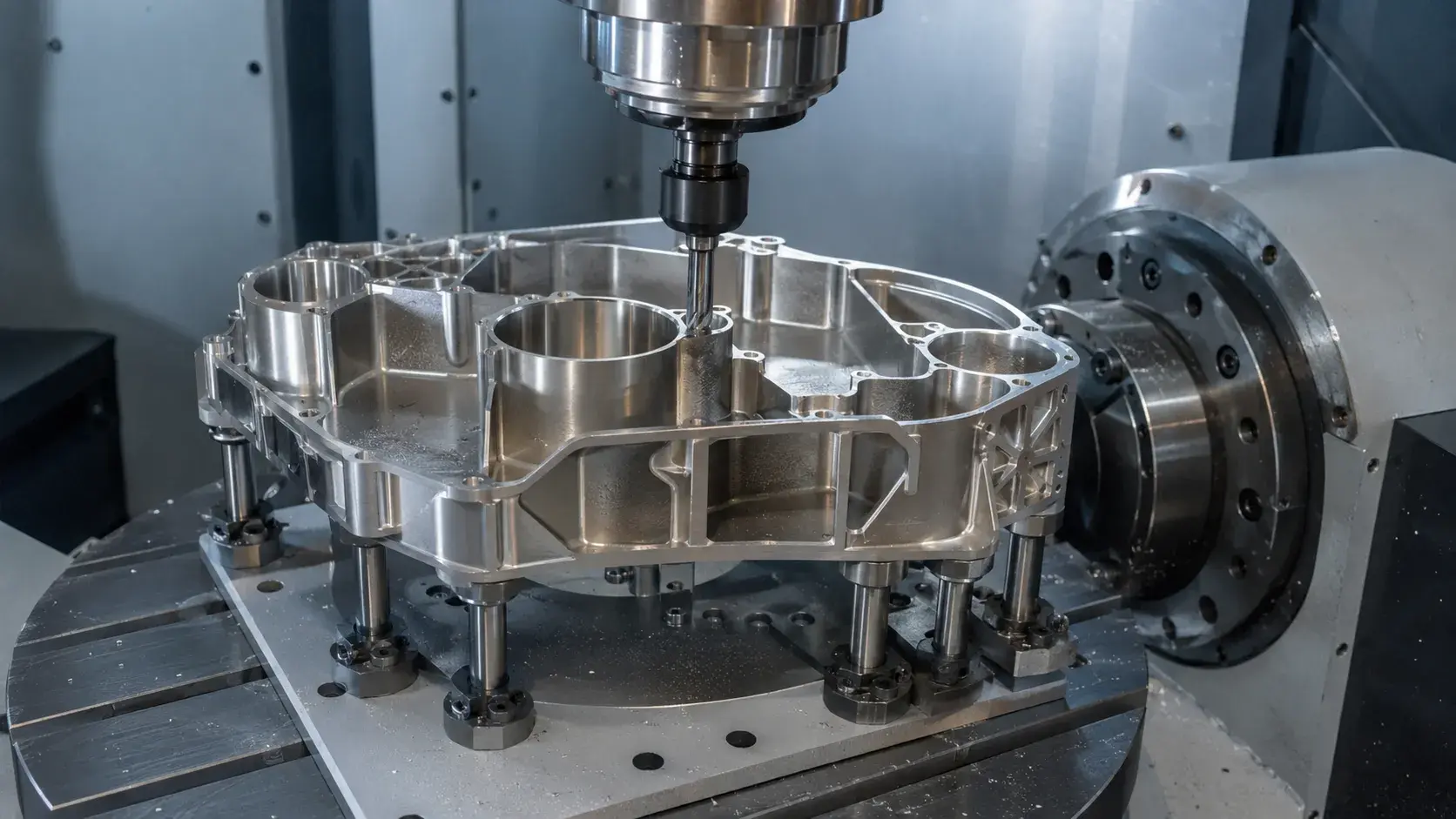
Thin-walled titanium part machined with controlled workholding

A titanium part may have residual stress from the original manufacturing process.Removing a significant amount of material can release this stress, causing the part to deform.

Thin walls are also sensitive to clamping pressure and cutting forces.A part may measure correctly while clamped but change shape once it is released.

Titanium Material and Tooling Are Expensive

Titanium stock is more costly compared to common aluminum and steel alloys.Machining titanium typically takes longer, and cutting tools may need more frequent inspection or replacement.

A failed titanium part can lead to significant loss of material, machine time, and programming effort.Careful process planning is essential to manage overall costs.
Common Titanium Grades for CNC Machining

Various titanium grades possess different levels of strength, corrosion resistance, formability, and how they behave during machining.
The choice of material depends on the mechanical properties, environmental conditions, and regulatory standards required for the part.

The following grades are commonly found in custom titanium parts.

Titanium GradeMain CharacteristicsTypical ApplicationsMachining Notes
Grade 1Commercially pure, soft and highly formableChemical equipment, heat exchangers and corrosion-resistant componentsLower strength than alloyed grades, but sharp tools are still required
Grade 2Good balance of strength, corrosion resistance and formabilityMarine, medical, chemical and general industrial partsGenerally easier to machine than Grade 5
Grade 5 / Ti-6Al-4VHigh strength-to-weight ratio and good fatigue resistanceAerospace structures, robotics, motorsport and high-performance equipmentRequires careful heat, tool wear and vibration control
Grade 23 / Ti-6Al-4V ELIExtra-low interstitial version of Grade 5 with improved toughnessMedical implants and critical aerospace componentsMaterial documentation and process control may be particularly important

Ti-6Al-4V is one of the most widely used alloys in titanium machining services. Its strength makes it suitable for high-performance components, but it also increases cutting forces and heat at the tool edge.

What Determines the Cost of 5-Axis Titanium Machining?

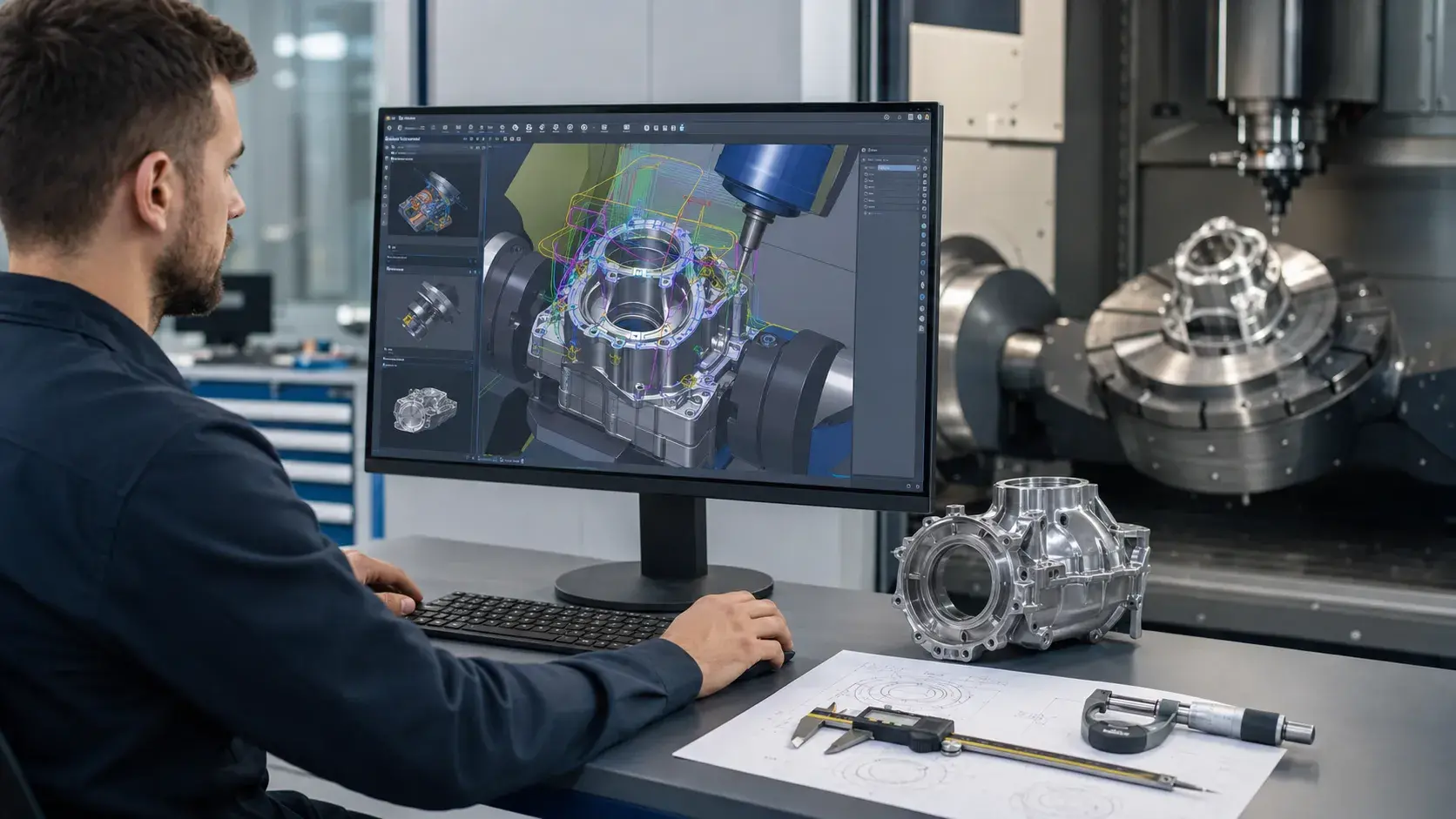
CAM programming and simulation for 5-axis titanium machining

The cost of 5-axis titanium machining is primarily influenced by the following factors:

  • Titanium grade and blank size: Using higher-grade titanium or larger blanks typically increases the cost.
  • Material removal: Machining parts that involve removing a significant amount of titanium can take more time and effort.
  • Part geometry: Features such as deep pockets, thin walls, undercuts, and complex surfaces often require more detailed programming and specialized cutting tools.
  • Tolerance: Parts with tighter tolerances usually need slower machining speeds, more careful setup, and extra inspection steps.
  • Surface finish: Achieving a high-quality surface finish can extend machining time and may involve additional processing steps.
  • Quantity: Prototypes tend to have higher per-unit setup costs, whereas larger production runs generally result in lower unit prices.
  • Inspection requirements: Additional costs may be incurred for services like CMM reports, material certificates, and full dimensional inspections.

A drawing that clearly identifies critical dimensions allows the inspection plan to focus on the features that matter most.

Cost FactorWhy It Affects PricePossible Cost-Control Approach
Large Titanium BlankHigher material cost and more stock removalReview blank shape, orientation and available stock sizes
Deep CavitiesLonger tools, slower cutting and difficult chip evacuationIncrease corner radii and improve tool access where possible
Thin WallsAdditional process stages and deformation controlAvoid unnecessarily thin sections and keep thickness consistent
Tight TolerancesMore finishing, setup control and inspectionApply tight tolerances only to functional features
Low QuantityProgramming and fixture cost is divided across fewer partsCombine prototype quantities when the design is stable
Extensive ReportingAdditional inspection and documentation timeDefine critical dimensions and required report format in advance

How Long Does Titanium CNC Machining Take?

The time required for 5-axis titanium machining depends on several factors, including the availability of the material, the complexity of the part, the order quantity, the tooling needed, and the finishing and inspection requirements.

A simple titanium prototype will generally take less time than a more complex part, such as a thin-walled aerospace housing.

The source of the material can greatly influence the lead time, especially if the design calls for an uncommon titanium grade or a specific material certificate.

Standard materials are usually available quickly, but special sizes or specific grades may require a longer lead time to source.

The setup of the machining program and the preparation of the fixtures also play a role in the initial order.

Orders that are repeated tend to be processed faster because the machining process, tooling, and inspection procedures are already in place.

YUANYI offers rapid prototyping and small-batch production services.

However, the exact delivery date is determined after a thorough review of the provided files.This approach is more reliable than giving a standard lead time without fully understanding the project details.

To get an accurate schedule, please provide the following information:

  • A 3D CAD model in STEP, STP, X_T, or another common file format
  • A 2D PDF drawing that includes tolerances and critical dimensions
  • The specific titanium grade and any required material specifications
  • The order quantity
  • Any surface finish or secondary process requirements
  • Inspection and documentation needs
  • The delivery destination and target date

Typical Applications for 5-Axis Machined Titanium Parts

5-axis titanium machining is commonly used for lightweight, high-strength parts with complex geometry, including:
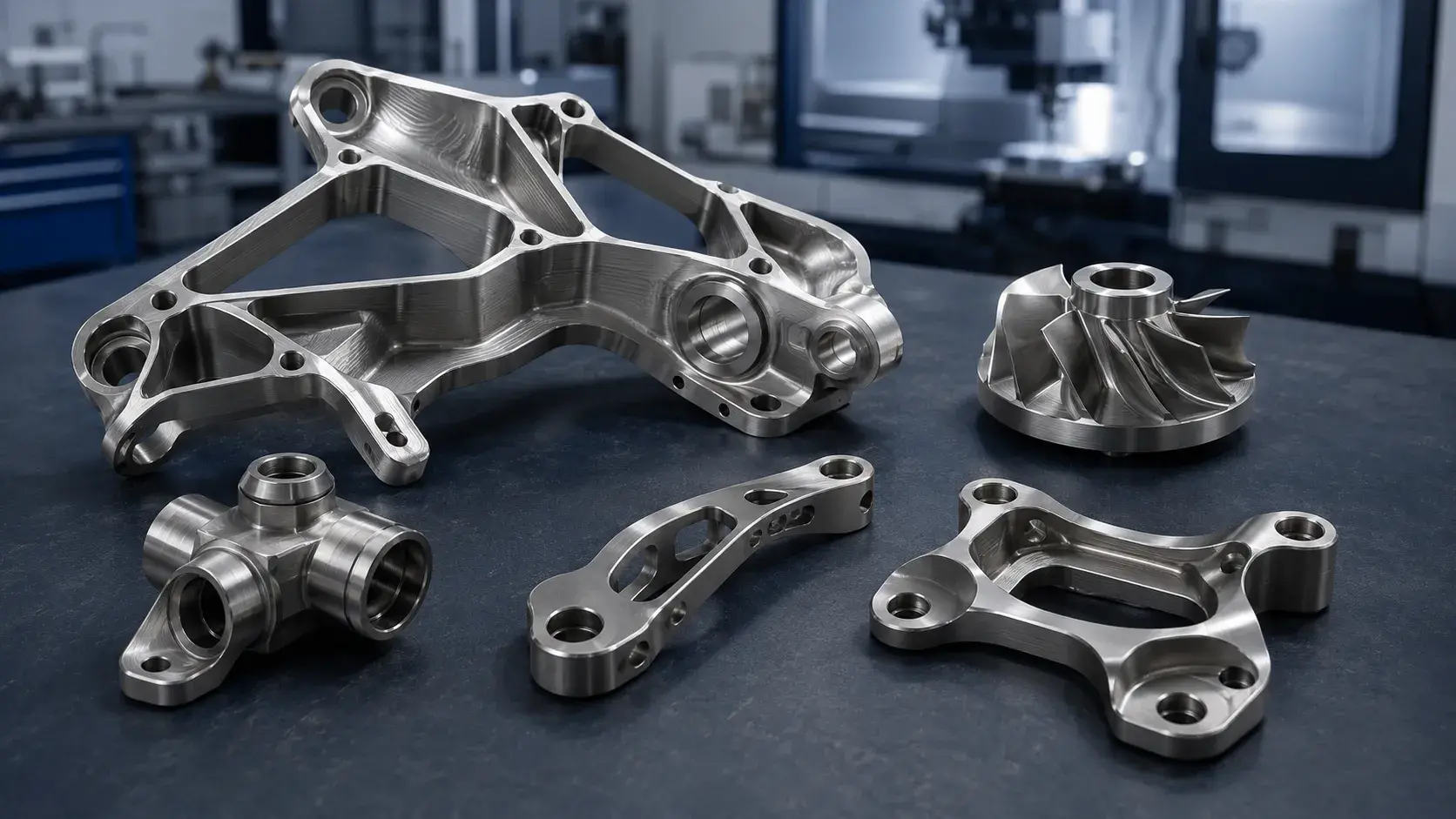
Custom 5-axis machined titanium parts for different industries

  • Aerospace: Structural brackets, mounts, housings and actuator components with thin walls, deep pockets or angled features.
  • Medical: Surgical instrument parts, equipment housings and implant-related components requiring corrosion resistance and biocompatibility.
  • Robotics and automation: Robotic joints, end-effectors and lightweight structural components with curved surfaces and angled bores.
  • Motorsport: Custom brackets, suspension components and high-performance parts that require low weight and fatigue resistance.
  • Industrial and energy equipment: Corrosion-resistant parts with complex flow channels, sealing surfaces and multiple connections.


How to Choose a 5-Axis Titanium Machining Supplier

A reliable supplier requires more than just a five-axis machine.
Before placing an order, consider the following:

  • Titanium machining experience: Ensure the supplier has worked with similar materials, thin walls, deep cavities, and tight tolerances.
  • CAM programming: The supplier should use simulation tools to plan toolpaths, fixtures, and machine movements to avoid collisions.
  • Process planning: Inquire about how the part will be secured, the number of setups required, and how deformation will be minimized.
  • Inspection capability: Verify that the supplier offers CMM inspection, material certificates, and dimensional reports.
  • DFM support: A trustworthy supplier should identify challenging features and potential unnecessary costs before starting the machining process.
  • Communication: Confirm that all drawing revisions, delivery dates, and quality requirements are clearly understood and agreed upon.

Why Choose YUANYI for Custom Titanium Parts?

YUANYI has more than 13 years of experience in manufacturing custom titanium parts using 3-axis, 4-axis, and 5-axis machining methods.

We offer services such as hyperMILL programming, machining simulation, Renishaw probing, and CMM inspection, with precision tolerances as tight as ±0.005 mm for appropriate features.

We provide support for both prototyping and small production runs without a minimum order quantity.

Simply send us your CAD files and drawings, and we will offer design for manufacturing feedback and a quotation within 24 hours.

Need Custom 5-Axis Titanium Parts?

Send us your CAD files and drawings. YUANYI supports complex titanium prototypes and low-volume production with no MOQ, DFM support and tolerances down to ±0.005 mm.

Get a Quote Within 24 Hours

Conclusion

Five-axis titanium machining is ideal for creating complex parts that have deep cavities, curved surfaces, thin walls, and features on multiple sides.

The primary benefits of this method include fewer setup changes, better tool access, and the use of shorter, more rigid cutting tools.

However, achieving successful machining still requires careful management of heat, stable workholding methods, appropriate toolpaths, and continuous inspection during the process.
When assessing cost and delivery time, it is important to base decisions on the actual CAD model and drawings rather than just the size of the part.

Frequently Asked Questions

Yes. Titanium can be machined successfully on a five-axis CNC machine when the tool, cutting parameters, fixture, coolant and toolpath are selected correctly.

Commercially pure grades such as Grade 1 and Grade 2 are generally easier to machine than high-strength Ti-6Al-4V. However, all titanium grades require attention to heat, sharp cutting edges and chip evacuation.

YUANYI can achieve tolerances down to ±0.005 mm on suitable machined features. The actual tolerance depends on part size, wall thickness, geometry, datum structure and inspection conditions.

Titanium raw material costs more, requires lower material-removal rates in many operations and places greater demands on cutting tools. Complex titanium parts may also require staged machining and more inspection.

Yes, but they require careful workholding and a controlled machining sequence. Material is normally removed in stages, leaving uniform stock for finishing.

It can reduce cost when it replaces several setups, simplifies fixturing or allows shorter tools to reach complex features. It may also improve consistency between related surfaces.

Yes. YUANYI has no minimum order quantity and can produce one-off prototypes, engineering samples and low-volume custom titanium parts.

Table of Contents
Discuss Your Complex Machining Requirements

Need Custom CNC Machined Parts?

From rapid prototypes to low-volume production, our engineering team can review your drawings and provide a manufacturing quote.

  • 24-Hour Quotation
  • DFM Engineering Support
  • No Minimum Order
  • ISO 9001 Certified
Request A Quote
Upload your drawing and get a quote within 24 hours.
