

Rare earth metals are a group of metallic elements that are known for having special magnetic, electrical, optical, and chemical characteristics.
Even though their name implies that they are very uncommon, most of these metals are actually found in fairly large amounts in the Earth’s crust.
The real issue is that they are typically spread out in small amounts, which makes it hard to extract and separate them effectively.
What Are Rare Earth Metals?
Rare earth metals consist of 17 metallic elements, which include 15 lanthanides from the periodic table, along with scandium and yttrium.
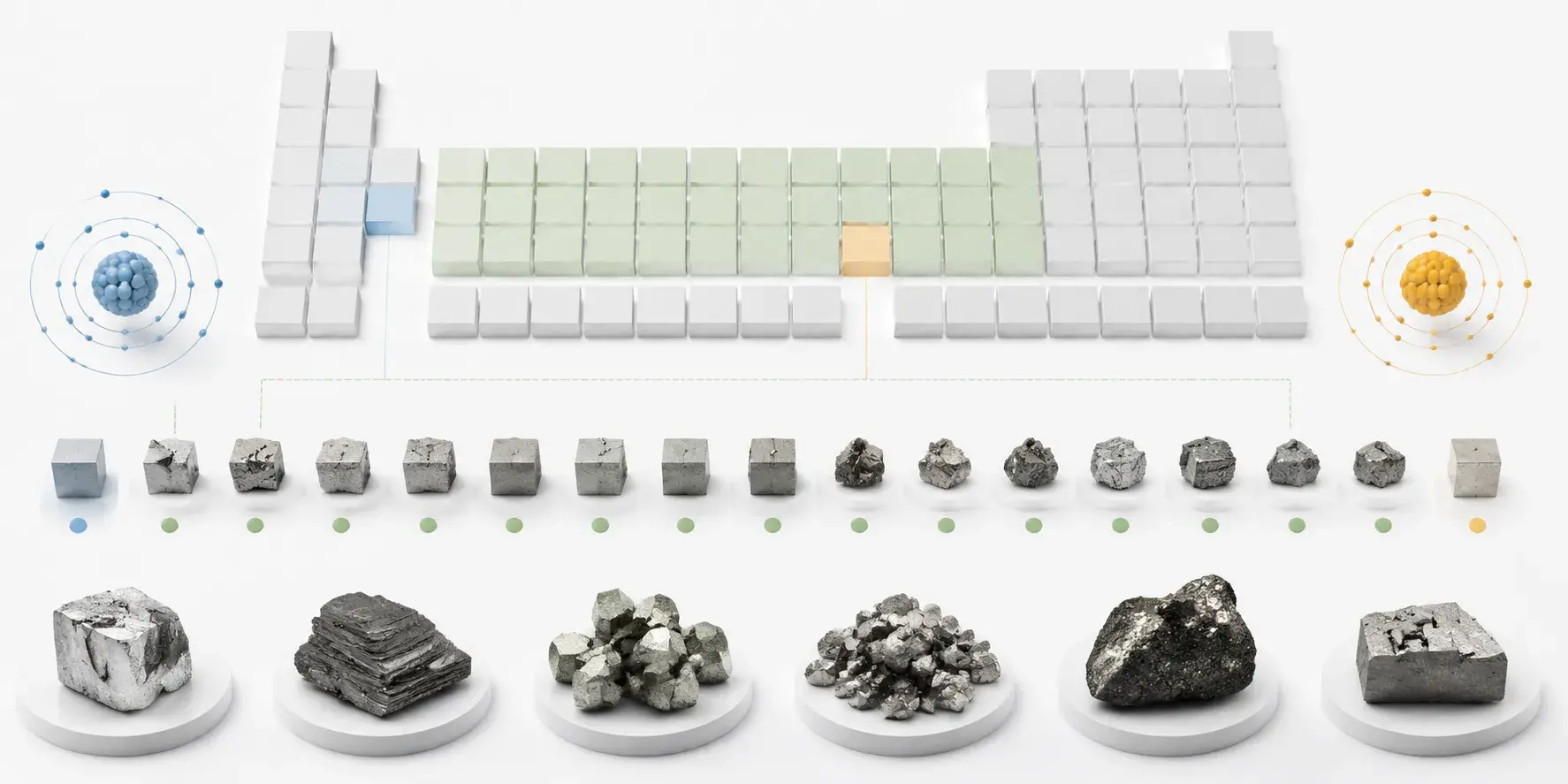
These elements are referred to as “rare earth” due to their similar chemical properties and frequent occurrence together in mineral deposits.
Despite this classification, they are not actually scarce in nature.In fact, some of these elements are more abundant than precious metals like gold or platinum.
The 17 rare earth elements include:
| Category | Elements |
|---|---|
| Lanthanides | Lanthanum (La), Cerium (Ce), Praseodymium (Pr), Neodymium (Nd), Promethium (Pm), Samarium (Sm), Europium (Eu), Gadolinium (Gd), Terbium (Tb), Dysprosium (Dy), Holmium (Ho), Erbium (Er), Thulium (Tm), Ytterbium (Yb), Lutetium (Lu) |
| Other rare earth elements | Scandium (Sc), Yttrium (Y) |
Why Are They Called Rare Earth Metals?
The term “rare” can be misleading.
Rare earth metals are not called rare because they are very scarce.
The main reasons for this name include:
Difficult Extraction
Rare earth elements are typically found mixed together in mineral deposits, rather than occurring in large, concentrated ores.
Extracting a single element from these deposits involves complex separation methods.
Similar Chemical Properties
Many rare earth elements share very similar chemical properties, which makes it challenging to separate them from one another.
Limited Economic Deposits
Although rare earth elements can be found around the world, only certain deposits have a high enough concentration to make mining and processing them economically viable.
Because of these challenges, creating usable rare earth materials requires advanced refining technologies.
List of Rare Earth Metals and Their Common Uses
Each rare earth element has different characteristics and industrial applications.
| Rare Earth Metal | Symbol | Common Uses |
|---|---|---|
| Neodymium | Nd | Permanent magnets, electric motors, wind turbines |
| Dysprosium | Dy | High-temperature magnets, aerospace applications |
| Cerium | Ce | Catalysts, polishing materials, glass manufacturing |
| Lanthanum | La | Batteries, optical glass, catalysts |
| Samarium | Sm | Specialized magnets and electronics |
| Europium | Eu | LED displays, fluorescent materials |
| Terbium | Tb | Green phosphors and electronic devices |
| Yttrium | Y | Lasers, ceramics, superconductors |
| Scandium | Sc | Aluminum alloys, aerospace materials |
Among these elements, neodymium, dysprosium, and terbium are especially important because of their magnetic properties.
Properties of Rare Earth Metals
The significance of rare earth metals lies in their special physical and chemical features.
1.Strong Magnetic Properties
A key feature of rare earth elements is their ability to form strong permanent magnets.
For example, neodymium magnets are some of the strongest permanent magnets available on the market.
They offer high magnetic strength while being relatively small in size.
These magnets are commonly used in:
- Electric vehicle motors
- Wind turbine generators
- Industrial robots
- Hard disk drives
- Speakers
- Sensors
Their strong magnetic performance allows engineers to build smaller and more efficient devices.
2.Excellent Electrical Properties
Rare earth elements are essential in many electronic components because they interact well with electrical and electromagnetic fields.
They are used in:
- Electronic sensors
- Communication equipment
- Semiconductor technologies
- Advanced control systems
Although rare earth metals are not typically used as electrical conductors like copper, their special properties make them useful in electronic systems.
3.Optical and Luminescent Properties
Some rare earth elements have unique light-emitting properties.
For example:
- Europium is used to produce red colors in display technologies.
- Terbium creates green phosphors.
- Yttrium compounds are used in lasers and optical materials.
These properties make rare earth elements important for:
- LED lighting
- Displays
- Optical devices
- Medical imaging equipment
4.High Temperature Performance
Some rare earth materials retain their performance even under high temperatures and harsh conditions.
For instance, dysprosium enhances the thermal stability of neodymium magnets used in challenging applications.
This makes rare earth materials valuable in:
- Aerospace systems
- Defense equipment
- High-performance motors
- Industrial machinery
Types of Rare Earth Metals
Although all rare earth metals share similar chemical characteristics, they are commonly divided into two groups based on their atomic weight and geological behavior: light rare earth elements (LREEs) and heavy rare earth elements (HREEs).
This classification helps industries understand their availability, properties, and typical applications.
Light Rare Earth Elements (LREEs)
Light rare earth elements have lower atomic numbers and generally occur in higher concentrations compared with heavy rare earth elements.
Common LREEs include:
- Lanthanum (La)
- Cerium (Ce)
- Praseodymium (Pr)
- Neodymium (Nd)
- Samarium (Sm)
These elements are widely used because they are more abundant and easier to process.
Typical applications include:
| Element | Main Applications |
|---|---|
| Neodymium (Nd) | Permanent magnets, electric motors, wind turbines |
| Lanthanum (La) | Batteries, optical glass, catalysts |
| Cerium (Ce) | Catalysts, polishing powders, glass manufacturing |
| Praseodymium (Pr) | Magnets, aerospace alloys, pigments |
Among LREEs, neodymium is one of the most commercially important elements because of its role in high-performance permanent magnets.
Heavy Rare Earth Elements (HREEs)
Heavy rare earth elements have higher atomic numbers and are generally less abundant than light rare earth elements.
Common HREEs include:
- Dysprosium (Dy)
- Terbium (Tb)
- Yttrium (Y)
- Erbium (Er)
- Ytterbium (Yb)
- Lutetium (Lu)
These materials are often valued for their ability to improve performance under extreme conditions.
Typical applications include:
| Element | Main Applications |
|---|---|
| Dysprosium (Dy) | High-temperature magnets, aerospace systems |
| Terbium (Tb) | Green phosphors, electronic devices |
| Yttrium (Y) | Lasers, ceramics, superconductors |
| Erbium (Er) | Fiber optic systems and optical equipment |
Because heavy rare earth elements are more difficult to obtain, they are often considered strategically important materials for advanced technologies.
What Are Rare Earth Metals Used For?
Rare earth metals are important materials due to their special properties, which are used in many modern industries.

These elements are not typically used as structural components like aluminum or steel, but rather to enhance the performance, efficiency, and reliability of advanced technologies.
Their uses include:
1.Electric Vehicles and Motors
Neodymium and dysprosium are commonly used in permanent magnets for:
- Electric vehicle (EV) motors
- Hybrid vehicles
- Industrial robots
- Automation equipment
These rare earth magnets offer strong magnetic properties while allowing for smaller and lighter motors.
2.Renewable Energy
Rare earth elements play a key role in renewable energy systems, especially in wind turbines.
Magnets made from neodymium help create efficient and compact generators used in:
- Wind turbines
- Energy systems
- Power generation equipment
3.Electronics and Consumer Devices
Many modern electronic products depend on rare earth elements, such as:
- Smartphones
- Computers
- Displays
- Speakers
- Sensors
For example, europium and terbium are used in display technologies, while neodymium is widely used in small, powerful magnets.
4.Aerospace and Medical Applications
Rare earth materials are used in high-performance applications where reliability and precision are essential.
Some common uses are:
- Aerospace sensors and electronic systems
- High-temperature magnetic components
- Medical imaging equipment
- Optical devices
Their special magnetic and optical properties make them essential in advanced engineering and technology.
Rare Earth Metals in Manufacturing and CNC Machining
Although rare earth metals are not typically used as structural materials like aluminum, stainless steel, or titanium, they play a significant role in modern manufacturing due to their special magnetic, electrical, and optical properties.
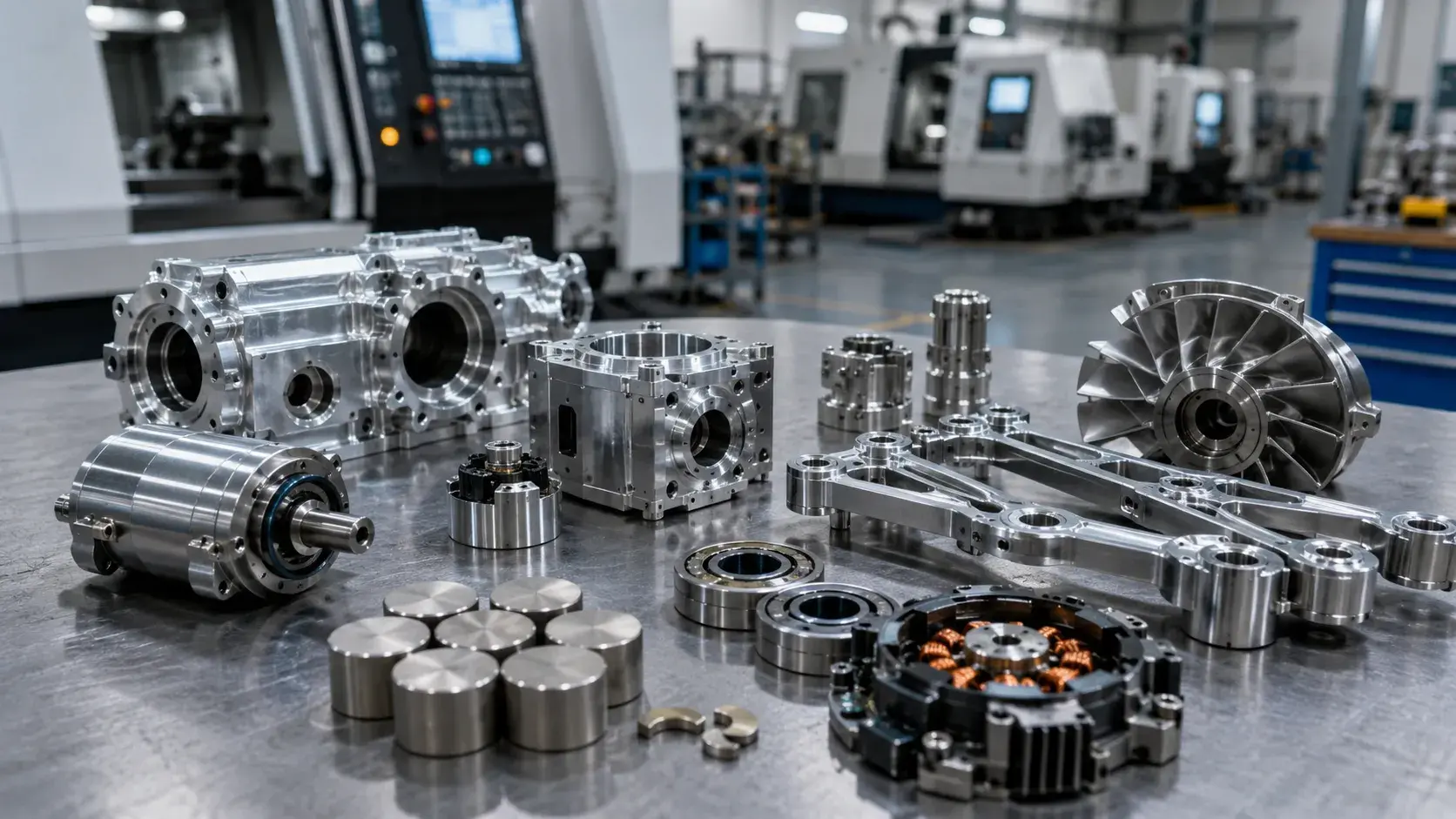
Rare earth elements are primarily used in functional parts, advanced alloys, and permanent magnets, rather than in standard machined components.
Common manufacturing applications include:
- Neodymium magnets, which are used in electric motors, robotics, automation equipment, and precision instruments.
- Scandium-aluminum alloys, which are used for lightweight components in the aerospace industry.
- Rare earth additives, which are used in magnesium and other alloys to enhance strength, durability, and performance.
In CNC manufacturing, rare earth materials are often part of assembled components, while the surrounding precision parts are machined from materials such as aluminum, stainless steel, titanium, and engineering plastics.
Can Rare Earth Metals Be CNC Machined?
Yes, certain rare earth materials can be machined, but they are not typically used as primary materials in CNC machining processes.
Most rare earth elements are utilized in specialized applications like permanent magnets, electronic components, and high-performance alloys, rather than in structural parts.
CNC machining is primarily used to manufacture supporting parts and assemblies from materials such as aluminum, stainless steel, titanium, and engineering plastics.
These parts are then combined with rare earth components to form the final products.
Why Material Selection Matters in Precision Manufacturing
In modern engineering, there is a growing need for materials that offer lightweight design, high efficiency, and dependable performance.
Although traditional metals like aluminum and steel are still vital for structural components, rare earth materials offer special functional benefits that are difficult to replace.
In complex assemblies, engineers frequently use a mix of different materials:
- Aluminum is used for lightweight structures
- Titanium is chosen for its high strength and resistance to corrosion
- Stainless steel is preferred for its durability
- Rare earth magnets are used to achieve strong magnetic performance
Selecting the right combination of materials is crucial for meeting performance requirements, controlling costs, and ensuring efficient manufacturing processes.
Rare Earth Metals vs Common Metals
Rare earth metals and traditional engineering metals like aluminum, steel, and titanium have distinct roles in today’s industries.
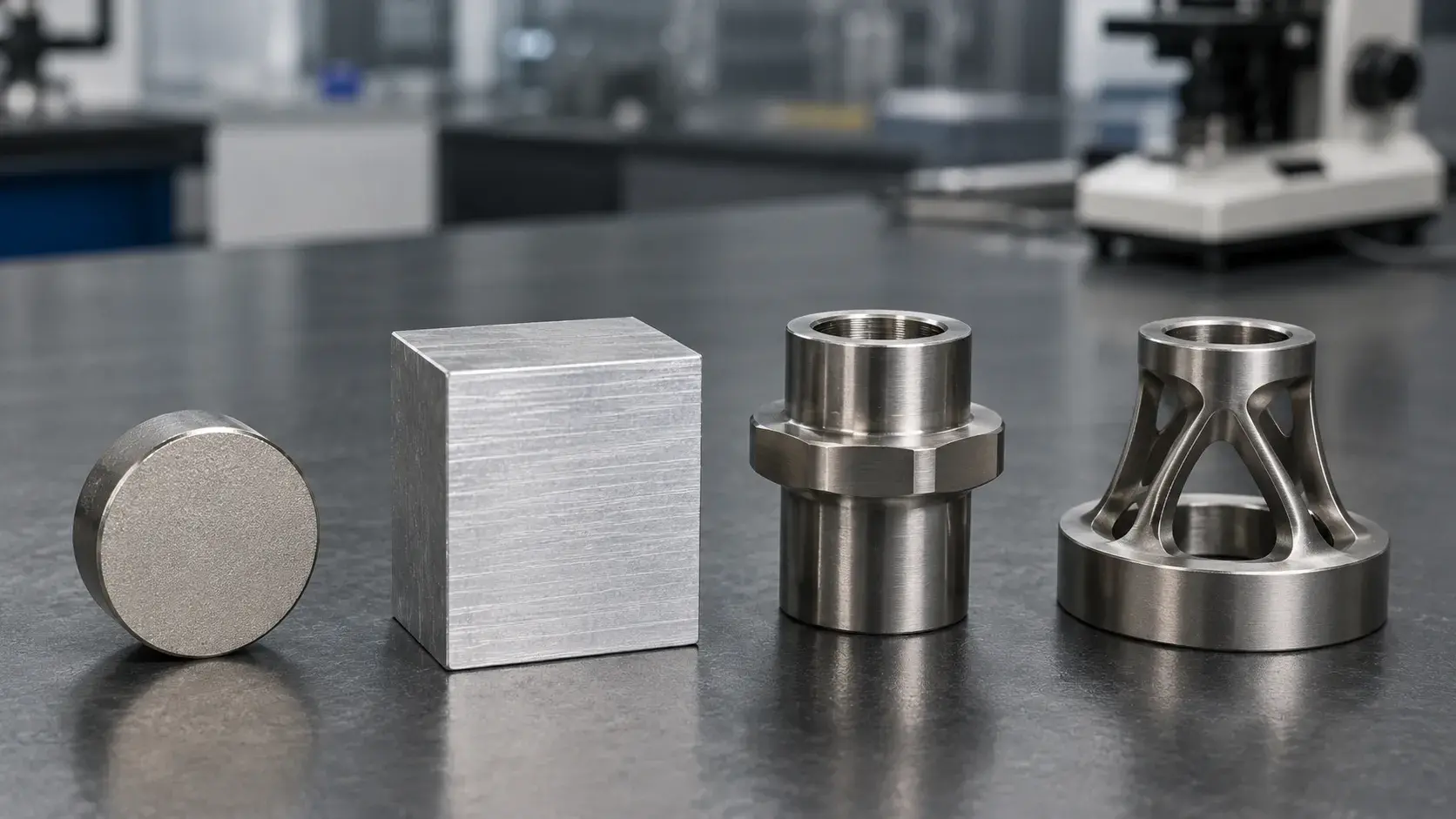
While common metals are primarily appreciated for their strength, durability, and ability to support structures, rare earth elements are prized for their special functional characteristics.
The following table compares rare earth metals with common engineering metals:
| Feature | Rare Earth Metals | Common Metals (Aluminum, Steel, Titanium) |
|---|---|---|
| Main Purpose | Functional applications such as magnets, electronics, and optical technologies | Structural components and mechanical parts |
| Key Properties | Strong magnetic, electrical, and optical performance | High strength, durability, corrosion resistance, and machinability |
| Typical Applications | Electric motors, sensors, displays, renewable energy systems | Aerospace parts, automotive components, industrial equipment |
| Machining Usage | Limited direct CNC machining applications | Widely used for CNC machining and precision manufacturing |
Conclusion
Rare earth metals consist of 17 elements that have special magnetic, electrical, and optical characteristics.
Even though they are not typically used as primary structural materials, they play a crucial role in modern technologies such as electric vehicles, renewable energy systems, electronics, aerospace, and medical devices.
While rare earth materials offer unique functionalities, conventional metals like aluminum, titanium, and stainless steel are still vital for precise manufacturing and CNC machining processes.
Need Precision Machining for Advanced Materials?
From aluminum and titanium to complex engineering materials, YUANYI provides precision CNC machining services for aerospace, automation, electronics, and industrial applications. Our engineers can help select suitable materials, optimize designs, and manufacture high-quality custom parts.
Get a Free QuoteFrequently Asked Questions About Rare Earth Metals
No. Rare earth metals are not generally stronger than steel. Their main advantage is not mechanical strength but unique functional properties such as magnetism, optical performance, and electrical behavior. Structural metals like steel and titanium are usually better choices for load-bearing components.
Neodymium magnets are considered the strongest commercially available permanent magnets. They provide very high magnetic strength compared with traditional ferrite magnets, making them widely used in electric motors, robotics, and precision equipment.
Rare earth elements are mined and processed in several countries, including China, the United States, Australia, and others. The supply chain includes mining, separation, refining, and production of rare earth-based materials.
Yes. Many rare earth materials can be recovered and recycled from products such as electric motors, electronic devices, and industrial equipment. Recycling helps reduce dependence on new mining and improves resource efficiency.
Industries that rely heavily on rare earth materials include:
- Electric vehicles
- Renewable energy
- Electronics
- Aerospace
- Robotics
- Medical technology
Their unique properties make them difficult to replace in many high-performance applications.



