

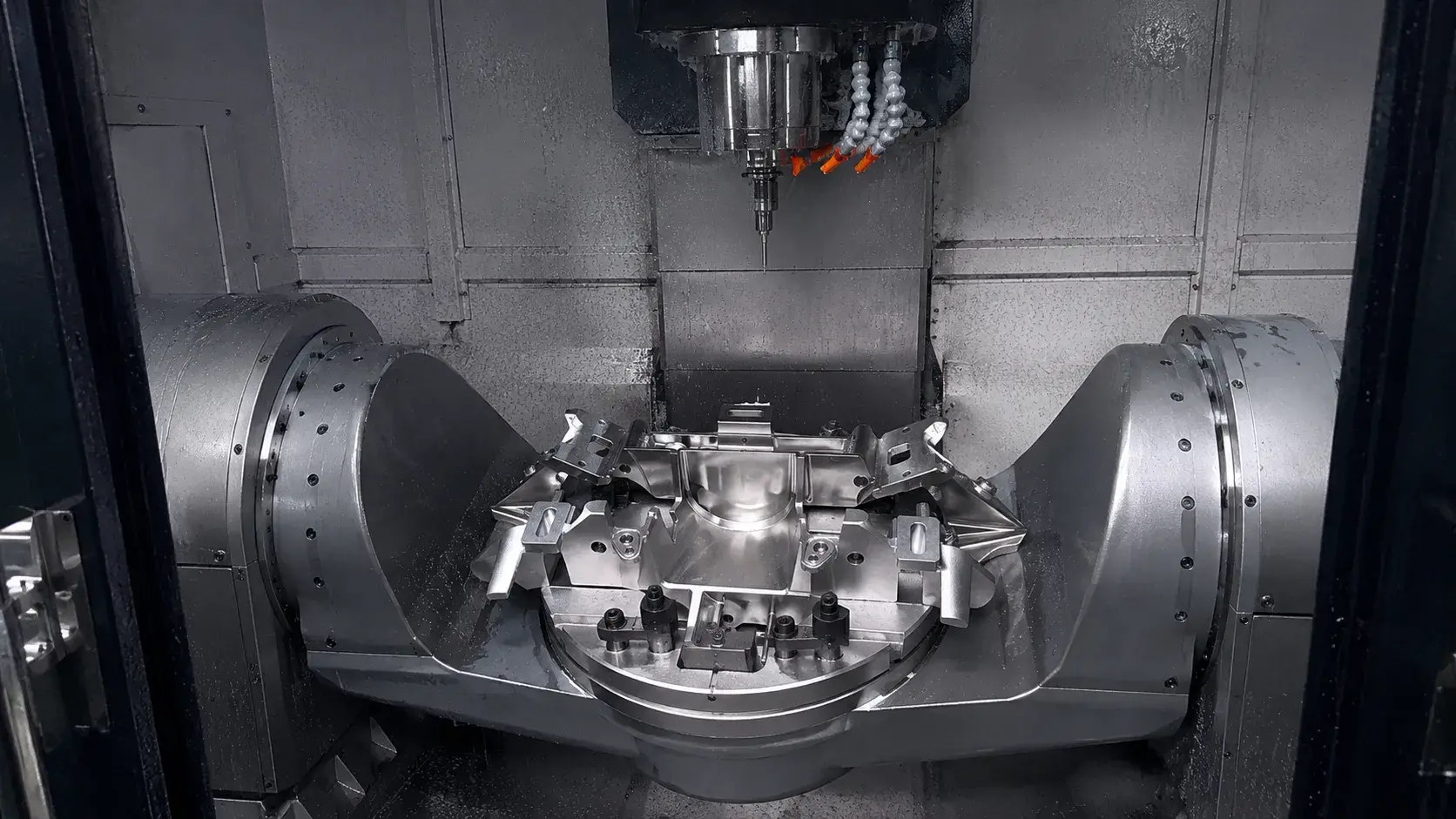
Why Are More and More Manufacturing Companies Turning to CNC Machining?
When a company is preparing to develop a new product or seeking new parts suppliers, it faces a common challenge: What manufacturing process can ensure product quality while balancing cost, delivery efficiency, and the ability to scale up to mass production?
For industries that require high-precision parts, the answer often lies in CNC machining.
Whether it’s structural components in new energy vehicles, precision components in medical devices, or complex parts in the aerospace sector, modern manufacturing companies are increasingly turning to CNC machining technology to produce their parts. This is not only because it achieves higher machining precision, but more importantly, it helps companies establish more stable and repeatable production processes, thereby reducing quality fluctuations during mass production.
For procurement managers, the key considerations when selecting a machining supplier are no longer limited to the number of machines or the price of a quote. Instead, they focus on whether the supplier possesses engineering support capabilities, a quality management system, consistent delivery reliability, and the ability to provide ongoing technical support throughout the product lifecycle.
In fact, in many OEM projects, what truly determines success or failure is not the machining equipment itself, but whether a proper process evaluation was conducted during the early stages of product design. For example, if a part’s machining path, clamping method, or material properties are not fully considered, even the use of advanced equipment may lead to increased manufacturing costs, extended delivery cycles, or even complications during product assembly.
Consequently, an increasing number of companies are inviting manufacturing suppliers to participate in Design for Manufacturability (DFM) reviews during the product development phase. By optimizing the structure and machining solutions in advance, they can reduce overall manufacturing costs while ensuring performance. This collaborative development model has gradually become a key trend in modern precision manufacturing.
This article will address the issues of greatest concern to buyers, including: For which products is CNC machining actually suitable? Which industries rely most heavily on this technology? How should one select the appropriate materials and processes? And how should one evaluate a manufacturing partner worthy of a long-term collaboration? We hope that through this content, you will gain a more comprehensive understanding of the value of CNC machining in modern manufacturing—one that goes beyond the mere level of equipment or processes.
Why Are More and More Companies Choosing CNC Machining?
In the past, many mechanical parts were primarily machined using conventional machine tools and manual expertise. While this approach could meet some product requirements, as part geometries became increasingly complex and tolerance requirements grew stricter, the limitations of traditional machining methods in terms of efficiency, stability, and consistency gradually became apparent.
The development of CNC (Computer Numerical Control) technology has transformed this landscape.
Using digital programs to control machine tools for machining not only reduces human error but also ensures a high degree of consistency across every batch of products. For companies requiring continuous batch production, this consistency is often more important than simply pursuing extremely high precision, as it directly impacts subsequent assembly efficiency, product reliability, and supply chain stability.
On the other hand, modern manufacturing is experiencing a trend toward ever-shorter product lifecycles. From product design to prototype validation and on to mass production, every stage demands faster response times. Relying solely on traditional machining methods often makes it difficult to meet the market’s demand for rapid iteration.
In contrast, professional Precision CNC Machining Services not only handle the manufacturing of complex parts but also provide engineering recommendations early in the product development phase—such as optimizing machining sequences, reducing the number of setups, and adjusting fillet radii and hole placement. These seemingly minor optimizations can often effectively reduce manufacturing costs while improving machining efficiency and product reliability.
For international buyers, a truly valuable manufacturing partner does more than simply machine parts according to drawings; they also offer sound recommendations from a manufacturing perspective to help customers mitigate future risks. This is a key reason why an increasing number of OEMs are opting for long-term partnerships rather than frequently switching suppliers.
What Is CNC Machining? More Than Just a Machining Method; It’s a Complete Manufacturing Solution
When many people first encounter CNC, they tend to think of it simply as “a computer-controlled machine tool.”
In fact, this is only part of the picture.
From the perspective of modern manufacturing, CNC machining is more like a complete digital manufacturing process. It encompasses multiple stages, including product design, process evaluation, programming, CNC machining, dimensional inspection, and surface treatment—each step influencing the final product’s quality and manufacturing costs.
A well-executed machining project typically begins with 3D design. Engineers use CAD software to create models and analyze them in light of the product’s intended use, tolerance requirements, and material properties. Before entering the machining phase, a DFM (Design for Manufacturing) evaluation is conducted to determine whether the product has areas that are difficult to machine, whether process steps can be reduced, and whether toolpaths can be optimized—thereby lowering manufacturing costs and improving machining efficiency.
After the design review is completed, CAM software generates machining programs based on the model, and the CNC machine tool then automatically performs operations such as milling, turning, and drilling according to the predetermined paths. The entire process is program-controlled, ensuring consistent quality across different production batches.
It is important to emphasize that the value of modern CNC machining lies not merely in the “machining” itself, but in its ability to integrate design, manufacturing, inspection, and quality management into a single, comprehensive process. For companies, this translates to higher product reliability, more stable delivery capabilities, and a smoother transition from prototype development to mass production.
How Does CNC Machining Work? The Complete Process from Design to Finished Product
Although machining processes vary by product, a typical machining project generally goes through the following stages:
Step 1: Product Design and Design for Manufacturability (DFM)
The design team creates a 3D model based on the product’s functionality. Engineers then evaluate the structure from a manufacturing perspective—checking for issues such as deep cavities that are difficult to machine, excessively small fillets, or unnecessarily complex features—and propose optimization recommendations.
Step 2: Process Planning and Programming
A machining plan is developed based on material properties, tolerance requirements, and machining sequence. CAM software is used to generate toolpaths, ensuring an optimal balance between machining efficiency and precision.
Step 3: Machining and Quality Control
Machines automatically complete machining according to the program. Concurrently, quality control measures—including First Article Inspection (FAI), in-process sampling, and Coordinate Measuring Machine (CMM) inspections—are employed to verify critical dimensions and ensure the product meets design requirements.
This closed-loop process, spanning design, manufacturing, and inspection, is a key factor enabling modern precision manufacturing to continuously improve product quality.
Which Industries Rely Most on CNC Machining? Examining Its Value Through Actual Manufacturing Needs
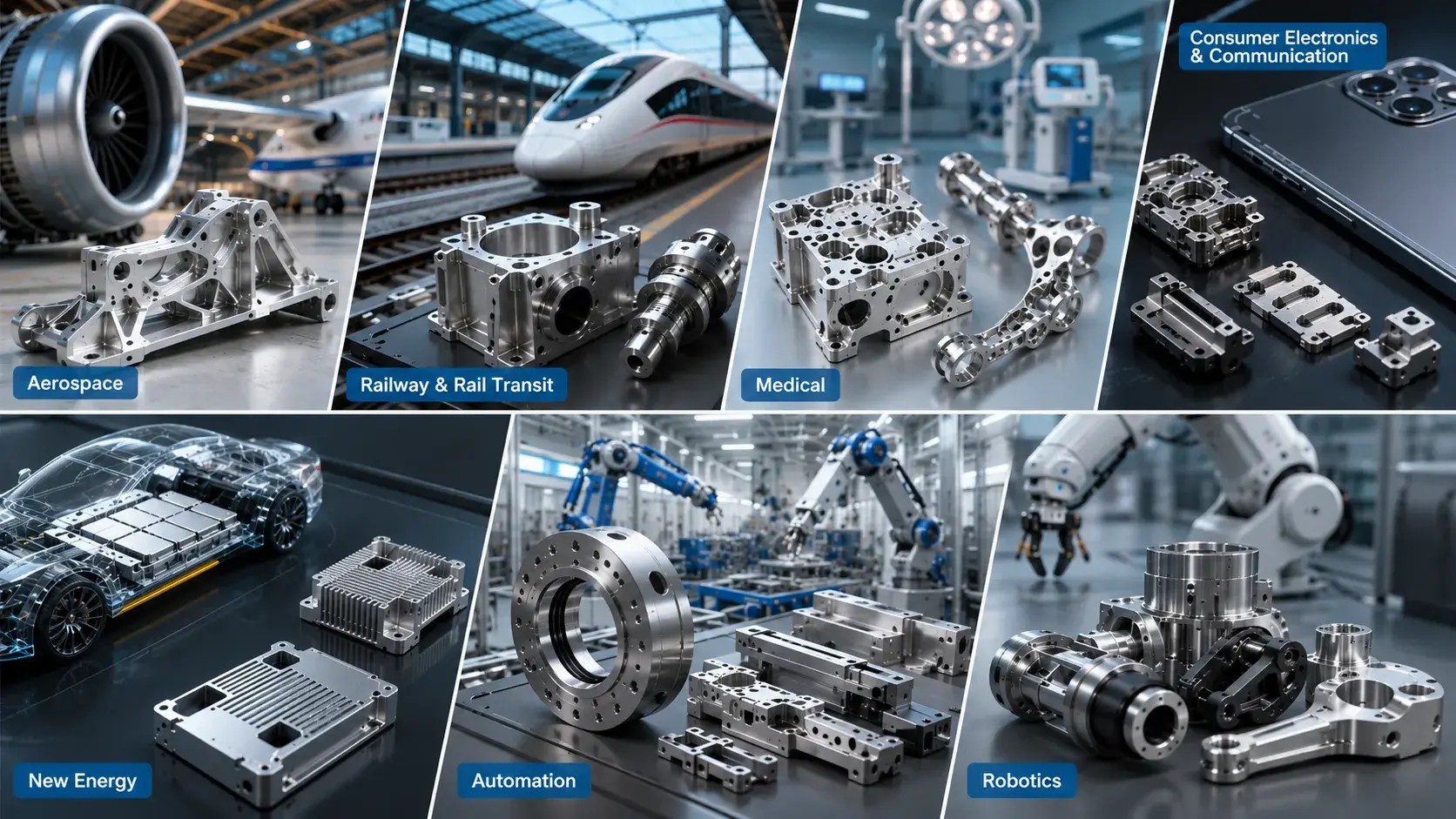
Different industries have varying requirements for components, but for those that demand high precision, high consistency, and stable delivery, CNC machining has become virtually an indispensable manufacturing method. Compared to traditional machining, it not only meets the manufacturing demands of complex structures but also ensures consistency across every batch of products through digitalized production processes. This is a key reason why an increasing number of companies are entrusting the production of critical components to specialized machining suppliers.
Below, we’ll examine several representative industries to see exactly which manufacturing challenges CNC machining truly addresses.
Aerospace: High Precision Is Just the Foundation; Stability Is the Key
The aerospace industry is generally considered one of the sectors with the most stringent manufacturing requirements.
Whether it’s aircraft structural components, engine parts, or satellite and drone assemblies, every part must maintain long-term stable operation under extreme conditions. Therefore, this industry focuses not only on dimensional accuracy but also places great emphasis on material performance, quality traceability, and the repeatability of the manufacturing process.
For example, aerospace components are often manufactured from aluminum alloys, titanium alloys, or high-strength stainless steel. While these materials possess excellent mechanical properties, they are also more difficult to machine, requiring careful control of cutting parameters based on material characteristics to avoid deformation, burrs, or heat-affected zones.
For aerospace projects, a mature supplier typically needs not only five-axis machining capabilities but also well-established quality management processes, including first-article inspection (FAI), dimensional inspection, material batch traceability, and comprehensive inspection records. These measures help customers meet industry quality requirements and reduce risks associated with subsequent assembly and validation.
Consequently, in the aerospace sector, true competitive advantage lies not merely in advanced equipment, but in the ability to consistently and reliably deliver products that meet standards over the long term.
Automotive Manufacturing: Mass Production Puts Supply Chain Capabilities to the Test
The automotive industry is one of the sectors where CNC machining is most widely applied. However, unlike the aerospace sector, it places greater emphasis on production efficiency, cost control, and batch consistency.
Particularly against the backdrop of the rapid development of new energy vehicles, product iteration cycles have accelerated significantly, requiring manufacturers to work with suppliers who possess faster response times and more stable delivery capabilities.
For example, various automotive components must not only meet dimensional requirements but also ensure that tolerances remain consistent throughout long-term mass production. If slight deviations occur in the same part across different batches, it may affect the assembly efficiency of the entire vehicle and even increase rework costs.
In recent years, an increasing number of automakers have begun adopting aluminum parts to replace some traditional steel components in order to achieve lightweight vehicle design. Aluminum alloys are characterized by their light weight, good machinability, and corrosion resistance, making them highly suitable for components such as battery trays, motor housings, heat sinks, and structural brackets.
However, it is important to note that different aluminum alloy grades exhibit significant differences in strength and machinability. For example, 6061 is better suited for structural components with high comprehensive performance requirements, while 7075 is commonly used for high-strength applications. Material selection requires a comprehensive consideration of product functionality, cost budget, and subsequent surface treatment requirements, rather than simply choosing the lowest-cost option.
For OEM customers, suppliers capable of providing material recommendations and process optimization typically offer greater collaborative value than those who merely provide machining services.
Medical Industry: Quality Systems Are More Important Than Manufacturing Capabilities
The manufacturing quality requirements in the medical device industry differ fundamentally from those of general industrial products.
In addition to manufacturing precision, medical products must also meet strict regulatory requirements, such as material biocompatibility, manufacturing environment, quality traceability, and production record management.
Common medical parts include:
- Surgical instruments
- Orthopedic implants
- Structural components for medical devices
- Components for diagnostic instruments
- Medical robotics parts
These products are typically manufactured using medical-grade stainless steel, titanium alloys, or high-performance engineering plastics.
In this field, companies focus more on whether suppliers have established a robust quality management system—such as ISO 13485—and whether they can provide comprehensive test reports and material certificates, rather than merely on manufacturing capacity alone.
Therefore, the medical industry is better suited to partnering with manufacturing partners that have long-term experience in quality management, rather than frequently changing suppliers.
Consumer Electronics and Communications Equipment: Faster Iteration Speeds Mean Higher Manufacturing Efficiency
Consumer electronics are being updated at an increasingly rapid pace, and the time from prototype development to mass production is constantly shrinking, placing higher demands on manufacturing efficiency.
Take smartphones, communications equipment, and data center products as examples: many structural components are machined from aluminum alloys, which not only ensure excellent surface finish but also provide superior heat dissipation performance.
During the project development phase, engineering teams typically need to rapidly complete multiple rounds of prototype validation. If suppliers can participate in process evaluation during the design phase and promptly offer optimization recommendations, this can reduce the number of subsequent revisions and accelerate time-to-market.
Therefore, for the electronics industry, manufacturing capability is reflected not only in processing speed but also in engineering collaboration capabilities.
New Energy and Industrial Automation: Product Upgrades Drive Continued Growth in Demand for Precision Manufacturing
In recent years, new energy equipment, robotics, and automation equipment have become the fastest-growing sectors in terms of demand for precision machining.
Whether it’s energy storage systems, photovoltaic equipment, or industrial robots, all require a large number of high-precision structural and transmission components. These products typically feature high assembly precision and long-term operational stability, resulting in extremely stringent requirements for machining quality and dimensional consistency.
For example, robot reducer housings, automation equipment fixtures, and precision transmission assemblies are all typical examples of precision parts. These parts often require multiple machining processes; without effective quality control during machining, cumulative assembly errors can easily occur, affecting the performance of the entire machine.
Consequently, in the automation industry, an increasing number of companies are opting for manufacturing partners capable of providing engineering support, quality management, and continuous improvement—rather than focusing solely on the unit price of machining.
CNC machining not only manufactures parts but also helps companies shorten product development cycles.
Many companies believe that the value of CNC machining lies solely in manufacturing parts according to drawings.
In fact, under modern manufacturing models, a mature machining supplier plays a more important role by participating in the product development process.
For example, during the prototyping phase, engineers can use DFM analysis to optimize product structures and reduce features that are difficult to machine; during the pilot production phase, process parameters can be adjusted based on machining data to improve yield; and once mass production begins, standardized processes and quality control ensure consistency across different batches.
This continuous collaboration—from design and prototyping through mass production—not only reduces manufacturing costs but also helps customers complete product development faster and enhances supply chain stability.
Consequently, an increasing number of international manufacturing companies are no longer seeking mere contract manufacturers, but rather long-term partners capable of jointly solving engineering challenges and continuously optimizing manufacturing solutions.
How to Select the Right Manufacturing Material? Materials Determine Not Only Performance but Also Machining Costs
In many product development projects, people often focus on equipment and machining precision while overlooking the impact of the material itself on manufacturing costs, product lifespan, and production efficiency.
In fact, for the same part, selecting different materials can result in significant differences in machining time, tool wear, surface treatment methods, and even the final procurement cost. Therefore, for product engineers and procurement teams, conducting a thorough material evaluation early in the project is more valuable than making repeated design revisions later on.
A well-developed manufacturing solution typically takes the following factors into comprehensive consideration:
- The product’s operating environment
- Strength and weight requirements
- Corrosion resistance
- Machinability
- Surface treatment methods
- Mass production costs
- Subsequent assembly requirements
Only by striking a balance among these factors can product performance and manufacturing costs be truly optimized.
Aluminum Parts: Why Have Aluminum Alloys Become the Top Choice in Modern Manufacturing?
Among the many machinable materials, aluminum parts have always held an important position.
This is not only because aluminum alloys are lightweight and have good thermal conductivity, but more importantly, because they offer excellent machinability, which can shorten processing time and improve production efficiency.
As a result, aluminum alloys have become virtually the default choice in the following industries:
- Consumer electronics housings
- Structural components for automation equipment
- Drone frames
- Heat dissipation components for telecommunications equipment
- Lightweight structural components for new energy vehicles
However, not all aluminum alloys are suitable for the same type of product.
For example:
- 6061 aluminum alloy balances strength, corrosion resistance, and machinability, making it suitable for most industrial parts and one of the most widely used materials in export projects.
- In contrast, 7075 aluminum alloy offers higher strength and is better suited for structural components subjected to heavy loads, such as aerospace equipment and high-performance sports equipment; however, its machining costs and material prices are also relatively higher.
- Consequently, during the project development phase, experienced engineering teams typically make selections based on product functionality rather than solely on material cost.
What applications are stainless steel, titanium alloys, and engineering plastics best suited for?
In addition to aluminum alloys, different materials each have their own advantages.
For example, stainless steel offers excellent corrosion resistance and is therefore commonly used in food processing machinery, medical devices, and outdoor environments.
304 stainless steel is suitable for most general industrial applications, while 316 stainless steel, due to its superior corrosion resistance, is better suited for medical devices, marine engineering, and the chemical industry.
Titanium alloys, on the other hand, combine light weight, high strength, and high-temperature resistance, making them widely used in aerospace components and high-end medical parts.
However, because titanium alloys have poor machinability and generate significant heat during machining, they place higher demands on tool life and machining processes. Therefore, titanium alloys are not suitable for all projects; a comprehensive assessment based on actual requirements is necessary.
In addition, engineering plastics such as PEEK, POM, and ABS have garnered increasing attention in recent years.
Not only are they lightweight, but they also offer properties such as electrical insulation, wear resistance, and chemical resistance, making them widely used in medical devices, electronic products, and automation equipment.
For procurement teams, material selection should not be based solely on product performance; it should also involve a comprehensive evaluation of lead times, post-processing procedures, and overall manufacturing costs.
From Drawing to Finished Products: What Key Processes Are Required for a Mature Machining Project?
Many people believe that CNC machining simply involves loading material into the machine and waiting for the part to be completed.
In fact, a high-quality part typically requires the coordinated completion of multiple stages, and each process step affects the final quality.
Milling
Milling is primarily used to machine flat surfaces, cavities, curved surfaces, and complex 3D structures, and is the most widely used machining method.
Modern machining centers can manufacture complex parts using three-axis, four-axis, or even five-axis simultaneous machining, reducing the need for repeated clamping and improving dimensional consistency.
Turning
For shaft-type, sleeve-type, and rotationally symmetric parts, turning is generally more efficient.
By selecting the appropriate cutting tools and cutting parameters, it is possible to achieve good surface roughness while improving machining efficiency.
Drilling and Tapping
Hole machining not only affects part assembly but also directly impacts the product’s subsequent performance.
Therefore, during the design phase, engineers typically optimize hole diameters and thread specifications based on standard tool sizes to avoid unnecessary machining costs.
Surface Treatment
After machining is complete, most products require post-processing to enhance corrosion resistance, aesthetics, and service life.
Common processes include:
- Anodizing
- Sandblasting
- Electroplating
- Powder Coating
- Polishing
- Laser Engraving
- Heat Treatment
It is important to note that surface treatment is not an issue to be considered only at the very end.
For example, certain anodizing processes can alter product dimensions, so appropriate tolerances must be factored in during the design phase; otherwise, subsequent assembly may be affected.
This is also a key reason why experienced engineering teams are typically involved in product development from the outset.
Why Can DFM Analysis Help Companies Reduce Manufacturing Costs?
In modern manufacturing processes, a good supplier is not only responsible for processing but, more importantly, for helping customers reduce unnecessary manufacturing costs.
DFM (Design for Manufacturability) is a key tool for achieving this goal.
Before a product enters full-scale production, engineers typically focus on the following aspects:
- Are there any cavities that are too deep?
- Are there any internal fillets that are too small?
- Are there any narrow grooves that are difficult to machine?
- Can the number of clamping operations be reduced?
- Can standard cutting tools be used?
- Can material utilization be optimized?
For example, a seemingly simple deep-hole design might require specialized cutting tools, increasing machining time by more than 30%; however, by adjusting the structural dimensions, the part can be machined using standard cutting tools, significantly reducing costs.
Similarly, if a part requires frequent flipping during machining, this also means increased machining time.
By optimizing positioning methods or adjusting the structural design, it is often possible to reduce the number of setups by one or even two, which not only improves efficiency but also minimizes cumulative errors.
Therefore, in actual OEM projects, many manufacturing cost savings are not achieved by lowering material prices, but rather by proactively avoiding unnecessary machining difficulties during the design phase through DFM analysis.
For purchasing companies, suppliers capable of providing DFM support often offer greater long-term partnership value than those who simply offer the lowest quotes.
High-quality manufacturing relies on a comprehensive quality control system.
Manufacturing equipment determines production capacity, while quality management determines whether products truly meet customer requirements.
Mature manufacturing companies typically establish a complete quality control process, including:
- Incoming inspection
- First Article Inspection (FAI)
- In-process inspection
- Coordinate Measuring Machine (CMM)
- Final inspection before shipment
For parts with strict dimensional requirements, complete inspection data and material batch records are also retained to facilitate traceability.
This standardized management not only reduces the risks associated with mass production but also enhances customer confidence in the supply chain.
Therefore, when evaluating a manufacturing partner, it is recommended not to focus solely on the number of machines, but rather to understand their quality management processes, inspection capabilities, and continuous improvement mechanisms.
How to Choose a CNC Machining Supplier Worthy of a Long-Term Partnership?
For procurement managers, selecting a machining supplier involves more than just comparing a few quotes.
A truly excellent manufacturing partner is not only capable of completing machining according to drawings but should also possess the ability to continuously support product development, optimize manufacturing solutions, and ensure stable delivery.
Especially for long-term OEM projects, frequent changes in suppliers not only increase validation costs but may also affect product consistency, lead times, and supply chain stability. Therefore, before formally entering into a partnership, it is recommended to focus on the following aspects.
Do they have comprehensive engineering support capabilities?
An excellent supplier is not only responsible for machining but should also participate in technical discussions during the product development phase.
For example:
- Can they provide DFM analysis?
- Can they optimize machining processes?
- Can they recommend more suitable materials?
- Can they reduce manufacturing costs?
- Can they shorten machining lead times?
In many cases, a well-thought-out engineering recommendation can help customers reduce setups, shorten machining time, and even lower overall manufacturing costs.
Therefore, engineering capabilities are often more important than mere machining capabilities.
Do they have a well-established quality management system?
While machining precision is certainly important, a stable quality control system is the foundation for long-term cooperation.
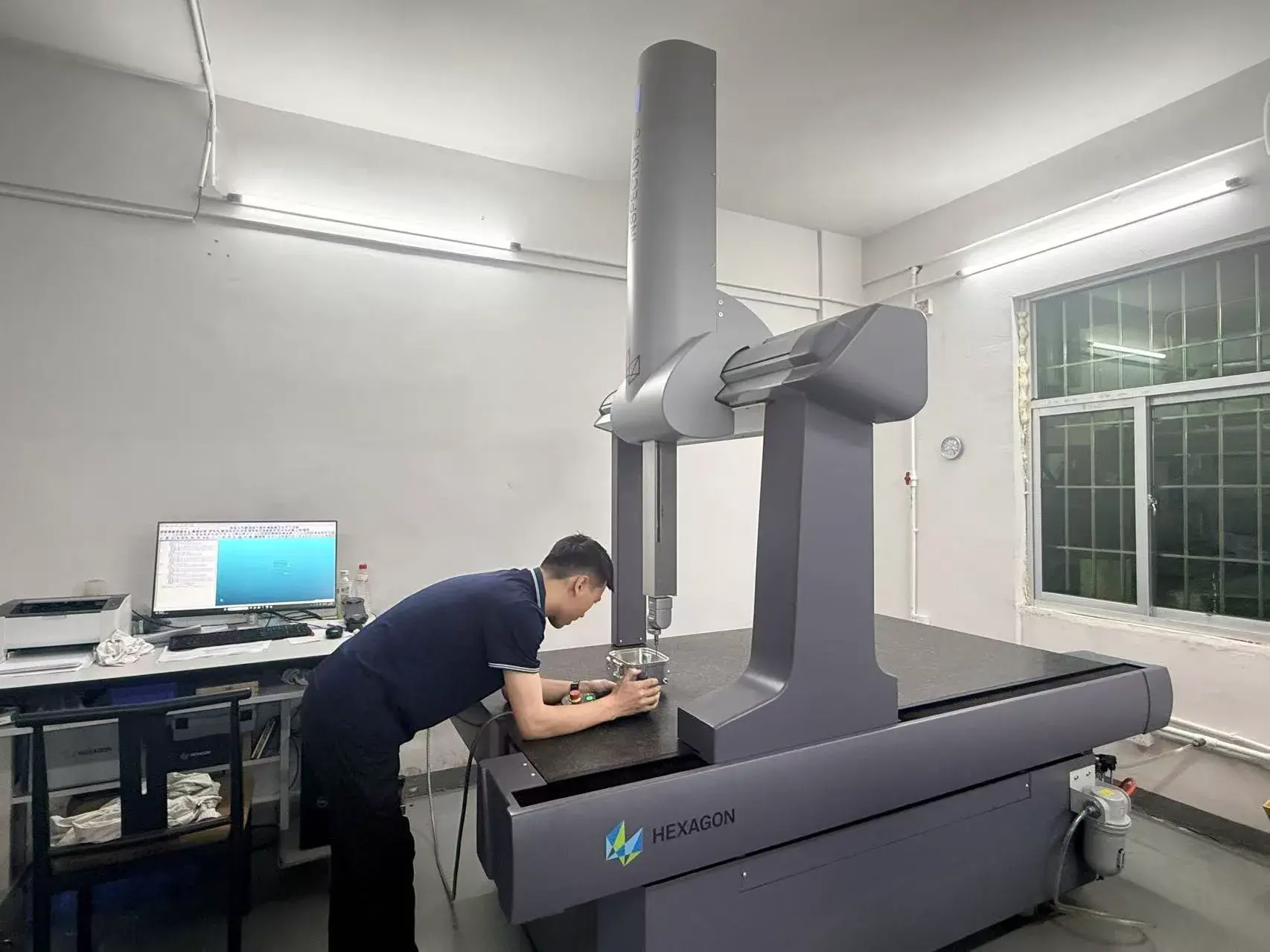
A mature manufacturing company typically establishes comprehensive quality management processes, such as:
- Incoming material inspection
- First Article Inspection (FAI)
- In-process inspections
- Coordinate Measuring Machine (CMM) inspection
- Final inspection before shipment
If the project involves the aerospace, medical device, or automotive industries, attention should also be paid to whether the supplier possesses the corresponding quality management systems, such as ISO 9001, ISO 13485, or AS9100.
These systems not only demonstrate management capabilities but also reflect the company’s commitment to product consistency and traceability.
Does the supplier have stable production capacity?
Beyond the number of machines, it is even more important to assess whether the equipment configuration is appropriate.
For example:
- Does the supplier have 3-axis, 4-axis, and 5-axis machining centers?
- Is the supplier capable of machining complex surfaces?
- Does the supplier support prototyping, small-batch, and mass production?
- Does the supplier have automated production capabilities?
If a supplier can only produce samples but cannot maintain stable mass production, you will still need to find a new partner later on, which inadvertently increases project risk.
Therefore, confirming whether a supplier has the capacity for sustained delivery early in the project often saves more time and costs.
Do they have experience with international projects?
For export projects, manufacturing capability is merely the foundation.
What is even more important is whether the supplier is familiar with the collaboration methods of international clients, such as:
- Drawing version management
- Engineering Change Control (ECN)
- Material certificates
- Environmental compliance requirements (e.g., RoHS, REACH)
- Packaging specifications
- Preparation of shipping documents
While these details do not directly affect part dimensions, they do impact the communication efficiency and customer experience throughout the project.
Teams with international project experience are typically better able to understand customer needs quickly and minimize time lost due to miscommunication.
Do they have the capacity for continuous improvement?
Modern manufacturing is not a one-time delivery but a process of continuous optimization.
Excellent suppliers typically make ongoing optimizations based on actual production conditions:
- Machining processes
- Tool life
- Material utilization
- Cycle time
- Product yield
As production data accumulates, manufacturing costs for many projects can be further reduced.
Therefore, the value derived from long-term partnerships often far exceeds the benefits of repeatedly searching for the supplier with the lowest quote.
Why are more and more companies choosing to partner with Yuanyi?
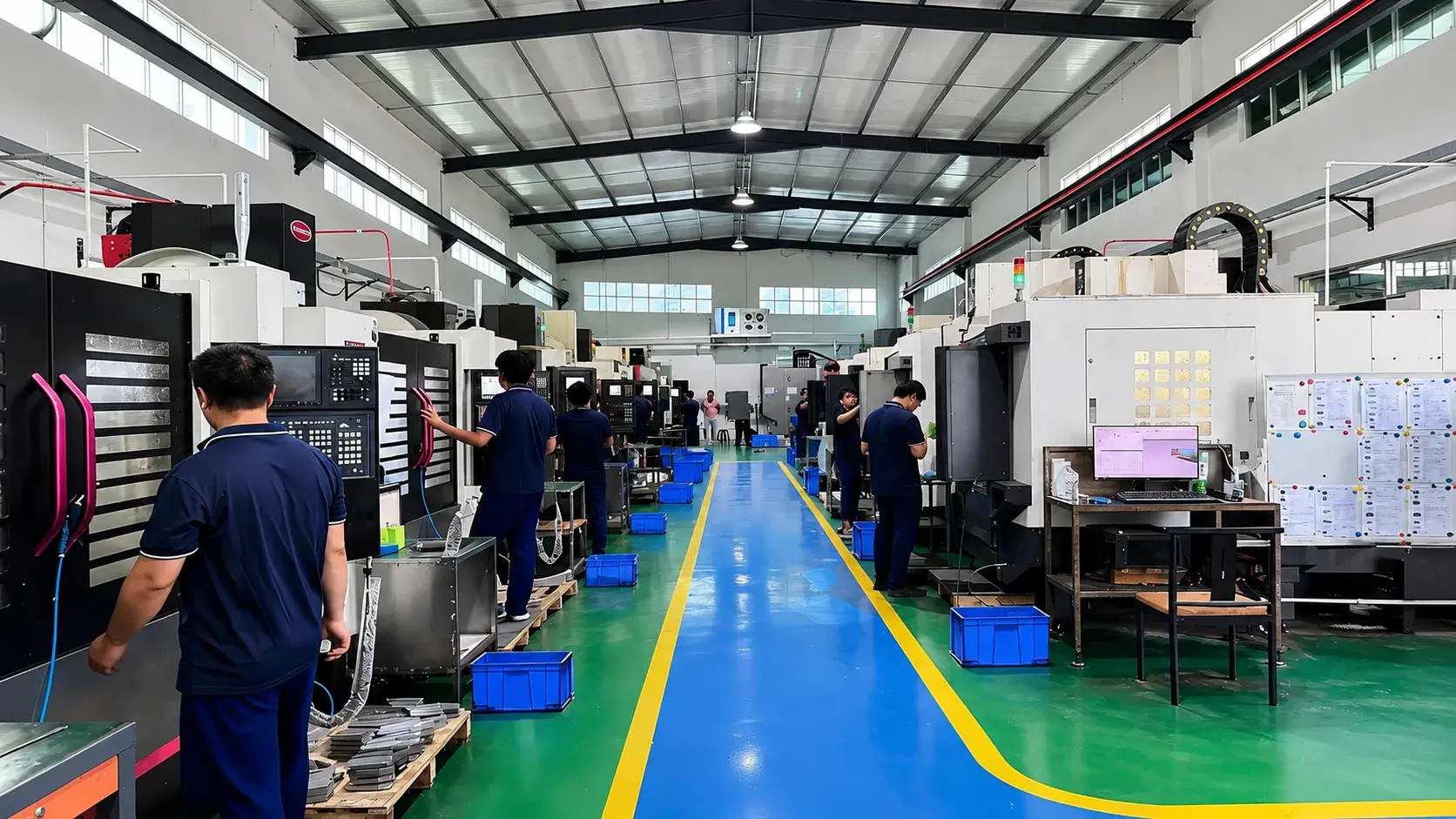
For manufacturing companies, a trustworthy partner must not only possess state-of-the-art equipment but also demonstrate the ability to consistently solve problems.
Yuanyi has long specialized in the manufacturing of precision components. In serving our global clients, we have always prioritized engineering capabilities, quality management, and reliable delivery as our core competitive advantages—rather than focusing solely on the machining process itself.
Our team typically participates in product evaluation during the project initiation phase, offering practical recommendations from a manufacturing perspective—such as optimizing machining paths, adjusting structural designs, or recommending more suitable material solutions—to help clients reduce overall manufacturing costs while ensuring product performance.
Currently, Yuanyi offers a wide range of machining capabilities for materials including metals and engineering plastics, supporting prototype development, small-batch trial production, and mass production, while meeting the dimensional accuracy, surface treatment, and quality inspection requirements of various projects.
Whether for industrial automation equipment, high-end electronic products, or precision components for the automotive, aerospace, and medical industries, we adhere to a unified quality management process. Through first-piece inspection, in-process control, and final inspection, we ensure that every batch of products maintains consistent quality.
For long-term partners, we place even greater emphasis on ongoing communication and engineering support—not merely processing parts according to drawings. As projects progress, our engineering team leverages production experience to continuously optimize manufacturing solutions, helping clients improve production efficiency and establish a more stable supply chain system.
We believe that a truly valuable manufacturing partner does more than simply fulfill orders; it continuously creates value throughout the entire product lifecycle.
Conclusion
With the continuous advancement of smart manufacturing, automation, and digital production, CNC machining has evolved from merely a processing technology into a vital bridge connecting product design, engineering optimization, and mass production.
For manufacturing companies, selecting the right machining process is only the first step; what matters even more is finding a partner capable of providing engineering support, quality assurance, and continuous improvement. This not only enhances product quality but also reduces development risks, shortens delivery cycles, and establishes a more stable supply chain system.
Whether you are developing a new product or planning to optimize existing manufacturing processes, we recommend thoroughly considering material selection, process planning, and manufacturability analysis early in the project. This allows design and manufacturing to advance in tandem, increasing the product’s success rate from the outset.
If you would like to learn more about specific machining solutions, material selection, or product optimization recommendations, Yuanyi’s engineering team is ready to collaborate with you to explore more efficient and reliable manufacturing solutions, providing continuous support for your products from concept design through mass production.
Looking for a Reliable CNC Machining Partner?
YUANYI specializes in precision CNC machining, including 3-axis, 4-axis, and 5-axis CNC machining services for complex parts and demanding applications. Our engineers provide DFM feedback, material recommendations, and quality control support to help turn your designs into reliable manufactured products.
Get a Free QuoteFrequently Asked Questions
Any product with high requirements for dimensional accuracy, consistency, and surface quality is suitable for CNC machining. Examples include industrial equipment parts, medical device components, automotive structural parts, aerospace components, and various types of high-precision metal or plastic parts.
3D printing is better suited for rapid design validation and the production of structurally complex prototypes, whereas CNC machining offers higher dimensional accuracy, better material properties, and more consistent surface quality, making it more suitable for functional testing and mass production.
Not necessarily.
5-axis machining is better suited for complex curved surfaces, multi-sided machining, and products requiring multiple operations to be completed in a single setup. If the part structure is relatively simple, 3-axis or 4-axis machining is typically more cost-effective.
In addition to selecting the right materials, conducting DFM analysis during the product design phase, optimizing structural dimensions, reducing the number of setups, and using standard cutting tools can all effectively lower manufacturing costs.
Therefore, involving manufacturing engineers in project evaluation as early as possible typically leads to higher manufacturing efficiency.
It is recommended to comprehensively evaluate the following aspects:
- Whether they have engineering support capabilities;
- Whether they have a comprehensive quality management system;
- Whether they can deliver consistently in bulk;
- Whether they have experience with international projects;
- Whether they are willing to continuously optimize products and processes.
These factors are generally more important than simply comparing prices.



