
How CNC Machining Software Improves Production Efficiency

CNC machining software improves production efficiency by helping engineers create better toolpaths, reduce programming time, prevent machining errors, and optimize the entire manufacturing workflow.

From simple milling operations to complex 5 axis CNC machining, software solutions such as CAD/CAM systems allow manufacturers to produce parts faster, more accurately, and with greater consistency.

What Is CNC Machining Software?

CNC machining software consists of digital tools that are used to design, plan, simulate, and improve the CNC manufacturing process.

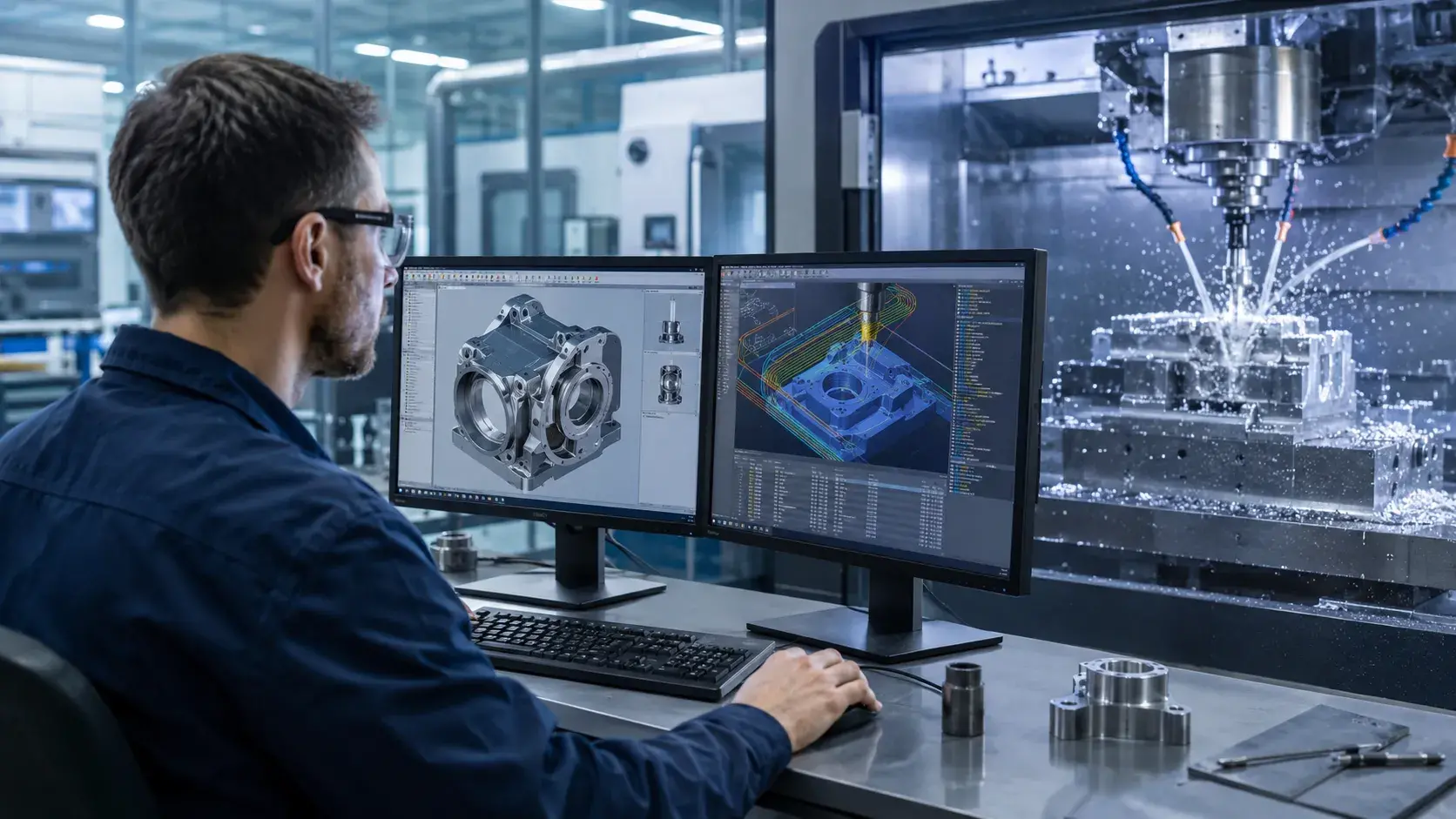
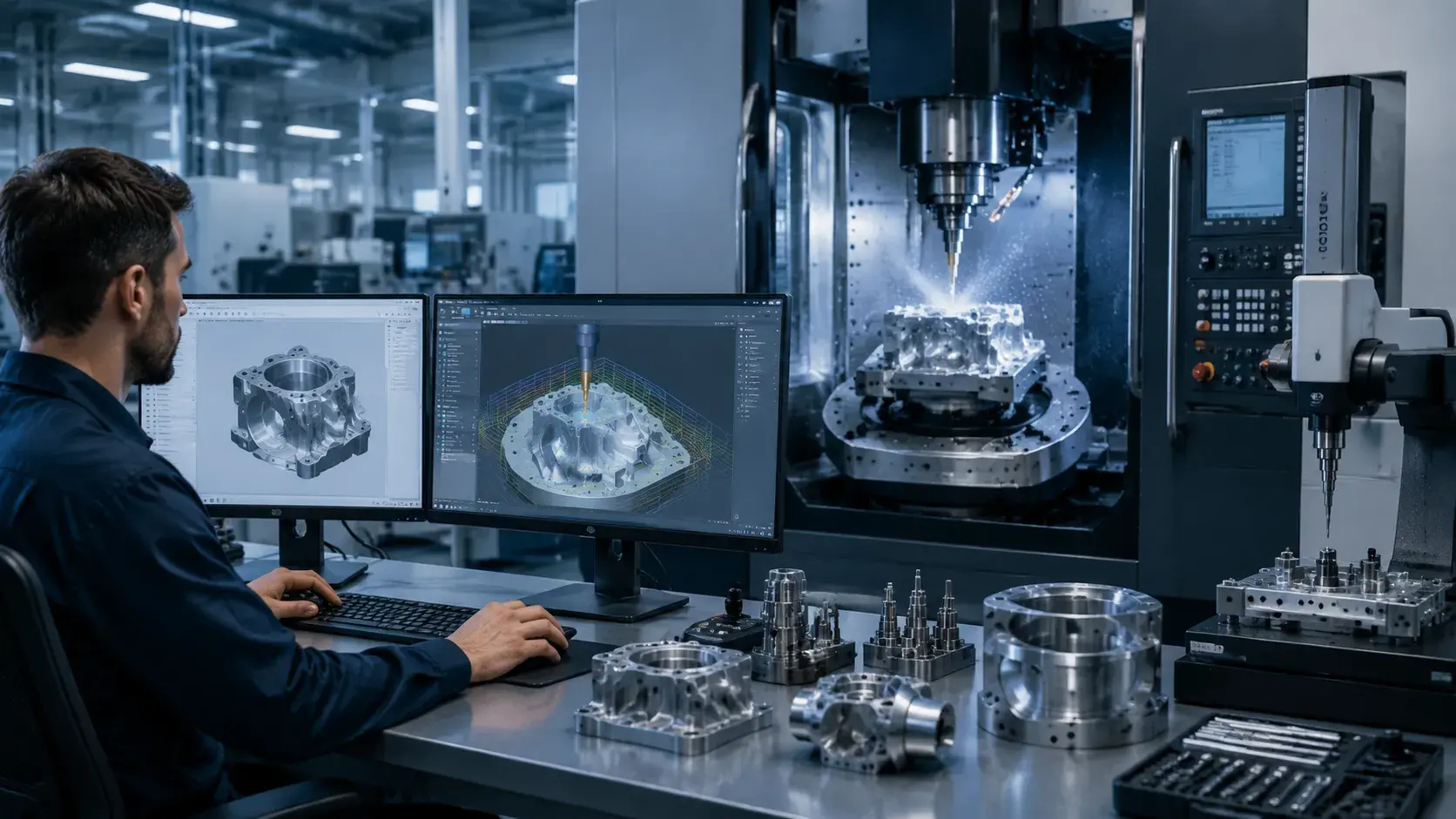
CNC machining software workflow showing CAD CAM programming, toolpath simulation, and CNC manufacturing process

A full CNC software process typically involves:

  • CAD software, which is used to make 3D models and engineering drawings
  • CAM software, which is used to create toolpaths and machining strategies
  • CNC programming software, which is used to develop instructions for the machine
  • Simulation software, which is used to check machining operations before actual production begins

By integrating CAD and CAM tools, engineers can turn digital designs into efficient machining programs that control CNC machines.

Rather than calculating each cutting action manually, CNC software helps with automating the programming process and enhances the communication between design and manufacturing teams.

How CNC Machining Software Improves Production Efficiency

Faster CNC Programming and Setup

One of the main benefits of CNC programming software is the ability to cut down the time needed to create machining programs.

Manual programming can be slow, especially when dealing with parts that have intricate shapes.

Engineers must calculate tool movement, cutting order, and machining settings, which raises the chance of errors.

Using today’s CAM software, engineers can swiftly generate tool paths based on CAD models.
This helps lower:

  • Programming time
  • Machine setup time
  • Mistakes from manual calculations

In the case of prototype building and small production runs, faster programming lets manufacturers go from getting design approval to starting machining more quickly.

Optimized Toolpaths Cut Machining Time

CNC toolpath optimization is key to improving machining efficiency.
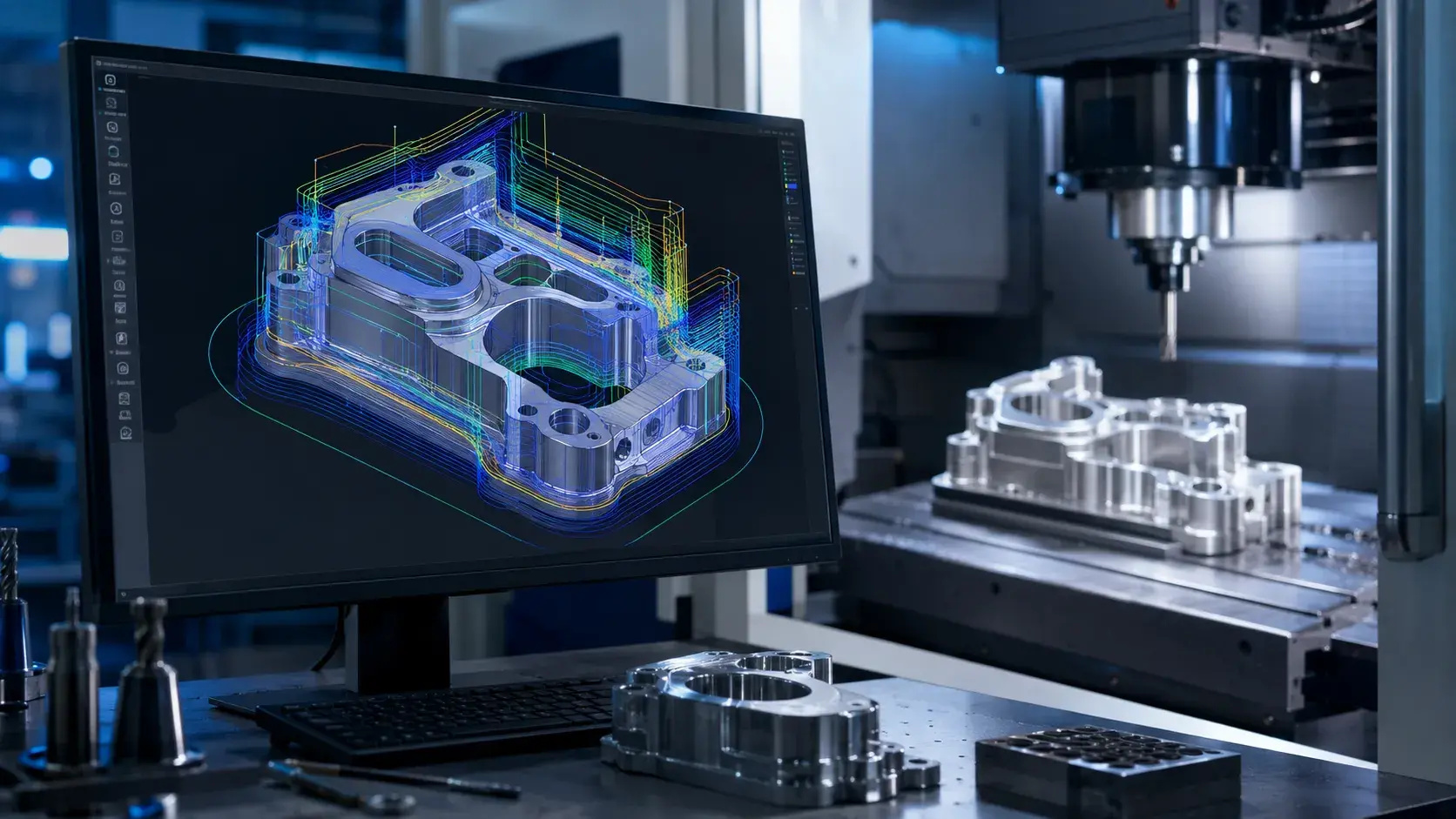
CNC machining software generating optimized toolpaths for precision manufacturing

A toolpath shows how the cutting tool travels through the material.Poorly planned paths can cause extra movement, longer cycle times, and more tool wear.

Advanced CNC software helps improve:

  • Cutting paths
  • Tool movement
  • Machining sequences
  • Cutting methods

By cutting down unnecessary movement and boosting cutting efficiency, manufacturers can reduce machining cycles while keeping part quality the same.

For complicated parts, having well-optimized toolpaths is especially important since inefficient programming can greatly increase production time.

Simulation and Collision Detection Help Avoid Production Errors

Before sending a CNC program to the machine, simulation software lets engineers check the entire machining process in a virtual environment.
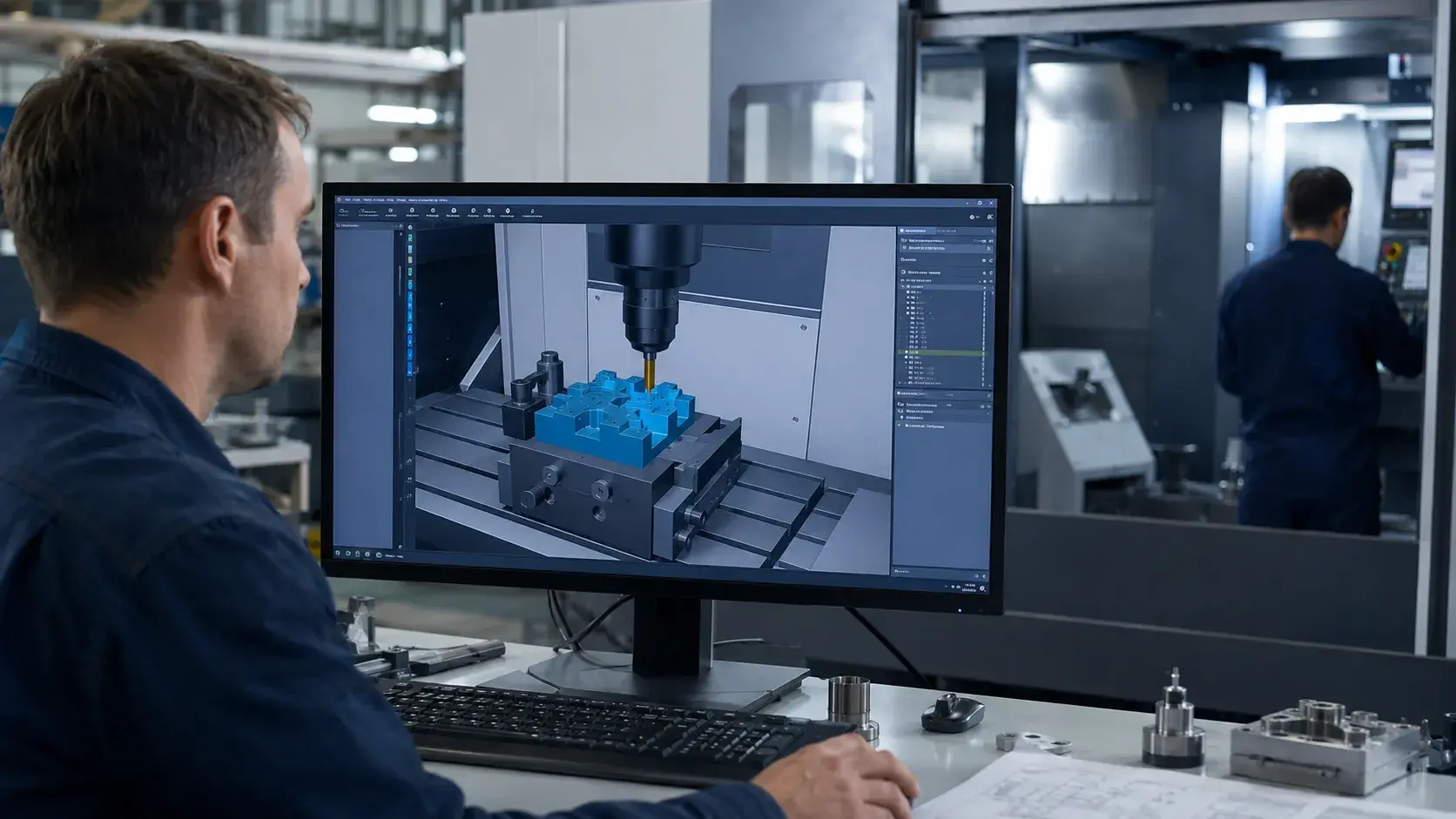
CNC machining simulation software used for collision detection and program verification

This process can spot issues such as:

  • Tool collisions
  • Fixture interference
  • Wrong tool movements
  • Problems in the machining sequence

This is especially helpful in 5-axis CNC machining, where the cutting tool and workpiece move along several axes at once.

Detecting these problems ahead of actual machining helps reduce:

  • Pieces that don’t meet standards
  • Time the machine is not working
  • Repeated attempts to adjust settings

This increases production stability and lowers unnecessary expenses.

Better Accuracy and Consistent Quality

CNC machines are known for their precision, but software is vital for ensuring consistent outcomes.

Through organized programming methods and confirmed toolpaths, CNC machining software helps manufacturers achieve:

  • Improved dimensional accuracy
  • Reliable production results
  • Consistent machining quality

This is especially important in industries like aerospace, medical, and automation, where even small variations can impact part performance.

When combined with professional checking processes, digital machining workflows help ensure each batch meets required standards.

Quick Response to Design Changes

Product development often involves several design changes before reaching the final stage.

Without an efficient digital process, each change might need extensive manual adjustments to the program.

With up-to-date CNC software, engineers can quickly update:

  • CAD models
  • Machining strategies
  • Tool paths
  • Production programs

This lets manufacturers respond more quickly to customer feedback and shorten product development timelines.

For CNC rapid prototyping, this flexibility helps companies test and refine designs before moving to large-scale production.
CNC Machining Software for Complex Manufacturing

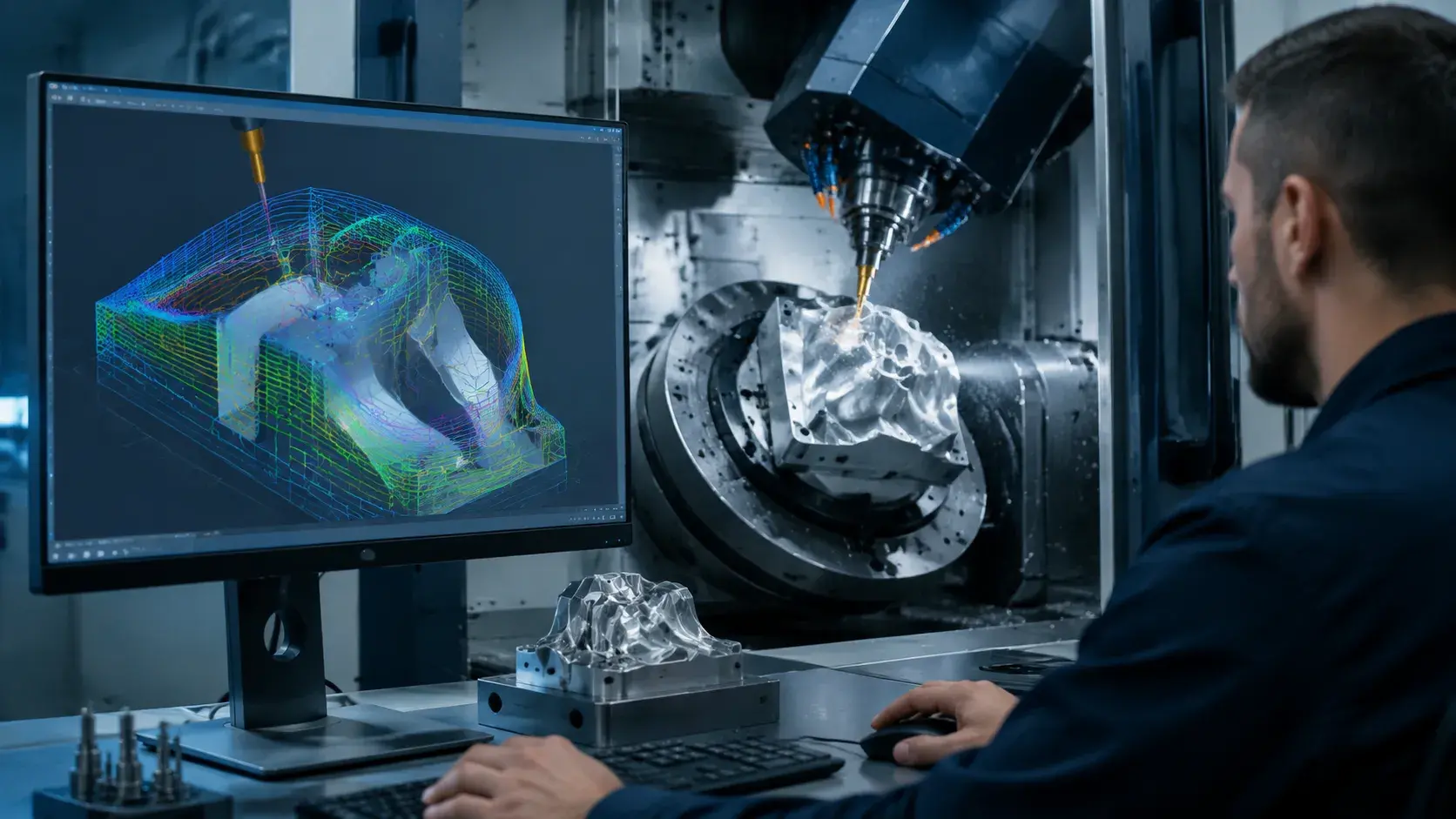
5-axis CNC programming software creating multi-axis toolpaths for complex machining

Advanced CNC machining software is particularly beneficial when manufacturing complex parts that involve several machining operations, strict tolerances, and sophisticated programming techniques.

For processes like 5-axis CNC machining, Swiss-type machining, and mill-turn machining, the software assists engineers in developing efficient toolpaths, ensuring correct tool positioning, preventing collisions, and enhancing machining performance.

5-Axis CNC Machining

CNC software enables:

  • Creating multi-axis toolpaths
  • Optimizing tool angles and cutting strategies
  • Machining complex curved surfaces
  • Avoiding tool collisions during multi-axis movements

These capabilities are essential for producing aerospace components, medical parts, and precision industrial components with complex geometries.

Swiss CNC Machining

For Swiss-type machining, CNC software helps optimize:

  • Tool movements
  • Cutting sequences
  • Small-diameter machining strategies
  • Precision control for complex features

This is critical for manufacturing high-precision parts such as medical devices, electronic components, and miniature mechanical components.

Mill-Turn Machining

For mill-turn machining, CNC software integrates multiple operations within a single setup, including:

  • Turning operations
  • Milling features
  • Drilling processes
  • Complex contour machining

By reducing the need for multiple setups and improving process control, the software helps minimize positioning errors, shorten production time, and improve overall manufacturing efficiency.

Common CNC Machining Software Used in Manufacturing

Different types of CNC machining software are used throughout the manufacturing process, from product design and programming to machining verification.

Software TypeMain FunctionsRole in CNC Manufacturing
CAD SoftwareCreate 3D models, engineering drawings, and product designsProvides the digital foundation for CNC machining and part development
CAM SoftwareGenerate toolpaths, optimize cutting strategies, and create CNC programsConverts CAD models into machining instructions and improves programming efficiency
Simulation SoftwareVerify tool movements, material removal, collision risks, and machining sequencesReduces production errors and improves first-time machining success

Common CAM software solutions include hyperMILL, Mastercam, and Fusion 360, which help manufacturers improve programming efficiency and optimize machining processes.

What Happens Without Effective CNC Machining Software?

Without proper CNC software support, manufacturers may face several challenges:

  • Longer programming time
  • Higher risk of programming errors
  • Inefficient toolpaths
  • More machine adjustments
  • Increased scrap rates
  • Slower production response

For simple parts, basic programming methods may be sufficient. However, complex components require advanced software to maintain efficiency and quality.

How to Maximize the Value of CNC Machining Software?

Using CNC software effectively involves more than just installing the newest tools.

Manufacturers can get the most out of it by:

  • Combining Software With Skilled Programmers:While software can boost efficiency, experienced engineers remain vital for choosing the correct machining approach, tools, and cutting settings.
  • Using Simulation Before Starting Machining:Checking programs before actual production helps avoid mistakes and enhances the reliability of the machining process.
  • Continuously Improving Manufacturing Processes:Analyzing toolpaths, machining data, and production outcomes allows manufacturers to steadily increase efficiency over time.

A successful CNC workflow relies on:

Advanced software, skilled engineers, and reliable CNC equipment working together to deliver improved manufacturing results.

CNC Machining Software and Production Efficiency: Key Benefits

Software FunctionProduction Benefit
Toolpath optimizationReduce machining time and improve cutting efficiency
Simulation and verificationPrevent programming errors and reduce scrap
CAD/CAM integrationSpeed up programming and design changes
Digital workflow managementImprove production control and consistency
Advanced multi-axis programmingEnable complex part manufacturing

Conclusion

CNC machining software is crucial in modern manufacturing as it enhances programming efficiency, improves machining processes, and helps minimize production risks.

When it comes to complex CNC components, particularly those that need 5-axis CNC machining, Swiss machining, or mill-turn operations, advanced software enables manufacturers to achieve greater precision and improved consistency in production.

Digital CNC manufacturing workflow combining software, engineers, and precision machining equipment

Improve Your CNC Manufacturing Efficiency

YUANYI combines advanced CNC machining software, experienced engineers, and precision manufacturing capabilities to deliver reliable solutions for complex parts.

Our 5 axis CNC machining service, CNC milling, CNC turning, Swiss machining, and mill-turn capabilities help customers produce high-precision prototypes, low-volume parts, and production components with improved efficiency and consistency.

Send Your CAD Files

Frequently Asked Questions

CAD software is mainly used for creating 3D models and engineering drawings, while CAM software converts these designs into machining instructions and generates toolpaths for CNC machines.

CNC machining software reduces the need for manual programming, but skilled engineers are still required to select machining strategies, optimize toolpaths, and adjust manufacturing parameters.

CNC software helps manage complex geometries by creating advanced toolpaths, simulating machining operations, and improving control over multi-axis processes such as 5-axis machining.

Yes. By using verified toolpaths, simulation, and standardized programming processes, CNC software helps improve repeatability, reduce errors, and maintain consistent part quality.

5-axis machining involves simultaneous movement across multiple axes. CAM software helps calculate tool orientation, avoid collisions, and optimize cutting paths for complex components.

CNC software allows manufacturers to quickly modify programs, reduce setup time, and efficiently produce prototypes or small batches without extensive tooling changes.

Table of Contents
Discuss Your Complex Machining Requirements

Need Custom CNC Machined Parts?

From rapid prototypes to low-volume production, our engineering team can review your drawings and provide a manufacturing quote.

  • 24-Hour Quotation
  • DFM Engineering Support
  • No Minimum Order
  • ISO 9001 Certified
Request A Quote
Upload your drawing and get a quote within 24 hours.


