
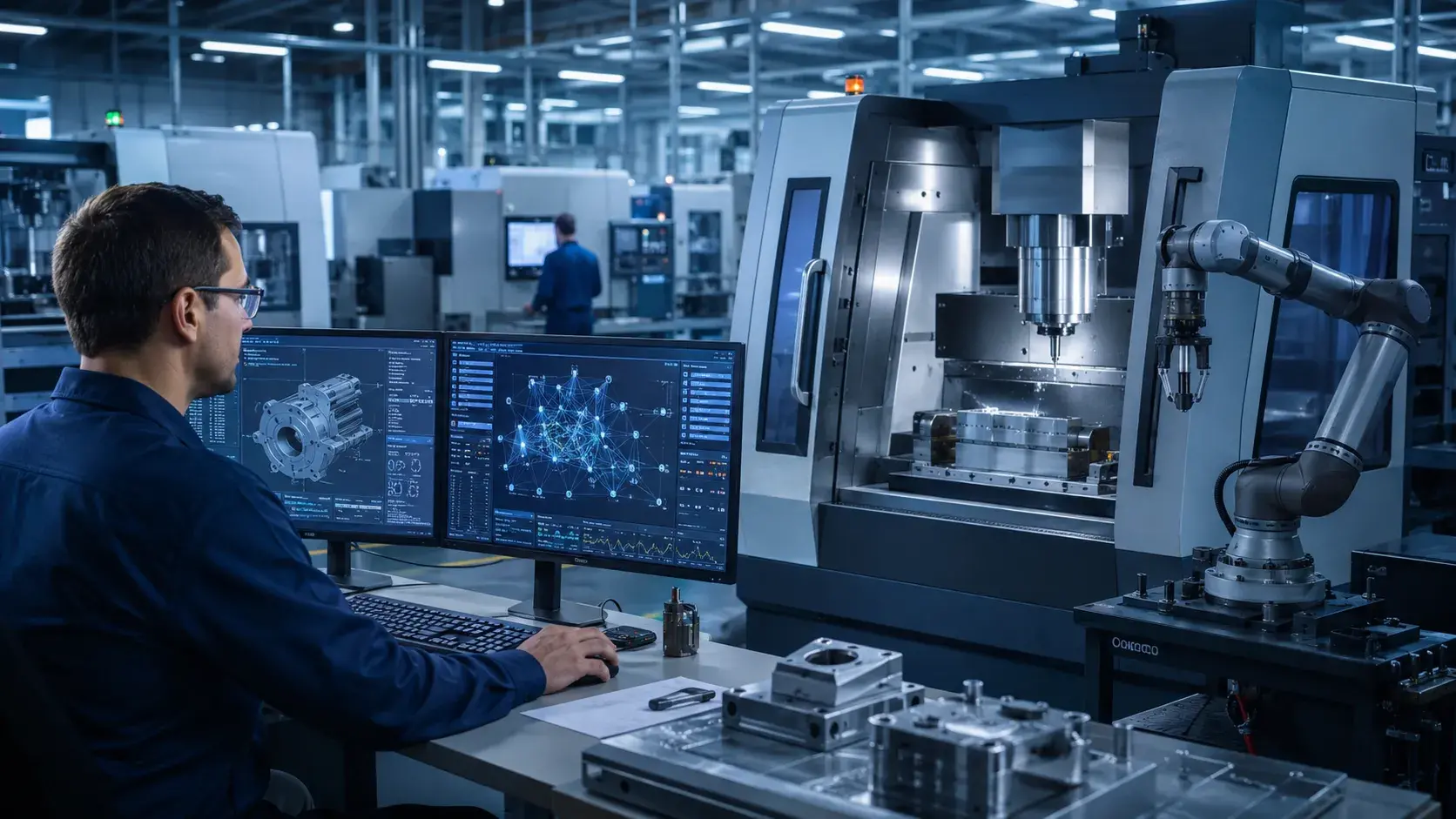
For precision manufacturers, AI is not replacing CNC machines or experienced engineers.Rather, it functions as a supporting tool that helps enhance programming efficiency, machining consistency, quality assurance, and production planning.
From AI-supported CNC programming and predictive maintenance to smart inspection systems, artificial intelligence is increasingly becoming a key element in modern CNC manufacturing and the advancement of smart factories.
What Is AI in CNC Machining?
Artificial intelligence (AI) in CNC machining refers to the use of technologies such as machine learning, data analysis, computer vision, and automation algorithms to improve machining processes.
Traditional CNC manufacturing relies heavily on engineer experience for tasks such as machining parameter selection, toolpath planning, production scheduling, and quality control. AI supports these processes by analyzing manufacturing data and providing optimization recommendations.
In modern CNC production, AI can help manufacturers:
- Optimize CNC programming
- Improve toolpath planning
- Adjust machining parameters
- Monitor machine conditions
- Support quality inspection
- Optimize production scheduling
The goal of integrating AI into CNC machining is not to replace skilled engineers, but to help them make faster and more accurate manufacturing decisions.
How AI Is Applied in CNC Machining
AI-Assisted CNC Programming
CNC programming is one of the areas where AI has significant potential.
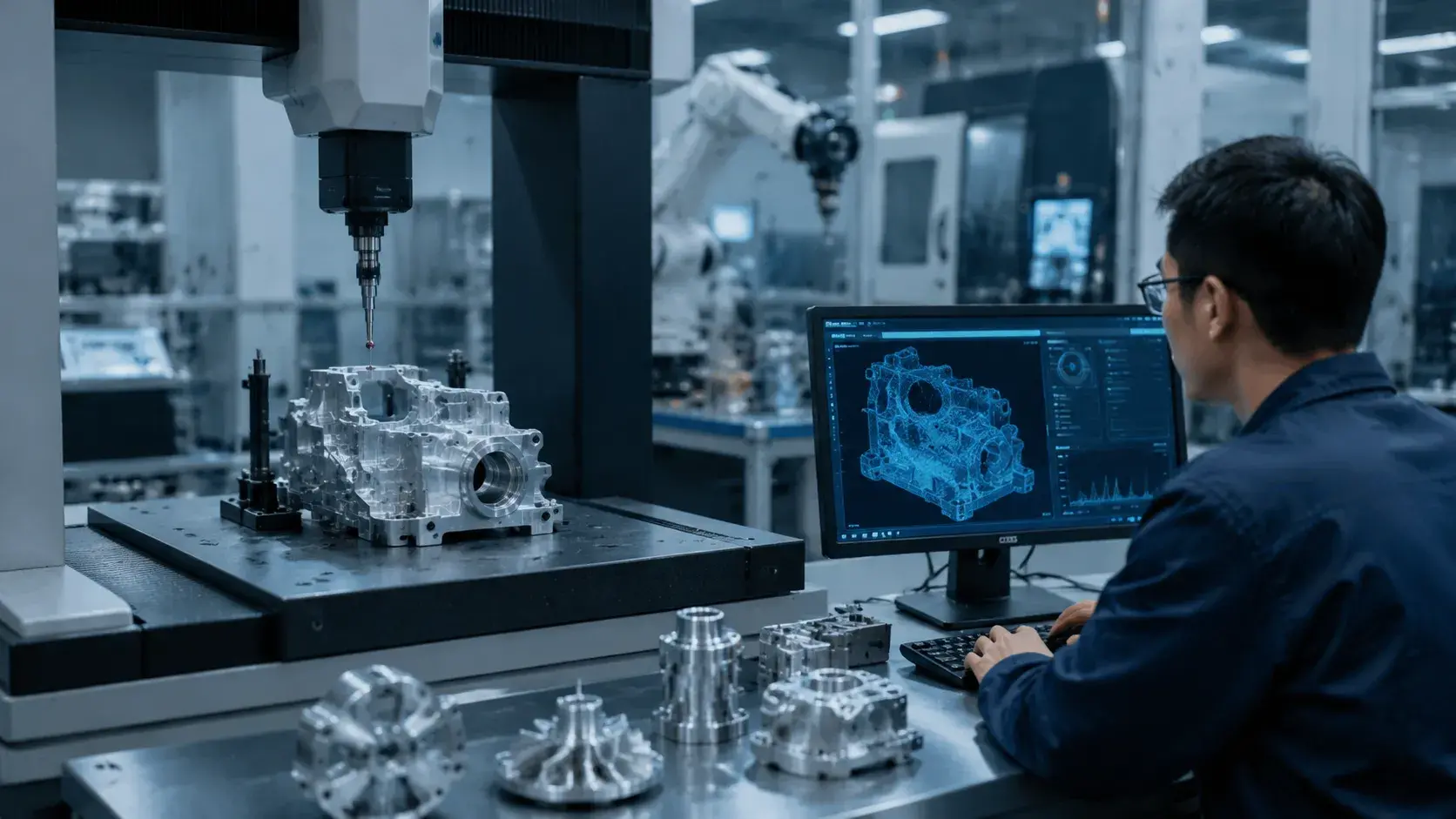
For complex parts, especially those requiring multi-axis machining, engineers need to consider tool accessibility, cutting strategies, fixture design, and machining sequences.
AI-based systems can analyze part geometry and machining data to suggest optimized tool paths and processing strategies.
AI-assisted CNC programming can help manufacturers:
- Reduce programming time
- Identify potential machining issues earlier
- Optimize cutting sequences
- Improve machining efficiency
This is particularly valuable for complex components produced through 5-axis CNC machining, where multiple tool orientations and intricate surface geometries require careful process planning.
AI-Based Toolpath Optimization
Toolpath optimization directly affects machining efficiency, surface finish, and tool life.
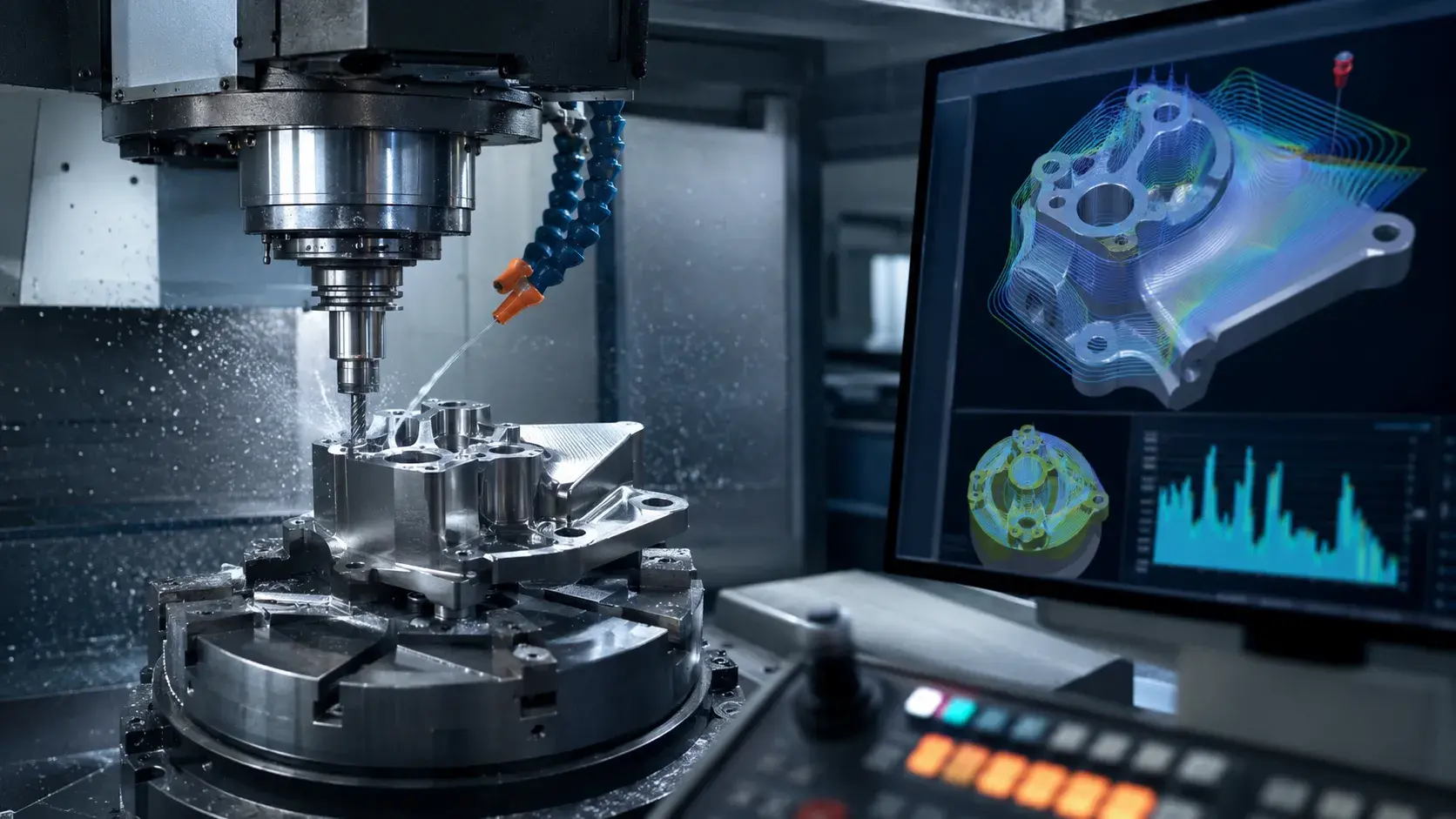
Traditional programming relies on engineer experience to select cutting parameters such as:
- Cutting speed
- Feed rate
- Depth of cut
- Tool engagement
AI systems can analyze historical machining data and recommend improved parameters based on material characteristics, machine capability, and production conditions.
For example, when machining aluminum, titanium, or stainless steel components, AI can help identify more efficient cutting strategies while maintaining required accuracy and surface quality.
The result can include:
- Shorter cycle times
- Reduced tool wear
- More stable production processes
- Improved consistency between batches
Predictive Maintenance for CNC Machines
Unexpected machine downtime can significantly affect production schedules and delivery performance.
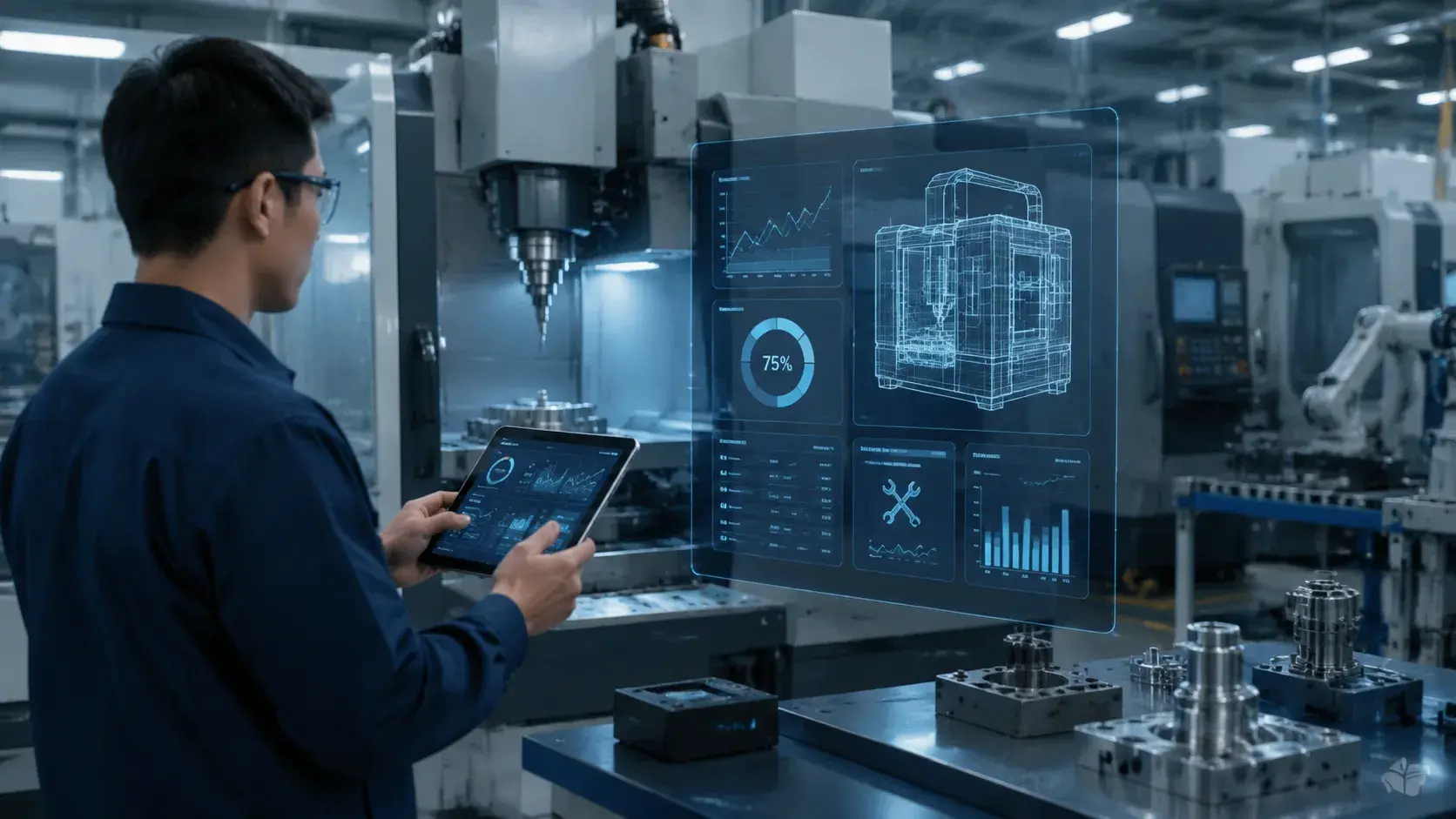
AI-powered predictive maintenance uses real-time machine data, including:
- Vibration signals
- Temperature changes
- Spindle conditions
- Cutting load information
to identify early signs of equipment problems.
Instead of performing maintenance only after a failure occurs, manufacturers can use AI predictions to schedule preventive actions before problems impact production.
This helps improve:
- Machine availability
- Production reliability
- Equipment lifespan
- Delivery stability
For precision CNC manufacturers, maintaining machine stability is essential because even small equipment variations can affect part accuracy and surface quality.
AI and Automated Quality Inspection
Quality control is another important application of AI in CNC manufacturing.

Traditional inspection methods rely on experienced inspectors using measurement equipment such as:
- Coordinate Measuring Machines (CMM)
- Micrometers
- Calipers
- Height gauges
AI-based inspection systems can combine computer vision, automated measurement, and data analysis to detect dimensional variations or surface defects more efficiently.
AI can support manufacturers by:
- Identifying quality deviations
- Analyzing inspection trends
- Improving inspection consistency
- Reducing manual inspection workload
For industries requiring strict tolerances, such as aerospace, medical, and semiconductor equipment manufacturing, AI-enhanced quality systems can provide additional support for maintaining production accuracy.
AI-Driven Production Planning and Scheduling
Beyond individual machining operations, AI is also improving production management.
In a CNC workshop with multiple machines, materials, and customer orders, production scheduling can become highly complex.
AI algorithms can analyze:
- Machine availability
- Production capacity
- Order priority
- Estimated machining time
- Material requirements
to optimize production plans.
This allows manufacturers to improve machine utilization, reduce idle time, and respond more efficiently to changing production requirements.

AI integration provides several advantages for modern CNC manufacturing.
| Benefit | How AI Helps |
|---|---|
| Higher production efficiency | Optimizes machining strategies and reduces unnecessary processing time |
| Improved machining accuracy | Provides data-based recommendations for more stable production |
| Reduced downtime | Predicts machine issues before failures occur |
| Better quality control | Supports automated inspection and defect detection |
| Faster engineering decisions | Analyzes production data and identifies improvement opportunities |
However, the effectiveness of AI still depends on the quality of manufacturing data, machine capability, and engineering experience behind the process.
Will AI Replace CNC Machinists and Engineers?
A frequent question is whether AI will take the place of CNC programmers or machinists.
The answer is that this is unlikely.
AI can handle repetitive tasks and offer suggestions for improvement, but effective CNC machining still depends on human expertise in several key areas, such as:
- Assessing part designs
- Choosing appropriate materials
- Developing fixtures
- Planning machining strategies
- Making quality judgments
Creating complex CNC parts often involves engineers making decisions that balance various factors like precision needs, production costs, machining challenges, and delivery timelines.
The future of CNC manufacturing will not involve AI replacing engineers, but rather engineers using AI tools to enhance manufacturing outcomes.
Future Trends of AI in CNC Manufacturing
As manufacturing technology continues to develop, AI is expected to become more integrated with other digital manufacturing systems.
Smart CNC Machines
In the future, CNC machines will become more intelligent by constantly gathering production data and automatically adjusting machining conditions.
Digital Twins and Virtual Manufacturing
Digital twin technology enables manufacturers to create virtual models of machining processes, allowing them to identify potential problems before actual production starts.
When combined with AI, digital twins can assist in refining machining strategies and minimizing development risks.
AI-Driven Automation
AI will keep enhancing automated manufacturing systems by linking various components such as:
- CNC machines
- Robots
- Inspection equipment
- Production management software
This integration will help create more adaptable and productive smart factories.
How YUANYI Combines Advanced Technology With CNC Expertise
YUANYI integrates advanced technology with expert CNC knowledge to deliver dependable precision machining services for intricate parts.
We utilize state-of-the-art CNC machinery, skilled engineering teams, and contemporary manufacturing techniques to offer precise and reliable solutions tailored to complex components.
Our services encompass 5 axis CNC machining, Swiss-type machining, mill-turn machining, and rigorous quality assurance through the use of advanced measurement tools like CMM systems.
By merging engineering experience with ongoing process improvements, we assist clients in achieving consistent production, precise tolerances, and dependable outcomes throughout the entire product lifecycle, from initial prototypes to small-scale manufacturing.
Conclusion
AI is growing in importance as a key technology for the future of CNC machining, offering improvements in programming efficiency, production optimization, predictive maintenance, and quality control.
Nevertheless, precise manufacturing still relies on the partnership between advanced technology and experienced engineers.While AI offers strong tools, human expertise is still crucial for creating dependable machining solutions.
As CNC manufacturing progresses toward smarter and more connected production systems, manufacturers who effectively combine cutting-edge technology with engineering skills will be better equipped to produce higher-quality and more efficient precision parts.
Frequently Asked Questions
AI can assist CNC programming by optimizing tool paths, analyzing machining data, and suggesting process improvements. However, experienced engineers are still required to review and adjust programs for complex manufacturing requirements.
AI improves accuracy by analyzing machining data, monitoring production conditions, and identifying factors that may affect dimensional consistency.
The cost depends on the level of AI integration. Some AI functions, such as monitoring systems and optimization software, can be implemented gradually without completely replacing existing equipment.
Complex processes such as 5-axis machining, high-precision turning, automated inspection, and multi-machine production planning can benefit significantly from AI technologies.



