
Does Brass Tarnish or Rust? Brass Oxidation Explained

Brass can tarnish over time, but it does not corrode like iron or steel.Since brass is mainly composed of copper and zinc, it can react with oxygen, moisture, and chemicals, leading to oxidation.This process can cause the surface of the brass to change color, often forming a greenish layer known as patina.Knowing how brass tarnishes helps in selecting and preserving this useful metal for various uses.

Does Brass Tarnish?

Yes, brass can tarnish over time.
When exposed to air, moisture, and other environmental factors, the copper in brass reacts with oxygen and other substances, resulting in a thin layer of oxidation on its surface.

Unlike rust, which weakens iron-based metals, tarnishing brass mainly affects its appearance without significantly compromising its strength.

When newly polished, brass has a bright, golden look.
However, with time, it may gradually change to:

  • A darker brown color
  • A dull gray tone
  • A blackish appearance
  • A greenish hue due to the formation of patina

The rate at which brass tarnishes depends on the surrounding environment.
Brass used in dry, indoor settings may retain its appearance for many years, whereas brass in humid, salty, or chemically active environments can tarnish more quickly.

rper mattis, pulvinar dapibus leo.

Why Does Brass Tarnish?

Brass is an alloy primarily made of copper and zinc. The copper component is the main reason why brass develops oxidation over time.
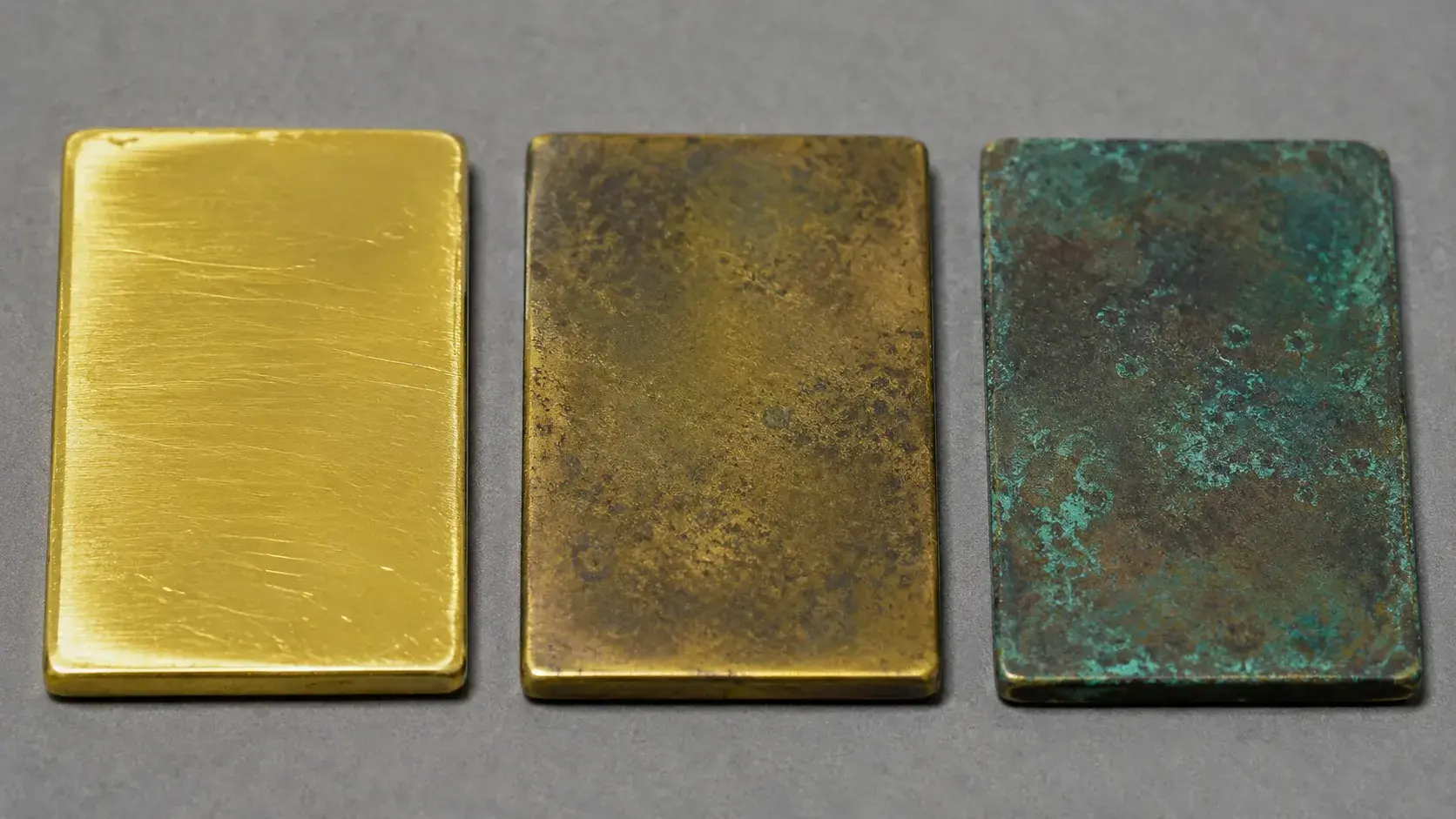
Brass oxidation process showing surface tarnish development

When brass reacts with oxygen and moisture in the environment, several chemical changes can occur:

  • Copper reacts with oxygen to form copper oxide
  • Additional reactions with carbon dioxide and moisture can create copper carbonate
  • These compounds gradually change the surface color

Common factors that accelerate brass oxidation include:

FactorEffect on Brass
HumiditySpeeds up surface oxidation
Salt waterCauses faster discoloration and corrosion
ChemicalsCan react with the metal surface
Outdoor exposureEncourages patina formation
Skin oilsCan accelerate tarnishing through contact

This is why brass objects used outdoors or in marine environments usually develop a patina faster than indoor decorative items.

Does Brass Rust?

No, brass does not rust in the same way as steel or iron.

Rust is a type of oxidation that affects iron, leading to the formation of iron oxide, which can slowly damage the metal’s structure.
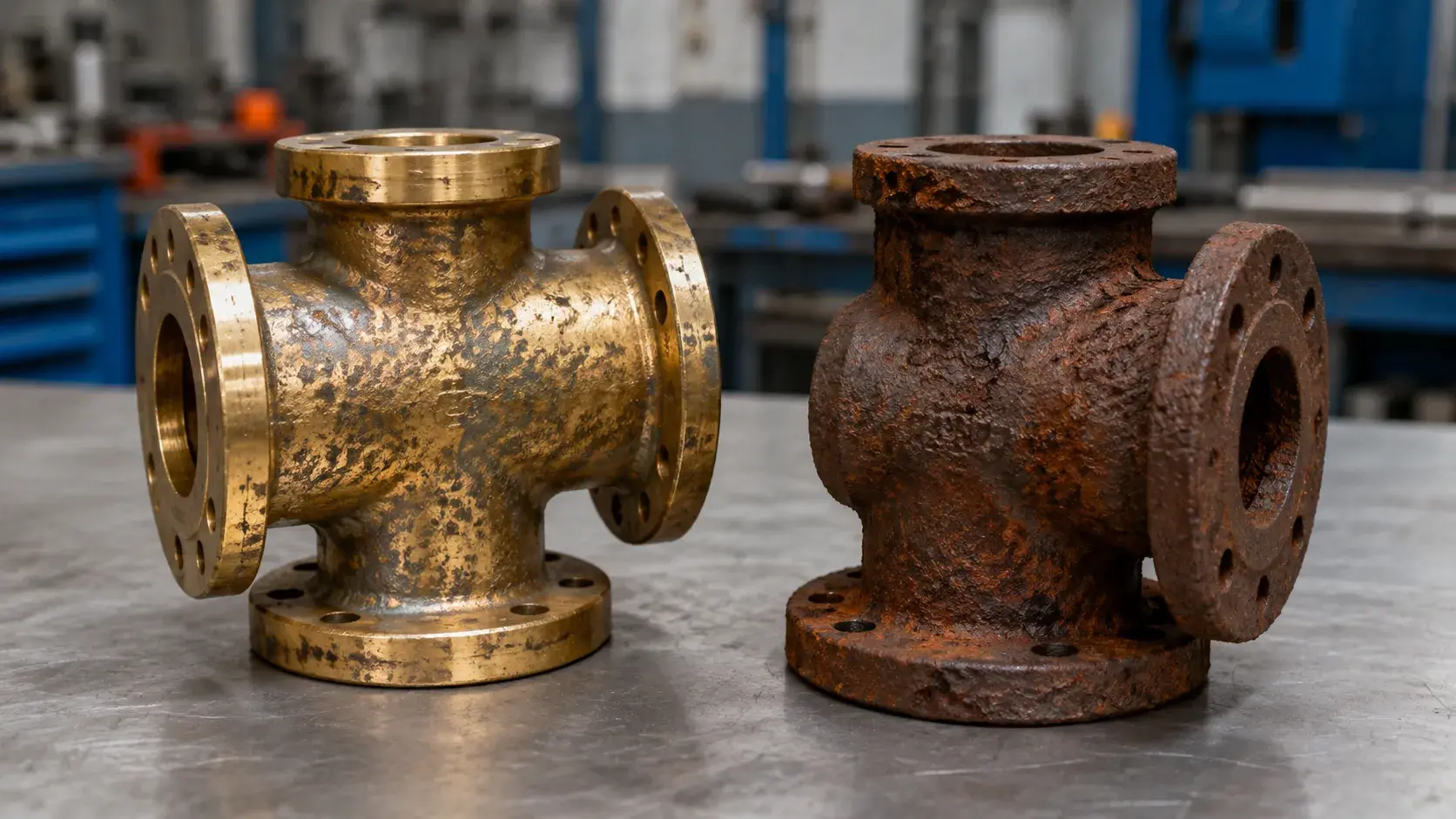
Comparison between tarnished brass and rusty steel surface

Since brass contains very little iron, it does not form the kind of rust that affects iron or steel.

Nevertheless, brass can still corrode and undergo changes in its appearance over time.

MaterialChemical ReactionResult
BrassCopper oxidationTarnish or patina
SteelIron oxidationRust
AluminumAluminum oxidationProtective oxide layer
Stainless SteelChromium oxide formationPassive corrosion-resistant layer

Although brass does not rust, prolonged exposure to harsh environments can still affect its appearance and surface condition.

Why Does Brass Turn Green?

One of the most common questions about brass is: Why does brass turn green?

The green color appears due to copper-based compounds that form when brass is exposed to oxidation.
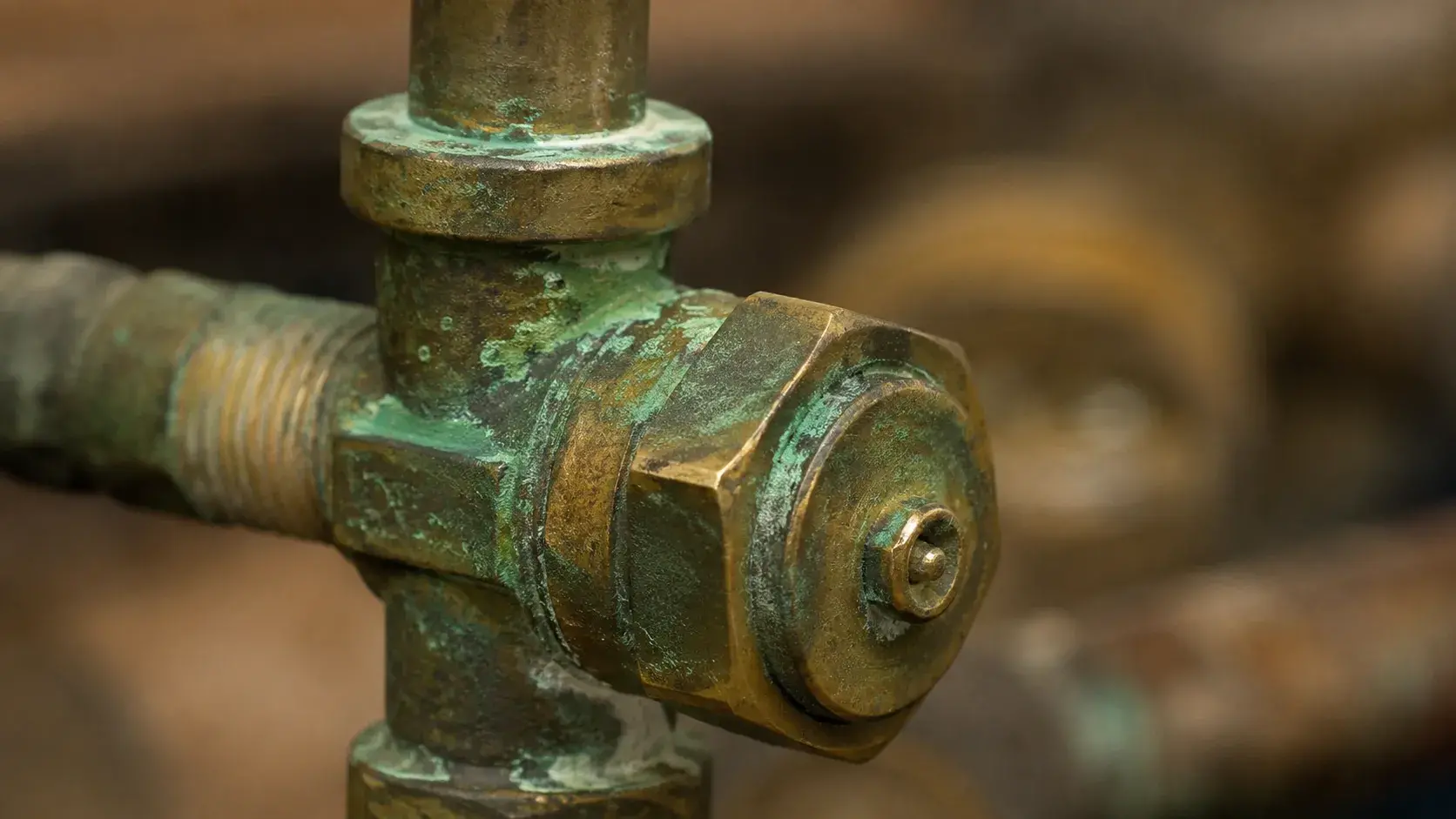
Green patina forming on brass surface due to oxidation

Because brass contains copper, prolonged contact with oxygen, moisture, and carbon dioxide can lead to the development of a green patina known as verdigris.

This green coating is often found on:

  • Outdoor brass fixtures
  • Old metal buildings
  • Marine equipment
  • Decorative brass items

It is important to note that a green patina does not always indicate that the brass has been damaged.

In many situations, it is just a natural change that occurs on the surface.

In certain uses, like in architecture and art, this aged look is actually preferred because it adds a distinctive and unique appearance to the brass.
How Fast Does Brass Tarnish?

The time it takes for brass to tarnish depends on factors such as the surrounding environment, the type of alloy it is made from, and the condition of its surface.Some brass items may begin to change color within just a few months, while others can retain their original look for many years.

In most cases, brass tarnishes more quickly when it is exposed to:

  • High levels of humidity
  • Salt-laden air
  • Outdoor conditions
  • Chemicals
  • Regular use or handling

For instance, brass parts used in coastal areas may show visible changes much sooner than those kept in a dry indoor setting.

The type of surface finish on the brass also influences how quickly oxidation becomes noticeable.

Polished brass tends to show signs of tarnish more easily because the shiny surface highlights any changes, whereas brushed or coated brass may mask oxidation for a longer time.

EnvironmentTarnishing SpeedCommon Result
Dry indoor environmentSlowSlight color change over years
Normal indoor humidityModerate

Gradual

darkening

Outdoor exposureFastVisible oxidation and patina
Marine environmentVery fastStrong discoloration and corrosion risk

For precision applications, controlling the environment and selecting an appropriate surface treatment can help maintain the appearance and performance of brass components.

Does Brass Tarnish in Water or Outdoors?

Yes, brass can lose its shine in water and outdoor settings, particularly when it comes into contact with moisture, oxygen, and chemicals over time.

Freshwater typically leads to a slower change on the surface, but environments with salt or harmful substances can make brass corrode more quickly.
This is why brass parts used in marine, plumbing, and outdoor settings often need extra protection.

The degree of oxidation depends on various factors:

EnvironmentEffect on Brass
Fresh waterSlow oxidation process
Salt waterAccelerates corrosion and discoloration
Humid climateIncreases tarnishing speed
Industrial atmosphereMay expose brass to reactive chemicals

Brass offers better resistance to corrosion compared to several common metals, but it is not entirely immune to corrosion.When using brass components in challenging environments, it is essential to choose the right material, apply suitable surface treatments, and carry out regular maintenance.

How to Prevent Brass Tarnishing?

Brass tarnishing is a natural occurrence, but there are several ways to slow down the oxidation process and help keep brass items looking like new.

1.Apply a Protective Coating

A protective coating helps shield brass from elements like air and water, which can cause it to tarnish.

Some common types of protective coatings include:

  • Clear lacquer coating
  • Wax coating
  • Plating finishes
  • Protective surface treatments

These methods are particularly helpful for decorative pieces and precision parts where appearance is important.

2.Keep Brass Away from Moisture

Humidity is a major contributor to the oxidation of brass.

To help reduce oxidation:

  • Store brass items in a dry place
  • Avoid letting brass parts come into contact with water for long periods
  • Use protective packaging when storing or transporting brass components

In industrial settings, maintaining the right storage conditions can help preserve the surface quality of brass before it is assembled into finished products.

3. Choose the Right Brass Alloy

Different brass alloys have different performance characteristics. Selecting the right alloy can improve corrosion resistance and machining performance.

Common brass alloys include:

Brass AlloyCharacteristicsTypical Applications
C360 BrassExcellent machinability and dimensional accuracyCNC machined parts, fittings, connectors
C260 BrassGood formability and corrosion resistanceElectrical components, hardware
C464 Naval BrassBetter performance in marine environmentsMarine components and valves

For manufacturers producing precision parts, alloy selection is an important factor in achieving the required balance between machinability, durability, and corrosion resistance.

How to Clean Tarnished Brass?

If brass has already turned discolored, it is often possible to restore its appearance through appropriate cleaning techniques.Since tarnishing primarily affects the outer layer of brass, removing oxidation can help return the metal to its original look.

The cleaning approach will vary depending on the condition of the brass and whether it has a protective coating.

1.Mild Soap and Water

For brass with light tarnishing, using warm water and a mild soap is typically sufficient to remove dirt, oils, and surface dirt.

Steps:

  • Combine warm water with a small amount of mild soap.
  • Wipe the brass surface with a soft cloth.
  • Rinse the item with clean water.
  • Dry it thoroughly to prevent more oxidation from forming.

This method is ideal for routine care and for handling delicate brass items.

2.Vinegar and Baking Soda

When there is more severe oxidation, common household items such as vinegar and baking soda are often used to eliminate surface tarnish.

The mild acidic nature of vinegar helps dissolve oxidation, while baking soda offers a gentle polishing effect.

However, it is important to avoid harsh cleaning on precision parts, as excessive polishing may alter the surface finish or affect the dimensional accuracy.

3.Commercial Brass Cleaners

Specialized commercial cleaners are made to remove oxidation from brass and restore its natural metallic appearance.

When using chemical cleaners, it is important to take into account:

  • The type of brass alloy
  • The required surface finish
  • Whether the part has a protective coating

For industrial brass parts, it is essential to choose the right cleaning method to ensure that the surface quality is not compromised.

Is Tarnished Brass Still Suitable for Industrial Applications?

Yes, tarnished brass can still be suitable for many industrial applications because tarnishing is usually a surface-level change rather than a structural failure.

Unlike rust on steel, brass corrosion typically develops more slowly and does not normally compromise the mechanical properties of the material.

Brass remains widely used in manufacturing because it offers:

PropertyBenefit
Excellent machinabilityEasy to produce precise components
Good corrosion resistanceSuitable for many environments
Electrical conductivityIdeal for electrical applications
Smooth surface finishGood appearance and functional performance

However, for applications requiring strict appearance requirements, electrical performance, or long-term environmental exposure, additional surface treatments may be considered.

Brass Applications in Manufacturing

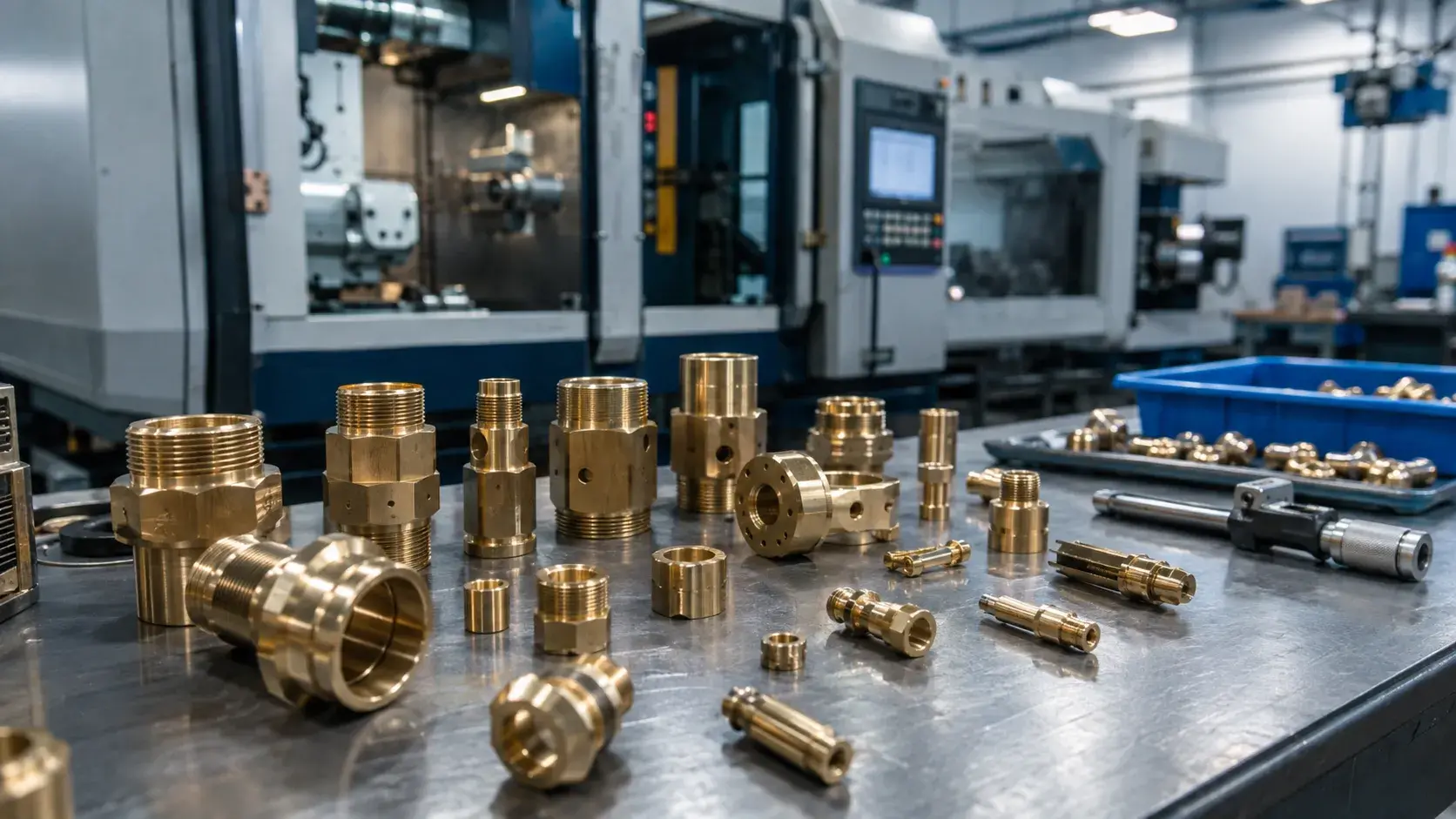
Precision CNC machined brass parts for industrial applications

Due to its good machinability and well-balanced material properties, brass is commonly used for making precise components in various industries.

Common CNC machined brass parts include:

ApplicationExamples
Electrical componentsConnectors, terminals, contacts
Plumbing systemsValves, fittings, adapters
Industrial equipmentBushings, shafts, precision hardware
Automotive applicationsSmall mechanical components
Medical equipmentPrecision fittings and instrument parts

For manufacturers making custom parts, brass is commonly chosen when there is a need for good machinability, consistent dimensions, and resistance to corrosion.

Among various metal materials, brass is particularly favored for precise machining because it allows for high-quality surface finishes and tight dimensional accuracy while maintaining efficient machining capabilities.

Brass Alloys Commonly Used in Manufacturing

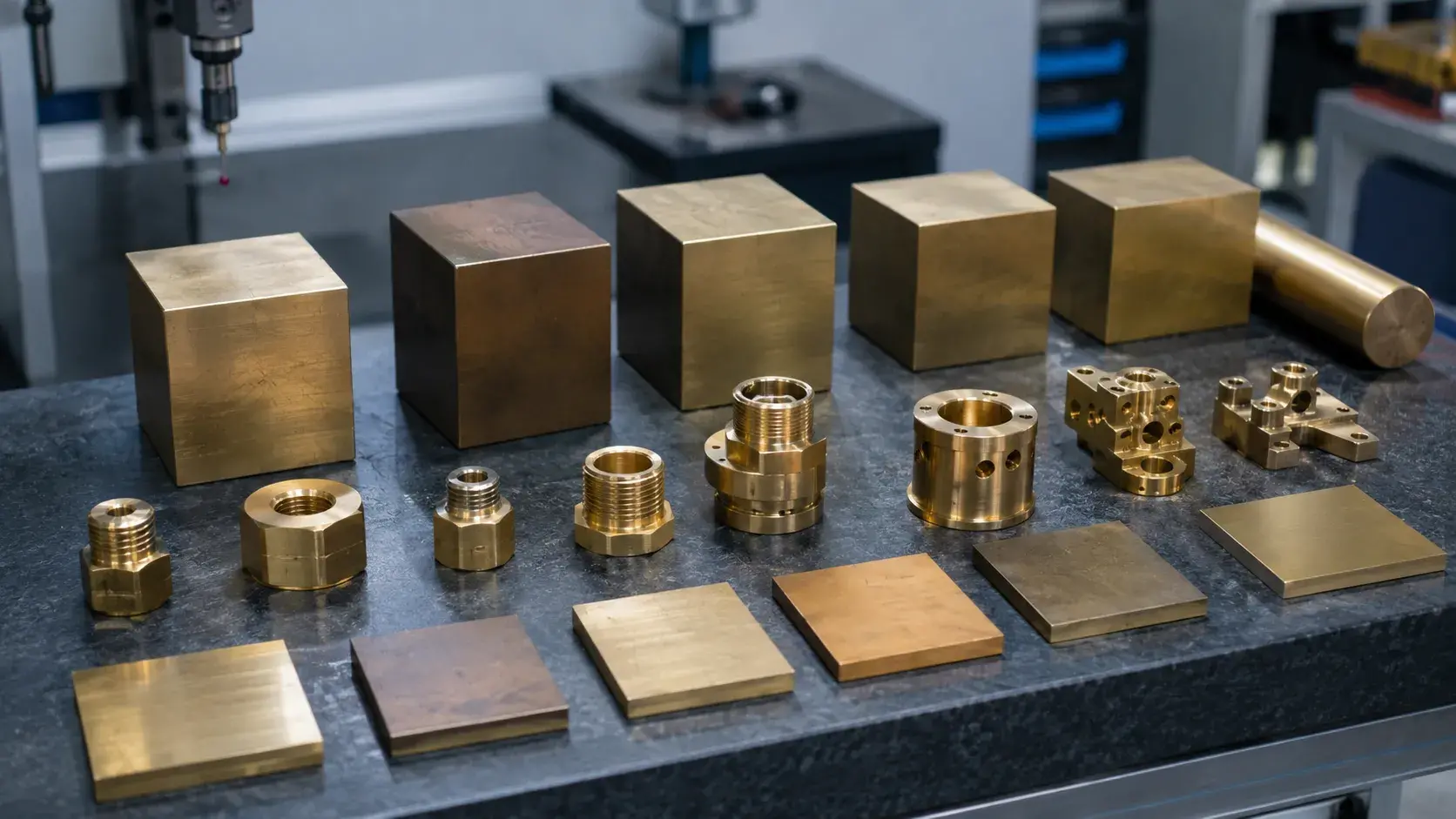
Different brass alloys used for precision manufacturing

Different brass alloys provide different combinations of strength, corrosion resistance, and machinability. Selecting the appropriate alloy is important for achieving the required performance.

Brass AlloyMain CharacteristicsCommon Applications
C360 BrassExcellent machinability, good dimensional stabilityCNC turned parts, connectors, fittings
C260 BrassGood corrosion resistance and formabilityElectrical components, hardware
C464 Naval BrassImproved corrosion resistance in marine environmentsMarine fittings, valves

For brass CNC machining, C360 brass is one of the most commonly used alloys because it offers excellent cutting performance and consistent machining results.

Custom Brass Parts Manufacturing

Brass is still a favored material for making precise components due to its good ability to be shaped, resistance to corrosion, and dependable performance in various industries.

When working on projects that need custom brass parts, it is important to select the appropriate alloy, machining method, and surface finish to ensure consistent quality and accurate measurements.

YUANYI offers precision CNC machining services for custom metal parts, including brass components, prototypes, and small-scale production.

With advanced machining technology and thorough quality checks, we assist customers in producing dependable precision parts for industrial use.

Need Custom Brass Parts?

Brass offers excellent machinability, corrosion resistance, and surface quality, making it a popular choice for precision components. If you need custom brass parts with tight tolerances and reliable quality, YUANYI provides CNC machining solutions for prototypes and low-volume production.

Get a Quote

FAQ About Brass Tarnishing

Yes, brass and copper can both develop surface oxidation, but they do not always tarnish at the same rate. Since brass contains zinc, its oxidation behavior can vary depending on the alloy composition and environment.

In many cases, copper develops a patina more noticeably, while brass may show darker discoloration before developing green surface compounds.

No, polishing removes the existing oxidation layer, but it does not permanently prevent future tarnishing.

After polishing, brass can oxidize again when exposed to oxygen and moisture. Applying a protective coating or storing brass in a controlled environment can help slow down future discoloration.

Yes, humid environments can accelerate brass tarnishing because moisture increases the chemical reactions between the metal surface and oxygen.

Brass used in coastal areas, tropical climates, or industrial environments may require additional surface protection to maintain appearance and performance.

Generally, tarnished brass is not harmful to touch. The oxidation layer that forms on brass is usually a surface reaction and does not mean the material is unsafe.

However, for applications involving food contact, medical devices, or sensitive environments, appropriate material standards and surface treatments should be considered.

Yes, different brass alloys can have different oxidation characteristics. The ratio of copper and zinc, as well as additional alloying elements, can influence corrosion resistance, surface appearance, and long-term durability.

For example, brass alloys used in marine or industrial applications are often selected for improved environmental resistance.

Yes. For CNC machined brass parts, oxidation can be reduced through proper material selection, surface finishing, and protective treatments.

Common methods include polishing, coating, plating, and choosing a suitable brass alloy based on the working environment.

Table of Contents
Discuss Your Complex Machining Requirements

Need Custom CNC Machined Parts?

From rapid prototypes to low-volume production, our engineering team can review your drawings and provide a manufacturing quote.

  • 24-Hour Quotation
  • DFM Engineering Support
  • No Minimum Order
  • ISO 9001 Certified
Request A Quote
Upload your drawing and get a quote within 24 hours.


