

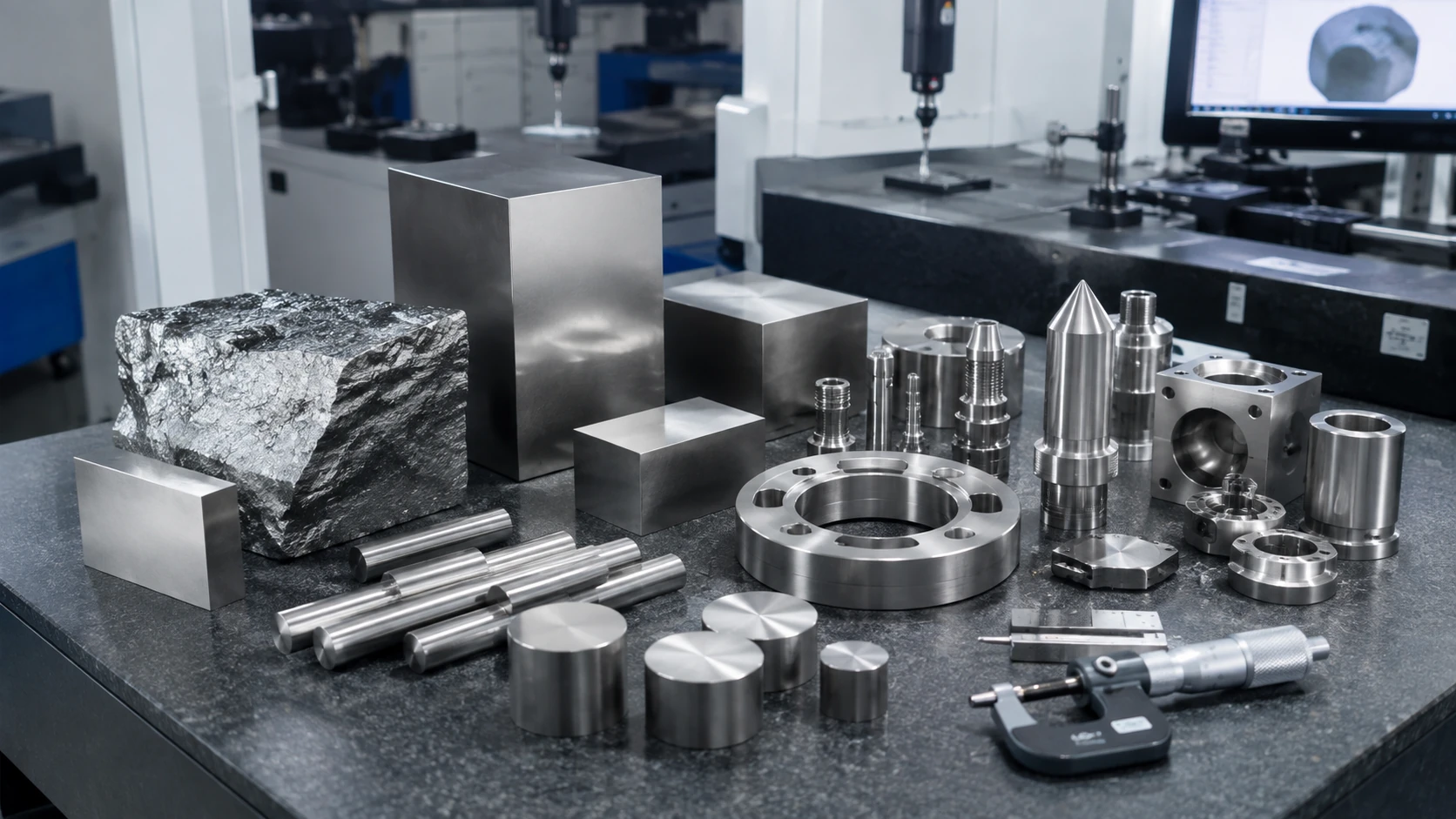
When engineers require a material that can endure extreme heat, heavy pressures, and tough operating environments, tungsten metal is frequently considered as a top option.
Tungsten is recognized for its exceptionally high melting temperature, significant weight, and strong resistance to wear.These characteristics make it highly useful in areas such as aerospace, medical devices, electronics, and various industrial uses.
Nonetheless, tungsten is not a straightforward material to produce.Its extreme hardness and tendency to break easily make the machining of tungsten much more complex compared to cutting standard metals like aluminum or stainless steel.
What Is Tungsten Metal?
Tungsten, also known as wolfram, is a rare metal with the chemical symbol W and atomic number 74. It has the highest melting point among all pure metals, making it ideal for high-temperature applications.
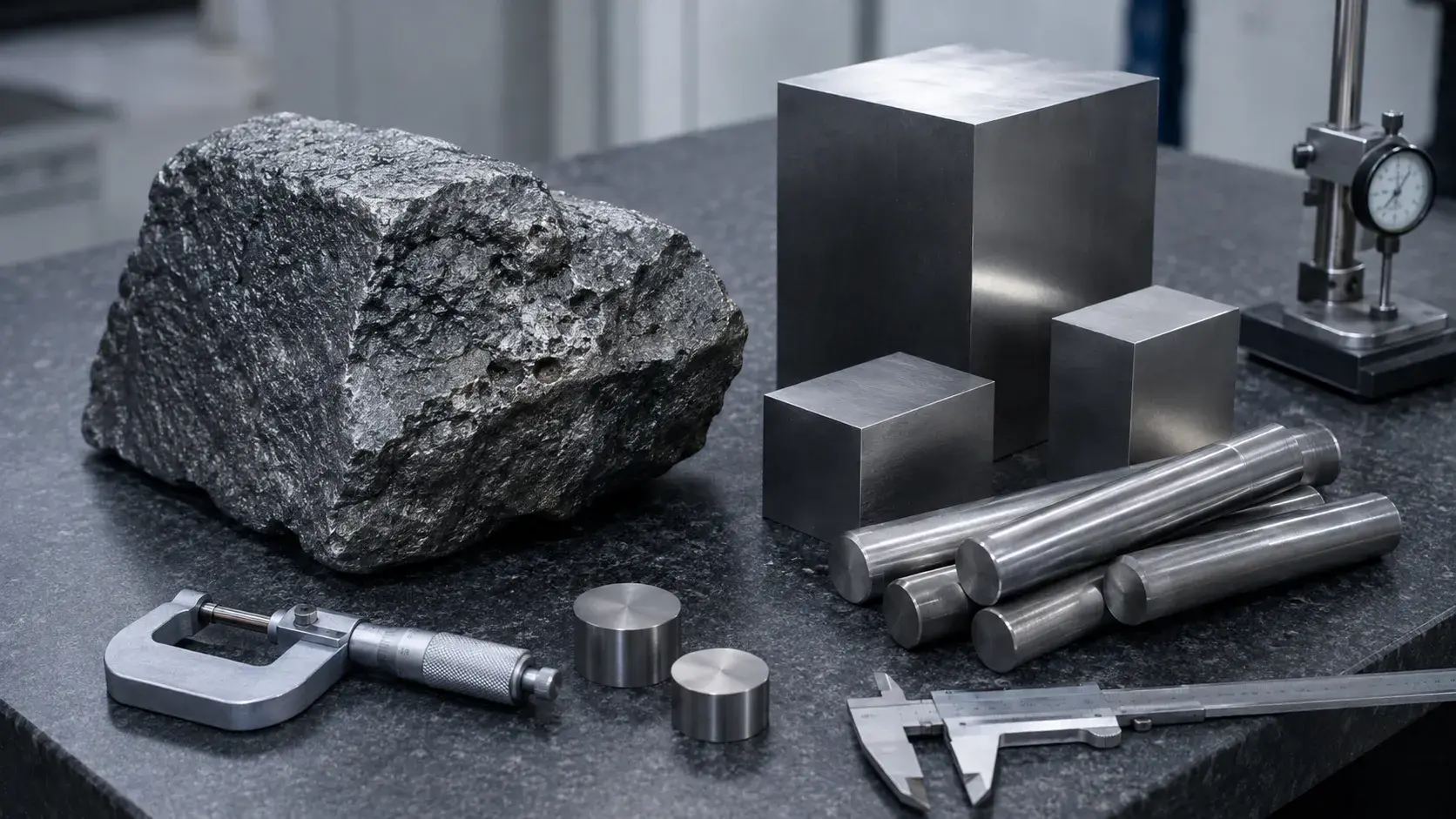
Tungsten has a silver-gray appearance and combines extremely high density with excellent mechanical stability. Unlike many metals that soften at high temperatures, tungsten maintains its strength and hardness under demanding conditions.
| Property | Tungsten Metal |
|---|---|
| Chemical Symbol | W |
| Density | 19.3 g/cm³ |
| Melting Point | 3422°C |
| Boiling Point | 5555°C |
| Appearance | Silver-gray metallic |
| Hardness | Very high |
| Corrosion Resistance | Excellent |
Key Properties of Tungsten Metal
Extremely High Melting Point
One of the most important characteristics of tungsten is its extremely high melting point of 3422°C, the highest among pure metals.
This allows tungsten components to maintain performance in high-temperature environments, making them suitable for:
- Aerospace components
- Furnace parts
- Heat-resistant equipment
- Electronics applications
High Density
Tungsten has a density of approximately 19.3 g/cm³, which is similar to gold and much higher than steel.
Its high density makes tungsten useful for applications requiring compact weight or radiation protection, including:
- Counterweights
- Vibration damping components
- Radiation shielding parts
- Medical equipment
Excellent Wear Resistance
Tungsten provides outstanding hardness and wear resistance, allowing components to maintain durability under friction and heavy loads.
Common applications include:
- Industrial wear parts
- Cutting tool materials
- High-performance mechanical components
Types of Tungsten Materials
Different tungsten materials are selected depending on the required performance and application.
| Tungsten Material | Characteristics | Common Applications |
|---|---|---|
| Pure Tungsten | Highest temperature resistance and density | Electronics, furnace components |
| Tungsten Alloy | Improved toughness and machinability | Aerospace, medical, industrial parts |
| Tungsten Carbide | Extremely hard and wear resistant | Cutting tools, machining inserts |
Pure Tungsten vs Tungsten Alloy: What Is the Difference?
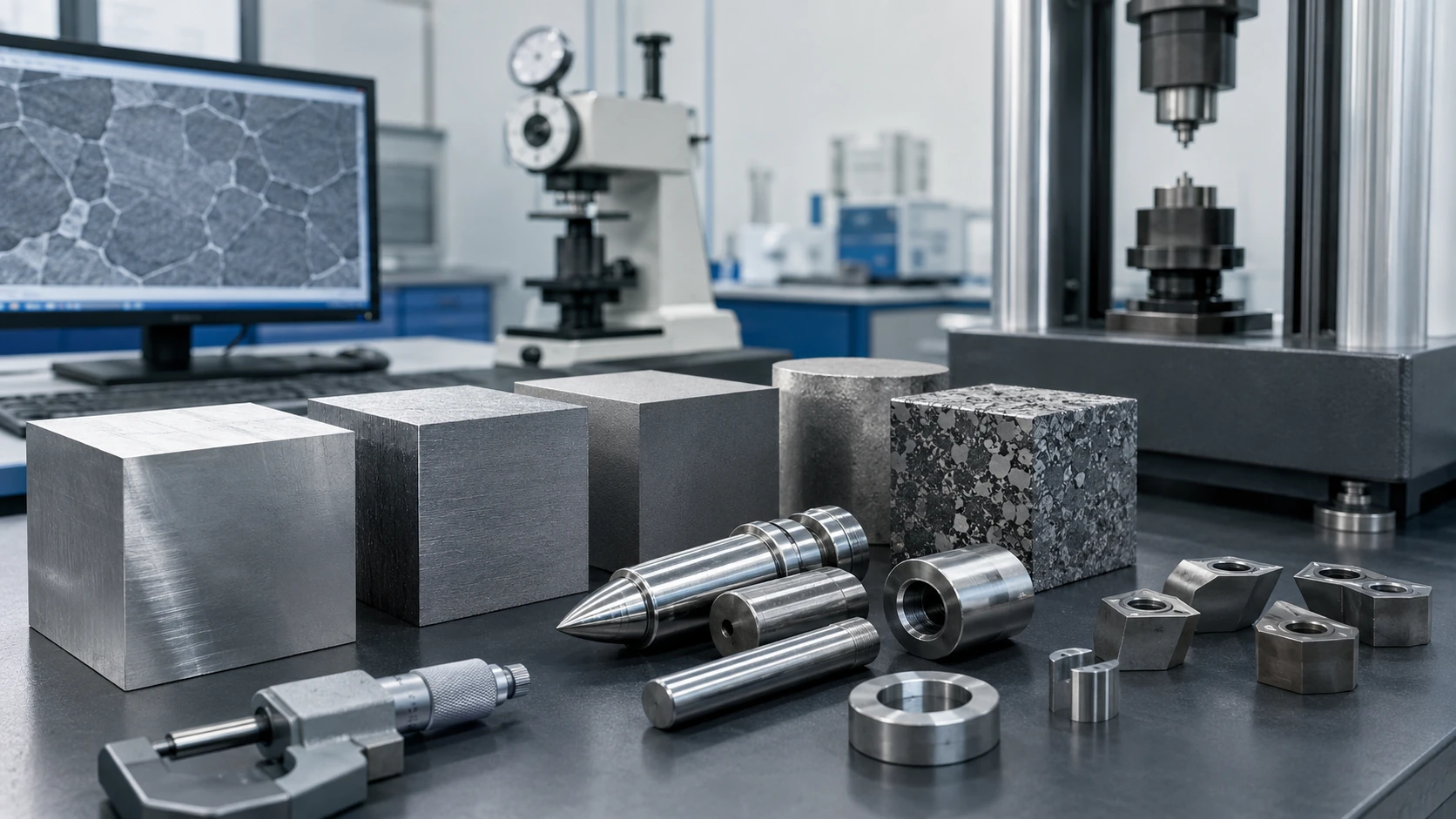
Pure tungsten has the highest melting point and excellent heat resistance, but it is also brittle and hard to work with.To enhance its toughness, machinability, and overall performance, tungsten alloys are created by adding other elements.
| Material | Characteristics | Common Applications |
|---|---|---|
| Pure Tungsten | Provides the highest temperature resistance, excellent density, and thermal stability, but has limited machinability due to brittleness. | Furnace components, electrical contacts, high-temperature parts |
| Tungsten Alloy | Offers better toughness, improved machinability, and balanced mechanical performance compared with pure tungsten. | Aerospace components, medical parts, counterweights, industrial components |
| Tungsten Carbide | A compound of tungsten and carbon with extremely high hardness and wear resistance. | Cutting tools, machining inserts, wear-resistant parts |
Advantages and Limitations of Tungsten Metal
Tungsten is highly effective in harsh conditions, but its toughness and tendency to break make it difficult to work with.In engineering uses, the main consideration is finding the right balance between its performance and how easy it is to machine along with the cost involved.
| Advantages | Limitations |
|---|---|
| Extremely high melting point | Difficult to machine |
| Very high density | Higher material cost |
| Excellent wear resistance | Brittle compared with many alloys |
| Good corrosion resistance | Requires specialized tooling and process control |
| Strong high-temperature performance | Longer machining time |
For components that are subjected to heat, wear, or heavy loads, tungsten is a good option.However, when it comes to intricate CNC machining parts, tungsten alloys are usually a better choice because they provide improved toughness and are easier to machine.
Tungsten Metal Applications
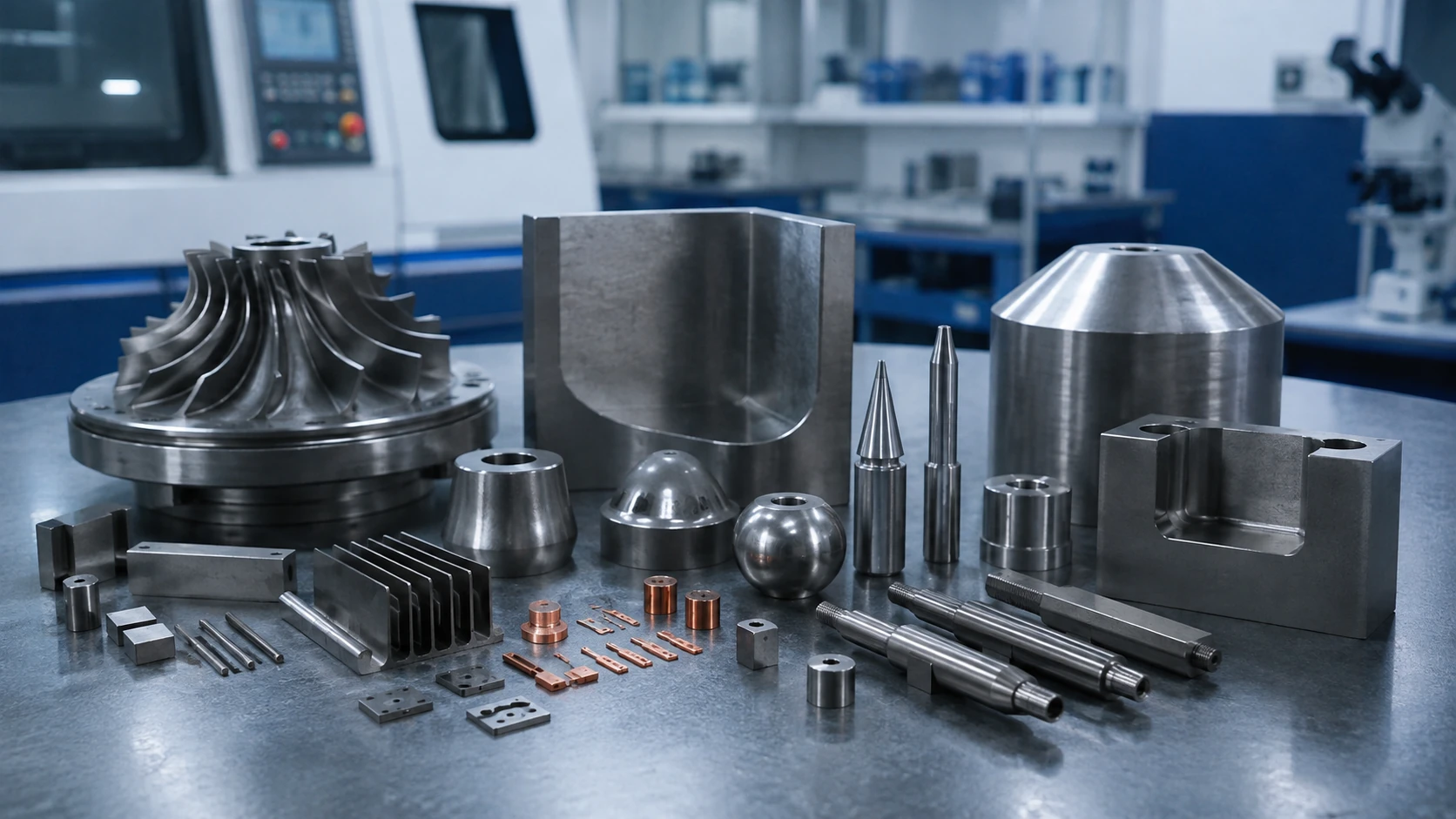
Due to its unique combination of high temperature resistance, high density, and excellent durability, tungsten is widely used in industries that require reliable performance under demanding conditions.
| Industry | Tungsten Applications |
|---|---|
| Aerospace | Used for high-temperature components, balancing parts, and precision components that require excellent stability under extreme conditions. |
| Medical | Commonly used for radiation shielding components, collimators, and precision medical parts due to its high density and radiation absorption capability. |
| Electronics | Used in electrical contacts, heat-resistant components, and high-temperature applications where dimensional stability is important. |
| Industrial | Applied in wear-resistant parts, tooling components, and heavy-duty mechanical parts that require high hardness and long service life. |
CNC Machining Tungsten: Challenges and Solutions
When compared to common metals like aluminum, steel, and stainless steel, machining tungsten using CNC techniques is significantly more difficult because of its extreme hardness, high density, and tendency to be brittle.
While machining tungsten, there is an increase in cutting forces, quicker tool wear, and challenges in keeping tight tolerances.
As a result, manufacturers must use appropriate tools, set the right machining parameters, and implement effective process control to create high-quality tungsten components.
| Machining Challenge | Solution |
|---|---|
| High hardness and tool wear | Use wear-resistant carbide tools and optimized cutting parameters to improve tool life. |
| Material brittleness | Apply controlled cutting strategies to reduce cracking and edge damage. |
| High cutting forces | Use stable fixturing and suitable machining conditions to maintain accuracy. |
| Heat generation during machining | Improve cooling methods and control cutting speed to protect tools and workpieces. |
| Tight tolerance requirements | Use precision CNC equipment and inspection methods to ensure dimensional accuracy. |
Tungsten CNC Machining at YUANYI
Working with tungsten demands specialized equipment, precise process management, and expertise in handling challenging materials.
YUANYI offers tailored CNC machining services for high-performance materials, supporting the development of prototypes, small production runs, and precision components.
We utilize advanced CNC milling, turning, and precision inspection technologies to help customers produce complex tungsten and tungsten alloy parts suited for demanding applications.
Our machining solutions include:
- Precision CNC machining of tungsten components
- Custom parts created based on customer designs
- Machining with tight tolerances and thorough quality inspection
- Support for both prototype and low-volume manufacturing
No matter the application—whether in aerospace, medical, electronics, or industrial sectors—YUANYI delivers dependable manufacturing solutions for tungsten parts.
Conclusion
Tungsten metal provides excellent performance due to its high melting point, high density, and strong resistance to wear, making it ideal for use in aerospace, medical, electronics, and industrial applications.
Despite these benefits, tungsten’s extreme hardness and brittleness make it more difficult to machine using CNC techniques compared to many other metals.Selecting the appropriate machining method, tools, and manufacturing partner is crucial for creating precise and dependable tungsten parts.
For projects that demand high-performance materials and accurate machining, collaborating with a skilled CNC manufacturer can lead to improved quality, consistency, and overall production efficiency.
Need Custom Tungsten CNC Machining?
YUANYI provides precision CNC machining for tungsten and other difficult-to-machine materials. Send us your drawings and requirements for a fast quote.
Get a Free QuoteFAQs About Tungsten Metal
Yes. Tungsten is much harder and denser than most steel materials, making it highly resistant to wear and deformation. However, its brittleness also makes it more difficult to machine.
Yes, tungsten can be CNC machined, but it requires specialized tooling, optimized cutting parameters, and careful process control due to its high hardness and brittleness.
Tungsten is difficult to machine because of its high hardness, high density, and low ductility. These properties can lead to increased tool wear, higher cutting forces, and potential cracking during machining.
Tungsten is a pure metal, while tungsten carbide is a compound made from tungsten and carbon. Tungsten carbide is harder and mainly used for cutting tools, while pure tungsten is valued for heat resistance and high density.
Yes. Tungsten has excellent corrosion resistance in many environments, especially compared with many common metals. However, its corrosion performance depends on the specific chemical conditions and operating environment.
Tungsten parts are widely used in aerospace, medical, electronics, and industrial applications where high temperature resistance, density, and durability are required.
Yes. Tungsten is generally more expensive than stainless steel because of its difficult processing requirements, high density, and specialized manufacturing processes.



