3/8-16 Tap Drill Size: Complete CNC Machining Guide

When making a threaded hole, it is important to select the right drill size to ensure proper thread engagement and dependable part function.For a standard 3/8-16 tap, the recommended drill bit size is 5/16 inch (0.3125″).This size is often used for 3/8-16 UNC threads and provides about 75% thread engagement, which works well for most CNC machining tasks.
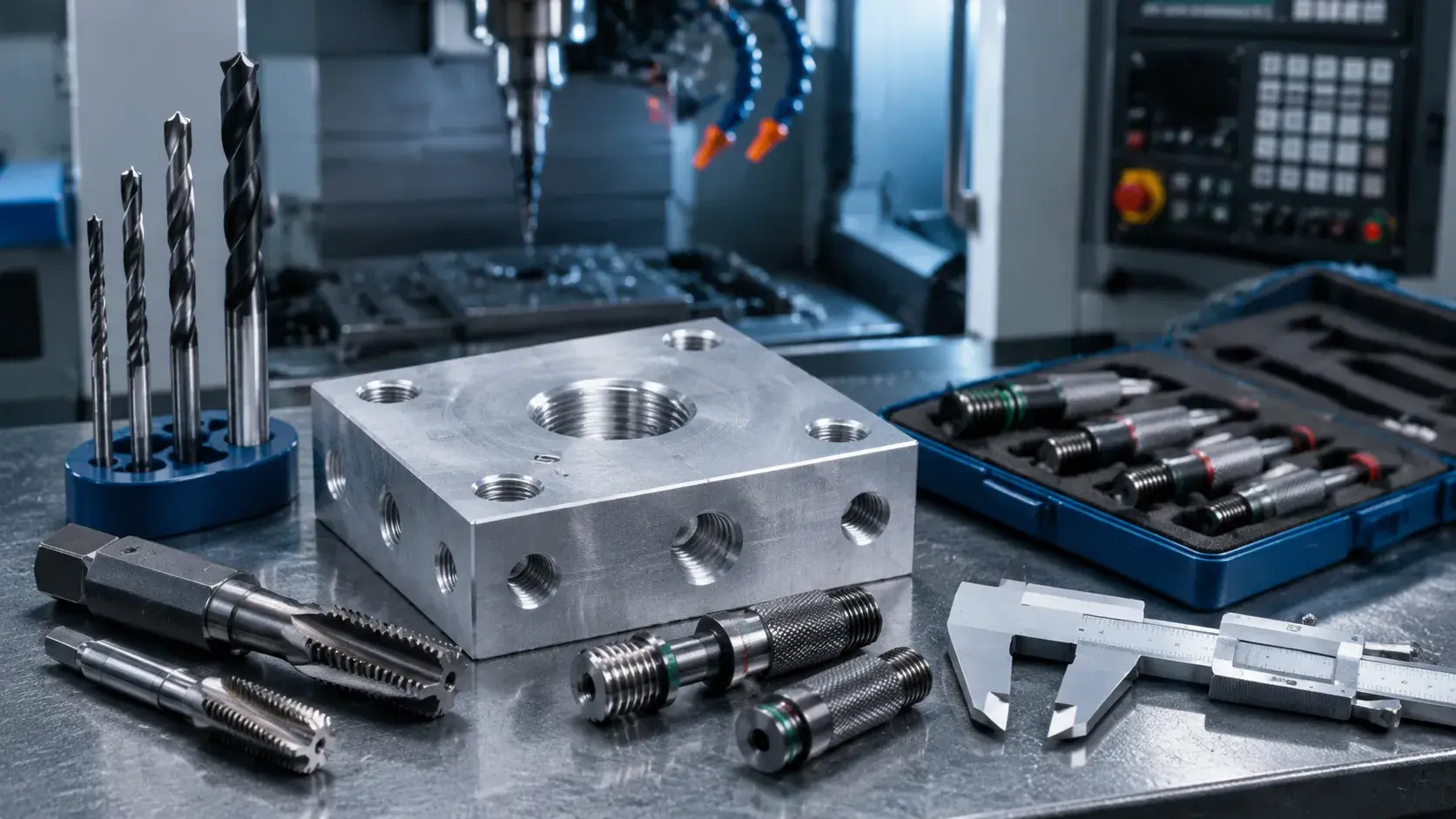
38-16 tap drill size guide showing drill bit and threaded hole

In CNC manufacturing, 3/8-16 tapped holes are frequently found in parts made from aluminum, steel, fixtures, machine frames, and industrial equipment.
Choosing the correct tap drill size helps avoid problems like damaged taps, weak threads, too much cutting force, and issues with assembly.

This guide covers what a 3/8-16 tap is, the right drill size for it, thread details, the CNC tapping process, and important factors to consider during machining.

What Does 3/8-16 Tap Mean?

A 3/8-16 tap is a type of Unified Coarse Thread (UNC) that is widely used in North America and in industrial manufacturing.

This designation includes two key measurements:

ParameterSpecification
Thread diameter3/8 inch
Threads per inch (TPI)16
Thread standardUNC (Unified National Coarse)
Thread typeInternal thread
Common applicationCNC machined parts, fixtures, industrial assemblies

The first number, 3/8, indicates the nominal outside diameter of the bolt or screw.

The second number, 16, means that there are 16 threads along each inch of the screw’s length.

UNC threads have a larger thread spacing compared to fine threads, which gives 3/8-16 UNC threads greater strength, quicker installation, and better protection against contamination.These qualities make them ideal for use in situations where parts need to be assembled and disassembled frequently.

What Is the Correct 3/8-16 Tap Drill Size?

The following tap drill size chart shows common drilling options for 3/8-16 threads.

Thread SpecificationTap Drill SizeDecimal EquivalentThread Engagement
3/8-16 UNC5/16″0.3125″Approx. 75%
3/8-16 UNC (larger clearance)21/64″0.3281″Lower engagement
3/8-16 UNC (higher engagement)19/64″0.2969″Higher cutting load

In practical CNC tapping operations, manufacturers typically select the standard 5/16 inch drill size because it provides a reliable combination of strength and machining performance.

The ideal choice may vary depending on:

  • material hardness;
  • required thread strength;
  • hole depth;
  • tapping method;
  • production volume.

How to Machine a 3/8-16 Threaded Hole with CNC?

Producing a dependable 3/8-16 threaded hole involves more than just choosing the right drill size.Proper machining techniques are essential to ensure the threads are accurate and durable over time.
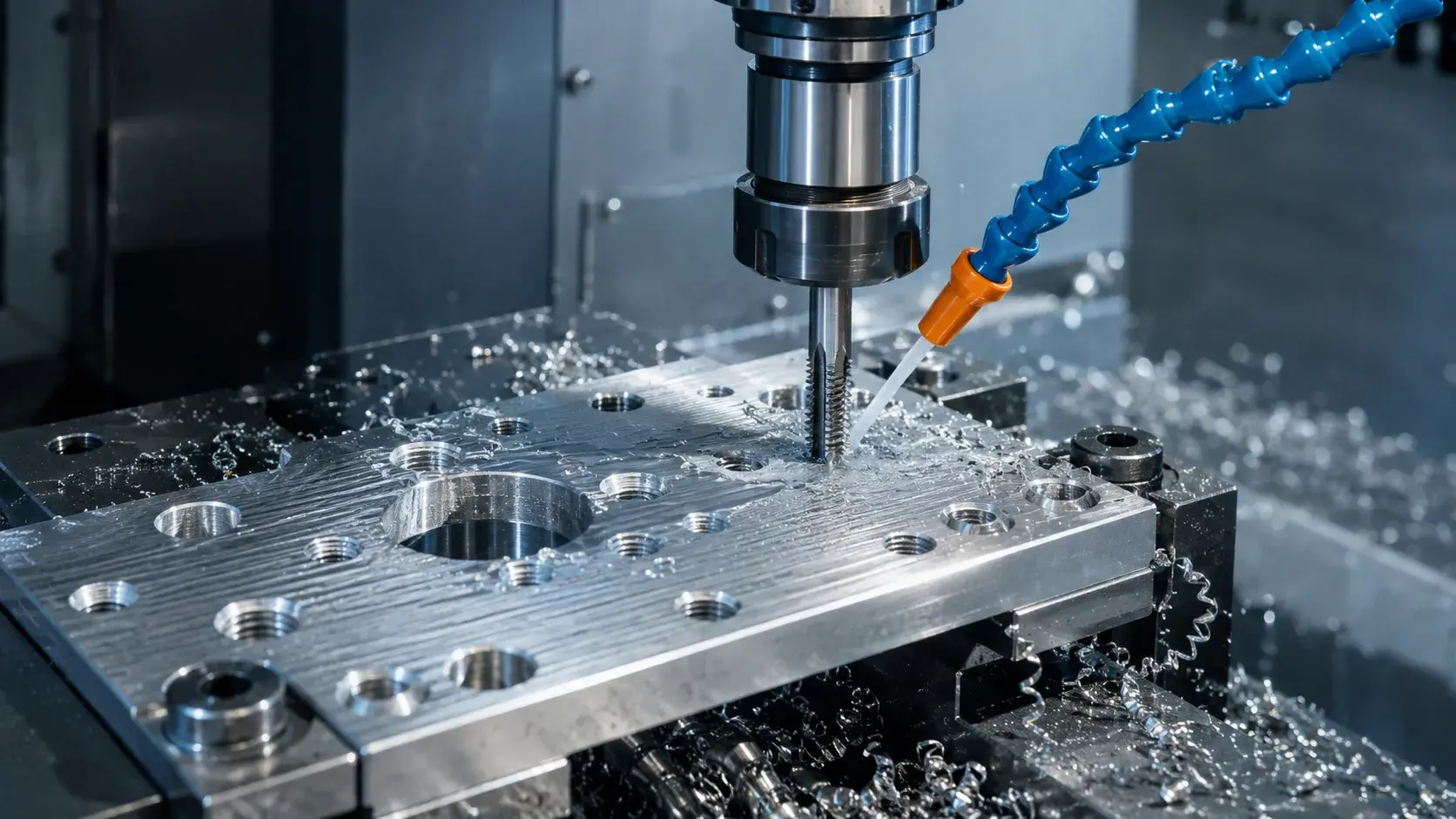
CNC tapping process for precision threaded holes

1.Drill the Correct Hole Size

The first step is to drill the hole using the recommended size for a 3/8-16 tap.

In CNC machining, engineers take into account several factors such as:

  • the type of material being used;
  • the type of drill coating;
  • the cutting speed;
  • the feed rate;
  • the depth of the hole.

2.Add a Chamfer Before Tapping

A slight chamfer at the entrance of the hole helps the tap enter smoothly.

This step offers several advantages, including:

  • easier insertion of the tap;
  • reduced cutting force;
  • better quality threads;
  • lower chance of damaging the first few threads.

In precision CNC machining, chamfering is often included in the machining program before the tapping process begins.

3.Perform the Tapping Operation

Once the hole is drilled, the internal 3/8-16 thread is formed using a tap.

The method chosen for tapping depends on the material and the production needs.

Commonly used tapping methods include:

  • Hand tapping: This is typically used for repair work or small batch production.
  • Machine tapping: This is commonly used in CNC manufacturing to maintain consistent thread quality.
  • Rigid tapping: This is used on CNC machining centers where the synchronization of the spindle improves accuracy and consistency.

For mass-produced CNC parts, rigid tapping is preferred because it provides:

  • uniform thread depth;
  • better control over dimensions;
  • increased production efficiency.

3/8-16 Tap Drill Size for Different Materials

Although the standard 3/8-16 tap drill size is 5/16 inch, the actual tapping performance can vary depending on the material being machined. Different materials have different cutting characteristics, which affect tool selection, cutting speed, lubrication, and thread engagement.

In CNC machining, engineers often adjust tapping parameters based on material hardness, ductility, and chip formation behavior.

Aluminum

Aluminum alloys such as 6061 aluminum and 7075 aluminum are commonly used for CNC machined parts because they offer excellent machinability and strength-to-weight ratio.

For aluminum parts with 3/8-16 tapped holes, manufacturers typically use:

  • Standard 5/16 inch drill size
  • Higher spindle speeds
  • Cutting lubricant to reduce chip adhesion
  • Spiral flute taps for blind holes

Because aluminum is relatively soft, excessive thread engagement is usually unnecessary. A properly selected tap drill size helps prevent aluminum chips from damaging the internal thread.

Common applications include:

  • aerospace brackets;
  • robotic components;
  • electronic housings;
  • precision mounting plates.

Stainless Steel

Stainless steel requires more attention during tapping because it has higher strength and work-hardening characteristics.

When machining 3/8-16 UNC threads in stainless steel, manufacturers usually focus on:

  • reducing cutting speed;
  • maintaining rigid tool holding;
  • applying sufficient cutting fluid;
  • selecting appropriate tap coatings.

Materials such as 304 and 316 stainless steel are widely used in industrial equipment and medical applications where corrosion resistance is important.

Incorrect drilling or tapping conditions may lead to:

  • premature tap wear;
  • thread damage;
  • tool breakage.

Steel

Carbon steel and alloy steel are common materials for mechanical components requiring strong threaded connections.

For steel parts, the standard 3/8-16 drill size remains suitable in most applications. However, machining parameters should be adjusted according to:

  • material hardness;
  • heat treatment condition;
  • thread depth requirements.

For hardened materials, manufacturers may choose specialized taps and optimized cutting strategies to maintain thread accuracy.

Titanium

Titanium alloys such as Ti-6Al-4V are widely used in aerospace and medical applications because of their high strength and corrosion resistance.

However, titanium is more challenging to machine due to:

  • low thermal conductivity;
  • high cutting forces;
  • tendency to work harden.

When producing CNC machined titanium parts with threaded holes, engineers carefully control:

  • tapping speed;
  • tool engagement;
  • lubrication;
  • chip evacuation.

Recommended 3/8-16 Thread Depth for CNC Machining

Selecting the right tap drill size for a 3/8-16 thread is just one aspect of creating a durable threaded connection.
The depth of the thread also significantly affects the strength and performance of the joint.

A standard recommendation for thread engagement is as follows:

MaterialRecommended Thread Engagement
Aluminum1.5 × bolt diameter
Steel1 × bolt diameter
Stainless Steel1–1.5 × bolt diameter

For a 3/8-inch diameter thread, the approximate minimum thread depth would be:

  • Steel: approximately 0.375 inch
  • Aluminum: approximately 0.560 inch

However, the exact depth may vary depending on several factors such as:

  • The load the connection must support
  • The strength of the bolt
  • The properties of the material being used
  • The overall design and geometry of the part

In precision CNC manufacturing, engineers typically examine threaded features during the design phase to ensure adequate wall thickness and proper access for machining tools.

Common Mistakes When Machining 3/8-16 Threaded Holes

Even when the correct 3/8-16 tap drill size is selected, machining mistakes can affect thread quality and assembly performance.

1. Using the Wrong Drill Size

One of the most common mistakes is selecting an incorrect drill diameter.

A hole that is too small can cause:

  • excessive tapping force;
  • broken taps;
  • damaged threads.

A hole that is too large may result in:

  • weak thread engagement;
  • reduced holding strength;
  • loose fastener connections.

Using the recommended 5/16 drill size for a 3/8-16 tap avoids these issues in most standard applications.

2. Incorrect Tapping Speed

Different materials require different tapping speeds.

For example:

  • Aluminum allows faster tapping speeds.
  • Stainless steel requires slower speeds.
  • Titanium needs careful heat control.

Using excessive speed can generate heat and accelerate tool wear.

3. Poor Chip Removal

During tapping, chips must be properly removed from the hole.

This is especially important for:

  • deep holes;
  • blind holes;
  • sticky materials such as aluminum.

Common solutions include:

  • spiral flute taps;
  • peck tapping cycles;
  • proper coolant application.

4. Insufficient Hole Preparation

Before tapping, CNC programmers should consider:

  • drilling accuracy;
  • hole position tolerance;
  • entrance chamfer;
  • surface condition.

Small preparation details can significantly improve final thread quality.

Applications of 3/8-16 Threaded Holes in CNC Machining

The 3/8-16 UNC thread is widely used in mechanical and industrial manufacturing because it provides a strong and reliable fastening solution.

Typical applications include:

Aerospace Components

Aircraft structures and support components often require precision threaded holes for:

  • assembly;
  • adjustment;
  • fixture mounting.

Robotics and Automation Equipment

Robotic systems use threaded holes for:

  • actuator mounting;
  • sensor installation;
  • mechanical adjustment.

Industrial Machinery

Machine components commonly use 3/8-16 tapped holes for:

  • brackets;
  • covers;
  • tooling fixtures;
  • equipment frames.

CNC Machined Prototypes

During prototype development, engineers frequently use standard thread sizes such as 3/8-16 UNC because they are widely available and easy to assemble.

CNC Machining Services for Precision Threaded Parts

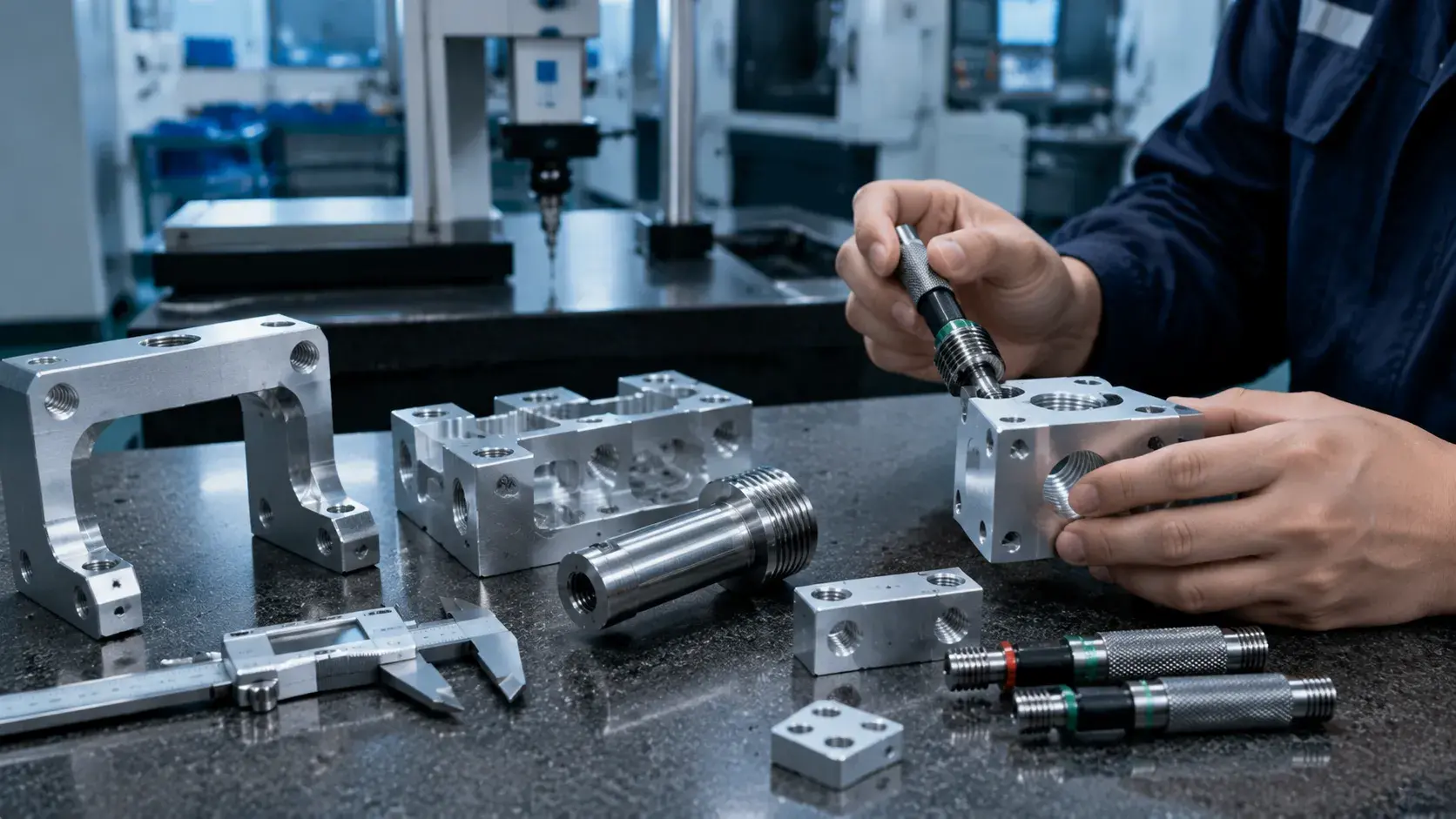
Precision CNC machined threaded parts inspection

YUANYI provides custom CNC machining services for components requiring accurate threaded holes, tight tolerances, and reliable production quality.

With advanced CNC milling, CNC turning, and 5-axis machining capabilities, we help customers manufacture precision parts for aerospace, medical, robotics, automotive, and industrial applications.

Upload your drawing today, and our engineering team will review your project requirements and provide a machining solution.

Conclusion

The standard tap drill size for a 3/8-16 thread is 5/16 inch (0.3125″), which is commonly recommended for most UNC threaded hole applications.Choosing the right drill size, tapping technique, and machining settings is crucial for creating strong and precise threads.

For CNC machined parts, proper thread preparation helps enhance assembly reliability, minimize manufacturing problems, and ensure consistent product quality.

With professional CNC machining services, skilled manufacturers can refine the drilling, tapping, and inspection processes to produce high-precision threaded components suitable for demanding industries.

FAQ About 3/8-16 Tap Drill Size

The standard 3/8-16 tap drill size is a 5/16 inch drill bit (0.3125 inch). This size provides suitable thread engagement for most CNC and general machining applications.

No. 3/8-16 UNC and M10 are different thread standards. They have similar diameters, but the thread pitch and dimensions are not identical.

For aluminum CNC machining, spiral flute taps are commonly used because they improve chip evacuation and reduce the risk of chip buildup.

The required depth depends on the material and load requirements. A general guideline is approximately one bolt diameter for steel and 1.5 times the diameter for aluminum.

Yes. Modern CNC machining centers can perform rigid tapping operations to produce accurate and repeatable 3/8-16 threaded holes.

Table of Contents
Discuss Your Complex Machining Requirements

Need Custom CNC Machined Parts?

From rapid prototypes to low-volume production, our engineering team can review your drawings and provide a manufacturing quote.

  • 24-Hour Quotation
  • DFM Engineering Support
  • No Minimum Order
  • ISO 9001 Certified
Request A Quote
Upload your drawing and get a quote within 24 hours.