

Metalloids are elements that have properties between metals and nonmetals. They may look metallic, but they are usually brittle and conduct electricity less efficiently than true metals.
The six most commonly recognized metalloids are boron, silicon, germanium, arsenic, antimony, and tellurium. Some classifications also include polonium and astatine.
What Are Metalloids?
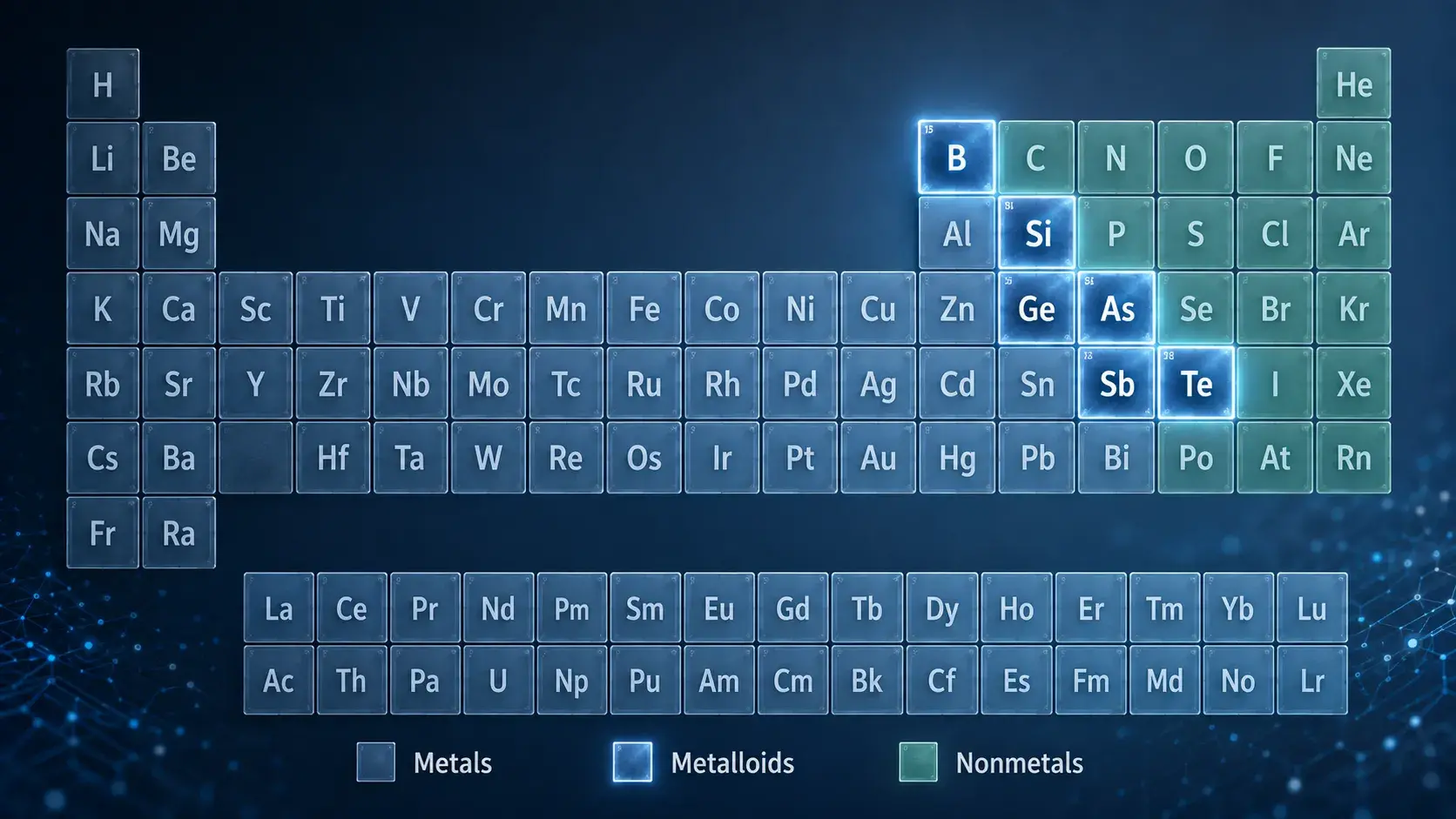
A metalloid is a chemical element that shows a combination of metallic and nonmetallic properties.
They are sometimes called semimetals, although the two terms are not always used in exactly the same way in chemistry and materials science.
Metalloids are located near the boundary between metals and nonmetals on the periodic table. Because of this position, their properties often fall somewhere between the two groups.
How Many Metalloids Are There?
There is no completely universal agreement on exactly how many elements should be classified as metalloids.
The six most commonly recognized metalloids are:
- Boron (B)
- Silicon (Si)
- Germanium (Ge)
- Arsenic (As)
- Antimony (Sb)
- Tellurium (Te)
These six elements are commonly shown along the stair-step boundary between metals and nonmetals on the periodic table.
However, some classifications also include:
- Polonium (Po)
- Astatine (At)
Their classification is less consistent because their properties do not fit as clearly into the traditional metalloid definition.
For most practical explanations, especially in general chemistry and engineering, the six-element list of B, Si, Ge, As, Sb, and Te is the safest and most widely accepted definition.
Which Elements Are Metalloids?
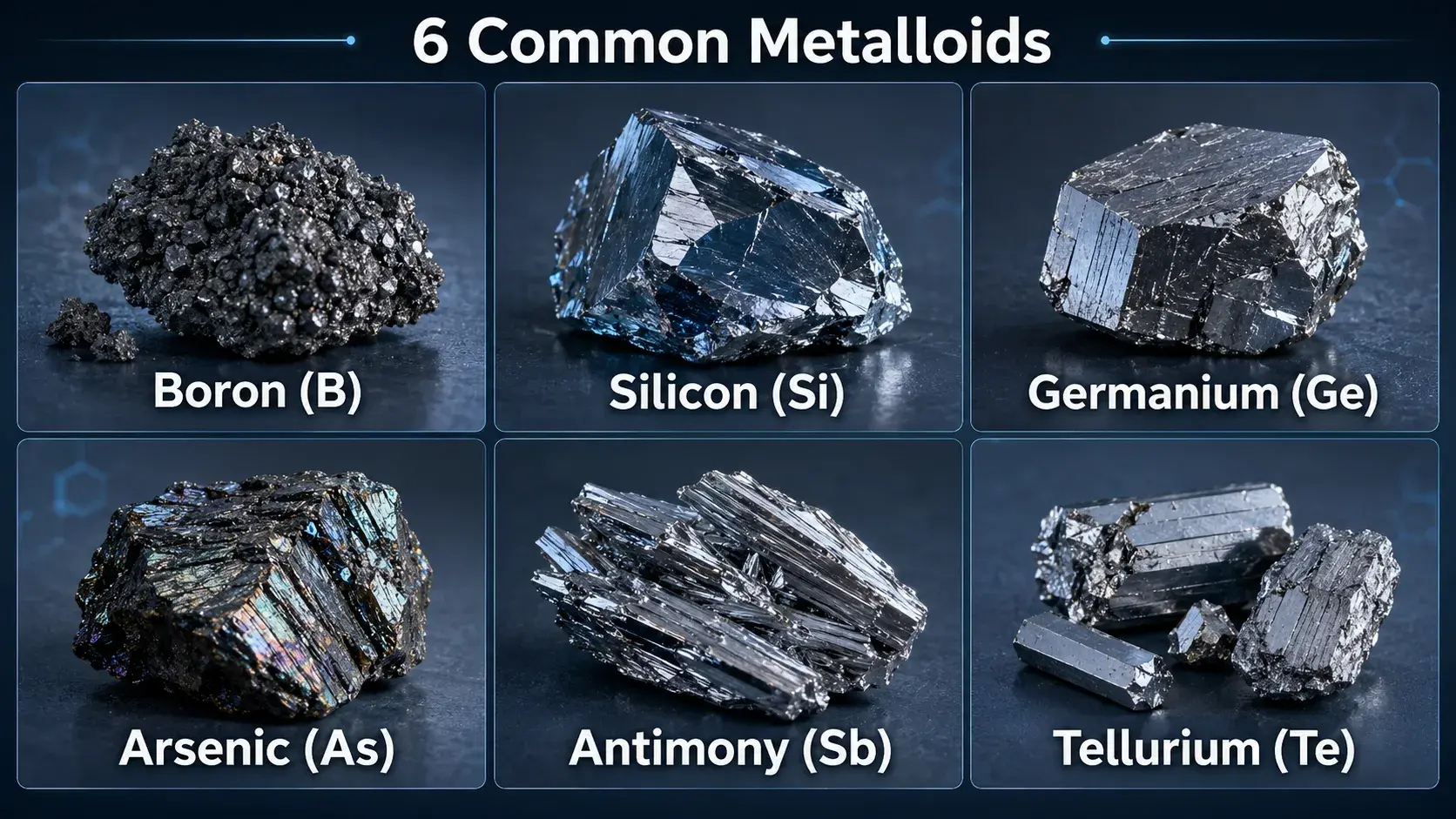
The following table summarizes the main metalloid elements and some of their most important characteristics.
| Metalloid | Symbol | Atomic Number | Key Characteristic | Common Uses |
|---|---|---|---|---|
| Boron | B | 5 | Hard, brittle, heat resistant | Borosilicate glass, ceramics, alloys |
| Silicon | Si | 14 | Excellent semiconductor material | Computer chips, solar cells, aluminum alloys |
| Germanium | Ge | 32 | Semiconductor and infrared-transparent material | Fiber optics, infrared optics, electronics |
| Arsenic | As | 33 | Semiconductor behavior, toxic in many forms | Semiconductor compounds, specialized alloys |
| Antimony | Sb | 51 | Brittle and useful as an alloying element | Flame retardants, batteries, lead alloys |
| Tellurium | Te | 52 | Semiconductor and thermoelectric properties | Solar cells, thermoelectric devices, alloys |
Among these elements, silicon is by far the most important metalloid in modern industry.
It is a fundamental material in semiconductor manufacturing and is also widely used in aluminum alloys, glass, ceramics, sealants, and photovoltaic products.
Boron is also important in engineering materials because it can improve hardness, heat resistance, and other material properties when used in glass, ceramics, and certain alloys.
Germanium, arsenic, antimony, and tellurium are generally used in smaller quantities but remain important in specialized electronics, optical systems, energy technologies, and engineered materials.
What Are the Properties of Metalloids?
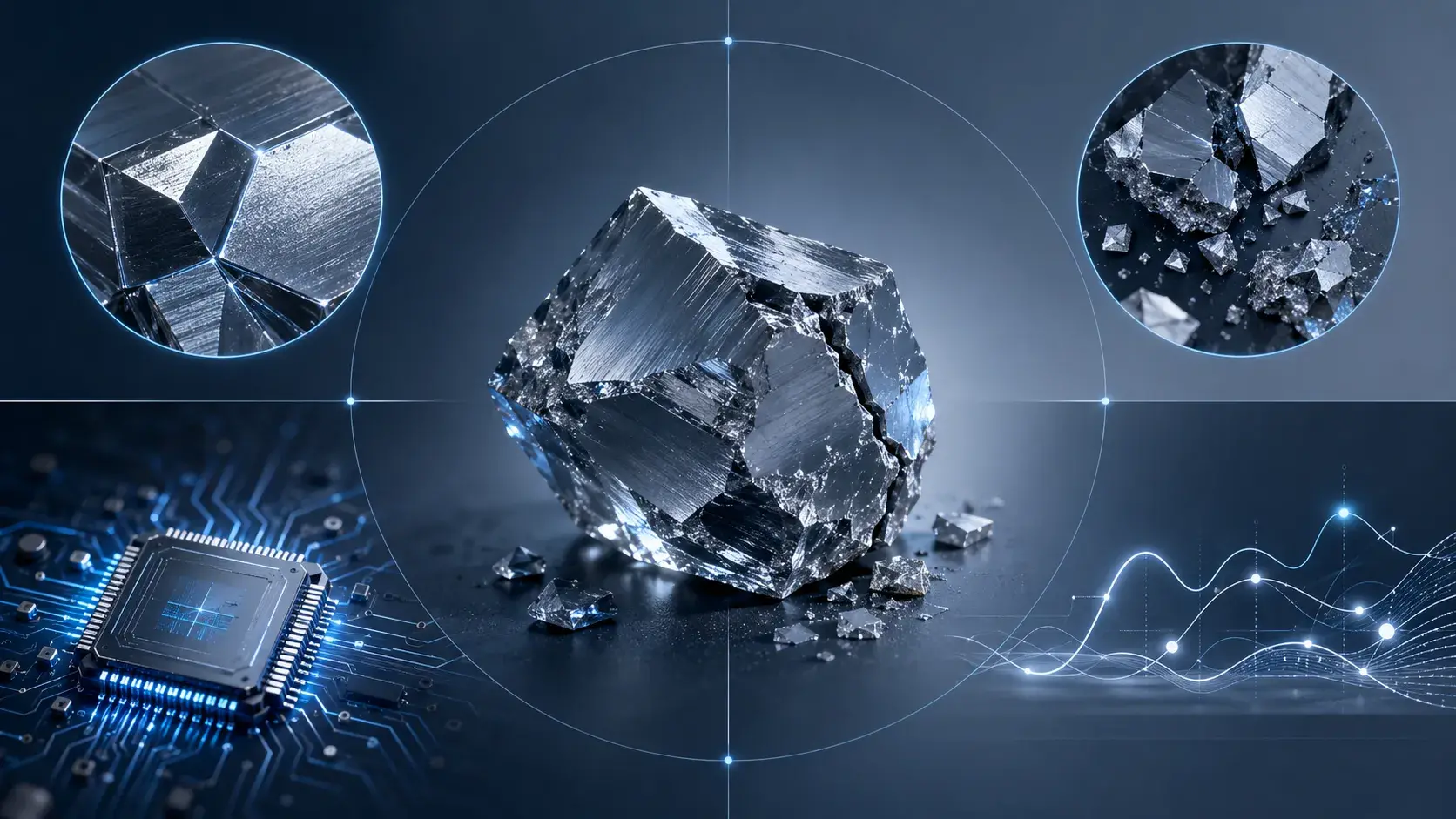
Metalloids do not all behave exactly the same way, but they share several general characteristics.
Their most important properties include a metallic appearance, brittle structure, moderate electrical conductivity, and semiconductor behavior.
Metallic Appearance
Many metalloids have a shiny or metallic-looking surface.
Silicon, germanium, antimony, and tellurium can all have a gray or silvery appearance that makes them look similar to metals.
However, appearance alone does not determine whether an element is a metal. Their mechanical and electrical behavior is often very different.
Brittle Structure
Unlike most metals, metalloids are generally brittle rather than ductile or malleable.
This means they are more likely to crack or fracture instead of bending significantly under load.
For example, crystalline silicon is hard but brittle, which is very different from ductile metals such as aluminum or copper.
Semiconductor Behavior
One of the most important properties of several metalloids is their ability to behave as semiconductors.
A semiconductor conducts electricity better than an electrical insulator but not as well as a typical metal conductor.
Silicon and germanium are the best-known examples.
Their conductivity can also be deliberately changed by adding very small amounts of other elements through a process known as doping. This makes them extremely useful in electronic components.
Electrical Conductivity
Metalloids generally have lower electrical conductivity than metals such as copper, silver, and aluminum.
Their conductivity can also vary significantly with temperature and composition.
This controllable electrical behavior is one reason metalloids are important in:
- transistors;
- integrated circuits;
- sensors;
- diodes;
- photovoltaic cells.
Thermal Conductivity
The thermal conductivity of metalloids varies considerably from one element to another.
For example, crystalline silicon can transfer heat relatively well, while other metalloids have much lower thermal conductivity.
This means metalloids cannot simply be described as either good or poor thermal conductors as a group.
Their thermal properties must be evaluated according to the specific element and application.
Hardness and Mechanical Strength
Some metalloids can be relatively hard, but hardness does not mean they are tough.
Boron, for example, is extremely hard in certain forms, while silicon is also harder than many common engineering metals.
However, both are brittle, which limits their use as conventional structural materials.
For this reason, metalloids are often more valuable as:
- semiconductor materials;
- alloying additions;
- ceramic components;
- glass additives;
- functional materials.
rather than as load-bearing structural materials.
Melting Point
Metalloids cover a relatively wide range of melting temperatures.
For example:
| Metalloid | Approx. Melting Point |
|---|---|
| Boron | 2,076°C |
| Silicon | 1,414°C |
| Germanium | 938°C |
| Arsenic | Sublimes at about 615°C at atmospheric pressure |
| Antimony | 631°C |
| Tellurium | 450°C |
Boron and silicon can withstand relatively high temperatures, which contributes to their use in high-temperature glasses, ceramics, and advanced materials.
However, melting point alone does not determine whether a metalloid is suitable for high-temperature engineering applications.
Density
Most metalloids have densities between very light nonmetals and heavier metallic elements, although the range varies significantly.
Approximate room-temperature densities include:
| Metalloid | Density |
|---|---|
| Boron | 2.34 g/cm³ |
| Silicon | 2.33 g/cm³ |
| Germanium | 5.32 g/cm³ |
| Arsenic | 5.73 g/cm³ |
| Antimony | 6.69 g/cm³ |
| Tellurium | 6.24 g/cm³ |
Silicon and boron are relatively lightweight, while antimony and tellurium are considerably denser.
Chemical Properties of Metalloids
The chemical behavior of metalloids also falls between that of typical metals and nonmetals.
Many metalloids can form covalent compounds, and several can react with oxygen to form oxides.
Their oxides may behave differently depending on the element. Some show acidic properties, while others can display both acidic and basic behavior.
Metalloids can also form compounds with metals and nonmetals, which is one reason they are useful in semiconductor compounds, alloys, ceramics, and specialty materials.
The exact chemical behavior varies significantly between boron, silicon, arsenic, antimony, tellurium, and the other elements sometimes included in the metalloid category.
Metals vs Metalloids vs Nonmetals
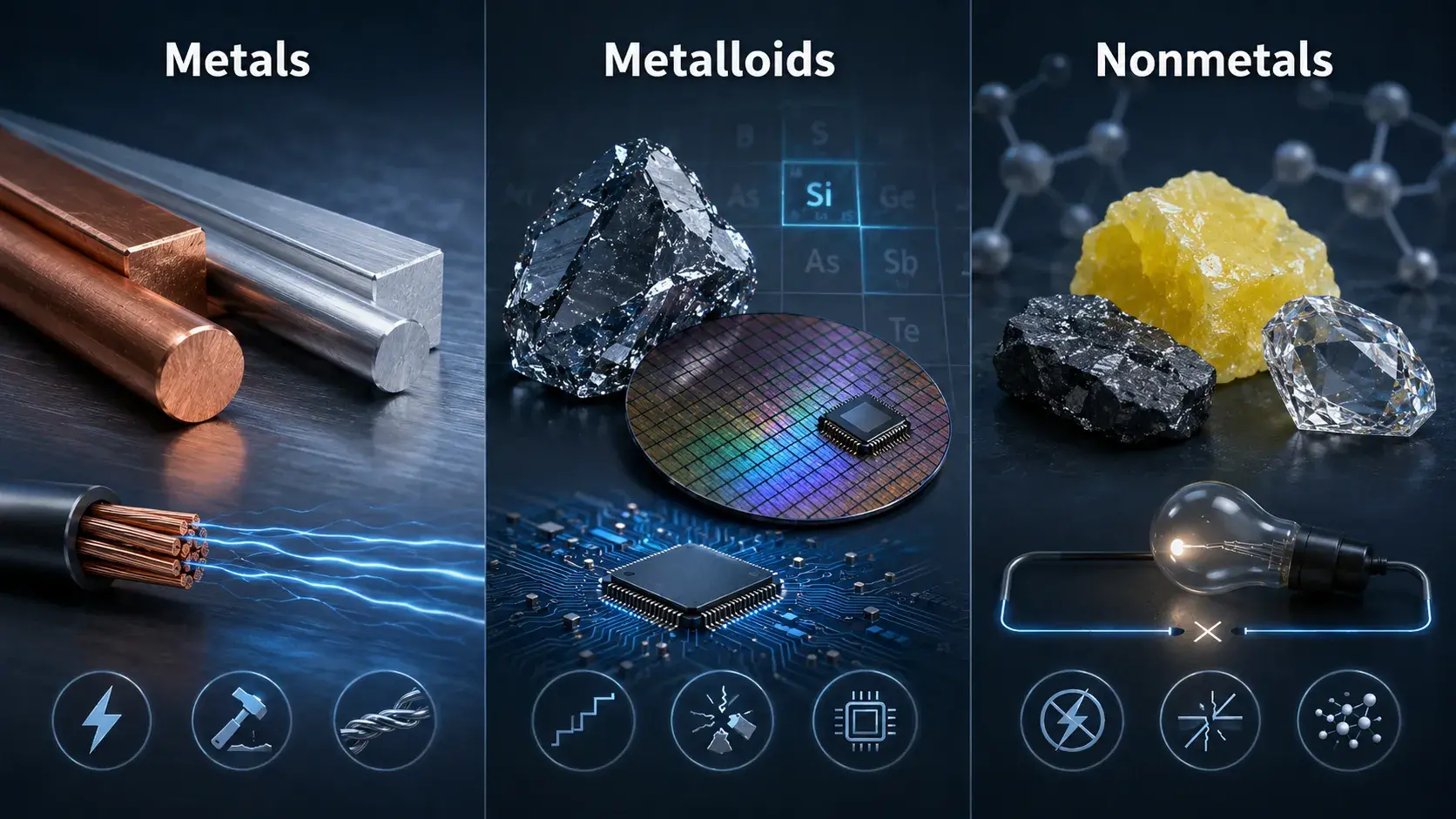
Metalloids sit between metals and nonmetals in both position and behavior.
They may look metallic, but they are usually brittle and often conduct electricity as semiconductors rather than as strong conductors.
| Property | Metals | Metalloids | Nonmetals |
|---|---|---|---|
| Appearance | Usually shiny | Often metallic-looking | Often dull |
| Electrical conductivity | High | Moderate or semiconductor | Usually low |
| Thermal conductivity | Usually high | Variable | Usually low |
| Ductility | Usually ductile | Usually brittle | Usually brittle |
| Malleability | Usually malleable | Low | Low |
| Typical state | Mostly solid | Solid | Solid, liquid, or gas |
| Position on periodic table | Left and center | Near stair-step boundary | Upper right |
| Examples | Aluminum, iron, copper | Silicon, boron, germanium | Oxygen, sulfur, carbon |
The biggest practical difference is electrical behavior.
Metals such as copper and aluminum conduct electricity very efficiently, while many nonmetals act as insulators. Metalloids such as silicon and germanium can act as semiconductors, which makes them useful in electronics and energy systems.What Are Metalloids Used For?
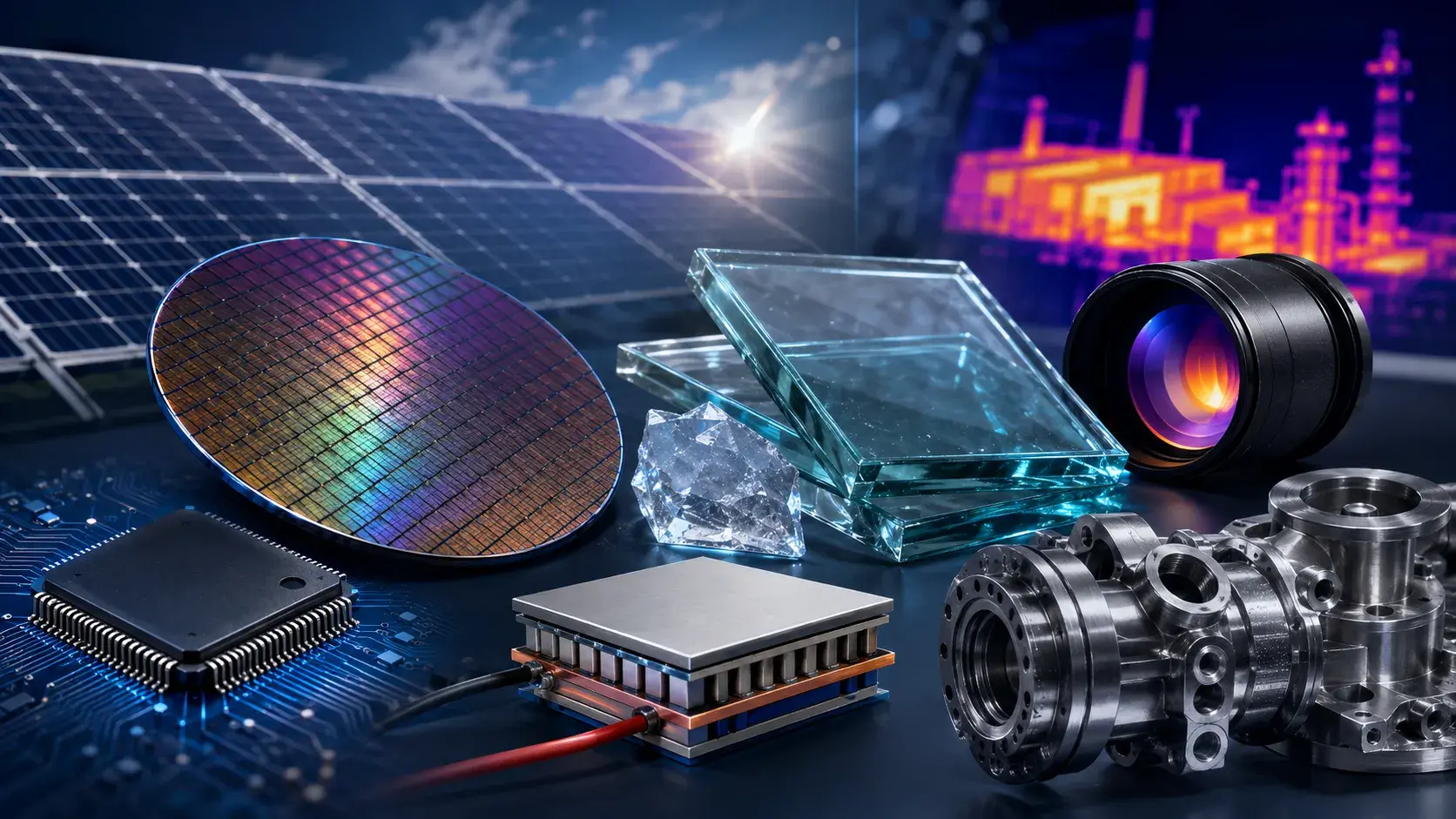
Metalloids are used in many industries because of their semiconductor, thermal, chemical, and alloying properties.
Their applications range from computer chips and solar cells to glass, batteries, alloys, and specialized optical systems.
Semiconductors and Electronics
Silicon and germanium are among the most important semiconductor materials.
Silicon is widely used to manufacture:
- computer processors;
- integrated circuits;
- transistors;
- sensors;
- power electronics;
- solar cells.
Germanium is also used in certain semiconductor devices, especially where high carrier mobility or specialized electronic performance is required.
Arsenic is commonly used in compound semiconductors such as gallium arsenide (GaAs), which is important in high-frequency electronics, LEDs, and some photovoltaic applications.
Solar Energy
Metalloids play an important role in photovoltaic technology.
Silicon is the dominant material used in conventional solar cells because it offers a practical balance of efficiency, availability, and manufacturing scalability.
Tellurium is also important in cadmium telluride (CdTe) solar cells, which are used in thin-film photovoltaic systems.
Glass and Ceramics
Boron and silicon are widely used in glass and ceramic materials.
Silicon dioxide is one of the primary components of many types of glass, while boron is used in borosilicate glass to improve resistance to heat and thermal shock.
These materials are commonly used in:
- laboratory glassware;
- cookware;
- optical glass;
- industrial equipment;
- electronic components.
Alloys
Some metalloids are added to metals in small amounts to modify their properties.
Silicon is especially important in aluminum alloys and cast aluminum materials.
Adding silicon can improve:
- fluidity during casting;
- wear resistance;
- hardness;
- dimensional stability;
- resistance to hot cracking.
Silicon is common in aluminum-silicon casting alloys used for automotive, machinery, housing, and structural components.
Antimony is also used in lead-based alloys to improve hardness and strength.
Tellurium may be added to copper and some steels to improve machinability.
Flame Retardants
Antimony compounds are widely used in flame-retardant systems.
Antimony trioxide, for example, is commonly used together with halogen-containing materials to improve flame resistance in plastics, textiles, and other products.
Because of environmental and health considerations, however, the use of some antimony-containing materials may be regulated depending on the application and region.
Infrared Optics
Germanium is valuable in infrared optical systems because it can transmit certain infrared wavelengths that ordinary glass cannot.
It is commonly used in:
- thermal imaging cameras;
- infrared lenses;
- night-vision equipment;
- optical sensors.
Germanium components are often precision-ground and polished rather than machined like conventional structural metals.
Thermoelectric Materials
Tellurium is widely used in thermoelectric materials.
Compounds such as bismuth telluride can convert temperature differences into electrical energy or create cooling when electrical current passes through them.
These materials are used in:
- thermoelectric coolers;
- temperature control systems;
- electronic cooling;
- energy recovery devices.
Why Are Metalloids Important in Manufacturing?
Metalloids are important in manufacturing mainly because they can change the performance of other materials or provide electrical and thermal properties that conventional metals cannot.
In CNC and metal manufacturing, silicon is one of the most relevant examples.
Silicon in Aluminum Alloys
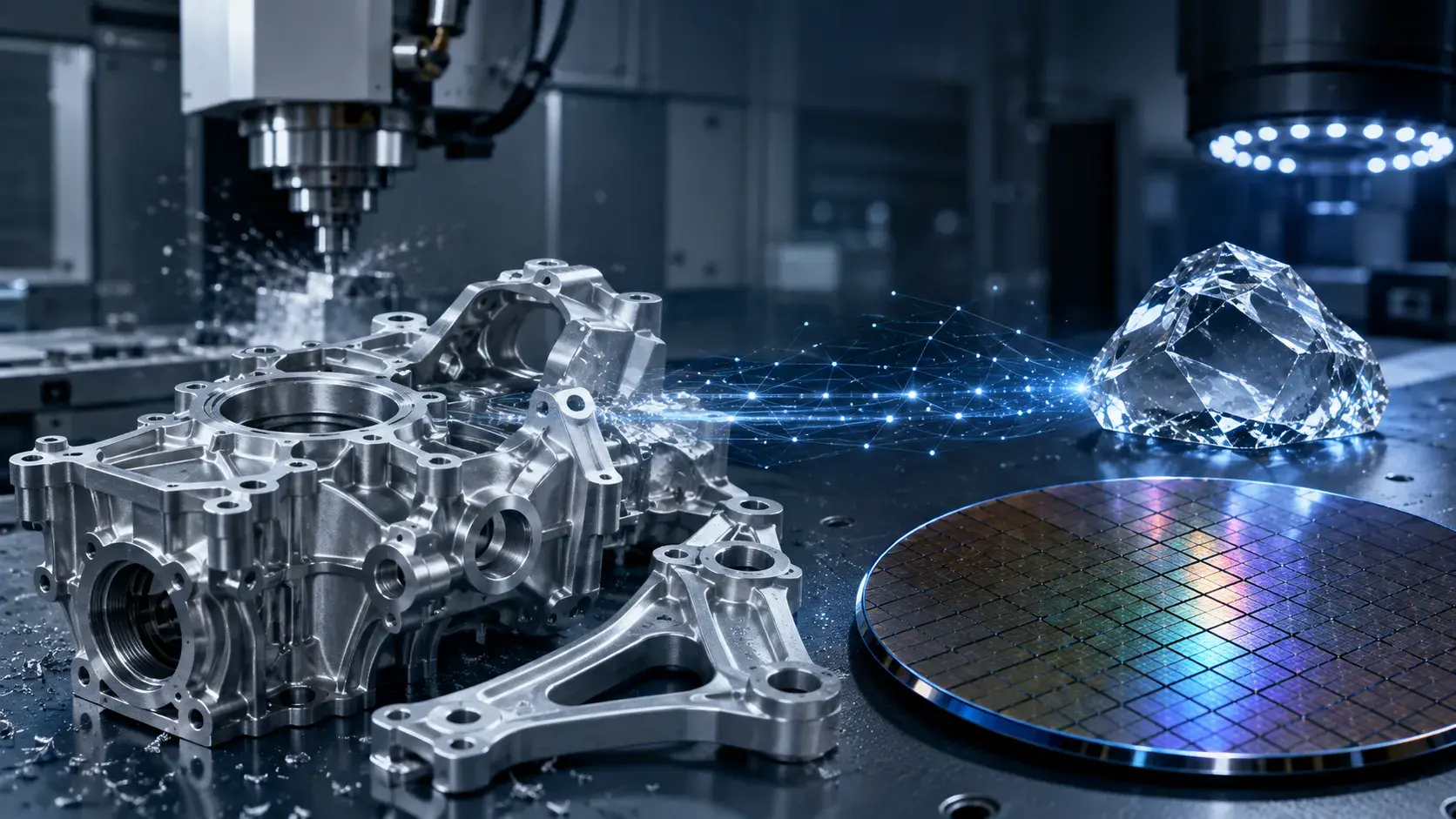
Silicon is commonly added to aluminum, especially in cast aluminum alloys.
Higher silicon content can improve molten-metal flow and reduce shrinkage problems during casting, making complex shapes easier to produce.
It can also improve wear resistance and hardness.
However, silicon content can affect machining behavior.
Aluminum alloys containing higher amounts of hard silicon particles can cause increased cutting-tool wear, especially during high-volume machining.
This means tooling, cutting speed, feed rate, and coolant strategy may need to be adjusted depending on the alloy.
Metalloids as Alloying Elements
Metalloids are usually not used as bulk structural materials in the same way as aluminum, steel, or titanium.
Instead, they are often added in relatively small amounts to modify properties such as:
- hardness;
- machinability;
- wear resistance;
- electrical behavior;
- casting performance;
- oxidation resistance.
This makes them important in both materials engineering and manufacturing process selection.
Examples of Metalloids in Everyday Life
Metalloids are found in many products people use every day, even though they are rarely seen in pure elemental form.
Silicon is the clearest example because it is used extensively in electronics, glass, construction materials, and solar technology.
Common examples include:
- Smartphones and computers: silicon is used in processors, memory chips, sensors, and other semiconductor components.
- Solar panels: crystalline silicon is widely used to convert sunlight into electricity.
- Glass products: silicon dioxide is a major component of common glass, while boron is used in heat-resistant borosilicate glass.
- LEDs and communication devices: arsenic-containing semiconductors such as gallium arsenide are used in specialized electronic and optical components.
- Thermal cameras: germanium is used in infrared lenses and imaging systems.
- Batteries: antimony may be used in certain lead-acid battery alloys.
- Thermoelectric coolers: tellurium-containing compounds are used in compact electronic cooling systems.
This wide range of applications shows why metalloids are important even though they represent only a small group of elements on the periodic table.
Are Metalloids Metals?
No. Metalloids are not classified as metals, even though many of them have a metallic appearance.
Their properties fall between those of metals and nonmetals.
For example, silicon may look shiny like a metal, but it is brittle and does not conduct electricity like copper or aluminum.
The term metalloid is used specifically because these elements cannot be described accurately as typical metals or typical nonmetals.
Conclusion
Metalloids are elements with properties between metals and nonmetals. The six most commonly recognized metalloids are boron, silicon, germanium, arsenic, antimony, and tellurium.
Their combination of brittle mechanical behavior, metallic appearance, and controllable electrical properties makes them especially valuable in semiconductors, solar cells, glass, ceramics, alloys, optics, and advanced materials.
For manufacturing applications, metalloids are often most important as functional materials or alloying elements rather than as bulk structural materials. Silicon is a particularly important example because it affects the casting, wear resistance, and machining behavior of many aluminum alloys.
FAQs About Metalloids
Silicon is a metalloid.
It has a metallic-looking surface but is brittle and behaves as a semiconductor rather than a conventional electrical conductor.
Its semiconductor properties make silicon one of the most important materials in electronics and solar-cell manufacturing.
Yes. Boron is one of the six most commonly recognized metalloids.
It is hard and brittle and is commonly used in borosilicate glass, ceramics, abrasives, advanced composites, and specialized alloys.
No. Aluminum is a metal, not a metalloid.
It is lightweight, ductile, electrically conductive, and highly machinable, which are typical metallic properties.
However, aluminum alloys may contain metalloid elements such as silicon to improve casting or material performance.
Most common classifications recognize six metalloids:
boron, silicon, germanium, arsenic, antimony, and tellurium.
Some sources also include polonium and astatine, so lists containing seven or eight metalloids may also be encountered.
Silicon is the most abundant and industrially important metalloid.
It is abundant in the Earth’s crust, mainly in the form of silica and silicate minerals, and is widely used in electronics, glass, solar panels, ceramics, and aluminum alloys.
Metalloids are generally not as conductive as metals.
Several metalloids, especially silicon and germanium, behave as semiconductors.
Their electrical conductivity can be controlled by temperature, impurities, and doping, which is why they are useful in electronic devices.
Most metalloids are brittle in their solid elemental form.
Unlike ductile metals such as copper or aluminum, they tend to fracture rather than undergo significant plastic deformation.
This brittleness is one reason pure metalloids are rarely used as conventional load-bearing structural materials.
Many metalloids have a shiny or metallic-looking appearance.
Silicon, germanium, antimony, and tellurium can appear gray or silver, while boron may have a darker appearance depending on its form.
Appearance alone, however, is not enough to classify an element as a metal.
Metalloids such as silicon and germanium have electrical conductivity between that of conductors and insulators.
More importantly, their conductivity can be precisely adjusted through doping.
This allows manufacturers to control electrical current in transistors, diodes, integrated circuits, sensors, and solar cells.
The terms are sometimes used interchangeably in general explanations, but they are not always identical in technical physics or chemistry.
Metalloid usually refers to an element with a mixture of metallic and nonmetallic properties.
Semimetal can have a more specific meaning related to the electronic band structure of a material.
For general periodic-table classification, metalloid is usually the clearer term.



