What Is Investment Casting? Process, Materials, Benefits & CNC Machining

Investment casting, also called lost wax casting, is a precision metal casting process used to produce complex parts with good dimensional accuracy and surface finish.

It works by creating a wax pattern, coating it with ceramic, removing the wax, and pouring molten metal into the remaining mold.

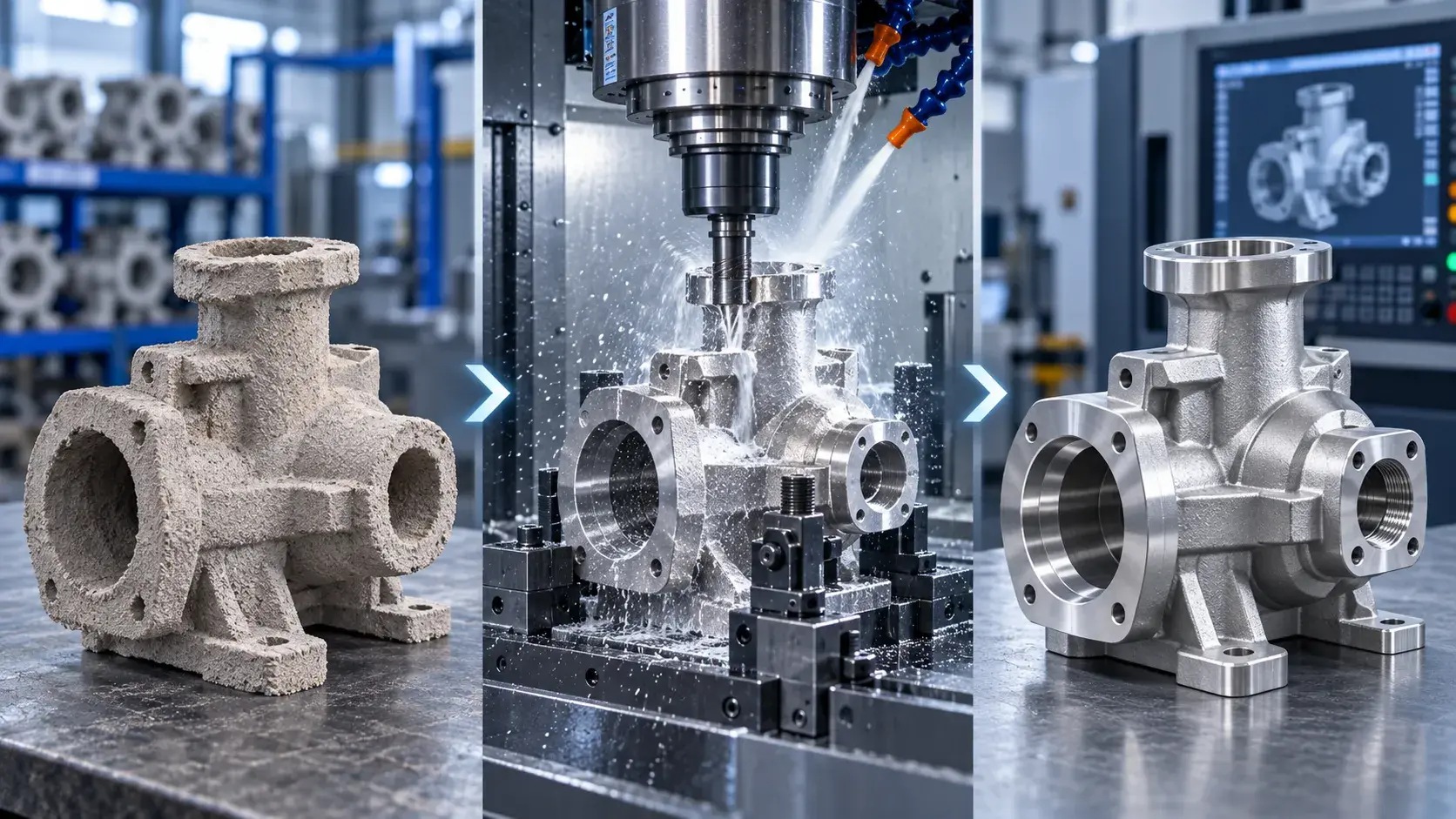
Investment casting can reduce machining, but critical features such as precision bores, threads, sealing surfaces, and tight fits often still require CNC machining.

What Is Investment Casting?

Investment casting is a manufacturing process in which a wax pattern is coated with several layers of refractory ceramic material to form a hard shell.

Once the ceramic shell has hardened, the wax is melted and removed. Molten metal is then poured into the remaining cavity. After cooling, the ceramic shell is broken away to reveal the cast metal part.

Because the ceramic mold closely reproduces the wax pattern, investment casting can create complex features that may be difficult or expensive to manufacture using conventional machining alone.

Investment casting is sometimes also called:

  • Lost wax casting
  • Precision casting
  • Wax casting

The term lost wax casting refers directly to the wax pattern that is removed during the process.

The term investment casting comes from the process of surrounding, or “investing,” the wax pattern with refractory ceramic material.

One of the main characteristics of investment casting is that it produces a near-net-shape part. This means the casting is already close to the final geometry, so only selected precision surfaces or features may require further machining.

How Does the Investment Casting Process Work?

Investment casting process steps

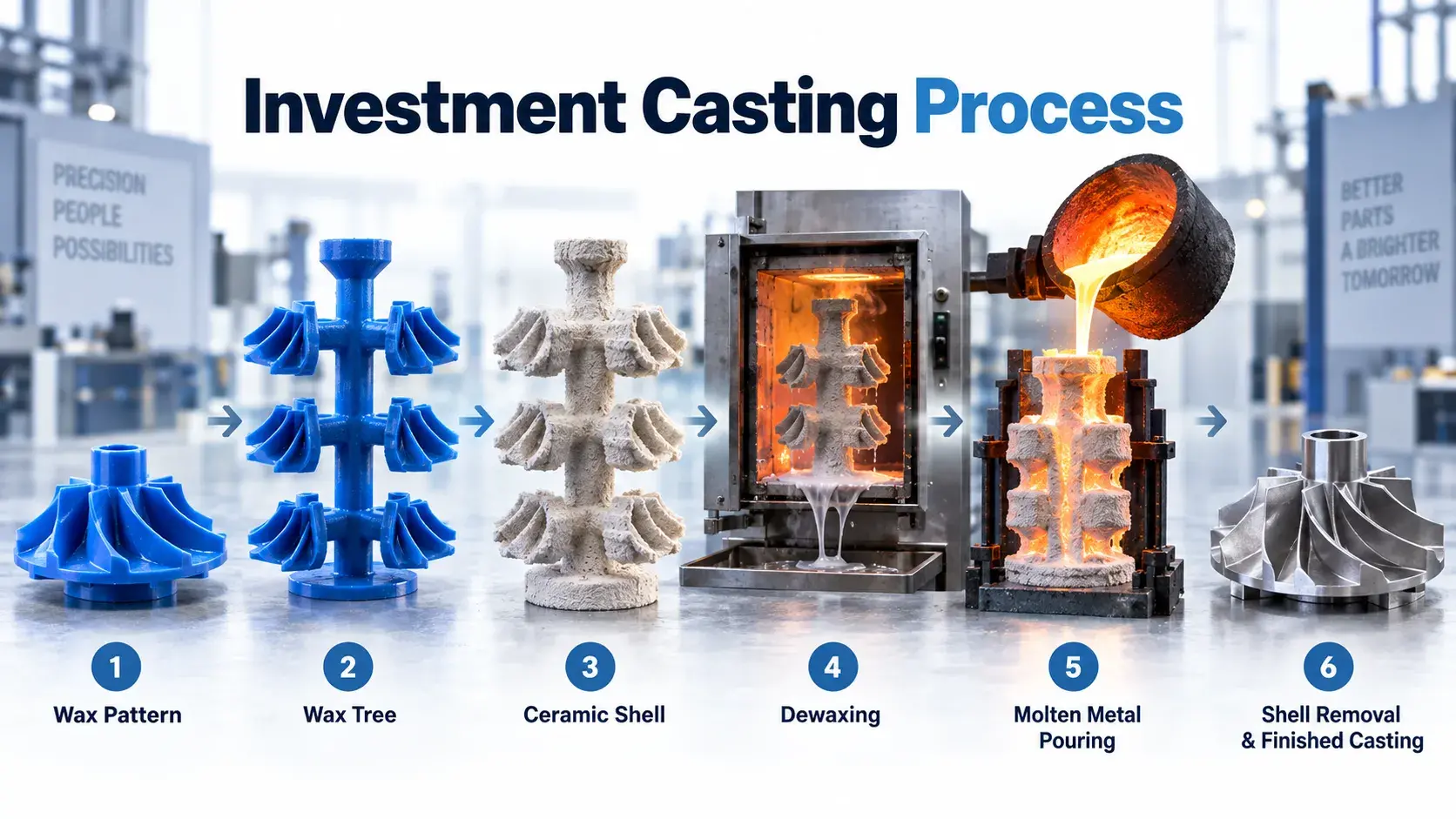
Although specific production methods vary between foundries, the investment casting process generally follows eight main steps.

1. Create the Tool or Master Pattern

Production normally begins with tooling used to create the wax patterns.

For repeated production, metal injection tooling is commonly manufactured so that identical wax patterns can be produced consistently.

For prototypes or low-volume parts, wax patterns may sometimes be created using additive manufacturing or other rapid tooling methods.

The accuracy of the original pattern is important because its geometry will be transferred through the entire casting process.

2. Produce the Wax Patterns

Molten wax is injected into the tooling and allowed to cool.

The resulting wax pattern has almost the same shape as the final metal component, with allowances added for expected metal shrinkage and processing requirements.

Each wax pattern is inspected for obvious defects before moving to the next stage.

3. Assemble the Wax Tree

Individual wax patterns are attached to a central wax runner or sprue.

This assembly is often called a wax tree.

Multiple parts can therefore be cast during a single metal pour, helping improve production efficiency.

The runner system also provides the channels through which molten metal eventually flows into each cavity.

4. Build the Ceramic Shell
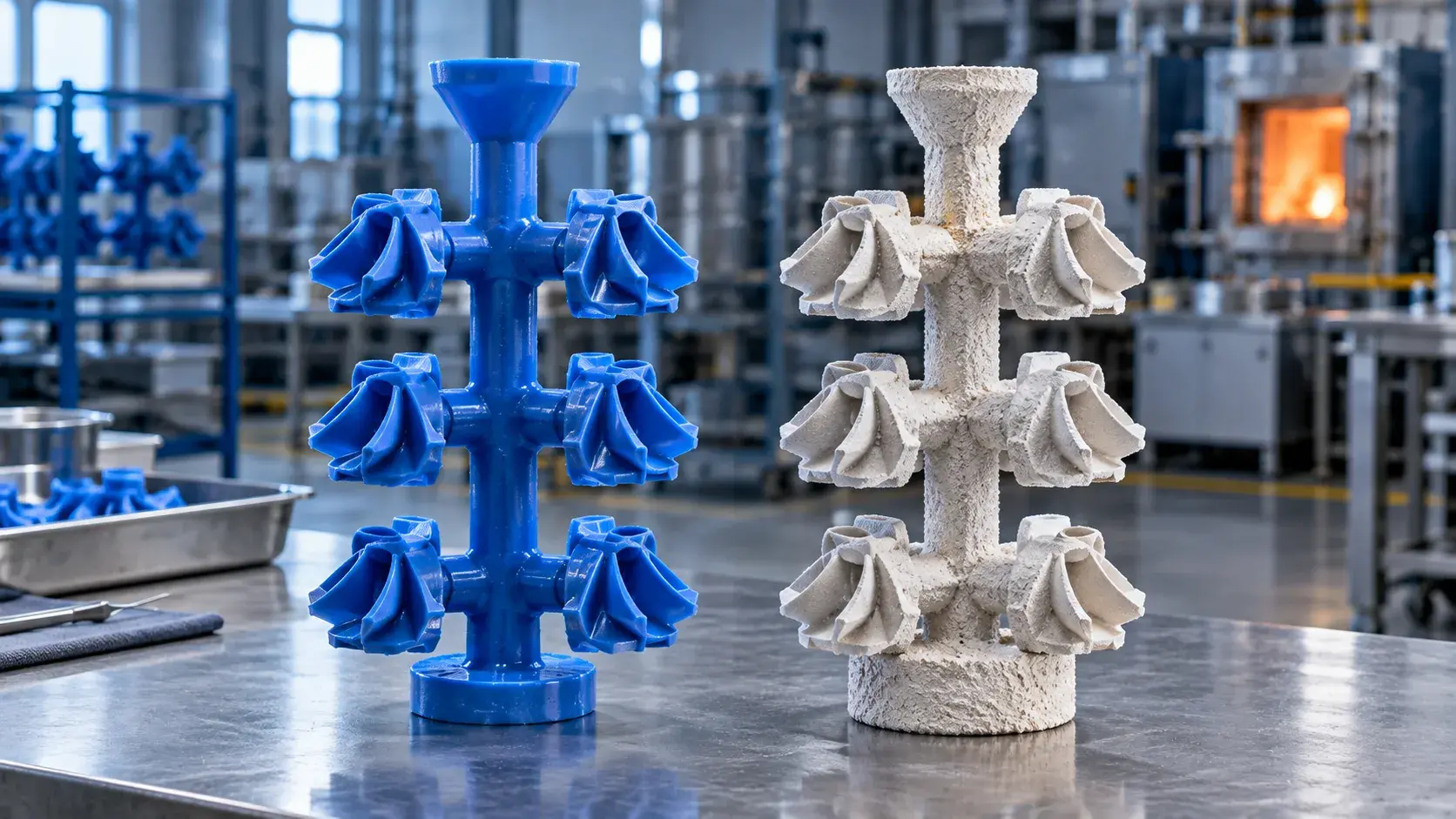
Wax pattern and ceramic shell for investment casting

The complete wax assembly is repeatedly dipped into a ceramic slurry and coated with fine refractory particles.

Each layer is allowed to dry before the next layer is applied.

Several layers are normally required to create a ceramic shell strong enough to withstand the temperature and pressure of molten metal.

This is one of the most important stages because shell quality directly influences surface finish, dimensional consistency, and casting quality.

5. Remove the Wax

After the ceramic shell has fully hardened, the wax must be removed.

The shell is heated so that the wax melts and drains out, leaving a hollow cavity inside the ceramic mold.

This step gives the process its common name: lost wax casting.

The empty ceramic mold is then prepared for metal pouring.

6. Pour the Molten Metal

The selected metal alloy is melted and poured into the preheated ceramic mold.

Depending on the alloy and component requirements, pouring may be performed using gravity, vacuum assistance, or other controlled methods.

The molten metal flows through the runner system and fills the cavities previously occupied by the wax patterns.

The metal is then allowed to cool and solidify.

7. Remove the Ceramic Shell and Separate the Castings

Once the metal has cooled, the ceramic shell is broken away.

The cast parts are then cut from the central runner system.

Remaining ceramic material, gates, and excess metal are removed through cleaning, grinding, blasting, or other finishing operations.

At this stage, the component has reached its near-net shape.

8. Perform Finishing and Secondary Machining

Depending on the drawing requirements, the casting may undergo additional processes such as:

  • CNC milling
  • CNC turning
  • Drilling
  • Thread machining
  • Grinding
  • Heat treatment
  • Polishing
  • Surface finishing
  • Dimensional inspection

This final stage is particularly important when the component contains features with tolerances tighter than the casting process can reliably maintain.

For example, a cast pump housing may already have its complex outer shape, while its bearing bores, sealing faces, and threaded holes are CNC machined afterward.
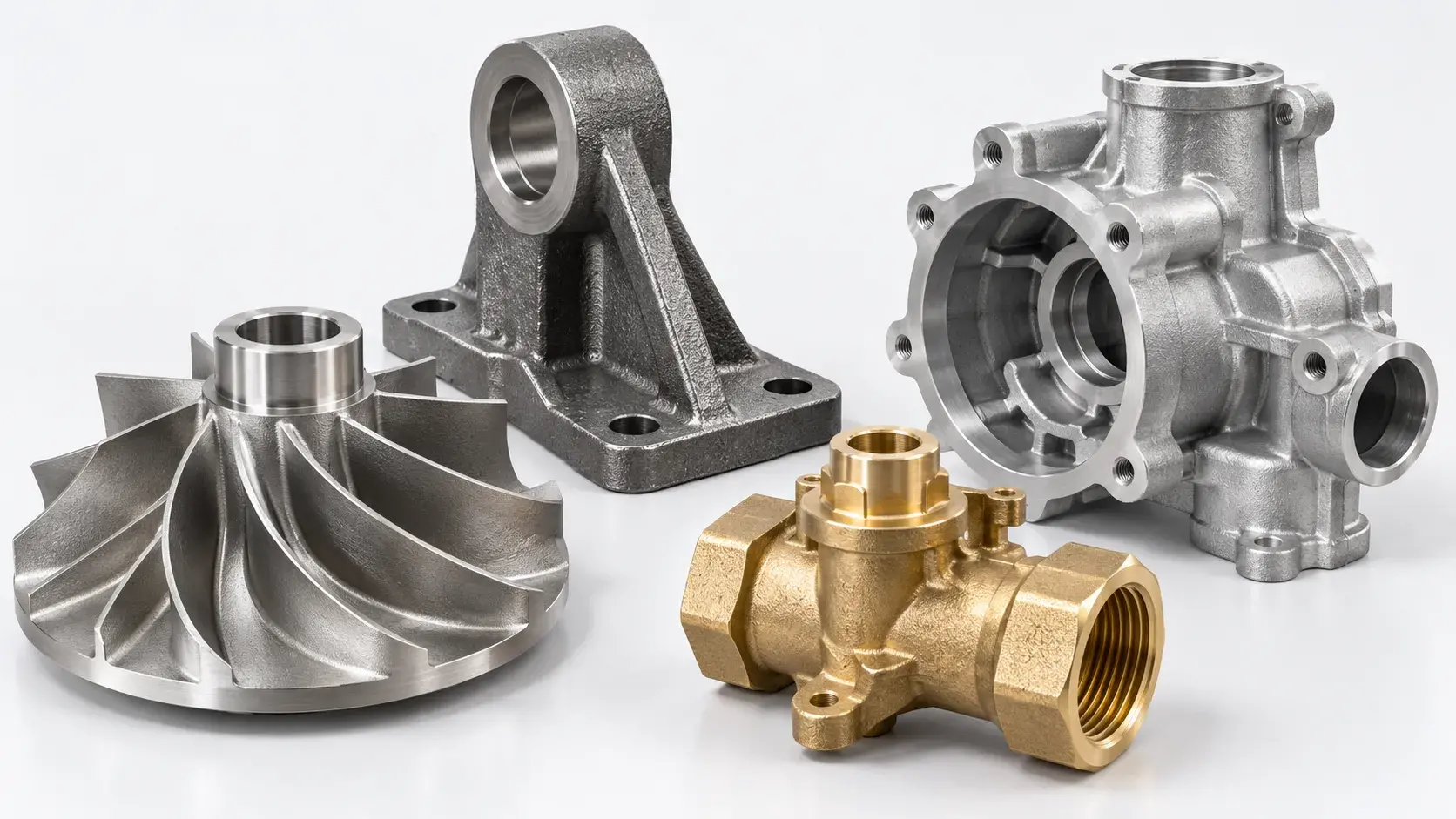
What Materials Can Be Used for Investment Casting?

Investment cast metal parts in different materials

Investment casting can be used with a wide range of metals and alloys.

MaterialTypical Applications
Stainless SteelValves, medical devices, food equipment, aerospace parts
Carbon SteelIndustrial brackets, mechanical components, hardware
Alloy SteelHigh-strength structural and mechanical parts
Aluminum AlloysLightweight aerospace and automotive components
BrassFittings, connectors, decorative components
BronzeBushings, marine components, wear-resistant parts
Nickel AlloysTurbine components, aerospace and high-temperature parts
Cobalt AlloysMedical, wear-resistant and high-temperature components

The correct material depends on the mechanical load, operating temperature, corrosion environment, weight requirements, and production cost.

For components requiring secondary machining, machinability should also be considered during material selection.

For example, aluminum, brass, stainless steel, and alloy steel castings can all be CNC machined after casting when more precise dimensions are required.

Advantages of Investment Casting

Investment casting is especially useful when conventional casting methods cannot easily reproduce the required geometry.

Complex Part Geometry

One of the biggest advantages is the ability to create complex three-dimensional shapes.

Investment casting can produce curves, ribs, bosses, internal passages, thin sections, and detailed external features without requiring extensive machining.

This is particularly useful for parts where machining the entire shape from solid material would remove large amounts of material.

Good Surface Finish

The ceramic mold produces a much smoother surface than many traditional sand casting processes.

A better as-cast surface can reduce grinding, polishing, and machining requirements.

Good Dimensional Accuracy

Investment casting is considered a precision casting process.

It can produce relatively accurate dimensions and repeatable geometry compared with many other casting methods.

However, it should not automatically be considered a replacement for CNC machining when very tight tolerances are required.

Near-Net-Shape Manufacturing

Because the casting closely resembles the final component, less material needs to be removed afterward.

This is especially useful when working with expensive metals or parts with complex profiles.

Reduced Machining Requirements

Many non-critical surfaces can be produced directly by casting.

Manufacturers can therefore limit machining to areas where precision is actually required.

This approach can significantly reduce machining time on suitable medium- or high-volume components.

Limitations of Investment Casting

Despite its advantages, investment casting is not suitable for every part.

Higher Initial Tooling Cost

Traditional production usually requires wax injection tooling.

This creates an upfront cost that can make investment casting less attractive for prototypes or very small quantities.

Longer Manufacturing Process

Investment casting includes several stages, including wax production, shell building, drying, dewaxing, pouring, shell removal, and finishing.

As a result, the production cycle can be longer than direct CNC machining for low-volume orders.

Process Variations Still Exist

Metal shrinkage, shell behavior, cooling, and other casting variables can influence final dimensions.

Investment casting provides good accuracy for a casting process, but extremely tight dimensional control usually requires machining.

Size and Geometry Limitations

Investment casting is highly flexible, but extremely large parts may become difficult or expensive to produce.

Simple large components may be more economically manufactured by sand casting, fabrication, or another process.

Critical Features May Still Need CNC Machining

Precision holes, bearing seats, threads, flat sealing surfaces, and tightly controlled datums commonly require secondary machining.

Therefore, engineers should evaluate not only the casting geometry but also the final drawing tolerances.

Why Do Investment Cast Parts Still Need CNC Machining?

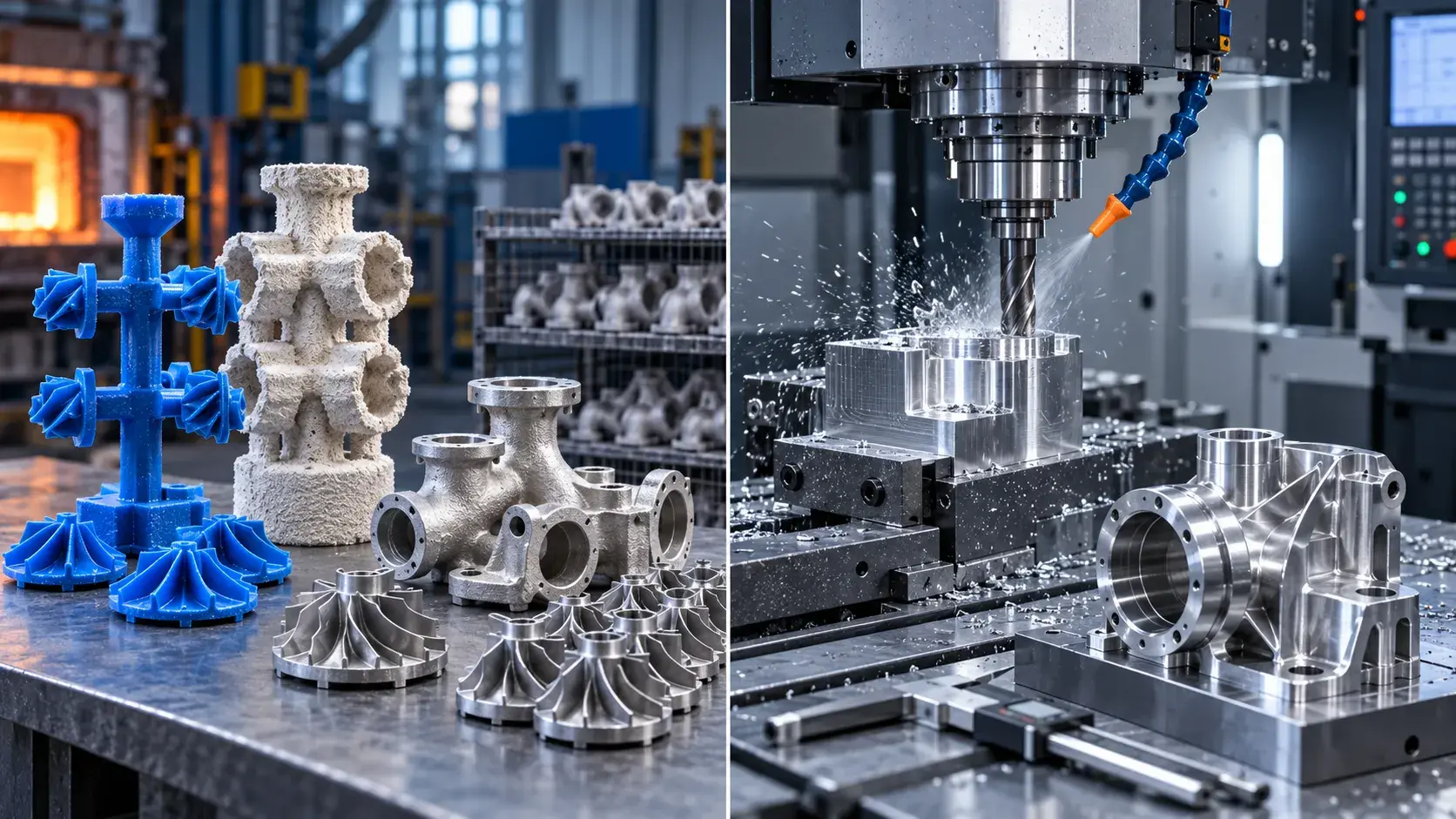
CNC machining of investment cast parts

Investment casting can reduce machining, but it does not always eliminate it.

A useful way to think about the process is:

Investment casting creates the complex overall shape. CNC machining creates the critical precision features.

For example, a valve body may be investment cast because its external geometry and internal flow passages are difficult to machine economically.

However, the valve body may still require CNC machining for:

  • Precision bores
  • Threaded ports
  • Sealing faces
  • Mounting surfaces
  • Locating holes
  • Datum surfaces

The same logic applies to aerospace brackets, turbine components, medical components, pump housings, and industrial equipment parts.

Part FeatureCasting Often SuitableCNC Machining Commonly Required
General outer geometryYesUsually no
Ribs and bossesYesSometimes
Non-critical surfacesYesUsually no
Bearing boreNoYes
Precision threadSometimesYes
Sealing surfaceNoYes
Tight hole positionNoYes
Precision datumNoYes
Close assembly fitNoYes

For this reason, many production parts use a hybrid process:

Investment Casting → CNC Machining → Inspection → Surface Treatment

This can provide the geometric freedom of casting together with the dimensional accuracy of precision machining.

Investment Casting vs CNC Machining

Investment casting vs CNC machining

Investment casting and CNC machining solve different manufacturing problems.

Neither process is automatically better.

The correct choice depends on part geometry, quantity, tolerances, material, and production requirements.

FactorInvestment CastingCNC Machining
Prototype ProductionLess attractiveExcellent
Low VolumeModerateExcellent
Medium/High VolumeExcellent for suitable partsDepends on machining time
Initial Tooling CostHigherUsually low
Complex Freeform ShapesExcellentDepends on tool access
Tight TolerancesGoodExcellent
Material WasteLowHigher
Design ChangesMore difficultEasy
Surface FinishGoodExcellent
Lead Time for First PartsLongerUsually shorter

Choose Investment Casting When:

Investment casting is usually more attractive when:

  • The part has a complex shape.
  • The same component will be produced repeatedly.
  • Large amounts of machining material would otherwise be removed.
  • The design includes curves, thin sections, or difficult-to-machine features.
  • Near-net-shape manufacturing can reduce overall production cost.

Choose CNC Machining When:

CNC machining is generally preferable when:

  • You need prototypes.
  • Production quantity is low.
  • The design may still change.
  • Tight tolerances are required across many features.
  • A short development cycle is important.
  • The geometry is straightforward to machine.

For rapid prototypes and low-volume precision components, processes such as CNC milling and CNC turning are often easier to implement because dedicated casting tooling is not required.

Choose Investment Casting + CNC Machining When:

A combined process is often the best solution when the component has:

  • Complex overall geometry
  • Medium or higher production volumes
  • Precision bearing or assembly interfaces
  • Threads and sealing surfaces
  • Critical dimensional tolerances

In this situation, investment casting reduces the amount of material that must be machined, while CNC machining finishes the features that actually require high precision.

Investment Casting vs Sand Casting vs Die Casting

Investment casting is only one of several metal casting methods.

FactorInvestment CastingSand CastingDie Casting
Dimensional AccuracyHighLow to MediumHigh
Surface FinishGoodRougherGood
Complex GeometryExcellentModerateHigh
Tooling CostMediumLowHigh
Suitable VolumeMedium to HighLow to MediumHigh
Typical MaterialsVery broadVery broadMostly non-ferrous alloys
Thin FeaturesGoodLimitedExcellent
Large Part CapabilityModerateExcellentLimited by tooling/machine size

Sand casting is often better for large parts and lower tooling budgets.

Die casting is highly efficient for high-volume production, particularly with aluminum and zinc alloys, but typically requires expensive tooling.

Investment casting sits between these processes and is especially useful when complex geometry, good surface quality, and a broad material range are required.

Common Applications of Investment Casting

Investment casting is used across many industries because it can manufacture complex metal components with fewer machining operations.

Aerospace

Typical components include brackets, turbine-related parts, structural components, housings, and high-temperature alloy components.

Investment casting is especially useful when components have complex geometry or are manufactured from difficult-to-machine alloys.

Medical

Medical manufacturers use investment casting for surgical instruments, implant-related components, and specialized equipment parts.

Critical mating or dimensional features may later be CNC machined to achieve final tolerances.

Automotive

Applications include engine, transmission, exhaust, suspension, and other mechanical components.

Investment casting is commonly considered when strength, repeated production, and complex geometry are required.

Industrial Equipment

Pumps, valves, fittings, impellers, levers, housings, and flow-control components are common investment casting applications.

These parts often combine cast geometry with machined threads, bores, flanges, and sealing surfaces.

Energy and Power Equipment

Investment casting is also used for turbine, oil and gas, and power-generation components where heat resistance and complex shapes are important.

When Should You Choose Investment Casting?

Investment casting is a strong manufacturing option, but selecting it should depend on the complete production requirement rather than geometry alone.

Choose investment casting when the part is complex, repeat quantities justify tooling, and reducing machining time provides a significant cost advantage.

Choose CNC machining when the part is still in development, production volume is low, tolerances are very tight, or you need parts quickly without dedicated casting tooling.

Choose investment casting plus CNC machining when the overall shape is difficult or inefficient to machine from solid stock but specific interfaces still require precision.

This hybrid manufacturing strategy is common because it combines the strengths of both processes.

Conclusion

Investment casting is a precision casting process that uses disposable wax patterns and ceramic molds to manufacture complex metal components.

Its main advantages include complex geometry, good surface quality, near-net-shape production, and reduced machining requirements.

However, investment casting does not completely replace CNC machining.

When a component requires precision bores, threads, sealing surfaces, tight assembly fits, or controlled datums, secondary machining is often necessary.

For many engineered components, the most efficient solution is therefore not choosing between casting and machining, but combining both:

Investment Casting for Complex Geometry + CNC Machining for Precision Features

If your part requires tight-tolerance machining after casting, YuanYi provides CNC milling, turning, 5-axis machining, and precision finishing for prototypes and production components.

Send us your drawings to evaluate the machining requirements for your parts.

Frequently Asked Questions

Yes. Investment casting is commonly called lost wax casting because a disposable wax pattern is used to create the ceramic mold cavity. The wax is melted and removed before molten metal is poured.

Investment casting provides better dimensional accuracy than many conventional casting processes. However, achievable tolerances depend on part size, geometry, alloy, and process control. Very tight functional tolerances usually require secondary CNC machining.

Not always. Many non-critical surfaces can be used directly after casting and finishing. CNC machining is typically required for precision bores, threads, sealing surfaces, bearing fits, datum surfaces, or other tightly toleranced features.

It can be used for low-volume production, but traditional tooling costs may make CNC machining more economical for prototypes or very small quantities. The correct choice depends on geometry, material, and total production quantity.

Investment casting generally offers better surface finish, dimensional accuracy, and complex feature capability. Sand casting usually has lower tooling costs and is better suited to large components or simpler shapes.

Table of Contents
Discuss Your Complex Machining Requirements

Need Custom CNC Machined Parts?

From rapid prototypes to low-volume production, our engineering team can review your drawings and provide a manufacturing quote.

  • 24-Hour Quotation
  • DFM Engineering Support
  • No Minimum Order
  • ISO 9001 Certified
Request A Quote
Upload your drawing and get a quote within 24 hours.