
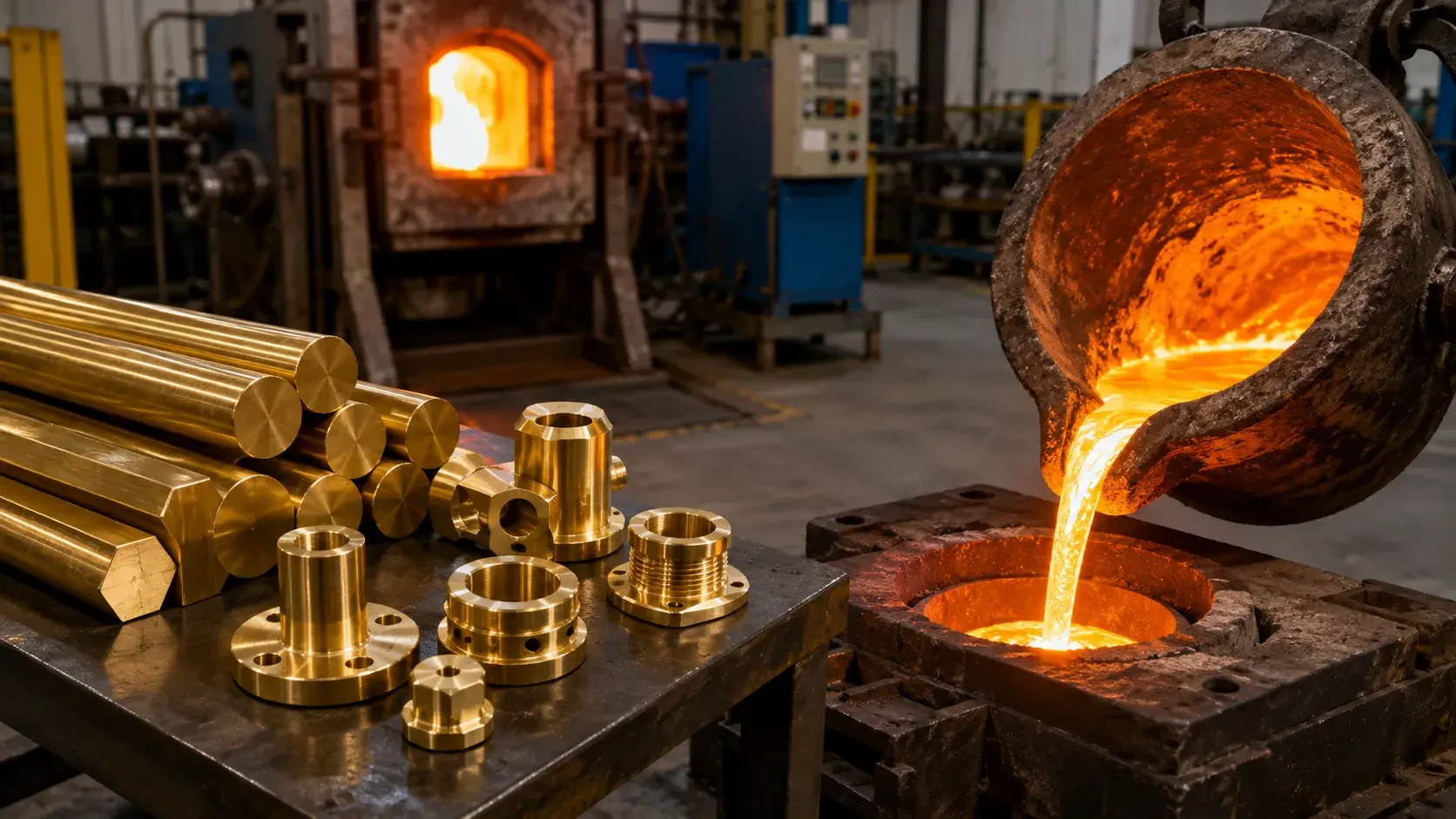
Brass typically melts within a range of about 900–940°C (1650–1725°F), but there is no single exact brass melting point. This is because brass is an alloy mainly made from copper and zinc, and different compositions melt at different temperatures.
Some brass grades begin melting below 900°C, while others remain partially solid until temperatures approach 950°C or higher. The exact melting point of brass therefore depends on the allo
Brass Melting Point: Temperature, Grades & Comparison
Brass typically melts within a range of about 900–940°C (1650–1725°F), but there is no single exact brass melting point. This is because brass is an alloy mainly made from copper and zinc, and different compositions melt at different temperatures.
Some brass grades begin melting below 900°C, while others remain partially solid until temperatures approach 950°C or higher. The exact melting point of brass therefore depends on the alloy grade, copper-to-zinc ratio, and additional alloying elements.
What Is the Melting Point of Brass?
The typical brass melting temperature is approximately 900–940°C, or around 1650–1725°F.
Unlike pure metals such as copper or aluminum, brass does not usually melt at one precise temperature. It melts gradually over a temperature range between its solidus and liquidus temperatures.
| Temperature Reference | Typical Brass Range |
|---|---|
| Brass melting point in Celsius | ~900–940°C |
| Brass melting point in Fahrenheit | ~1650–1725°F |
| General melting behavior | Melts over a range rather than at one exact temperature |
The actual values can vary significantly between different brass alloys.
Brass Melting Point in Celsius
For most common brass alloys, the brass melting point in Celsius falls roughly between 900°C and 940°C.
High-copper brass alloys may melt at somewhat higher temperatures, while grades containing more zinc or other alloying elements may have lower melting ranges.
For this reason, the alloy designation should always be checked when an exact melting range is required for casting, heat processing, or engineering calculations.
Brass Melting Point in Fahrenheit
The typical brass melting point in Fahrenheit is approximately 1650°F to 1725°F.
However, some specific grades fall outside this general range. For example, free-machining brass and cartridge brass have different solidus and liquidus temperatures because their chemical compositions are different.
Does Brass Have an Exact Melting Point?
No. Brass normally has a melting range rather than one exact melting point.
Two temperatures are commonly used to describe this behavior:
- Solidus temperature: the temperature at which the alloy starts to melt.
- Liquidus temperature: the temperature at which the alloy becomes completely liquid.
Between these two temperatures, brass exists as a mixture of solid and liquid material.
This is why published brass data often gives a temperature range instead of a single value.
Melting Points of Different Brass Grades
Different brass alloys contain different percentages of copper, zinc, lead, tin, and other elements. These composition differences directly affect their melting behavior.
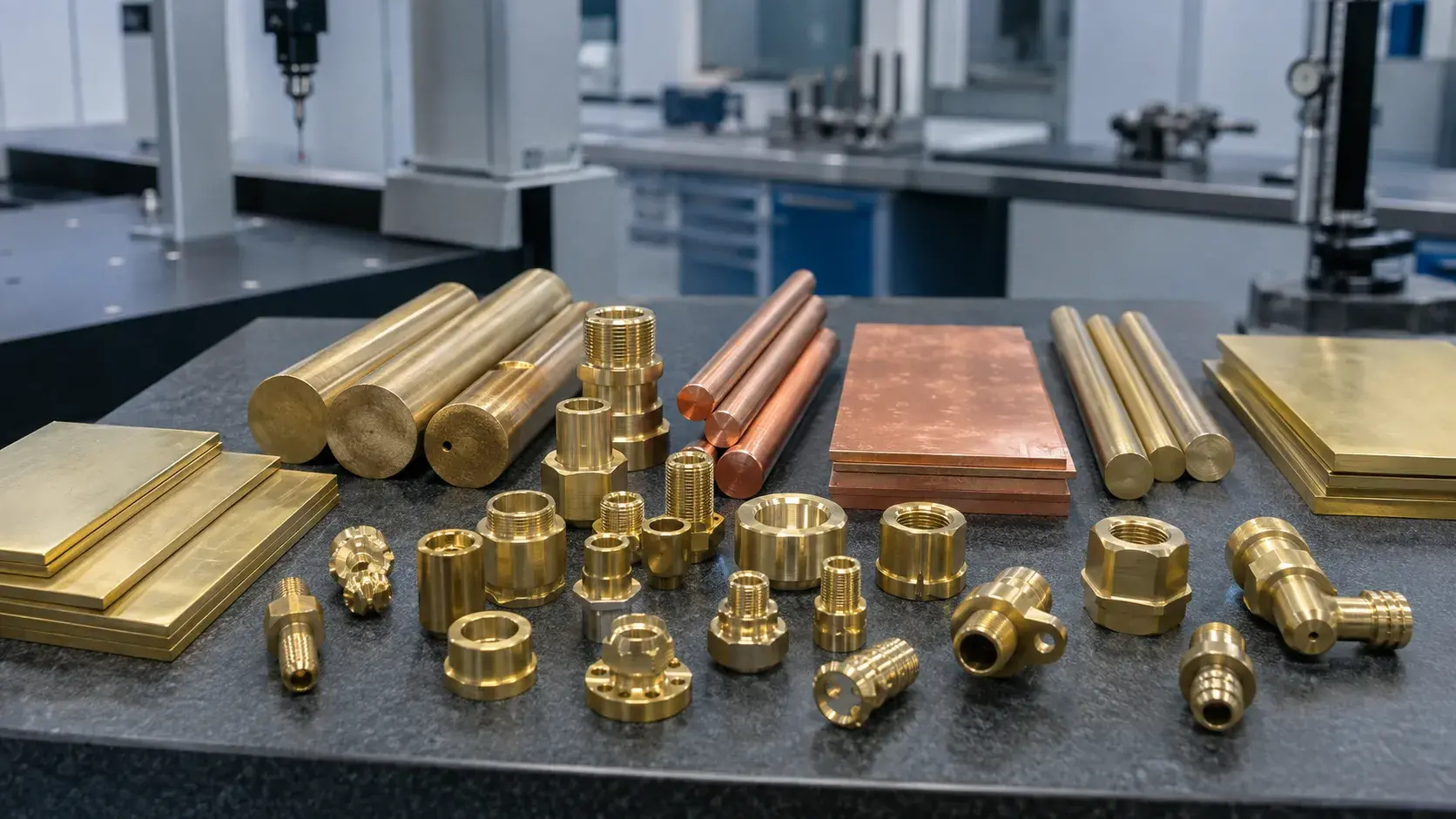
The table below shows typical melting ranges for several commonly used brass types.
| Brass Grade or Type | Typical Composition | Approx. Melting Range |
|---|---|---|
| C260 Cartridge Brass | About 70% Cu, 30% Zn | ~915–955°C |
| C360 Free-Cutting Brass | Cu-Zn-Pb alloy | ~888–899°C |
| C464 Naval Brass | Cu-Zn-Sn alloy | ~880–900°C |
| Yellow Brass | Higher zinc content | ~900–940°C |
| Red Brass | Higher copper content | ~990–1025°C |
| Lead-Free Brass | Cu-Zn with alternative alloying elements | Varies by grade |
C260 Brass Melting Point
C260 brass, also known as cartridge brass, contains approximately 70% copper and 30% zinc.
Its typical melting range is around 915–955°C (1680–1750°F).
Because C260 contains more copper than many free-machining brass grades, its melting temperatures are generally higher than those of C360 brass.
C260 is widely used for formed components, electrical parts, radiator components, ammunition cases, and decorative products because of its good ductility and corrosion resistance.
C360 Brass Melting Point
The C360 brass melting point is typically around 888–899°C (1630–1650°F).
C360 is commonly called free-cutting brass or free-machining brass. Its composition is designed to improve machinability, making it one of the most widely used brass grades for precision CNC parts.
Compared with C260, C360 generally has a lower melting range and much better chip-breaking behavior during machining.
Common applications include:
- threaded fittings;
- valve components;
- connectors;
- bushings;
- fasteners;
- precision turned parts.
Red Brass Melting Point
Red brass contains a relatively high percentage of copper, usually around 80% or more depending on the specific alloy.
Its typical melting range is approximately 990–1025°C (1815–1875°F).
Because copper has a higher melting point than zinc, the higher copper content generally raises the melting range of red brass.
Red brass is commonly used for plumbing components, valves, pumps, marine hardware, and corrosion-resistant fittings.
Yellow Brass Melting Point
Yellow brass usually contains more zinc than red brass and typically has a melting range of approximately 900–940°C (1650–1725°F).
Its exact melting temperature depends on the copper-to-zinc ratio.
Yellow brass is commonly used for:
- fittings;
- decorative hardware;
- electrical components;
- plumbing parts;
- general machined components.
Why Does Brass Have a Melting Range?
Brass has a melting range because it is an alloy rather than a pure metal. Its melting behavior depends mainly on the proportion of copper and zinc, along with any additional alloying elements.
Instead of changing from solid to liquid at one exact temperature, brass gradually begins to melt and becomes fully liquid over a temperature interval.
Copper and Zinc Content
The copper-to-zinc ratio has a major influence on the melting point of brass.
Copper has a melting point of about 1085°C (1985°F), while zinc melts at about 420°C (788°F). As the zinc content increases, the melting range of many brass alloys generally becomes lower.
This is one reason why high-copper red brass usually melts at a higher temperature than common yellow brass.
Alloying Elements
Brass may also contain small amounts of other elements to improve specific properties.
Common additions include:
- lead for improved machinability;
- tin for corrosion resistance;
- aluminum for strength and oxidation resistance;
- silicon for strength and casting performance;
- nickel for improved strength and appearance.
These alloying elements can change the brass melting temperature, so two brass grades with similar copper and zinc contents may still have different melting ranges.
Solidus vs Liquidus Temperature
Two temperatures are commonly used when describing how brass melts.
Solidus temperature is the point where the alloy first begins to melt.
Liquidus temperature is the point where the material becomes completely liquid.
For example, if a brass alloy has a solidus temperature of 890°C and a liquidus temperature of 910°C, it will be partially solid and partially liquid between those temperatures.
This is why technical data sheets often list both values instead of giving one exact brass melting point.
What Factors Affect the Melting Point of Brass?
The melting temperature of brass is mainly controlled by its chemical composition. However, several material-related factors can influence the exact melting range.
Copper-to-Zinc Ratio
The ratio of copper to zinc is one of the most important factors.
In general, brass with a higher copper content tends to have a higher melting range, while increasing the zinc content can lower the melting temperature.
This is why different types of brass should not be treated as having identical thermal properties.
Additional Alloying Elements
Elements such as lead, tin, aluminum, silicon, and nickel are added to brass for different engineering purposes.
These additions can affect:
- melting behavior;
- strength;
- corrosion resistance;
- machinability;
- casting performance.
The effect depends on both the type and amount of alloying element used.
Brass Grade and Composition
Standard brass grades are produced with controlled composition limits, but their melting ranges are not all the same.
For example, C360 free-cutting brass and C260 cartridge brass have significantly different melting ranges because they are designed for different manufacturing requirements.
When precise temperature information is needed, the specific alloy grade is more useful than simply referring to the material as “brass.”
Impurities and Material Condition
Small variations in chemical composition can slightly change the melting behavior of brass.
Recycled material, contamination, oxidation, or uncontrolled alloy composition may also make the actual melting behavior less predictable.
For engineering or production use, it is therefore better to rely on the material specification or supplier data for the exact grade being processed.
Brass Melting Point vs Other Metals
The brass melting point is lower than that of copper, stainless steel, and titanium, but higher than those of aluminum and zinc.
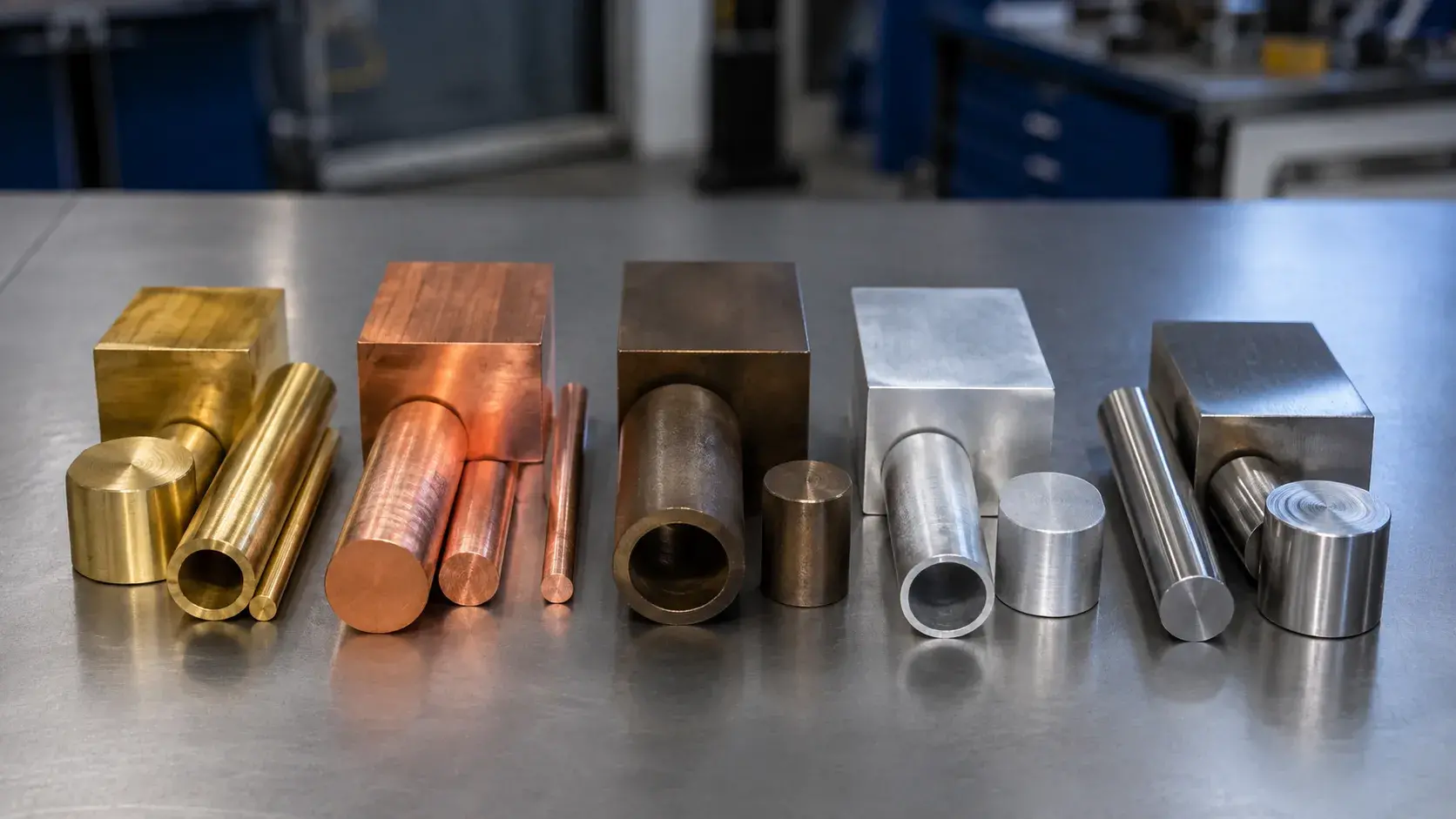
The table below gives a simple comparison.
| Material | Approx. Melting Temperature |
|---|---|
| Brass | ~900–940°C |
| Copper | ~1085°C |
| Bronze | ~850–1050°C |
| Aluminum | ~660°C |
| Zinc | ~420°C |
| Stainless Steel | ~1375–1530°C |
| Titanium | ~1668°C |
The exact temperature of an alloy can vary depending on its composition, so these values should be used as general references.
Brass vs Copper Melting Point
When comparing the brass vs copper melting point, copper melts at a higher temperature.
Pure copper melts at approximately 1085°C (1985°F), while many common brass alloys melt in the range of about 900–940°C (1650–1725°F).
The lower melting temperature of brass is mainly related to the addition of zinc and other alloying elements.
This difference is important in casting, brazing, recycling, and other high-temperature manufacturing processes.
Brass vs Bronze Melting Point
The bronze melting point vs brass comparison is less straightforward because both materials are families of copper alloys.
Many bronze alloys melt somewhere between approximately 850°C and 1050°C, while common brass grades are often around 900–940°C.
The exact result depends heavily on composition.
Traditional bronze is mainly copper and tin, while brass is mainly copper and zinc. Different alloying elements change the melting range, so neither material has one universal melting point.Does Brass Melt Easily?
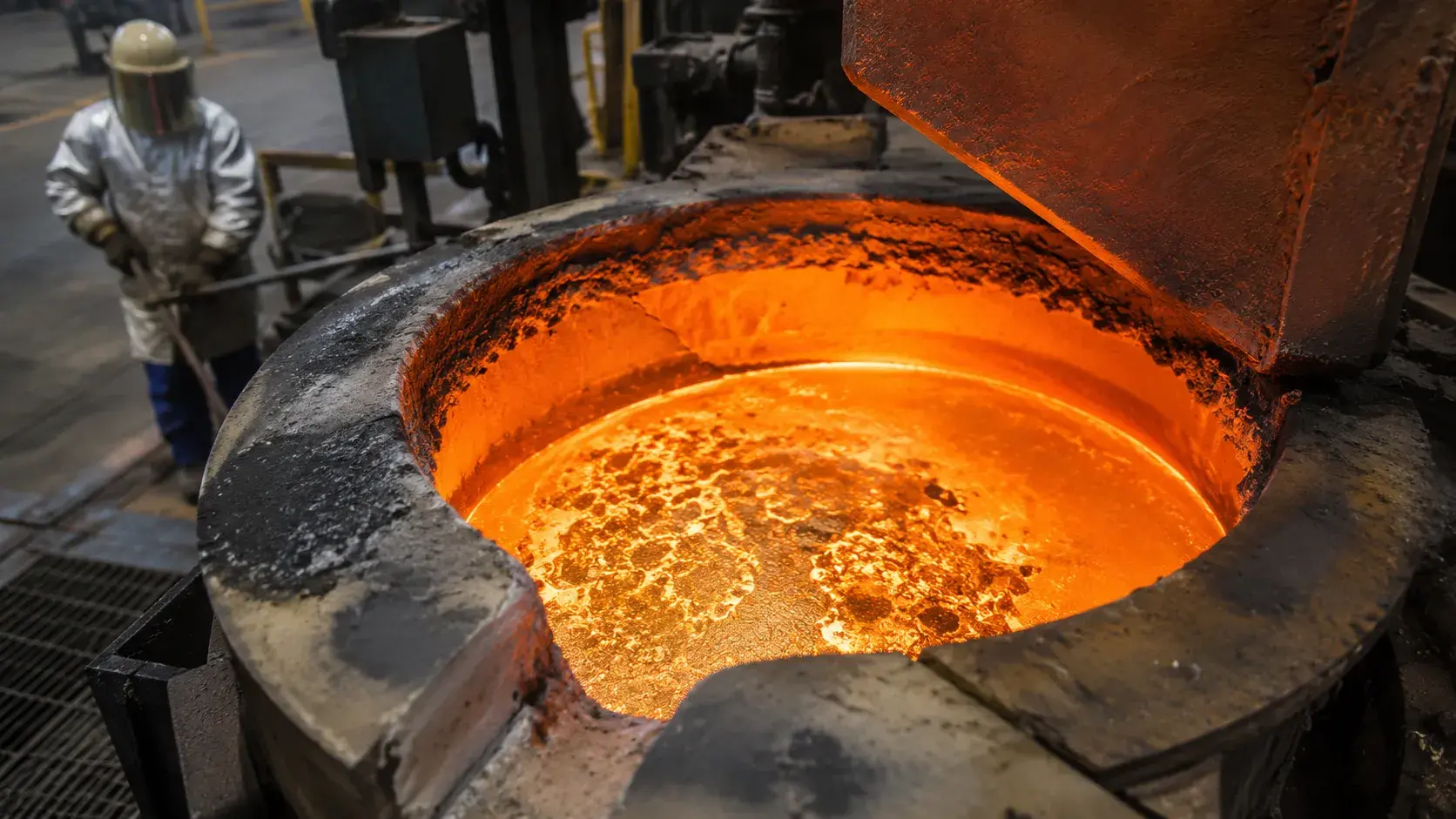
Compared with metals such as copper, stainless steel, and titanium, brass has a relatively low melting temperature.
Most common brass alloys begin to melt at around 900°C (1650°F), which makes brass easier to melt than many higher-temperature engineering metals. However, melting brass still requires controlled industrial heating equipment.
The exact temperature depends on the alloy grade. High-copper brass generally requires more heat, while some higher-zinc brass alloys melt at lower temperatures.
Because brass contains zinc, temperature control is especially important during melting. Excessive heating can cause zinc loss and change the final alloy composition.
What Happens When Brass Is Overheated?

Heating brass far beyond its required melting range can affect both the material composition and the quality of the final part.
Zinc Loss
Zinc has a much lower boiling temperature than copper and can be lost more easily when brass is overheated.
Excessive zinc loss changes the copper-to-zinc ratio and may affect the color, mechanical properties, and performance of the alloy.
Oxidation
High temperatures increase oxidation on the surface of molten brass.
Oxides and other contaminants can enter the melt and may contribute to poor surface quality or defects in cast parts.
Changes in Alloy Composition
If brass is held at excessive temperatures for too long, volatile alloying elements may be reduced.
This means the final material may no longer have the same composition or properties as the original brass grade.
Surface and Casting Defects
Poor temperature control can also increase the risk of:
- porosity;
- inclusions;
- rough surfaces;
- dimensional problems;
- inconsistent material properties.
For this reason, brass melting should be controlled according to the specific alloy and manufacturing process.
Does Brass Melting Point Affect CNC Machining?
The brass melting point is not normally reached during CNC machining. Cutting tools remove material mechanically, and the entire workpiece remains far below its melting temperature.
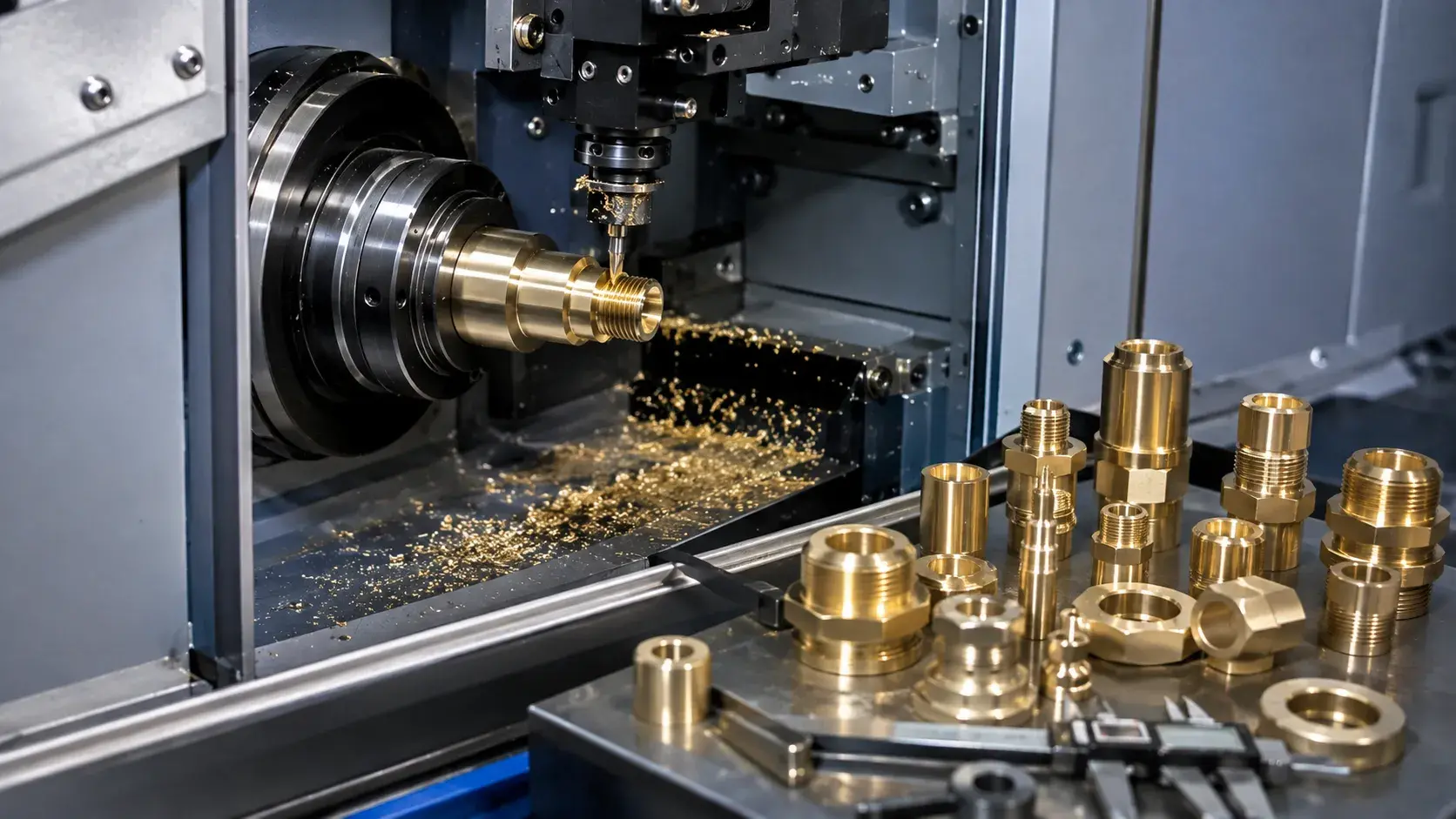
However, the thermal and physical properties associated with different brass grades still influence machining performance.
Important factors include:
- thermal conductivity;
- hardness;
- ductility;
- chip formation;
- alloy composition;
- cutting speed and tool selection.
These properties affect cutting temperature, surface finish, tool wear, and dimensional stability.

Why C360 Brass Is Easy to Machine
C360 brass is one of the most commonly used materials for precision machining because it offers excellent machinability.
Its composition promotes short, easily controlled chips and reduces cutting resistance compared with many other copper alloys.
This makes C360 brass machining suitable for high-speed turning, milling, drilling, and threading.
Typical CNC-machined C360 components include:
- fittings;
- threaded inserts;
- connectors;
- bushings;
- valve parts;
- precision shafts;
- electrical components.
Although its melting range is lower than that of some other brass grades, its excellent machinability is mainly related to alloy composition and chip-forming behavior rather than melting point alone.
Common Applications of Brass
Brass combines good machinability, corrosion resistance, electrical conductivity, and an attractive appearance. These properties make it useful across many industries.
Plumbing and Valves
Brass is widely used for fittings, valves, couplings, and fluid-control components because of its corrosion resistance and good machinability.
Electrical Components
Its electrical conductivity and corrosion resistance make brass suitable for terminals, connectors, contacts, and other electrical hardware.
Automotive Parts
Brass can be found in fittings, connectors, sensor components, bushings, and other precision automotive parts.
Precision CNC Components
Free-machining grades such as C360 are widely used for small and medium-sized brass CNC machining parts that require accurate dimensions, clean threads, and efficient production.
Decorative Hardware
The gold-like appearance of brass makes it popular for handles, fixtures, architectural components, furniture hardware, and decorative parts.
Conclusion
The brass melting point is typically around 900–940°C (1650–1725°F), but the exact temperature depends on the alloy composition. Different brass grades, such as C260, C360, red brass, and yellow brass, have different melting ranges because of their copper, zinc, and other alloying elements.
For engineering applications, it is better to check the specific brass grade rather than rely on one general melting temperature. Understanding these differences is useful for casting, material selection, heat processing, and brass CNC machining.
Need Custom Brass CNC Parts?
YUANYI provides precision brass CNC machining for C360, C260, and other brass alloys, supporting prototypes and production parts with tight tolerances and professional inspection.
Brass Melting Point FAQs
Yes, but only if the fire reaches a sufficiently high temperature.
Most common brass alloys begin melting at around 900°C (1650°F). Ordinary fires may damage, soften, or oxidize brass without fully melting it, while very high-temperature industrial or intense structural fires can exceed the brass melting temperature.
A standard handheld propane torch is generally not ideal for melting a significant amount of brass because brass requires temperatures around 900°C or higher.
Small pieces may be heated significantly under suitable conditions, but practical brass melting normally requires a furnace or higher-output heating system that can maintain sufficient temperature.
Yes. Most brass alloys melt at a lower temperature than pure copper.
Copper melts at about 1085°C (1985°F), while common brass alloys often melt somewhere around 900–940°C (1650–1725°F).
The addition of zinc is one of the main reasons brass has a lower melting range than pure copper.
The yellow brass melting point is typically around 900–940°C (1650–1725°F).
The exact melting range depends on the copper-to-zinc ratio and any additional alloying elements.
The red brass melting point is generally higher than that of yellow brass because red brass contains more copper.
Depending on the specific alloy, its melting range is commonly around 990–1025°C (1815–1875°F).
Zinc can be lost from brass when the material is heated to very high temperatures.
Because zinc is more volatile than copper, overheating molten brass can cause zinc loss and may change the final alloy composition.
For this reason, temperature control is important during brass melting and casting.
Not always.
Both brass and bronze are copper-based alloys, and their melting temperatures depend on their specific compositions. Many brass alloys melt around 900–940°C, while bronze alloys can range broadly from about 850°C to 1050°C.
The exact grade should be checked when comparing the two materials.



