

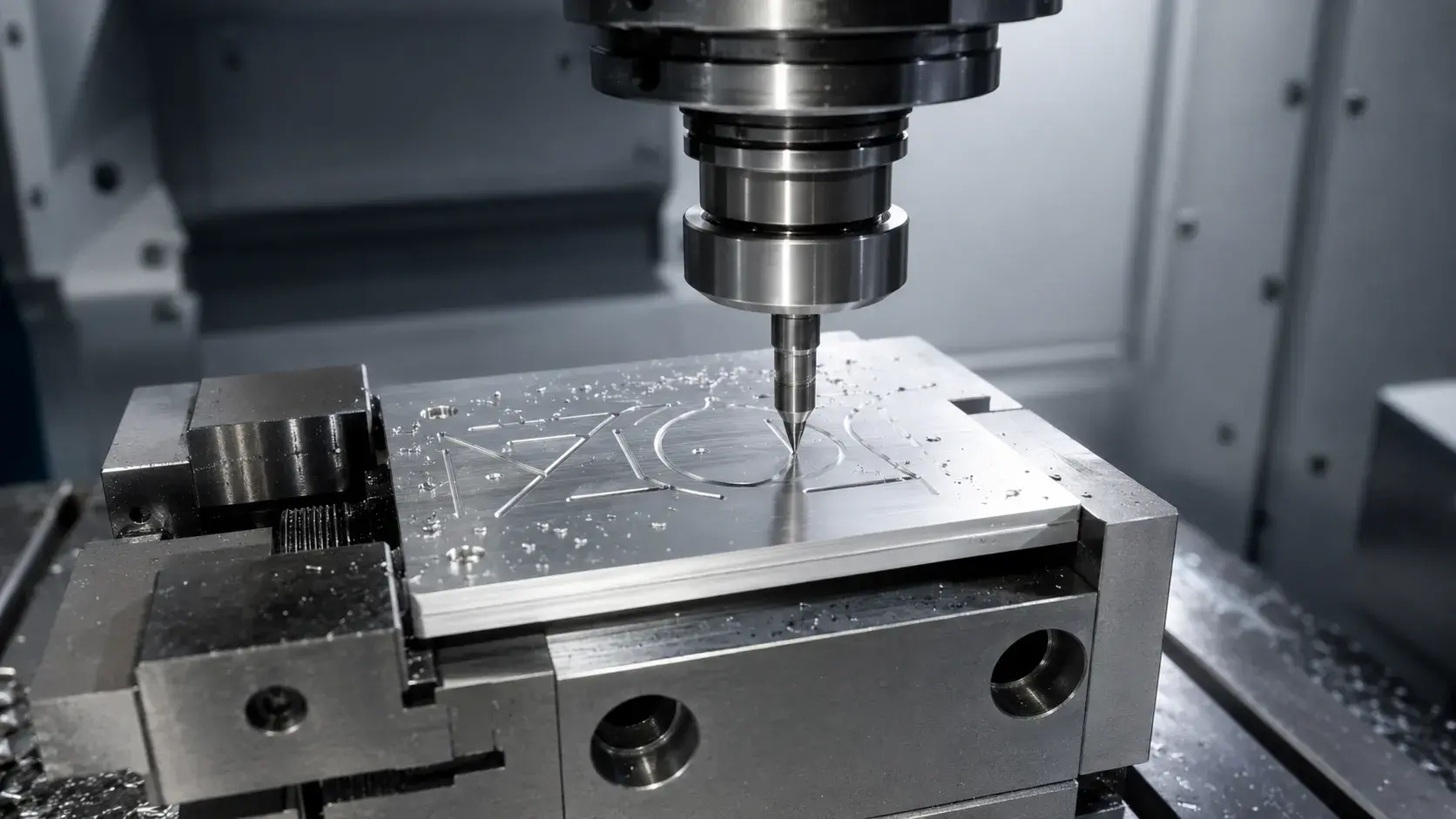
Yes. CNC machine tools can not only machine metal parts, but also engrave text, numbers, logos, scale lines, and other patterns on the surfaces of materials such as aluminum alloy, stainless steel, brass, copper, titanium alloy, and tool steel.
Unlike laser marking, CNC metal engraving uses rotating or diamond cutting tools to directly remove or extrude material, thereby creating marks with actual depth.
How Is CNC Metal Engraving Performed?
The basic principles of CNC metal engraving are similar to those of CNC milling.
First, the operator must convert text, logos, or patterns into machining paths that the CNC machine can recognize. CAM software generates a program based on the graphic, engraving depth, tool type, and material, and the CNC system then controls the tool to move along the specified path.
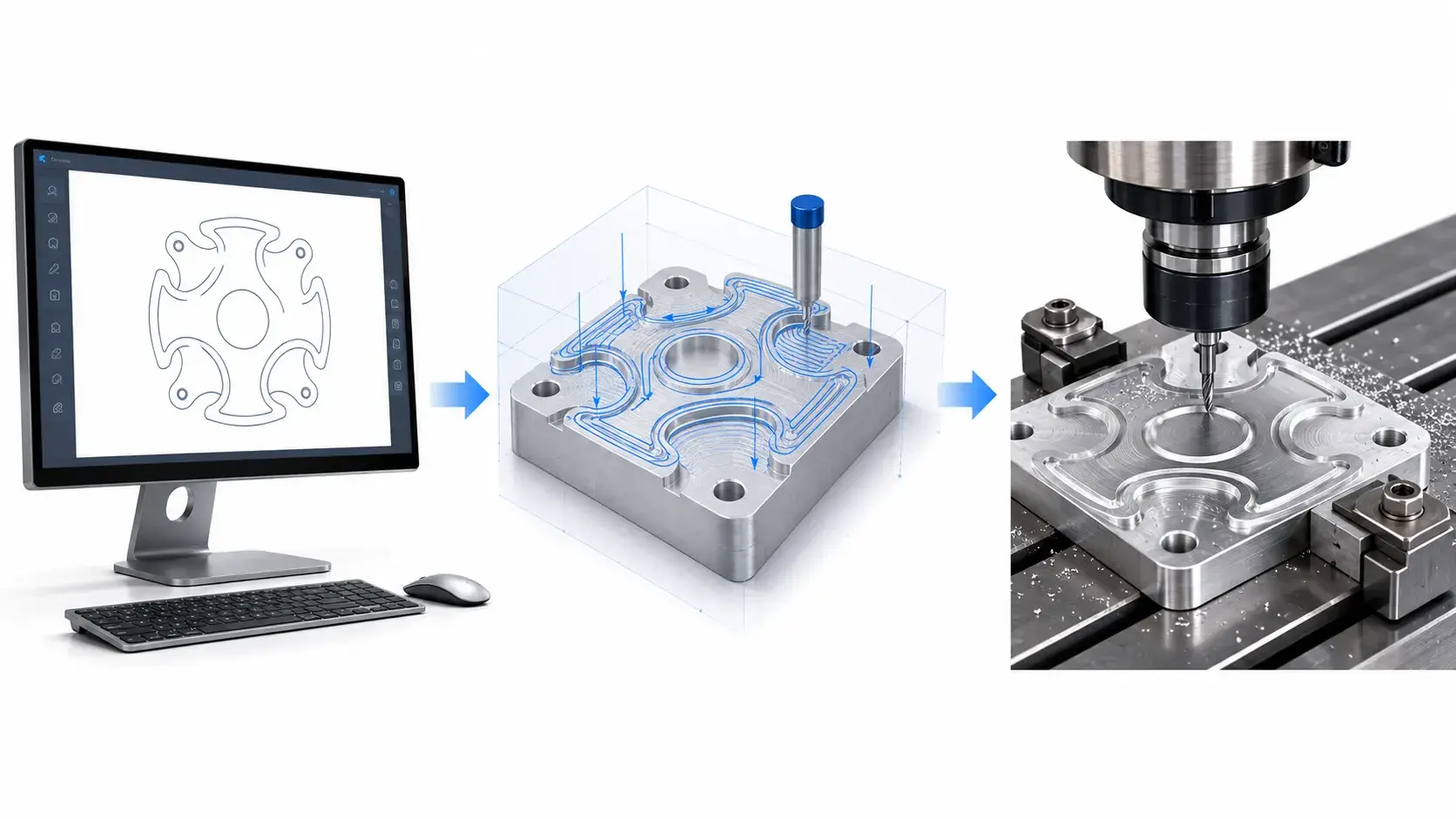
During the machining process, the cutting tool cuts into or traces the metal surface to form the desired pattern. Engraving quality primarily depends on the following factors:
- The metal material and its hardness
- The type and size of the engraving tool
- Spindle speed, feed rate, and cutting depth
- The stability of the workpiece clamping
- The dimensions of the patterns, text, and lines
- Machine accuracy and spindle runout
- Toolpaths and programming methods
For small text, fine graduations, or complex logos, machine accuracy and the condition of the tool tip are particularly important. Even slight tool wear can result in inconsistent line widths or blurred character edges.
Which CNC machines can engrave metal?
A variety of CNC machines can be used for metal engraving, but they differ in the types of parts they are suitable for and their machining capabilities.
CNC Milling Machines and Machining Centers
CNC milling machines are among the most commonly used machines for metal engraving.
They are suitable for engraving text, serial numbers, logos, and scales on flat surfaces, inclined surfaces, curved surfaces, and specific areas of machined parts. Three-axis machining centers can handle most flat engraving tasks, while four-axis or five-axis machining centers can engrave in multiple directions or on complex curved surfaces.
CNC Lathes
CNC lathes can also engrave text, scales, and serial numbers on cylindrical parts.
Conventional lathes are primarily suited for machining annular grooves or circumferential markings. Turning-milling combination machines equipped with powered tools, a C-axis, or a Y-axis can engrave text and logos on the outer surfaces or end faces of shafts, sleeves, knobs, and other cylindrical parts.
CNC Engraving Machines
Specialized CNC engraving machines typically feature high spindle speeds, making them suitable for machining fine text, small patterns, and shallow grooves.
However, not all engraving machines are suitable for machining metal. Machine rigidity, spindle power, guideway structure, and cooling methods all affect actual machining capabilities. Lightweight engraving machines primarily designed for wood or plastic may experience issues such as vibration, excessive tool wear, or insufficient precision when machining stainless steel or titanium alloys.
CNC Routers
Some CNC routers with higher rigidity can engrave relatively easy-to-machine metals such as aluminum alloy and brass.
However, standard woodworking routers are generally not suitable for deep engraving on steel. Before machining, you must verify that the equipment has sufficient rigidity, spindle torque, and cooling and chip removal capabilities suitable for metalworking.
What metals can CNC machines engrave?
CNC machines can engrave most machinable metals, but the difficulty of machining varies significantly depending on the material.
| Metal | Engraving Difficulty | Commonly Used Tools | Typical Applications |
|---|---|---|---|
| Aluminum | Low | V-bit engraving tools and small-diameter end mills | Logos, part numbers, nameplates, and enclosures |
| Brass | Low | V-bit engraving tools, ball nose end mills, and flat end mills | Decorative parts, instrument components, and nameplates |
| Copper | Moderate | Sharp carbide engraving tools and end mills | Electrical components, signs, and decorative patterns |
| Stainless Steel | High | Coated carbide engraving tools or small-diameter end mills | Medical components, industrial parts, and serial numbers |
| Carbon Steel | Moderate to high | Carbide engraving tools | Tooling, machine components, and identification marks |
| Titanium | High | Carbide tools designed for machining titanium | Aerospace, medical, and high-performance components |
| Tool Steel | High | Carbide or CBN tools, depending on material hardness | Mold numbers, cavity lettering, and tooling identification |
If the markings need to withstand wear and tear, sandblasting, or long-term use, CNC engraving with actual depth is generally more suitable.
If you need to quickly produce QR codes, dense information, or a large number of shallow markings, laser marking may be more efficient. The final choice should be based on marking depth, appearance, production volume, and cost.
What cutting tools are commonly used in CNC metal engraving?
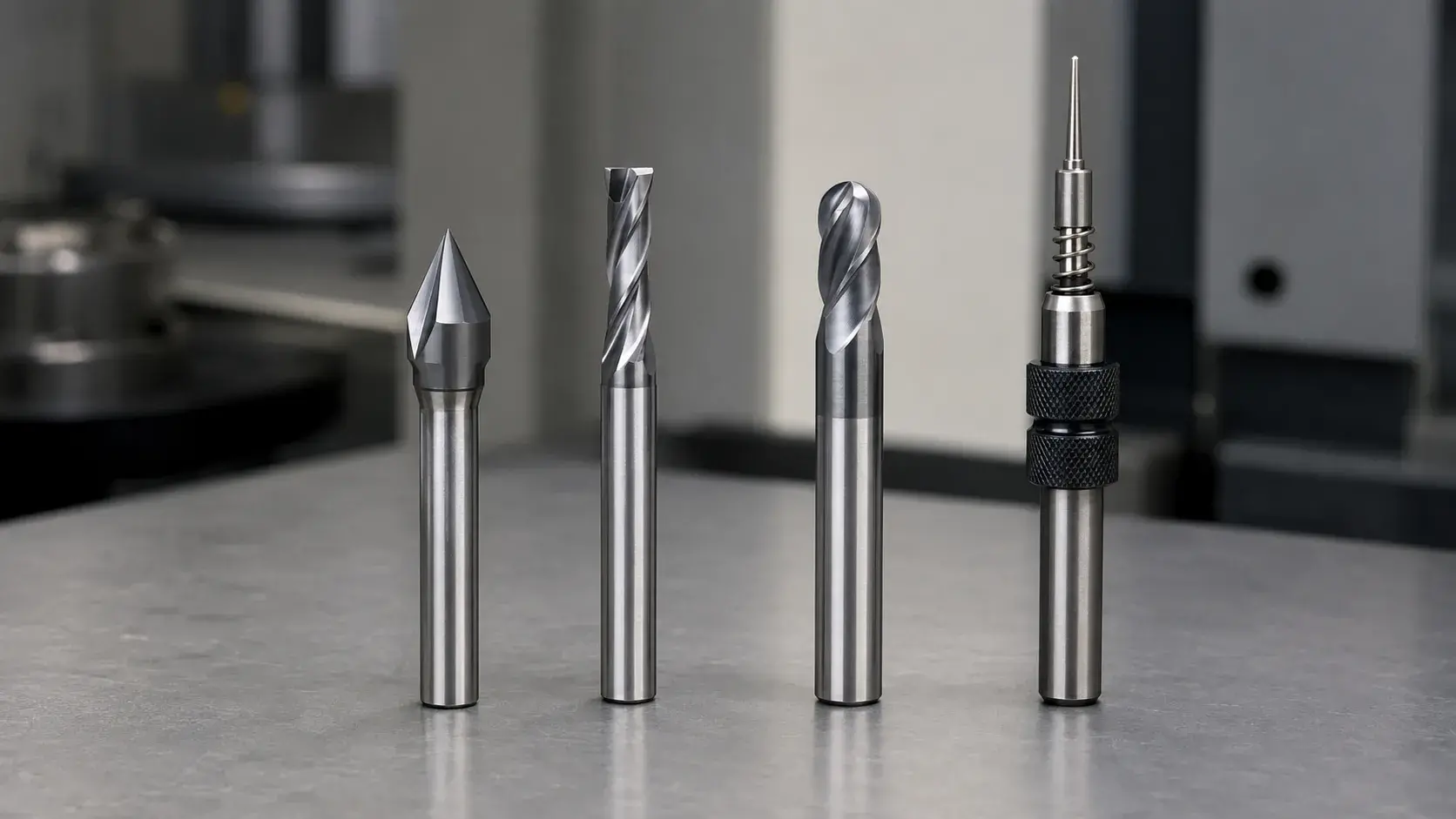
The choice of cutting tools directly affects line width, engraving depth, the shape of the engraved area, and surface quality.
V-shaped engraving cutters
V-shaped cutters are very commonly used for engraving text and logos.
The deeper the cutting edge penetrates the material, the wider the resulting line. Therefore, even a slight variation in engraving depth can lead to differences in character thickness. When machining parts with uneven surfaces, special attention must be paid to part alignment and tool height compensation.
V-shaped cutters are suitable for:
- Letters and numbers
- Company logos
- Outline lines
- Nameplates and decorative patterns
- Fine identification marks
Small-diameter end mills
Small-diameter flat-bottom end mills are suitable for machining text, grooves, and patterns with relatively consistent widths.
Compared to V-shaped cutters, the line width produced by flat-bottom end mills is primarily determined by the cutter’s diameter, making them more suitable for designs requiring specific groove widths or flat-bottom structures.
However, the smaller the cutter diameter, the lower the rigidity tends to be. When machining hard metals, it is necessary to control the depth of cut per pass to prevent the cutter from breaking.
Ball-Nose End Mills
Ball-nose end mills are suitable for engraving curved surfaces, three-dimensional patterns, and grooves with arched bottoms.
They are frequently used for mold surfaces, decorative textures, and three-dimensional reliefs; however, they may be less efficient than V-shaped cutters or small-diameter end mills when machining fine, flat text.
Diamond Scribing Tool
Diamond scribing tools do not rely on high-speed rotational cutting; instead, they use a diamond tip to etch lines onto the metal surface.
This method is suitable for creating shallow, fine permanent markings and is commonly used on aluminum alloys, brass, and some stainless steel parts. It produces minimal chips but is generally not suitable for engraving that requires significant depth.
How deep can CNC metal engraving go?
The engraving depth depends on the intended use of the marking, font size, material, and part structure.
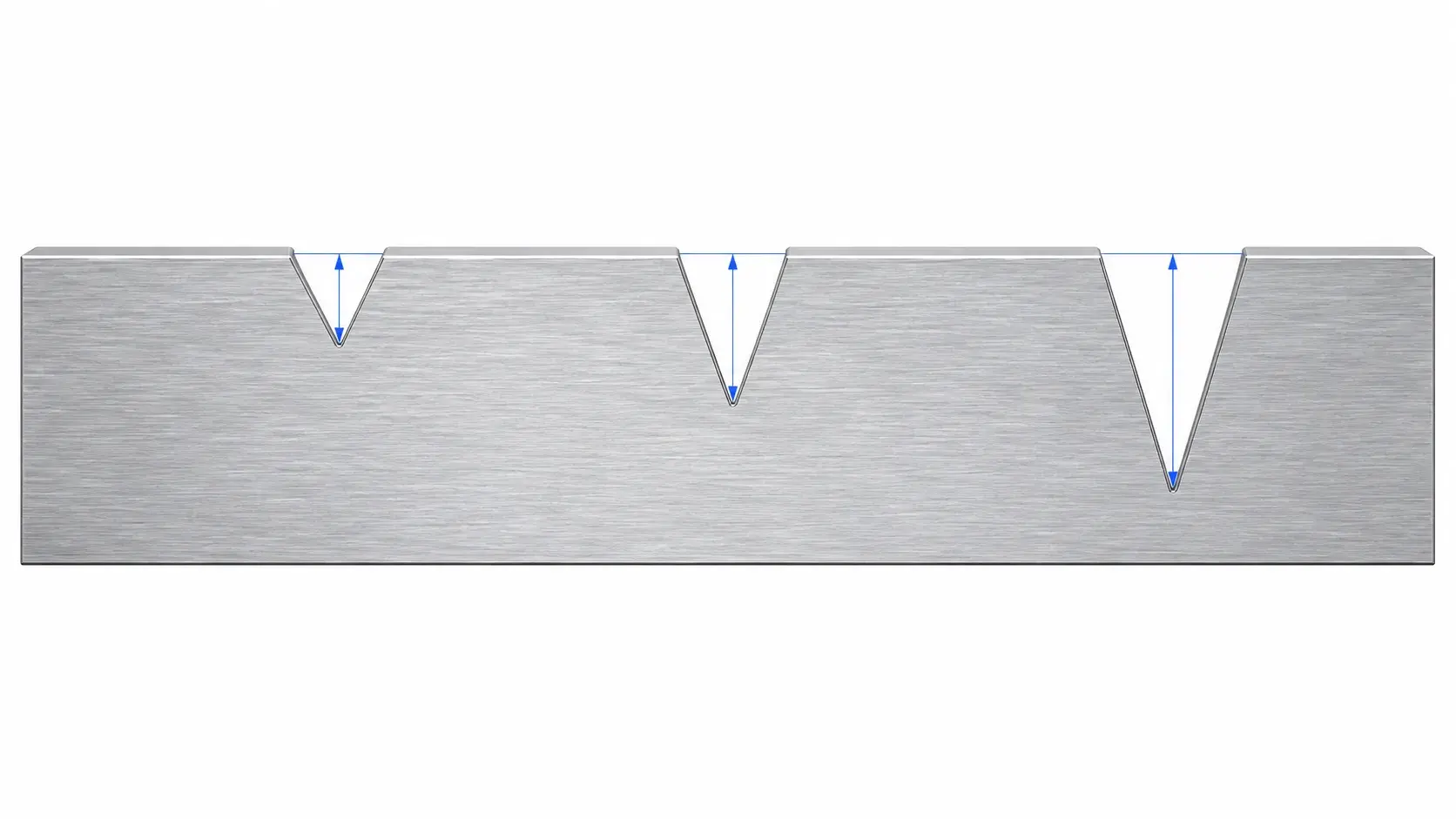
Generally speaking, metal engraving can be categorized as follows:
- Approximately 0.02–0.10 mm: Superficial markings, fine lines, and decorative patterns
- Approximately 0.10–0.50 mm: Standard text, logos, serial numbers, and graduations
- 0.50 mm and above: Deep engraving, mold markings, or markings requiring high wear resistance
These values are for general reference only and are not fixed standards.
How to Set CNC Metal Engraving Parameters?
There are no universal parameters for CNC engraving that apply to all metals and cutting tools. Before actual machining, the following factors must be considered comprehensively:
- Material grade and hardness
- Cutting tool diameter, point angle, and overhang
- Cutting tool material and surface coating
- Spindle power and machine tool rigidity
- Engraving depth and line width
- Whether to use cutting fluid or cooling gas
- Recommended parameters provided by the cutting tool manufacturer
Generally, smaller-diameter tools require higher spindle speeds and lighter cutting loads. When machining stainless steel, titanium alloys, or tool steel, avoid prolonged friction between the tool and the surface, as this can easily lead to work hardening and overheating.
What is the difference between CNC engraving and laser engraving?
Both CNC engraving and laser engraving can be used to mark metal, but their processing principles and results differ.
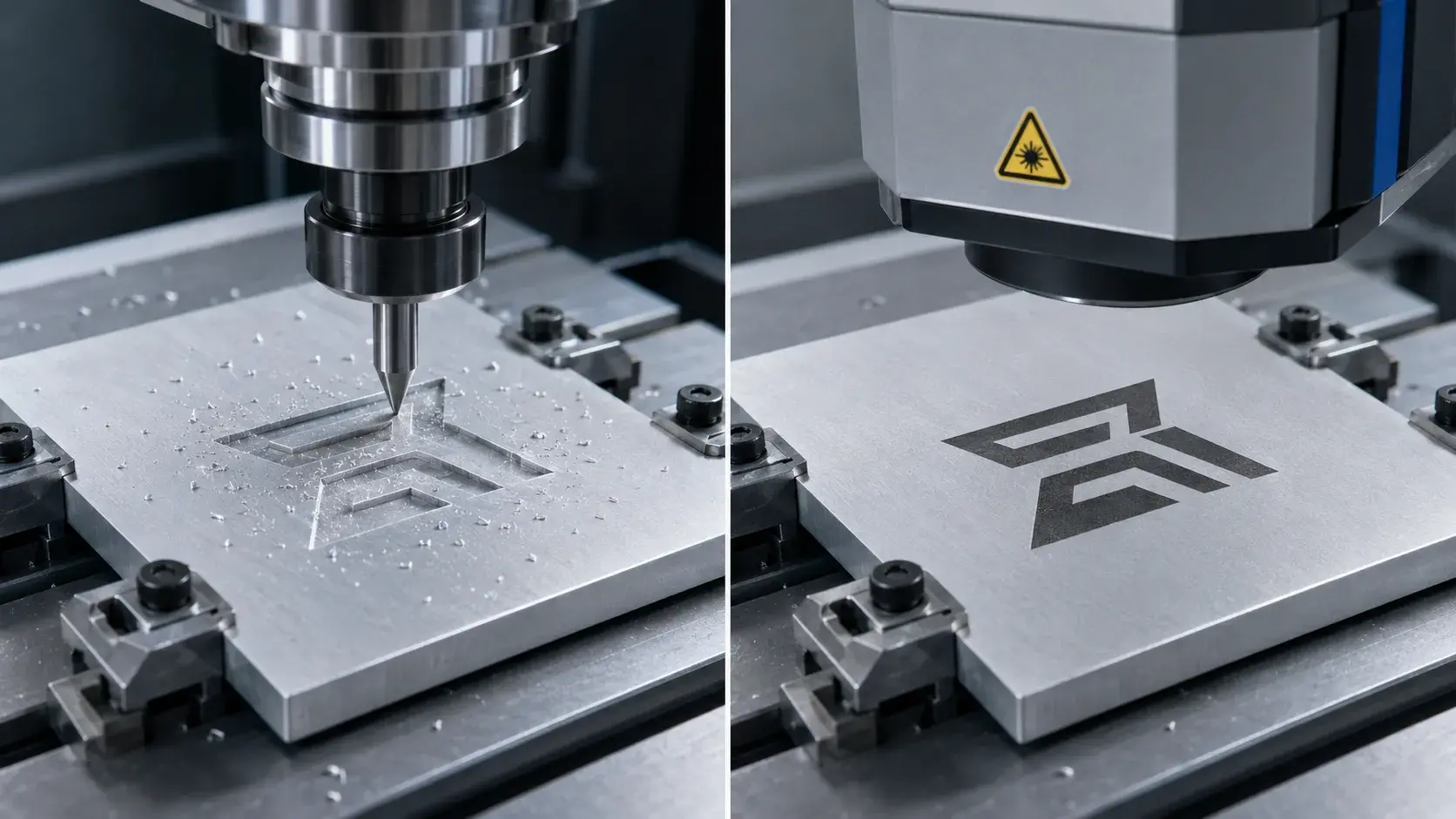
| Comparison | CNC Engraving | Laser Engraving or Marking |
|---|---|---|
| Process | A cutting or drag tool removes or displaces material | Laser energy alters or removes material from the surface |
| Marking Depth | Can produce clearly defined and relatively deep grooves | Usually shallower, depending on the laser and process settings |
| Tactile Feel | The engraved grooves can usually be felt by touch | Some laser marks have little or no noticeable depth |
| Processing Speed | May be slower when producing complex patterns | Usually faster for small text, serial numbers, and QR codes |
| Tool Wear | Cutting and engraving tools wear over time | No conventional cutting tools are required |
| Best Suited For | Deep lettering, scales, grooves, and mold characters | QR codes, serial numbers, fine text, and detailed graphics |
| Workpiece Requirements | Requires secure workholding and accurate surface-height control | Suitability for curved or complex surfaces depends on the laser system |
| Integration With CNC Machining | Can often be completed during the CNC machining process | Typically requires a separate laser marking operation |
If the markings need to withstand wear and tear, sandblasting, or long-term use, CNC engraving with actual depth is generally more suitable.
If you need to quickly produce QR codes, dense information, or a large number of shallow markings, laser marking may be more efficient. The final choice should be based on marking depth, appearance, production volume, and cost.
What are some common applications of CNC metal engraving?
CNC engraving is widely used for industrial parts and custom metal products, including:
- Product serial numbers
- Lot numbers
- Part numbers
- Company names and logos
- Measurement scales and directional markings
- Text on mold cavities
- Fixture numbers
- Control panel text
- Instrument knob scales
- Assembly location markings
- Custom nameplates
- Decorative patterns
For parts subject to traceability requirements, unique numbers, batch codes, or assembly identifiers can be incorporated during the machining process. If each product has a different number, it is essential to ensure accurate correspondence in programming and production management to avoid duplicate or incorrect numbering.
Frequently Asked Questions About CNC Metal Engraving
Burrs on Text Edges
Burrs are typically caused by a dull cutting tool, inappropriate feed parameters, material properties, or the cutting direction.
This can be improved by replacing the tool with a sharper one, optimizing the toolpath, adding a finishing pass, or incorporating a light deburring process.
Inconsistent Engraving Depth
Engraving depth may vary if the part surface is uneven, the clamping is skewed, or the workpiece is warped.
When using a V-shaped cutter, this variation can also directly result in inconsistent line widths. Therefore, it is necessary to check the part’s flatness, clamping condition, and coordinate settings before machining.
Small Text Is Unclear
Fonts that are too small, lines that are too dense, or a cutter diameter that is too large can all prevent small text from being machined completely.
During the design phase, confirm the minimum line width, character spacing, and tool accessibility. If necessary, use monoline fonts and simplify complex strokes.
Tool Breakage
Small-diameter tools have lower rigidity; excessive tool overhang, excessive cutting depth, or machine vibration can all cause tool breakage.
For hard materials, it is usually necessary to reduce the depth of cut per pass and use stable clamping and appropriate cooling methods.
Logo Does Not Match the Design After Machining
Color images or low-resolution bitmaps cannot be used directly as reliable CNC machining files. Logos typically need to be converted into clear vector outlines, and closed areas, minimum line widths, and fine details must be checked.
Can CNC machining and metal engraving be completed in a single operation?
In many projects, part machining and engraving can be scheduled to be completed on the same CNC machine.
For example, an aluminum alloy housing can first be machined for its outer contours, holes, and slots, and then the engraving tool can be swapped in to engrave the logo and product number. This reduces part transfers and repeated clamping, and also helps ensure positional accuracy between the engraved patterns and other machined features.
- However, whether these operations can be completed in a single setup also depends on:
- Whether the engraving location is accessible to the cutting tool
- Whether the part needs to be flipped for machining
- The number of axes and travel range of the machine tool
- The sequence of surface treatments
- Whether the part numbers need to vary for each individual part
- Whether the engraving tool is suitable for the target material
Providing a complete 3D model, 2D drawings, and engraving files before requesting a quote helps manufacturers evaluate machining methods, tool selection, and production costs.
Can YUANYI Add Engraving to Custom CNC Parts?
Yes. YUANYI can add engraved logos, serial numbers, part numbers, scales, and other identification marks to custom CNC parts. Engraving can often be completed during the milling or turning process, helping maintain accurate positioning while reducing additional handling.
Please include the engraving location, size, depth, and artwork in your drawing. Vector files such as DXF, DWG, AI, or vector PDF are recommended for logos and custom graphics.
Need Custom CNC Parts With Engraving?
Send us your drawings, material requirements, engraving files, and order quantity. Our team will review your project and provide a fast quotation.
Request a QuoteConclusion
CNC machines can engrave text, logos, numbers, and patterns on metals such as aluminum, stainless steel, brass, and titanium. CNC engraving is a reliable option when the marking requires measurable depth, wear resistance, or integration with the machining process.
Before production, consider the material, engraving size, depth, and surface finish. Laser marking may be more suitable for QR codes and shallow surface marks.
F.A.Q.
Yes, but raised lettering requires the machine to remove material around the characters rather than cutting the characters into the surface. This usually takes longer and costs more than recessed engraving.
Yes. Engraved grooves can be filled with paint, enamel, or epoxy to improve contrast and visibility. The filling material should be selected according to the part’s environment and surface finish.
Yes. The engraving program can be updated to apply a unique serial number, batch code, or identification mark to each part. A clear numbering list should be provided before production.
Shallow engraving usually has little effect on part strength. However, deep engraving near thin walls, sealing surfaces, or highly stressed areas may weaken the part and should be reviewed before machining.
Shallow engraving may sometimes be removed by machining, grinding, or polishing the surface. Whether this is possible depends on the engraving depth, available material, dimensional tolerance, and surface-finish requirements.
Most text, numbers, and simple logos can be produced with standard engraving tools or small end mills. Custom tooling may only be necessary for unusual profiles, special textures, or high-volume production.



