

If you need a white aluminum part, anodizing may seem like an obvious choice. After all, anodized aluminum is available in black, blue, red, gold, bronze, and many other colors.
But true white anodized aluminum is different.
Conventional aluminum anodizing generally cannot produce a bright, opaque white finish. The anodized layer is naturally transparent or slightly translucent, and the coloring process relies on dyes entering microscopic pores in the oxide layer. White pigments do not behave the same way as normal anodizing dyes.
That does not mean you cannot make an aluminum part white. In most cases, finishes such as powder coating, e-coating, wet paint, or specialized ceramic coatings are better options.
Is White Anodized Aluminum Possible?
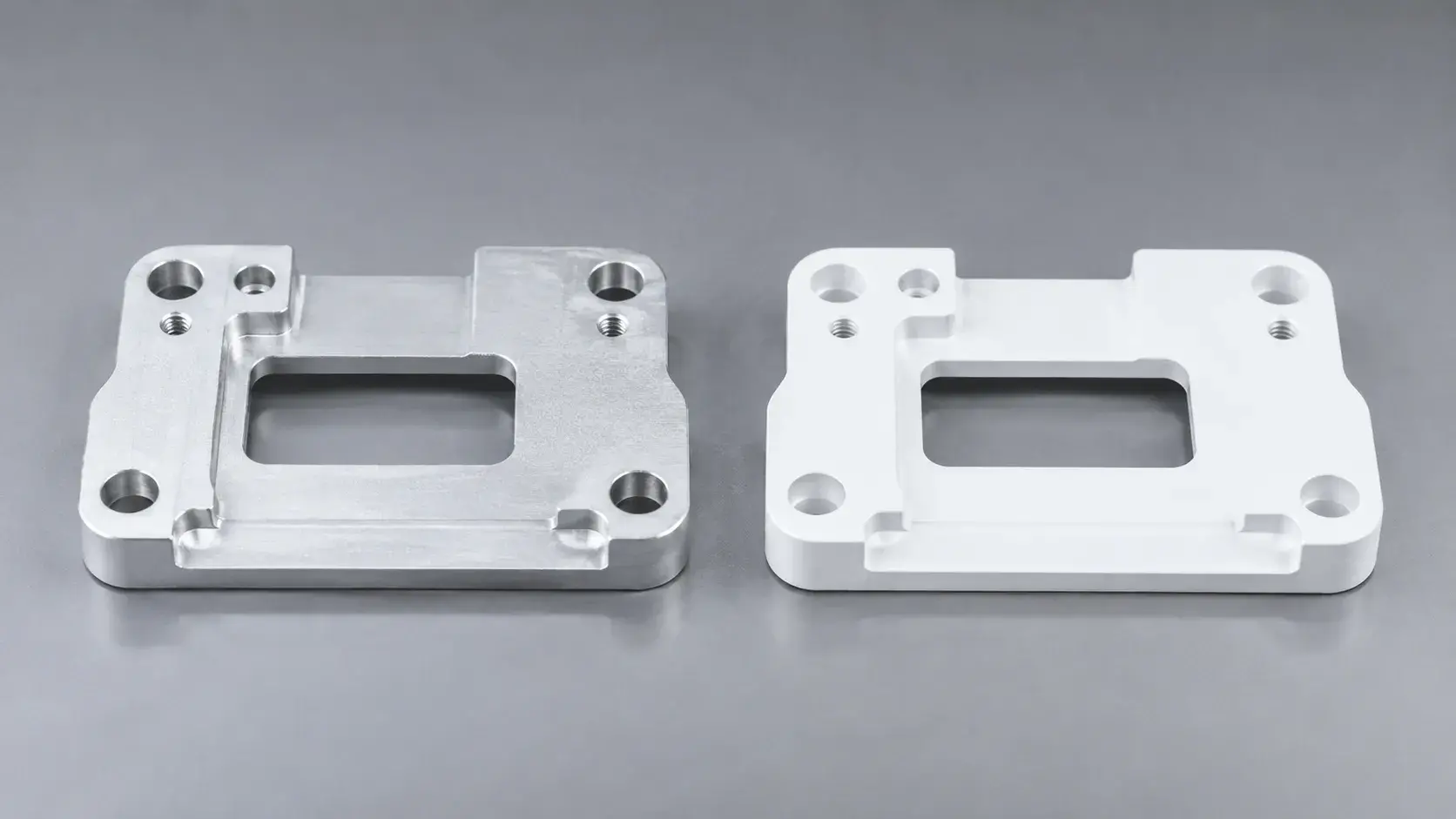
With conventional anodizing, a true bright white finish is generally not achievable.
Standard anodizing creates a thin aluminum oxide layer on the surface of the part. This layer can then be dyed to produce colors such as black, blue, red, or gold.
White is much more difficult.
The anodized layer itself is not opaque. It still allows some light to pass through and reflect from the aluminum underneath. Because of this, the surface tends to keep a metallic or slightly gray appearance instead of becoming a solid white.
You may sometimes see finishes described as:
- white anodized aluminum;
- silver-white anodizing;
- matte white anodizing;
- natural white anodizing.
In many cases, these are actually clear or natural anodized finishes with a light silver-gray appearance, rather than a true white coating.
Some specialized ceramic or plasma electrolytic oxidation processes can produce white or off-white surfaces. However, these are different from conventional Type II dyed anodizing.
Why Can't Aluminum Be Anodized White?
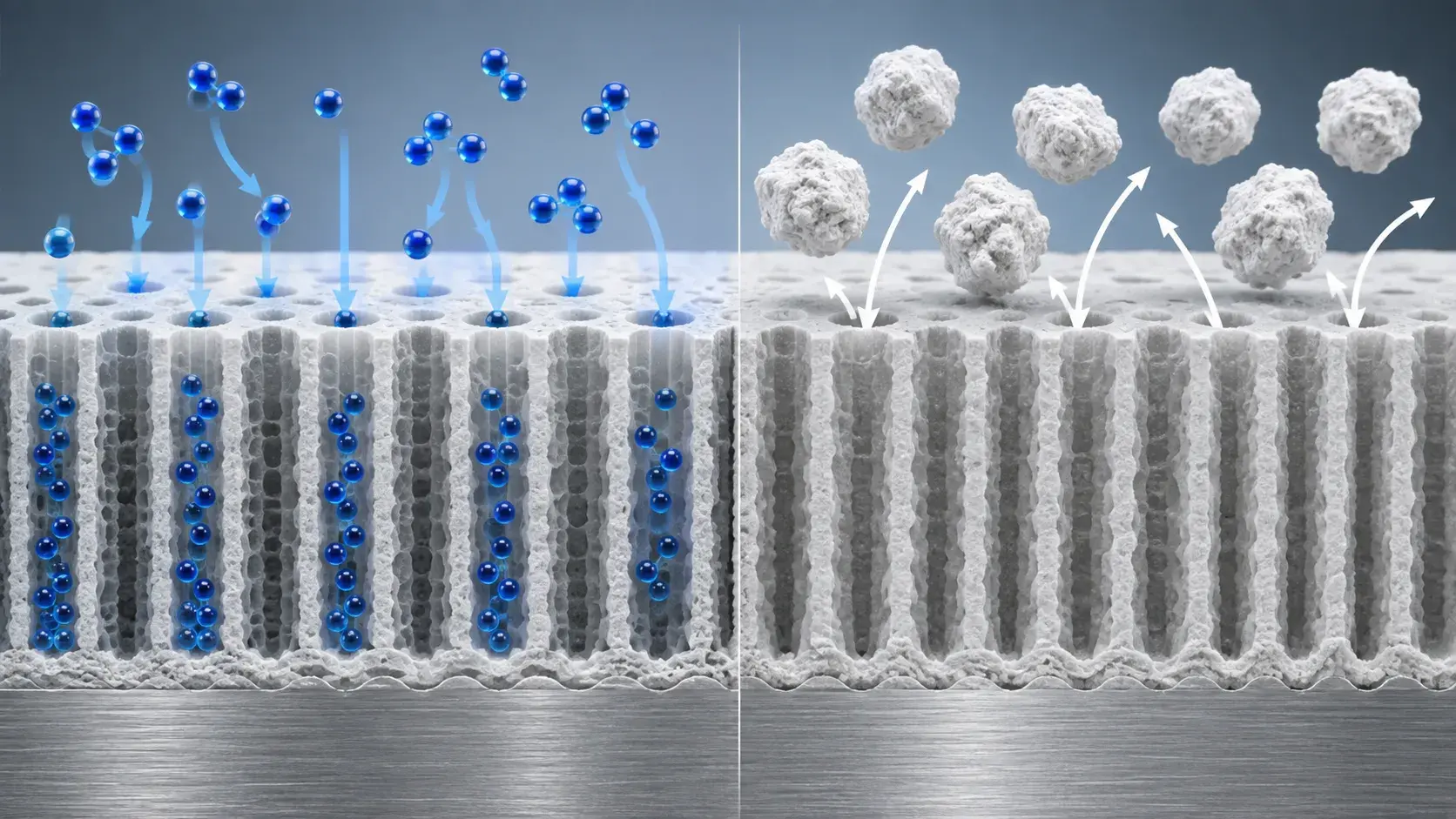
The main reason is that white does not work like normal anodizing colors.
The Anodized Layer Is Transparent or Translucent
Anodizing does not apply a thick colored layer on top of aluminum like paint or powder coating.
Instead, an electrochemical process converts the aluminum surface into a porous aluminum oxide layer.
This oxide layer is usually clear or slightly cloudy. Even after coloring, the metallic surface underneath still affects the final appearance.
That is why anodized finishes often have a metallic look.
For black, blue, red, or other dark colors, this is usually not a problem. The dye absorbs light strongly enough to create a clear visible color.
White needs a different effect.
White Depends on Light Scattering
A surface looks white when it reflects and scatters most visible wavelengths of light.
Paints and powder coatings achieve this by using opaque white pigments, commonly titanium-dioxide-based pigments, that strongly scatter light.
Anodizing dyes work differently.
They are designed to enter the microscopic pores in the anodized oxide layer. These dyes absorb certain wavelengths of light and create the visible color.
A true white finish cannot be produced simply by using a “white dye” in the same way.
White Pigments Are Difficult to Put Into Anodizing Pores
White pigments are generally solid particles rather than soluble dyes.
These particles are much larger than normal dye molecules and cannot easily penetrate the fine pores of a conventional anodized layer.
Even if a light-colored material is deposited on the surface, it may not produce the smooth, bright, opaque white appearance that users expect.
The result may look:
- light gray;
- silver;
- cloudy;
- off-white;
- uneven.
This is why conventional anodizing is excellent for metallic colors, but not for producing a paint-like pure white finish.
What Does "White Anodized Aluminum" Usually Mean?
In real manufacturing, the term white anodized aluminum is often used loosely.
A customer may ask for a white anodized finish, but what they actually want can be very different.
It may refer to:
- clear anodized aluminum with a light silver appearance;
- bead-blasted aluminum followed by clear anodizing;
- matte silver anodizing;
- aluminum with a white powder coating;
- aluminum with white e-coating or paint;
- a specialized ceramic or PEO coating.
This is why a drawing that only says “white anodize” can cause confusion.
Before production, it is better to confirm what the customer means by white. A color sample, RAL or Pantone reference, gloss level, and coating process can help avoid mismatched expectations.
For cosmetic CNC parts, this becomes especially important because a metallic silver-white surface can look very different from a solid opaque white.
What Is the Closest Color to White Anodized Aluminum?
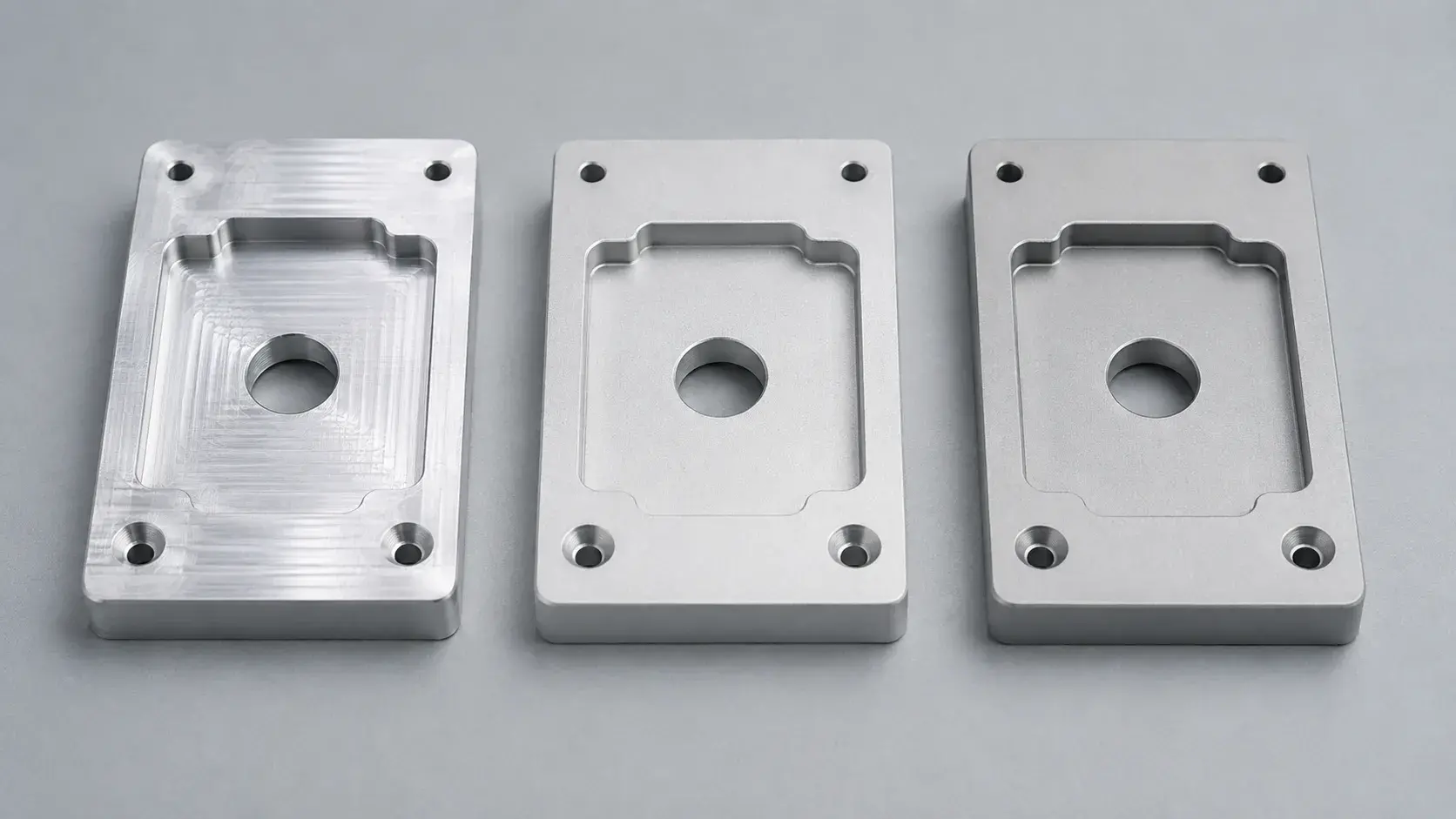
If you want to keep the metallic appearance of anodized aluminum, the closest option is usually clear or natural anodizing.
The final color depends heavily on the aluminum alloy and surface preparation.
For example, bead blasting before clear anodizing can create a soft matte silver finish. Chemical etching can also reduce surface shine and make the part look lighter and more uniform.
However, the result is still not true white.
It normally appears closer to:
- light silver;
- matte silver;
- pale gray;
- silver-white.
This type of finish is common on electronics housings, control panels, machine components, and other products where a clean metallic appearance is preferred.
If you need an opaque white similar to painted plastic or a white appliance surface, anodizing is not the right process.
Best Alternatives to White Anodized Aluminum
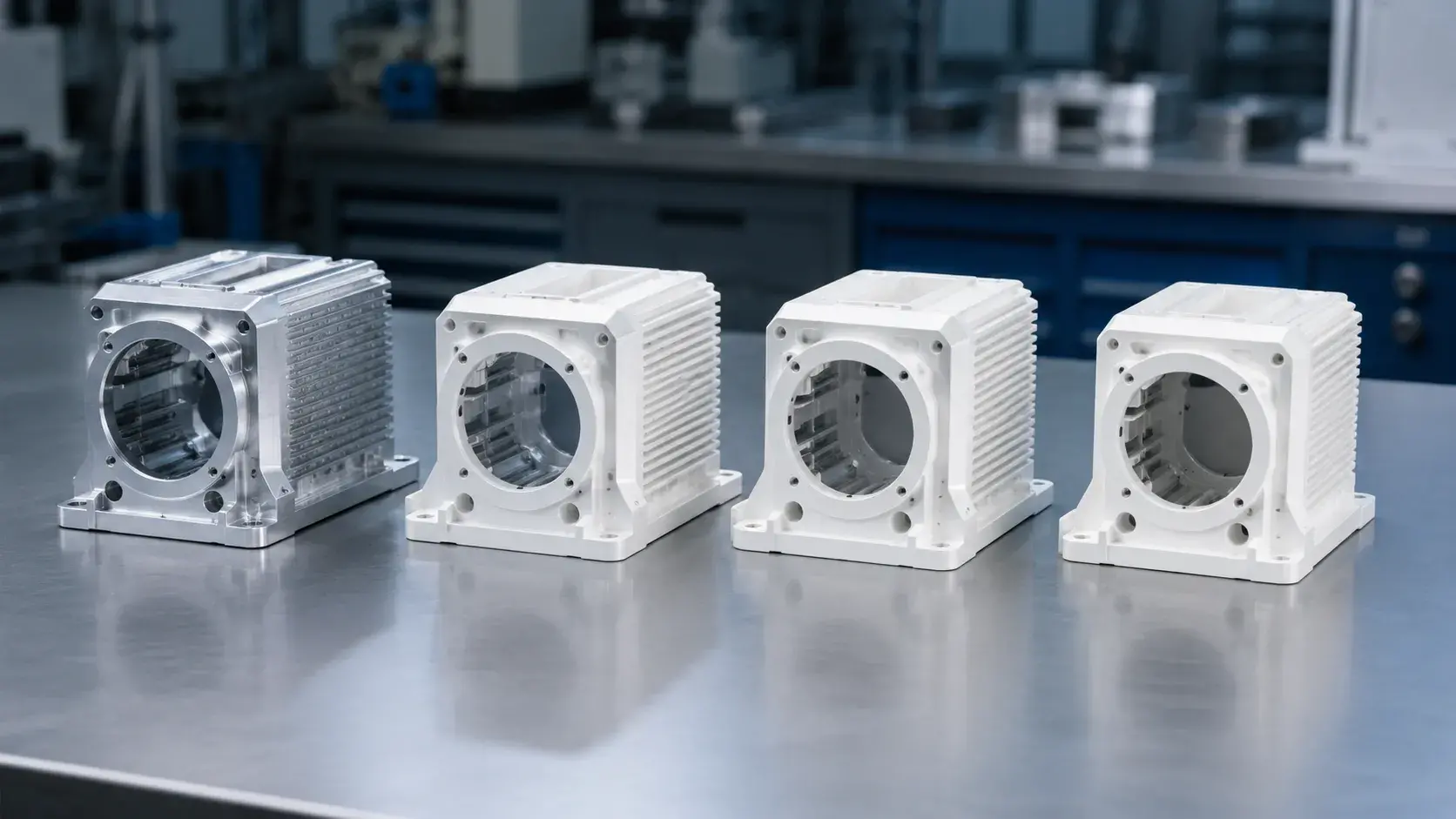
If the final part must actually look white, there are several better options.
White Powder Coating
Powder coating is one of the most common alternatives.
A dry powder is electrostatically applied to the aluminum surface and then cured at high temperature. The result is a thick, durable, opaque coating.
It can produce a much brighter and more consistent white than anodizing.
Powder coating is a good choice for:
- equipment housings;
- covers;
- brackets;
- panels;
- consumer products;
- visible CNC machined parts.
It also offers a wide range of gloss levels and colors.
The main limitation is coating thickness. Powder coating is much thicker than anodizing, so it can affect threaded holes, bearing fits, mating surfaces, and other precision features.
These areas may need masking before coating.
White E-Coating
E-coating, or electrophoretic coating, uses an electrical current to deposit a coating onto the aluminum surface.
One advantage is that it can cover complex shapes more evenly than many spray-applied finishes.
The coating is also generally thinner than powder coating, which can make it more suitable for parts with tighter dimensional requirements.
White e-coating may be considered for:
- complex CNC parts;
- recessed features;
- parts that need more uniform coverage;
- applications where a thinner coating is preferred.
However, the exact available color, thickness, and performance depend on the coating system used by the supplier.
White Wet Paint
Wet paint is another flexible option.
It can produce nearly any white shade and is useful when appearance is more important than maximum wear resistance.
It is commonly used for:
- prototypes;
- low-volume parts;
- decorative housings;
- products that require custom color matching.
Paint can also be easier to repair or rework than some other finishes.
Its durability, however, depends strongly on the paint system, surface preparation, primer, and curing process.
Ceramic or PEO Coatings
Specialized ceramic coatings and plasma electrolytic oxidation, or PEO, can sometimes produce white or off-white surfaces on aluminum.
These processes are different from conventional decorative anodizing.
They are usually selected for functional reasons such as:
- wear resistance;
- electrical insulation;
- heat resistance;
- corrosion protection.
They can be useful when a light-colored surface and high functional performance are both required.
But they are normally more specialized and more expensive than standard anodizing or powder coating.
For a simple cosmetic white finish, powder coating is usually the more practical choice.
White Anodizing vs Powder Coating vs E-Coating
If the goal is simply to make an aluminum part look white, anodizing is usually not the best option.
The main difference is that anodizing changes the aluminum surface itself, while powder coating and e-coating add a separate coating layer on top.
| Finish | Can Produce True White? | Typical Thickness | Surface Appearance | Best For |
|---|---|---|---|---|
| Conventional anodizing | No | About 5–25 μm | Metallic, translucent | Corrosion resistance, wear resistance, metallic appearance |
| Powder coating | Yes | About 50–150 μm | Opaque, smooth, matte or glossy | Housings, covers, panels, cosmetic parts |
| E-coating | Yes | About 10–30 μm | Smooth, uniform | Complex parts, recessed areas, thinner coating needs |
| Wet paint | Yes | Varies | Wide color and gloss range | Prototypes, custom colors, decorative parts |
| Ceramic / PEO coating | White or off-white possible | Varies | Ceramic-like | Wear, insulation, corrosion, functional applications |
The best finish depends on more than color.
For precision CNC parts, you also need to think about coating thickness, masking, dimensional changes, wear, corrosion resistance, and how visible the part will be.Which White Finish Should You Choose for CNC Aluminum Parts?
There is no single best white finish for every aluminum part.
A practical way to choose is to start with the main requirement.
For a bright, opaque cosmetic white:
Powder coating is usually the easiest choice. It gives good color coverage and is widely available in different shades and gloss levels.
For a thinner white coating:
E-coating may be more suitable, especially on complex parts where uniform coverage is important.
For a metallic silver-white appearance:
Use clear anodizing with bead blasting, brushing, or chemical etching.
For custom colors or low-volume prototypes:
Wet painting offers more flexibility and is often easier to match to a specific color standard.
For high wear resistance or electrical insulation:
A specialized ceramic or PEO coating may be worth considering.
The key is to choose the finish based on the part’s function, not just the color name.
Share your CAD file or drawing with us. We can review your aluminum part and recommend a suitable finish based on color, tolerance, wear resistance, and production quantity.
Request a QuoteHow White Coatings Affect CNC Part Tolerances
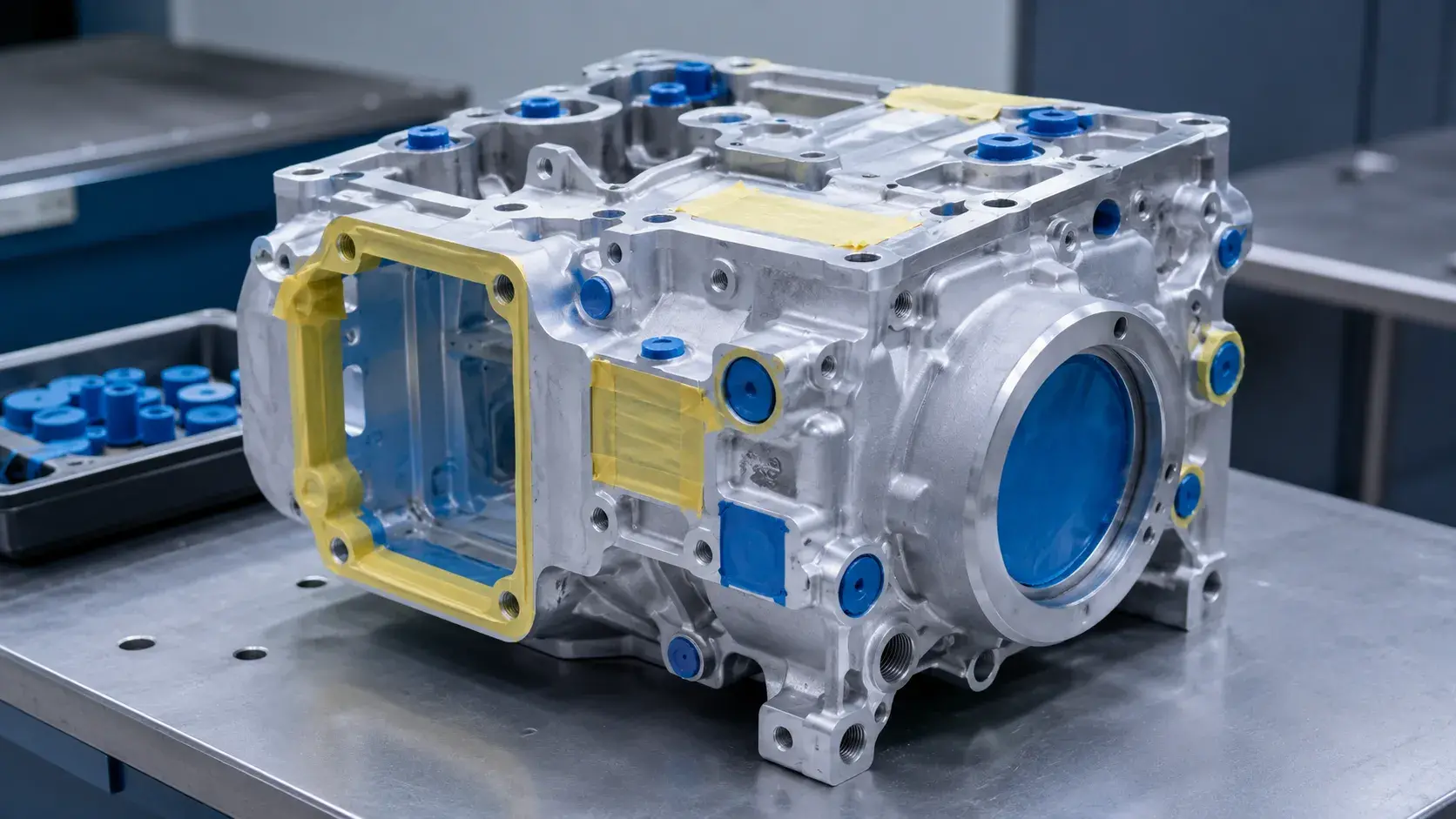
This is especially important for precision machined aluminum parts.
Anodizing is relatively thin, but powder coating can add a much thicker layer to the surface. If this is ignored during design, the finished part may no longer fit correctly.
Features that often need extra attention include:
- threaded holes;
- bearing bores;
- dowel holes;
- sealing surfaces;
- mating faces;
- electrical contact areas;
- precision slots and pockets.
For example, a thick powder coating inside a bearing bore can reduce the usable diameter enough to prevent assembly.
The same problem can happen with threaded holes or close-fitting mating parts.
In these areas, manufacturers often use masking plugs, caps, or tape to keep the coating off critical surfaces.
The coating thickness may also need to be considered in the machining dimensions before finishing.
For tight-tolerance parts, it is better to define the finishing process during design rather than after machining is complete.
How to Specify a White Finish on an Engineering Drawing
Writing only “white anodize” on a drawing is usually not enough.
It can mean different things to different suppliers.
A better specification should include:
- the exact finishing process;
- required white color;
- RAL, Pantone, or approved color sample;
- gloss or matte requirement;
- coating thickness;
- masking areas;
- cosmetic surface requirements;
- corrosion or wear requirements.
For visible parts, it is also useful to define which surfaces are cosmetic.
If color consistency is important, an approved physical sample is often more reliable than relying only on a digital color code.
This is especially true for aluminum because the base alloy, machining marks, bead blasting, surface roughness, and coating process can all affect the final appearance.
For production parts, confirming the finish on a first article or sample part can prevent costly rework later.
Conclusion
True white anodized aluminum is generally not achievable with conventional anodizing.
The anodized oxide layer is transparent or translucent, and the process relies on dyes that work well for colors such as black, blue, red, and gold, but not for producing an opaque white surface.
If you need a metallic silver-white appearance, clear anodizing with bead blasting or etching is usually the closest option.
If you need a bright, solid white finish, powder coating, e-coating, wet paint, or a specialized ceramic coating is usually more practical.
For CNC aluminum parts, the final choice should also consider coating thickness, masking, tolerances, wear resistance, corrosion resistance, and cosmetic requirements.
Send us your drawing, color requirement, and quantity. We can help you choose the right finish based on appearance, coating thickness, tolerances, and application.
Get a CNC Machining QuoteFrequently Asked Questions
Conventional Type II anodizing cannot normally produce a true opaque white.
It can produce clear, silver, gray, black, blue, red, and many other dyed colors, but a bright white finish is difficult because white pigments do not penetrate the anodized pores like normal dyes.
No, hard anodizing is not normally used to create a white finish.
Type III hard anodizing usually produces a natural gray, dark gray, bronze, or nearly black appearance depending on the alloy and coating thickness.
Its main purpose is wear resistance, hardness, and corrosion protection rather than decorative color.
6061 aluminum can be anodized very well, but conventional anodizing still will not make it truly white.
Clear anodized 6061 usually has a silver or light gray metallic appearance. If you need a bright white 6061 CNC part, powder coating, e-coating, or paint is normally more suitable.
No.
Clear anodized aluminum may look bright silver, light gray, or slightly whitish under some lighting, especially after bead blasting.
However, it still has a metallic appearance and should not be confused with an opaque white coating.
Clear or natural anodizing is usually the closest conventional anodized finish.
For a softer and lighter appearance, bead blasting or chemical etching can be used before clear anodizing.
The result is normally matte silver or light gray rather than pure white.
It depends on the part, batch size, masking, coating specification, and cosmetic requirements.
Powder coating can require more material and curing time, while anodizing may involve more chemical processing and racking.
For precision parts, masking can also add significant cost to either process.
The better choice should be based on performance and appearance rather than price alone.
Yes.
Anodized aluminum can be painted, but the surface must be prepared correctly so the paint bonds well.
In many cases, however, it is simpler to specify the final white coating process from the beginning instead of anodizing first and painting afterward.



