
CNC machining is vital in contemporary medical manufacturing as it creates precise parts for surgical tools, medical devices, diagnostic machines, and other specialized healthcare uses.It offers high accuracy, works with various materials, and can produce intricate shapes, making it suitable for both creating prototypes and manufacturing small batches of medical products.
Why CNC Machining Is Important in Medical Manufacturing
Medical components often require extremely high standards for accuracy, reliability, and consistency.Unlike general industrial parts, medical products must meet strict dimensional requirements while maintaining excellent material performance and surface quality.
CNC machining is widely used in the medical industry because it provides:
High Precision and Tight Tolerance Control
Many medical components require precise dimensions to ensure proper assembly and reliable performance.CNC machining allows manufacturers to produce complex parts with consistent accuracy across prototypes and production batches.
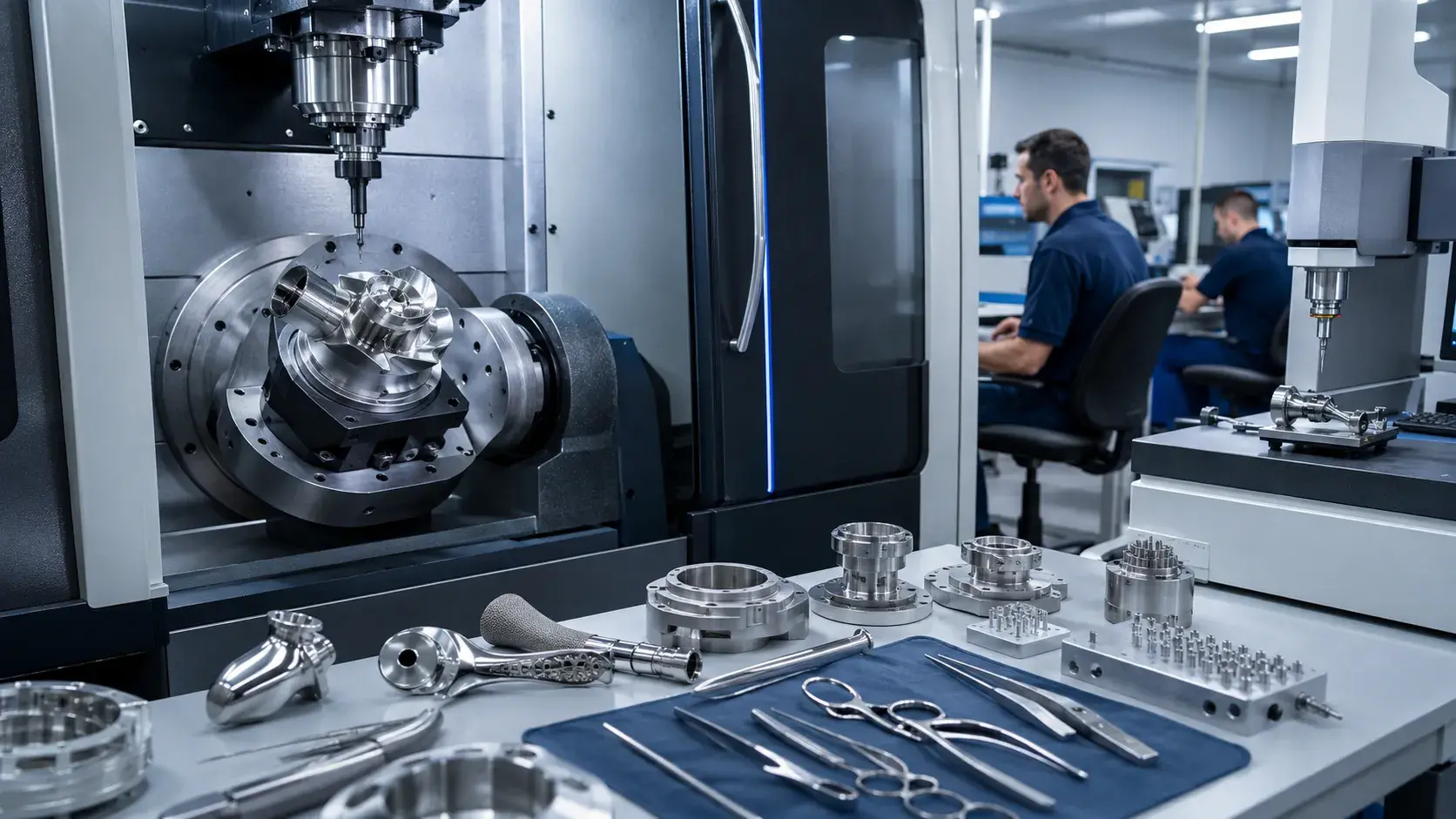
Advanced machining processes, including 5 axis CNC machining, help reduce multiple setups and improve accuracy when manufacturing parts with complex surfaces, angled features, or internal structures.
Complex Medical Part Manufacturing
Medical devices often contain intricate designs that are difficult to manufacture using conventional methods.
CNC machining enables the production of parts with:
- Complex geometries
- Small precision features
- Internal channels
- Thin-wall structures
- Custom designs
Multi-axis machining technologies provide better tool access and allow engineers to manufacture challenging medical components while maintaining dimensional accuracy.
Rapid Prototyping and Low-Volume Production
Medical product development often requires functional prototypes and small production runs before large-scale manufacturing.
Compared with injection molding or other tooling-based processes, CNC machining offers faster production without expensive mold costs.
This makes it suitable for:
- Medical device prototypes
- Product validation
- Clinical testing components
- Customized medical equipment parts
Common CNC Machining Applications in the Medical Industry
CNC machining is widely used in different areas of the medical field, including surgical tools, diagnostic equipment, and robotic systems.
Surgical Instruments
Surgical instruments are among the most frequent uses of CNC machining in the medical sector.
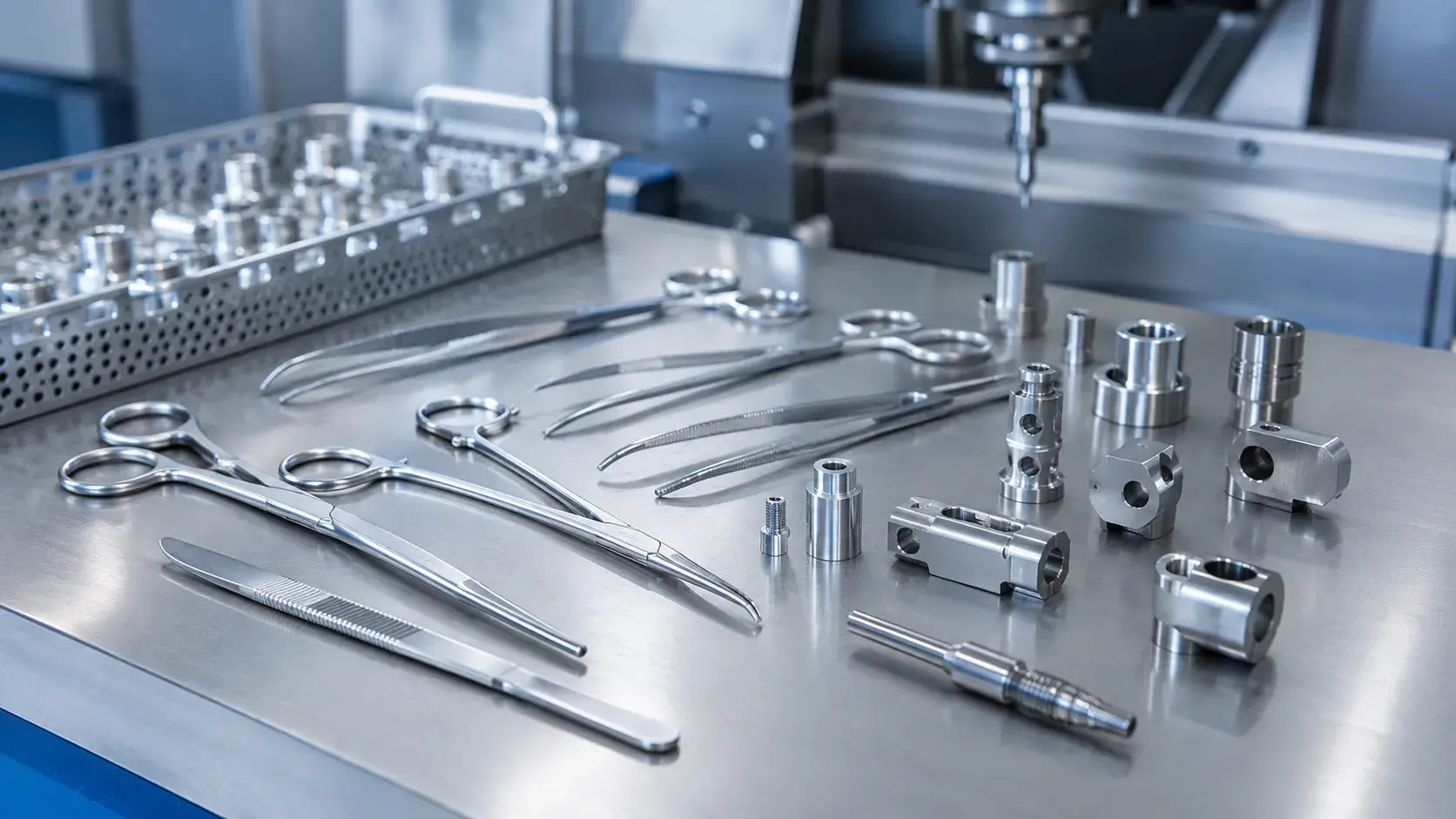
Precision machining helps create various parts such as:
- Surgical handles
- Forceps
- Cutting tools
- Clamps
- Orthopedic instruments
These components often need smooth surfaces, resistance to corrosion, and precise measurements to ensure they function properly during medical procedures.
Common materials used include:
- Stainless steel
- Titanium
- Aluminum alloys
Medical Device Components and Housings
Many medical devices rely on precision-machined structural parts and protective housings.
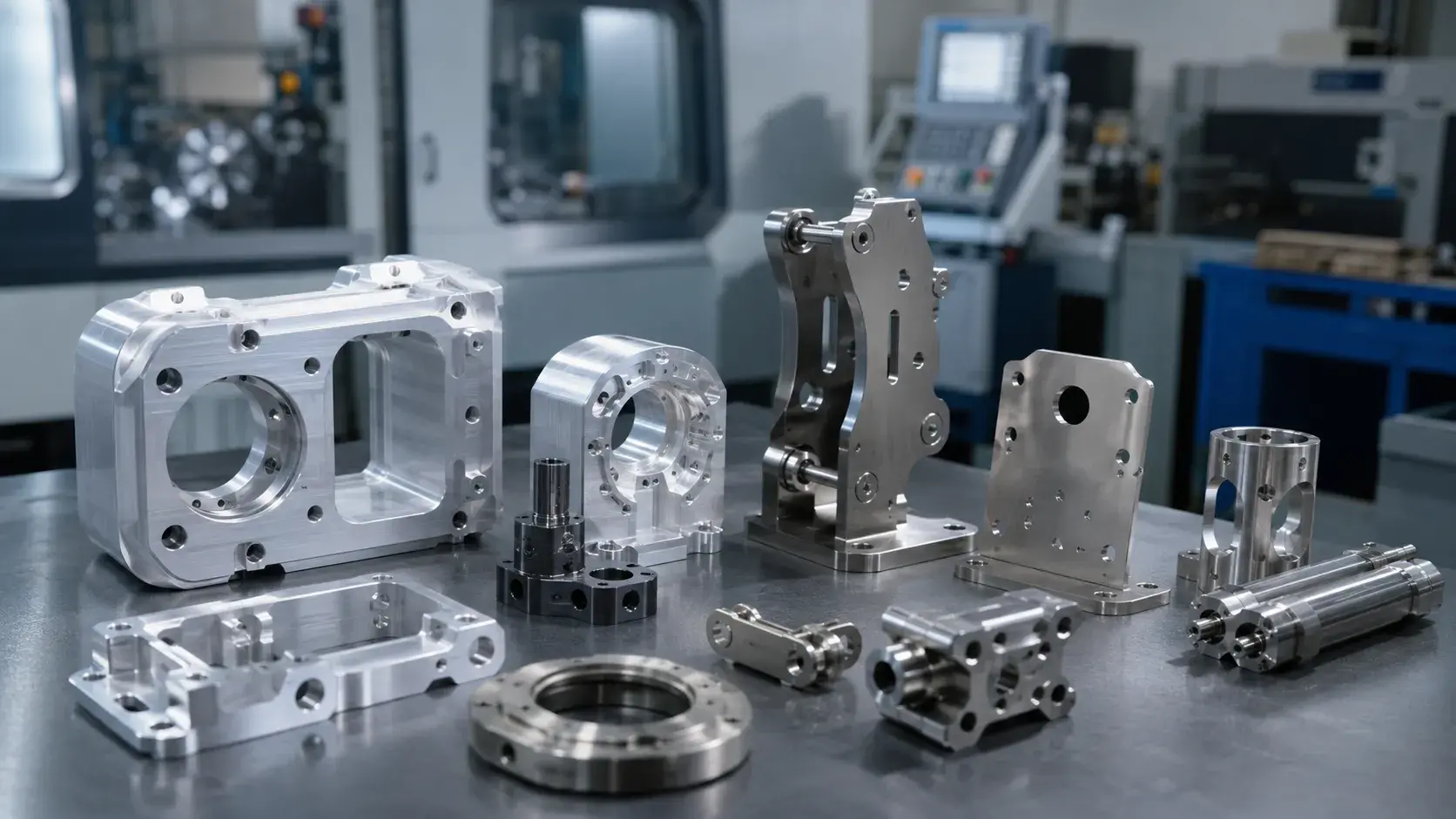
Typical uses include:
- Components for diagnostic equipment
- Housings for monitoring devices
- Brackets for medical equipment
- Mechanical assemblies
CNC machining enables manufacturers to produce lightweight, strong, and precisely fitting parts using materials such as aluminum, stainless steel, and engineering plastics.
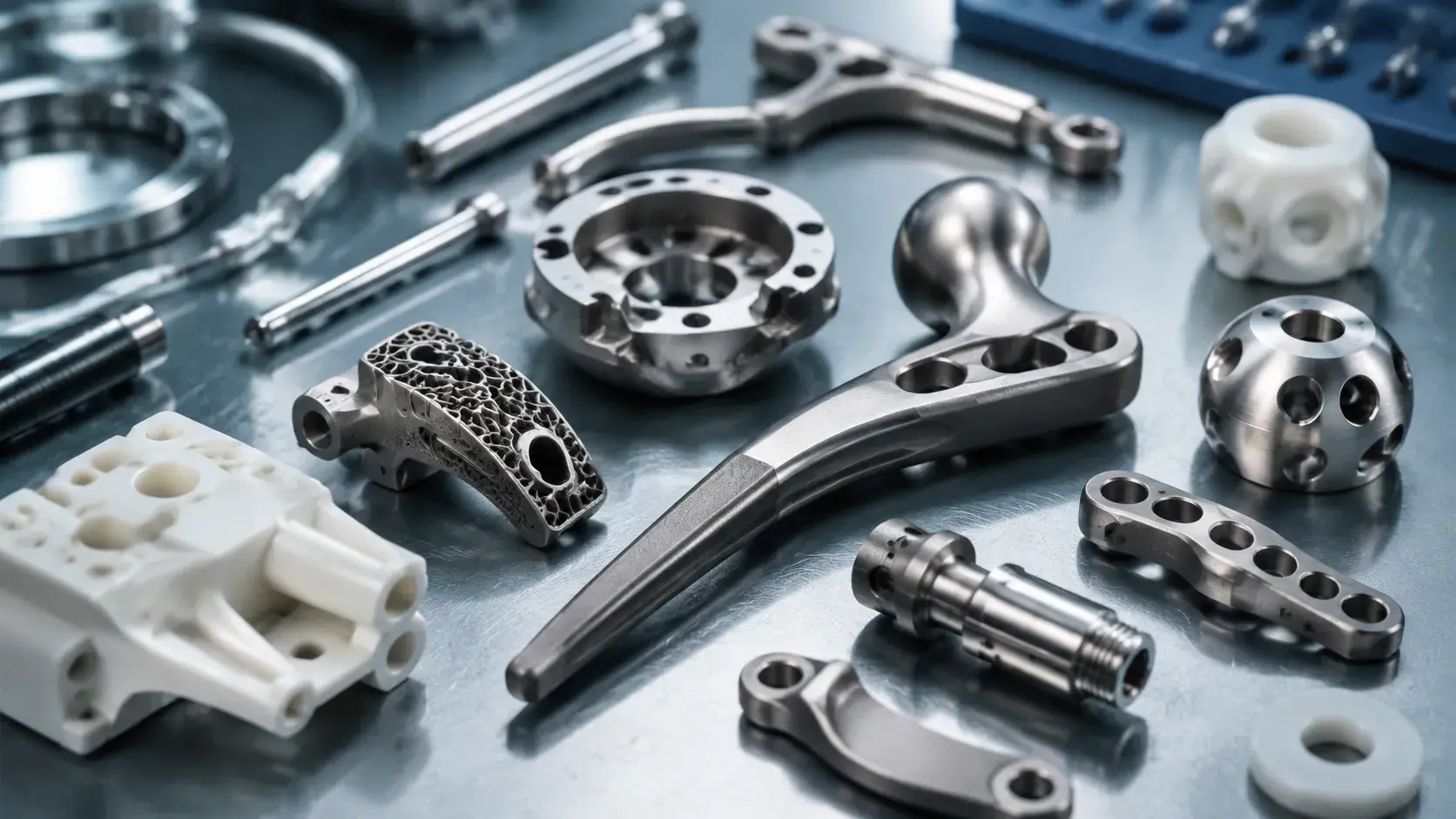
Orthopedic Components and Prosthetic Parts
Orthopedic applications require materials and methods that offer strength, durability, and biocompatibility.
CNC machining is used to produce:
- Components for orthopedic instruments
- Prosthetic prototypes
- Custom mechanical parts
- Surgical planning models
Common materials include titanium alloys and medical-grade plastics because of their high strength-to-weight ratio and performance.
Dental Components and Equipment Parts
The dental industry also depends on precision machining for customized components and equipment parts.
Examples include:
- Parts for dental instruments
- Custom fixtures
- Components for dental equipment
- Prototype models
CNC machining provides the precision needed for small and detailed dental parts while allowing for flexible customization.
Surgical Robotics Components
As robotic-assisted surgery continues to develop, there is a growing need for precision mechanical components.
CNC machining supports the production of components such as:
- Parts for robotic arms
- Precision connectors
- Structural brackets
- Custom mechanical assemblies
These applications often require tight tolerances, lightweight materials, and consistent quality in production.
Materials Used for Medical CNC Machining

Different medical applications require specific material properties, including strength, corrosion resistance, weight reduction, and durability.
| Material | Common Medical Applications |
|---|---|
| Titanium | Orthopedic components, lightweight medical parts |
| Stainless Steel | Surgical instruments and corrosion-resistant components |
| Aluminum | Medical equipment housings and structural parts |
| PEEK | Medical prototypes and specialized components |
| Engineering Plastics | Lightweight medical device components |
CNC Machining Processes Used for Medical Parts

Different CNC technologies are selected based on part size, complexity, and accuracy requirements.

| CNC Process | Typical Medical Applications |
|---|---|
| 5 Axis CNC Machining | Complex medical components with curved surfaces and multiple features |
| Swiss CNC Machining | Small diameter precision medical parts |
| CNC Turning | Cylindrical components and precision shafts |
| Mill-Turn Machining | Complex rotating parts requiring multiple operations |
For example, Swiss-type CNC machining is especially suitable for small medical components because it provides excellent stability and precision when producing long, thin, or miniature parts.
Quality Requirements for Medical CNC Machining
Medical manufacturing demands rigorous quality control at every stage of the machining process.
Key quality considerations include:
Dimensional Accuracy
Accurate measurements ensure that the machined parts precisely match the engineering drawings and specified design requirements.
Surface Finish Control
Achieving a smooth surface finish enhances the performance, cleanliness, and suitability of the parts for medical applications.
Inspection and Documentation
Skilled CNC manufacturers employ inspection tools like coordinate measuring machines (CMM) to check essential dimensions and generate detailed quality reports.
Choosing a Medical CNC Machining Manufacturer
It is crucial for medical companies to select a dependable machining partner who can provide reliable and consistent components.
When evaluating potential manufacturers, several important factors should be considered:
- Their experience working with medical-grade materials
- Their ability to achieve high precision in machining
- The use of advanced CNC machines
- Their quality inspection and control processes
- Their capability to support prototype development and low-volume production
Manufacturers that offer technologies like 5-axis machining, Swiss CNC machining, and Coordinate Measuring Machine (CMM) inspection are better equipped to meet the demanding requirements of complex medical parts.
Medical CNC Machining Services at YUANYI
YUANYI offers precision medical CNC machining services tailored for medical manufacturers.We support the development of prototypes and the production of complex components in small quantities.
Our services include 5-axis CNC machining, Swiss-type machining, CNC turning, and mill-turn machining.We work with materials such as aluminum, titanium, stainless steel, and engineering plastics.These advanced machining techniques allow us to create intricate medical components with tight tolerances and high-quality results.
We maintain strict tolerance control and use CMM inspection to ensure accuracy.With over 13 years of machining expertise, we assist customers in producing dependable medical parts for rigorous healthcare applications.
Conclusion
CNC machining has become an essential manufacturing method for the medical industry due to its precision, flexibility, and ability to produce complex components.
From surgical instruments and medical equipment parts to robotic systems and custom prototypes, CNC machining helps medical manufacturers achieve accurate, reliable, and high-quality solutions.
YUANYI provides advanced CNC machining solutions for medical manufacturers, including 5 Axis CNC Machining Services, Swiss machining, and low-volume production with strict quality control.
Get Your Quote Today



