
The specifications of a CNC turning center determine the types of parts it can machine, as well as its machining efficiency and precision.
Understanding key specifications—such as turning capacity, spindle performance, axis configuration, and tooling setup—helps evaluate whether a specific machining solution meets the requirements of a given part.
This guide provides a detailed analysis of the most critical specifications for CNC turning centers and explains how they impact actual machining performance, part quality, and production efficiency.
What Is a CNC Turning Center?
A CNC turning center is an advanced machining system that rotates a workpiece while cutting tools remove material to create precise cylindrical features. Compared with a traditional CNC lathe, a turning center usually includes additional capabilities such as live tooling, C-axis control, Y-axis movement, or sub-spindles.
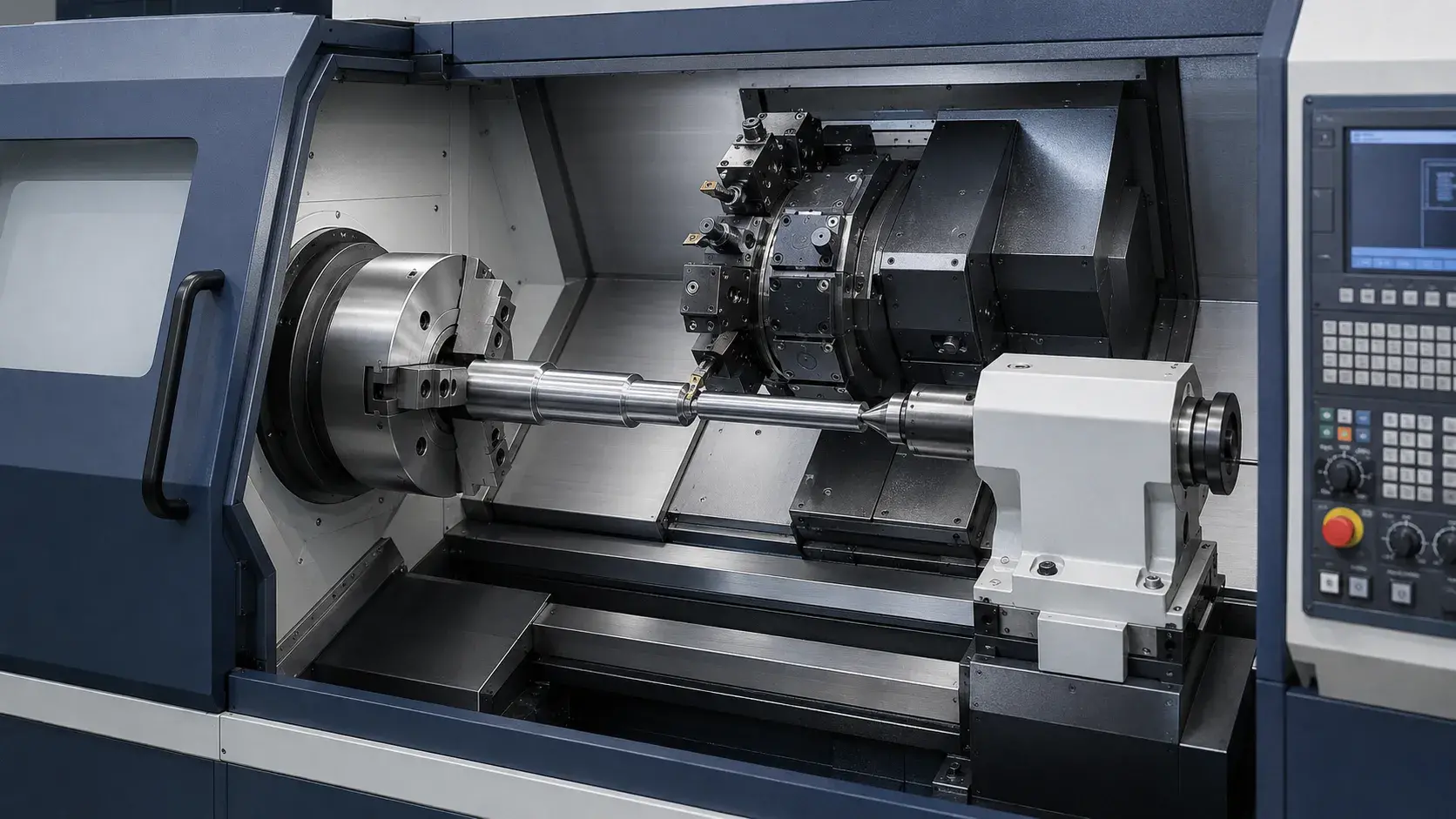
These additional functions allow one machine to complete more operations in a single setup. Besides turning operations, many CNC turning centers can also perform drilling, milling, tapping, and other secondary processes.
Why Do Specifications Matter?
The specifications of a CNC turning center are important because they define the machine’s actual manufacturing capability. A machine with limited turning capacity may not handle large components, while a machine without additional axes may struggle with complex geometries.
For example, a simple shaft may only require a standard two-axis turning center. However, a precision medical component with cross holes, milled surfaces, and tight tolerances may require a Y-axis or mill-turn machine to complete the part efficiently.
Understanding these specifications helps manufacturers and buyers select the right machining process instead of choosing based only on price or basic machine size.
What Are the Most Important CNC Turning Center Specifications?
The most important CNC turning center specifications include turning capacity, spindle performance, axis configuration, tooling capability, and accuracy. These factors determine the size of parts a machine can handle, the materials it can process, and the level of precision it can achieve.
Understanding these specifications helps engineers and buyers evaluate whether a CNC turning center is suitable for their specific components instead of focusing only on machine price or basic equipment size.
Maximum Turning Diameter and Length
Maximum turning diameter and length define the working envelope of a CNC turning center. They determine the largest part size the machine can physically hold and process.
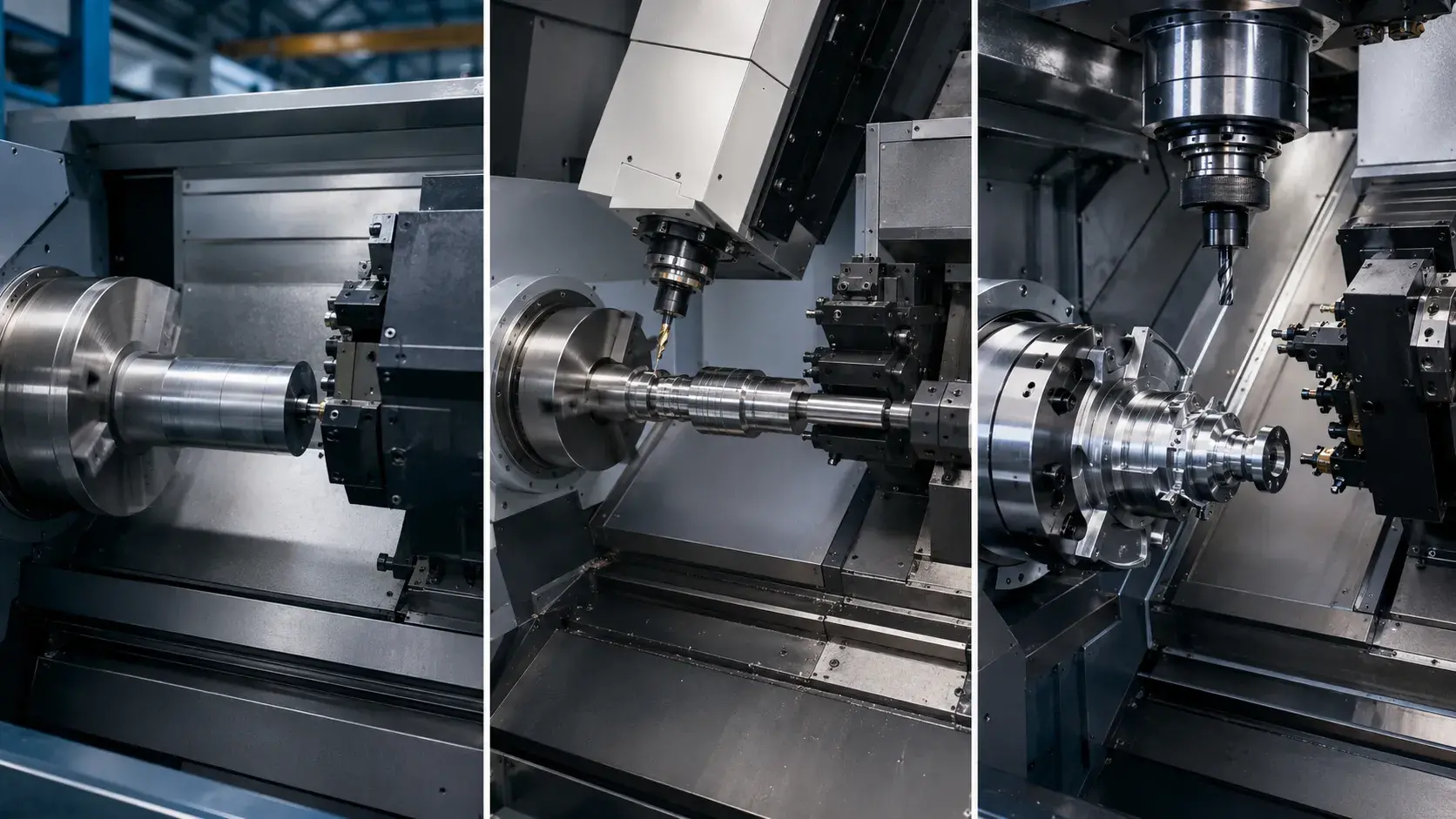
The turning diameter refers to the maximum diameter of the workpiece, while turning length defines the maximum machining distance along the Z-axis. These specifications are especially important when selecting a machine for shafts, housings, sleeves, and other cylindrical components.
| Specification | What It Means |
|---|---|
| Maximum Turning Diameter | The largest workpiece diameter the machine can process |
| Maximum Turning Length | The maximum part length that can be machined |
| Chuck Size | Determines workholding capability and part stability |
| Bar Capacity | Defines the maximum raw material diameter for automatic feeding |
Spindle Speed and Spindle Power
The spindle system directly affects cutting performance, machining efficiency, and surface quality.
Spindle speed controls how fast the workpiece rotates, while spindle power determines the cutting force the machine can handle. Higher speed is often beneficial for aluminum and brass, while materials such as stainless steel and titanium require stronger torque and machine rigidity.
| Specification | Impact on Machining |
|---|---|
| Spindle Speed (RPM) | Affects cutting efficiency and surface finish |
| Spindle Power | Determines cutting capability for harder materials |
| Spindle Torque | Supports heavy cutting operations |
Axis Configuration
Axis configuration determines the machining flexibility of a CNC turning center.
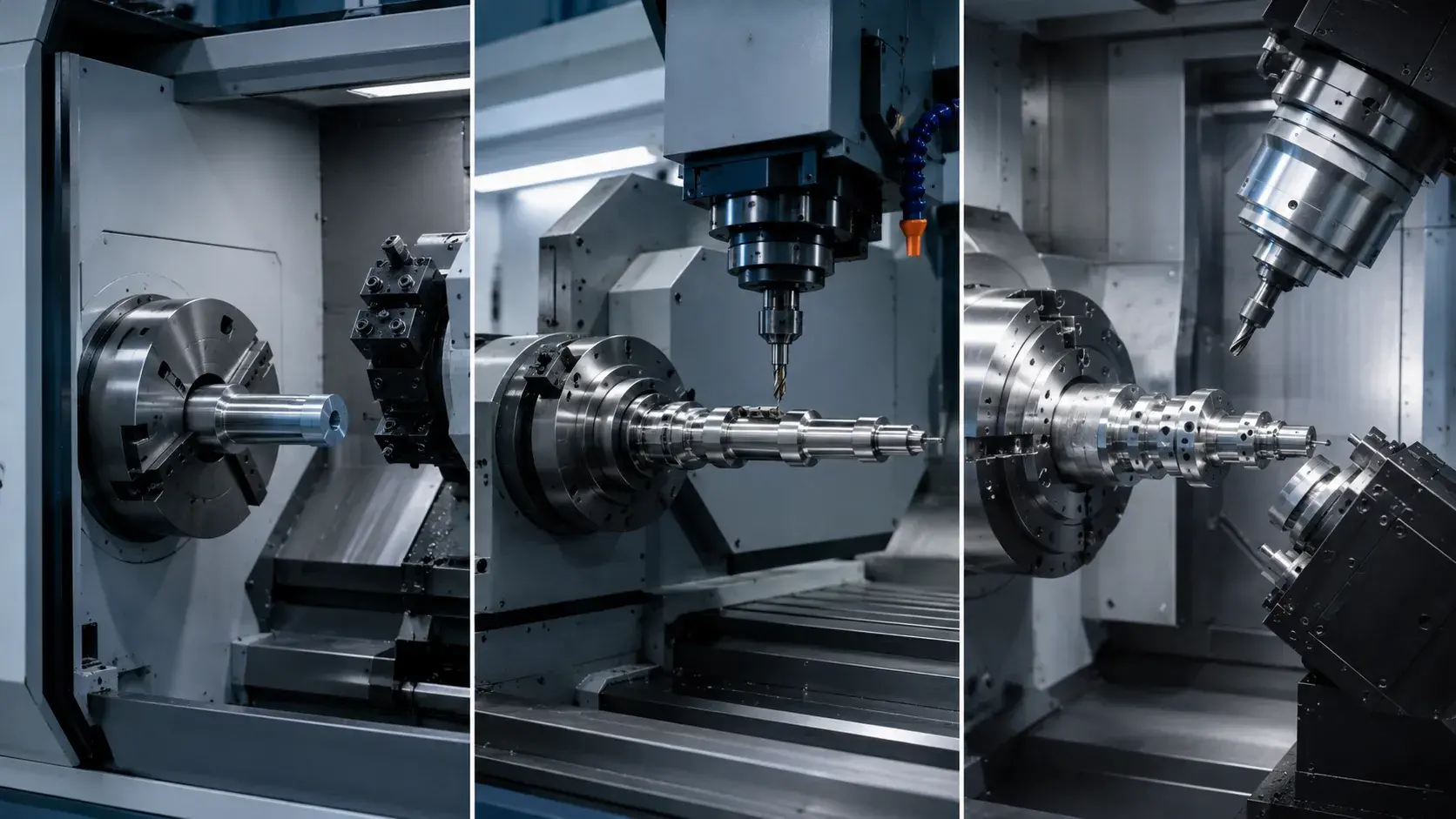
A basic two-axis turning center can complete standard turning operations, while advanced machines with Y-axis, C-axis, or mill-turn capability can perform additional milling and drilling operations in the same setup.
| Machine Configuration | Main Capability |
|---|---|
| 2-Axis CNC Turning Center | Suitable for standard turning operations such as facing, threading, and diameter machining |
| Y-Axis Turning Center | Allows off-center drilling, milling, and complex feature machining |
| Mill-Turn Center | Combines turning and milling for complex precision components |
Tool Turret and Live Tooling Capability
The tooling system affects how efficiently a CNC turning center can complete different machining operations.
A larger tool turret allows more cutting tools to be installed, reducing tool changes and improving production efficiency. Live tooling adds rotating cutting tools, allowing milling, drilling, and tapping operations directly on the turning center.
| Feature | Why It Matters |
|---|---|
| Number of Tool Stations | Determines how many tools can be loaded at one time |
| Live Tooling | Enables milling and drilling operations |
| Automatic Tool Change | Reduces machining interruptions |
CNC Turning Accuracy and Tolerance Capability
Machine specifications alone do not guarantee part accuracy. Final precision depends on the combination of machine rigidity, tooling condition, programming, process control, and inspection capability.
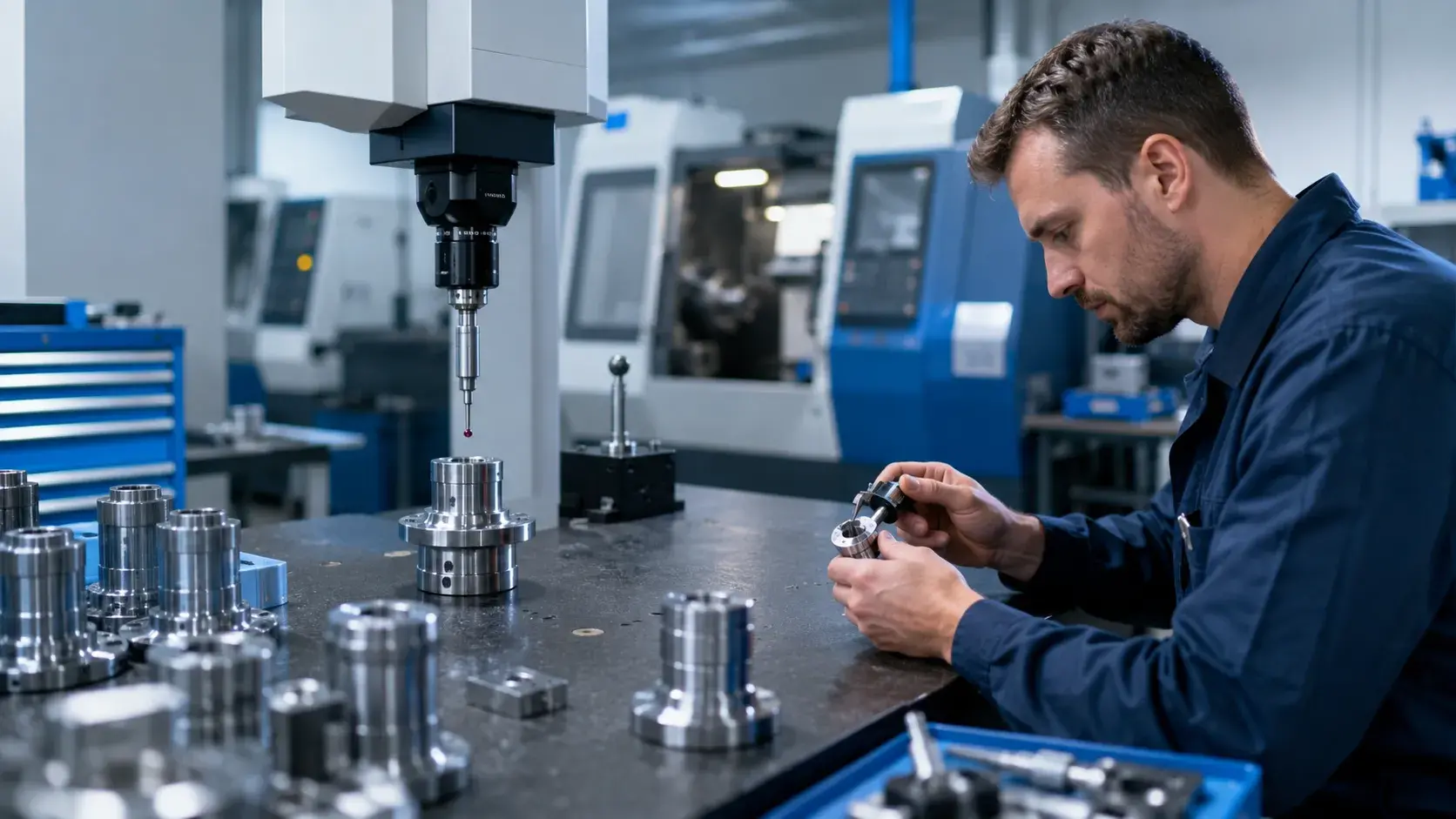
Important accuracy-related specifications include:

| Specification | Purpose |
|---|---|
| Positioning Accuracy | Measures how accurately the machine reaches programmed positions |
| Repeatability | Measures the ability to produce consistent results |
| Surface Finish Capability | Affects final appearance and functional performance |
Workholding and Automation Features
Workholding and automation features are often overlooked when evaluating CNC turning center specifications, but they have a direct impact on machining stability, production efficiency, and consistency.
The workholding system keeps the part securely positioned during cutting. Common solutions include hydraulic chucks, collet systems, and custom fixtures. A stable workholding setup helps reduce vibration and improves dimensional accuracy, especially when machining long or thin components.
Automation features, such as bar feeders, robotic loading systems, and automatic measurement devices, are important for high-volume production. They reduce manual handling and allow more consistent machining results.
| Feature | Why It Matters |
|---|---|
| Hydraulic Chuck | Provides stable clamping force for reliable machining |
| Collet Chuck | Suitable for small precision parts and bar machining |
| Bar Feeder | Enables continuous production from raw bar materials |
| Automatic Measurement | Helps maintain consistent dimensions during production |
How Do CNC Turning Center Specifications Affect Manufacturing Capability?
CNC turning center specifications are not just machine data. They directly influence whether a supplier can manufacture a specific part efficiently and consistently.
A machine with larger capacity may handle bigger components, but complex parts may require additional capabilities such as Y-axis movement, live tooling, or mill-turn functions. Similarly, high spindle power is useful for difficult materials, while precision components depend more on machine stability, tooling, and inspection processes.
The right combination of specifications helps determine:
- What materials can be machined
- What part geometries are possible
- How many setups are required
- How stable the production process will be
- Whether the required tolerance can be achieved
CNC Turning Center vs CNC Lathe: What Is the Difference?
Although the terms CNC turning center and CNC lathe are sometimes used interchangeably, they usually refer to machines with different levels of capability.
A CNC lathe is mainly designed for turning operations, while a CNC turning center typically includes additional functions that allow more complex machining.
| Feature | CNC Lathe | CNC Turning Center |
|---|---|---|
| Main Function | Basic turning operations | Turning plus additional machining processes |
| Axis Capability | Usually 2-axis | Can include Y-axis, C-axis, and additional axes |
| Tooling | Standard turning tools | Advanced tooling and live tools |
| Part Complexity | Suitable for simpler cylindrical parts | Suitable for complex precision components |
For simple shafts or bushings, a CNC lathe may be completely sufficient. However, when a part requires milling features, angled holes, or multiple machining operations, a CNC turning center can provide better efficiency.
The choice depends on the part requirements rather than whether one machine type is always better than another.
What Should You Look for When Choosing a CNC Turning Supplier?
Choosing a CNC turning supplier requires more than checking whether they own advanced machines. Machine specifications are important, but they only represent potential capability. The actual quality of your parts depends on how well the supplier combines equipment, engineering experience, process control, and inspection systems.
A supplier with advanced CNC turning centers but limited experience with your material or part requirements may still struggle to achieve consistent results. On the other hand, an experienced manufacturer can often optimize tooling, machining strategies, and production processes to improve efficiency and reliability.
When evaluating a CNC turning supplier, consider the following factors:
| Factor | Why It Matters |
|---|---|
| Machine Capability | Ensures the supplier can handle your part size, complexity, and material requirements |
| Material Experience | Helps avoid machining issues with materials such as stainless steel, titanium, and aluminum |
| Quality Inspection | Ensures finished parts meet dimensional and tolerance requirements |
| Engineering Support | Provides process optimization and manufacturability recommendations |
| Production Experience | Improves consistency during prototype and production stages |
For precision CNC turning projects, it is important to look at the complete manufacturing process. A reliable supplier should be able to support your project from design review and material selection to machining, inspection, and delivery.
At YUANYI, our CNC turning capabilities include precision turning, Swiss-type machining, and mill-turn operations for complex components. We also provide 5-axis CNC machining services for parts with complex geometries, tight tolerances, and multi-surface machining requirements.
From precision prototypes to low-volume production, YUANYI provides CNC turning solutions with advanced equipment, experienced engineers, and strict quality control. Share your part drawings and requirements, and our team will help evaluate the best machining solution.
Request a QuoteConclusion
Important factors such as turning capacity, spindle performance, axis configuration, tooling capability, and accuracy all influence what parts a machine can produce and how efficiently they can be manufactured.
However, machine specifications are only one part of successful CNC machining. A capable supplier also needs strong process knowledge, quality control systems, and experience working with different materials and applications.
By evaluating both equipment capability and manufacturing expertise, companies can choose a CNC turning partner that delivers consistent quality, shorter development cycles, and reliable long-term production support.
Frequently Asked Questions About CNC Turning Center Specifications
A CNC turning center specification sheet usually includes information about machining capacity, spindle performance, axis movement, tooling system, and accuracy.
When reviewing specifications, focus on the parameters related to your part requirements. For example, check turning diameter and length for part size, spindle power for material capability, and axis configuration for machining complexity.
Not necessarily. A larger machine can handle bigger components, but machining performance also depends on rigidity, tooling setup, programming strategy, and process control.
For small precision parts, an oversized machine may not provide additional benefits and could reduce efficiency due to higher setup requirements.
Yes. CNC turning centers are widely used for prototypes, small-batch production, and mass production.
For prototype and low-volume projects, advanced turning centers with live tooling or mill-turn capability can reduce the need for multiple machines and shorten development time.
Machine specifications only describe the equipment’s potential capability. Actual machining results also depend on factors such as operator experience, tooling selection, fixture design, programming quality, and inspection methods.
Yes. Machine capability can directly influence production cost by affecting setup time, cycle time, tooling requirements, and the number of machining operations needed.



