

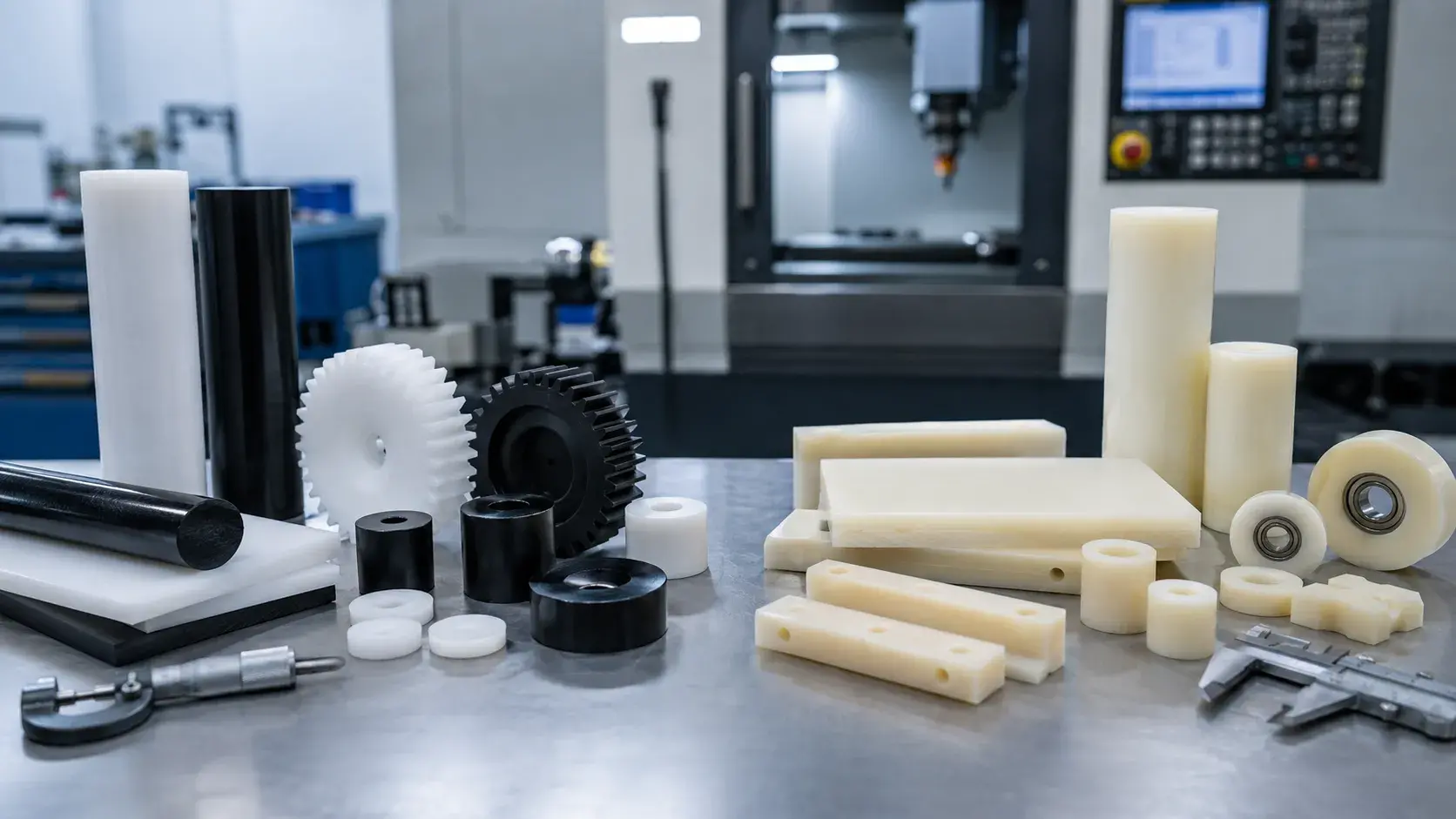
Delrin and nylon are both strong engineering plastics, but they are better suited to different jobs. Delrin is usually the better choice when you need high dimensional stability, low moisture absorption, low friction, and easier precision machining. Nylon is often preferred when toughness, impact resistance, and abrasion resistance matter more.
For CNC machined parts such as gears, bushings, rollers, spacers, and mechanical components, the right choice depends on how the part will be loaded, where it will be used, and how tightly its dimensions need to be controlled.
This guide compares Delrin vs nylon in practical terms so you can choose the material that better fits your part.
What Is Delrin?
Delrin is a brand name for a type of acetal plastic, also known as POM, or polyoxymethylene.
It is a hard, stiff engineering plastic known for low friction, good wear resistance, and excellent dimensional stability. Delrin also absorbs very little moisture, so its size and shape remain relatively stable in humid or wet environments.
These properties make Delrin common in precision parts such as gears, bearings, rollers, valve components, mechanical housings, and CNC machined components.
One point worth clarifying is that Delrin and acetal are not exactly the same thing. Delrin is a specific POM homopolymer material, while acetal is a broader material family that also includes POM copolymers.
For most buyers, the important point is simple: Delrin is commonly chosen when a plastic part needs to stay stiff, slide smoothly, and hold accurate dimensions.
What Is Nylon?
Nylon is a family of engineering plastics known for its toughness, strength, and excellent wear resistance.
Unlike Delrin, nylon is slightly more flexible and can absorb impact and repeated mechanical loads well. This makes it useful for parts such as gears, bushings, rollers, wear pads, pulleys, guides, and structural components.
Common grades include Nylon 6, Nylon 6/6, and Nylon 12. Their properties are not identical, especially when it comes to moisture absorption, strength, and temperature resistance.
One of the main characteristics of nylon is that it absorbs moisture from the surrounding environment. This can make the material tougher, but it can also cause small dimensional changes.
For general mechanical parts, this may not be a problem. For tight-tolerance components, however, moisture absorption needs to be considered during material selection and machining.
Delrin vs Nylon: Quick Comparison
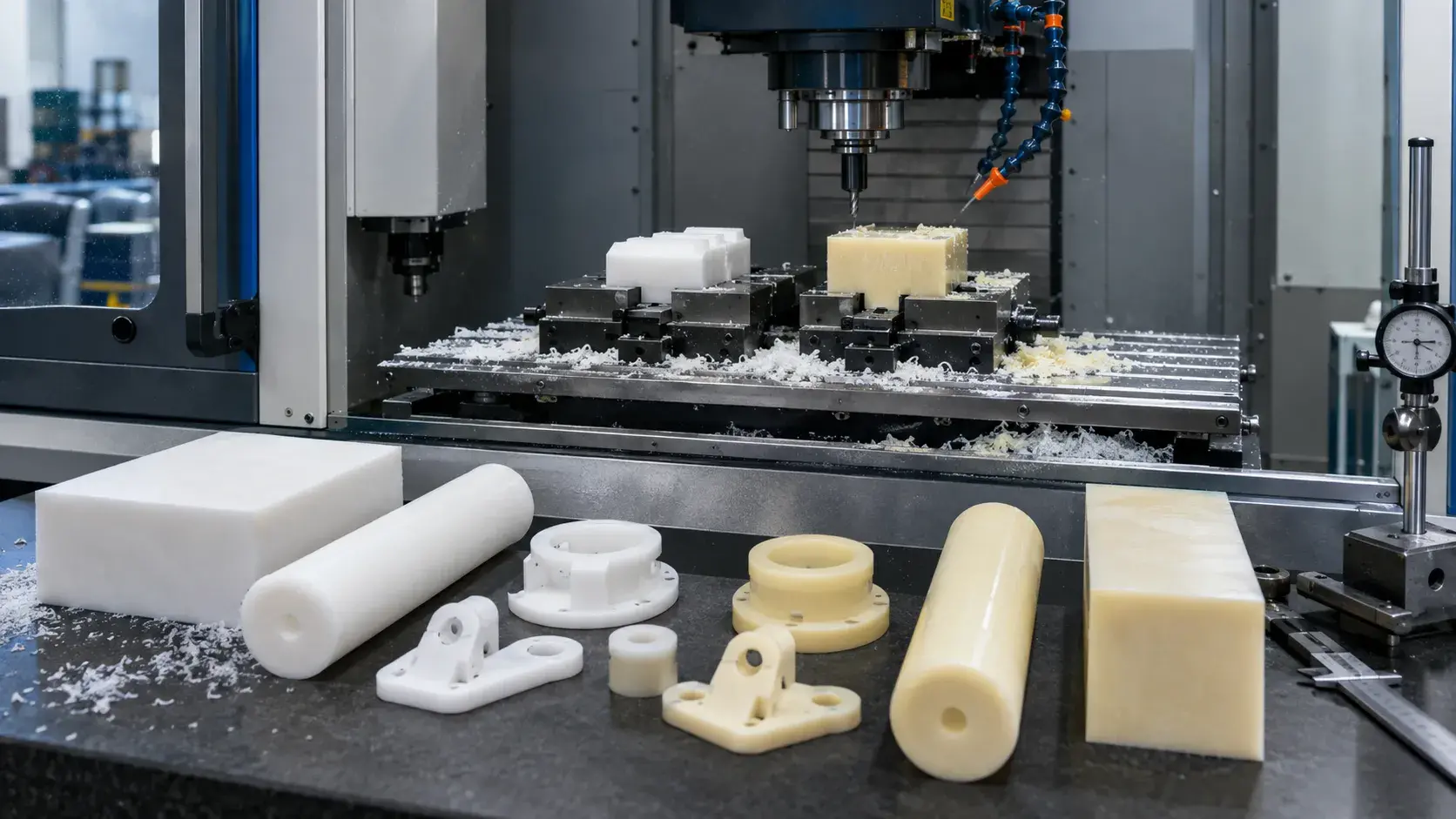
The main difference between Delrin and nylon comes down to dimensional stability versus toughness.
| Property | Delrin | Nylon |
|---|---|---|
| Stiffness | Higher | Moderate to high |
| Toughness | Good | Excellent |
| Impact resistance | Moderate | Higher |
| Moisture absorption | Very low | Higher |
| Dimensional stability | Excellent | Moderate |
| Wear resistance | Excellent | Excellent |
| Friction | Very low | Low |
| CNC machinability | Excellent | Good |
| Tight tolerance control | Easier | More challenging |
| Humid environment | Better | Depends on grade |
If your part needs to maintain accurate dimensions, slide smoothly, or be machined to tight tolerances, Delrin is often the safer choice.
If the part needs to handle impact, bending, vibration, or repeated mechanical stress, nylon may perform better.Key Differences Between Delrin and Nylon
1. Strength and Stiffness
Both materials are strong enough for many mechanical parts, but they behave differently under load.
Delrin is generally stiffer, so it resists bending and keeps its shape well. This is useful for precision gears, spacers, housings, and other parts where dimensional accuracy matters.
Nylon is tougher and more flexible. It can absorb more impact without cracking, which makes it a better choice for parts exposed to shock, vibration, or repeated loading.
In simple terms, choose Delrin when you need rigidity. Choose nylon when you need toughness.
2. Moisture Absorption
This is one of the biggest differences in the Delrin vs nylon comparison.
Delrin absorbs very little moisture, so its dimensions remain relatively stable in humid or wet conditions.
Nylon absorbs much more moisture from the air and surrounding environment. As it absorbs water, the material can expand slightly and its mechanical properties may also change.
For general parts, this may not matter much. But for tight-tolerance components, bearings, or precision-fit parts, Delrin is usually easier to control.
3. Dimensional Stability
Because Delrin has low moisture absorption and good rigidity, it offers excellent dimensional stability.
This makes it suitable for CNC machined parts that need consistent dimensions after machining and during use.
Nylon can also be machined accurately, but changes in humidity, temperature, and internal stress may cause more dimensional movement.
For parts with close fits or tight tolerances, Delrin normally has an advantage.
4. Wear and Abrasion Resistance
Both Delrin and nylon have good wear resistance and are widely used for moving mechanical parts.
Delrin performs especially well in low-friction sliding applications such as gears, rollers, and bushings.
Nylon also has excellent abrasion resistance and often performs well in parts that experience repeated rubbing or contact with rough surfaces.
The better choice depends on the application. Delrin is often preferred for smooth, precise motion, while nylon is useful where toughness and heavy wear are more important.
5. Friction
Delrin has a naturally low coefficient of friction, allowing parts to move smoothly with limited lubrication.
This is one reason it is commonly used for plastic gears, bearings, sliders, and guide components.
Nylon also has relatively low friction, but it may generate more resistance depending on the grade, surface condition, and moisture level.
If low friction and smooth movement are key requirements, Delrin is usually the better option.
6. Impact Resistance
Nylon generally performs better when a part needs to absorb impact.
Its greater flexibility allows it to deform slightly under sudden loads instead of cracking immediately.
Delrin is still a tough engineering plastic, but it is more rigid and usually less forgiving under heavy impact.
For clips, wear components, structural parts, or components exposed to repeated shock, nylon may be the safer choice.
7. Temperature Resistance
Both materials can handle moderate operating temperatures, but performance depends heavily on the specific grade.
Some nylon grades can maintain useful mechanical strength at higher temperatures, while Delrin offers good stability across many normal mechanical applications.
For parts operating near their temperature limits, material selection should be based on the exact grade rather than comparing only “Delrin” and “nylon” in general.
8. Chemical Resistance
Delrin provides good resistance to many fuels, solvents, oils, and common industrial chemicals.
Nylon also offers good chemical resistance, especially against oils, greases, and hydrocarbons.
However, neither material is resistant to every chemical. Strong acids, oxidizing agents, or certain solvents may cause degradation depending on the grade and exposure conditions.
If chemical exposure is important, the exact fluid, temperature, and exposure time should be checked before choosing the material.
Delrin or Nylon: Which Should You Choose?
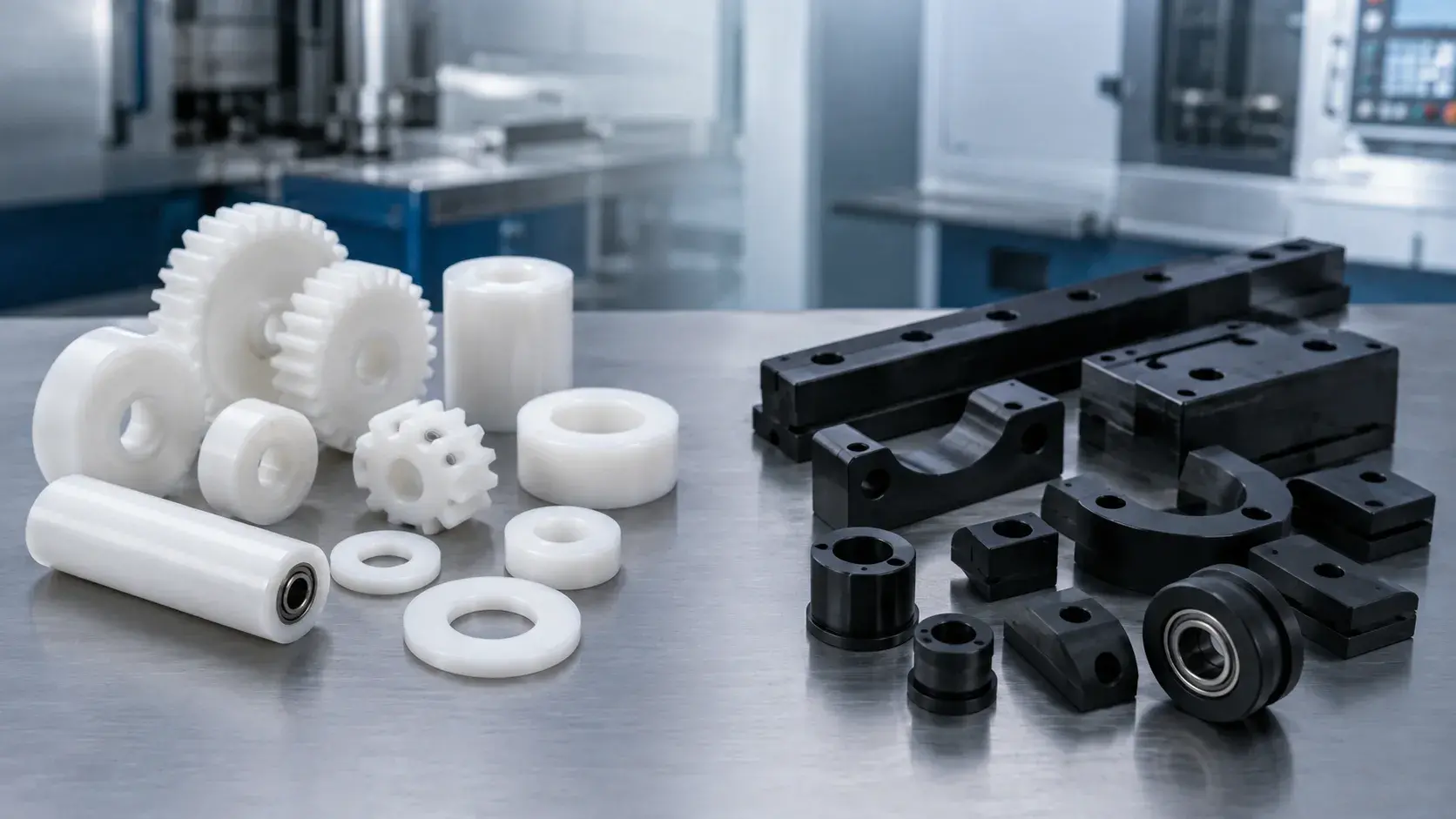
Choosing between Delrin and nylon is easier when you focus on the part’s actual working conditions instead of looking at one property alone.
Choose Delrin if your part needs:
- high dimensional stability;
- low moisture absorption;
- low friction;
- good stiffness;
- tight machining tolerances;
- smooth movement with limited lubrication.
Delrin is often a good fit for precision gears, bushings, spacers, rollers, valve parts, and other CNC machined components where size and fit need to remain consistent.
Choose nylon if your part needs:
- higher toughness;
- better impact resistance;
- good abrasion resistance;
- some flexibility;
- resistance to repeated mechanical loading.
Nylon is often better for wear pads, guides, rollers, structural parts, and components that may experience shock, vibration, or rough use.
If your application is humid or involves close-fitting parts, Delrin usually has an advantage because it absorbs less moisture. If the part is more likely to be hit, flexed, or heavily worn, nylon may be the better choice.
Delrin vs Nylon Cost
There is no single answer to whether Delrin or nylon is cheaper.
Price depends on the material grade, sheet or rod size, supplier, order quantity, and whether the material contains fillers or other additives.
In many cases, standard nylon can be less expensive than Delrin. However, material price alone should not decide the final choice.
A cheaper material can become more expensive if it causes machining problems, dimensional changes, premature wear, or part failure.
For CNC machined parts, it is usually better to compare the total part cost, including material, machining time, scrap risk, and expected service life.
Delrin vs Nylon: Final Comparison
If you are still unsure, the decision can usually be simplified like this:
Choose Delrin for precision and stability. Choose nylon for toughness and impact resistance.
Delrin performs especially well when a part needs low friction, accurate dimensions, and consistent machining results. Nylon performs well when the part needs to handle wear, shock, or repeated mechanical stress.
Neither material is better in every situation. The right choice depends on the part geometry, tolerance, load, temperature, moisture exposure, and operating environment.
CNC Machining Delrin and Nylon Parts
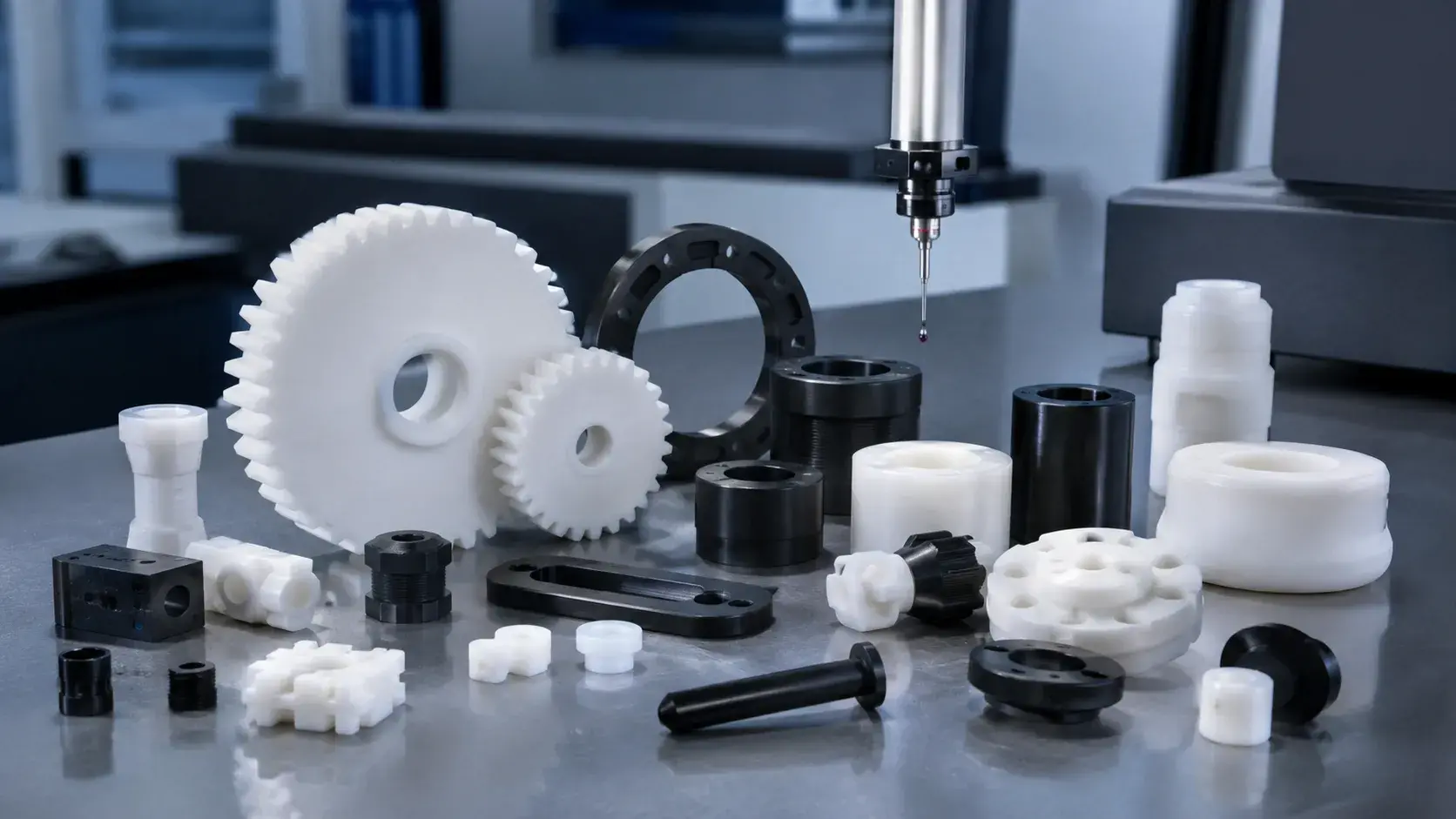
Delrin and nylon are both widely used for custom CNC machined plastic parts.
YUANYI provides CNC milling and turning for engineering plastics including Delrin, POM, Nylon 6, Nylon 6/6, and other plastic materials.
For tight-tolerance parts, material behavior should be considered before machining, especially for nylon components that may be affected by heat or moisture.
If you have a drawing but are unsure whether Delrin or nylon is the better choice, material selection can be reviewed together with the machining requirements before production.
Conclusion
The main difference between Delrin vs nylon is how each material balances precision and toughness.
Delrin is usually the better choice for parts that need to stay rigid, maintain accurate dimensions, and move with low friction. Nylon is often better when impact resistance, abrasion resistance, and toughness are more important.
For CNC machined parts, the final material choice should also consider tolerance, moisture, temperature, loading, and the part’s actual working environment.
Need Help Choosing Delrin or Nylon?
Not sure which material is right for your part? Send us your drawing and requirements.
YUANYI can help review the material, tolerance, part structure, and application before machining. We provide custom Delrin and nylon CNC machining for prototypes and production parts.
Frequently Asked Questions
Not exactly. Delrin is a specific brand of acetal homopolymer, while acetal is the broader material family that includes both homopolymer and copolymer POM materials.
Some Delrin and acetal grades are available for food-contact applications, but not every grade is automatically food safe. Always check the material certification and applicable food-contact requirements before use.
Both can be used outdoors, but standard grades may degrade under long-term UV exposure. UV-stabilized grades are a better choice for parts exposed to sunlight for extended periods.
Yes. Both materials can be machined with internal or external threads. Delrin generally holds fine thread details well, while nylon may require more care because it is more flexible.
Both materials can be difficult to bond compared with many other plastics. Surface preparation and specialized adhesives may be required, especially for Delrin because of its low surface energy.
Delrin is not commonly joined by conventional plastic welding methods. Mechanical fastening, press fits, or specialized joining methods are usually more practical.



