
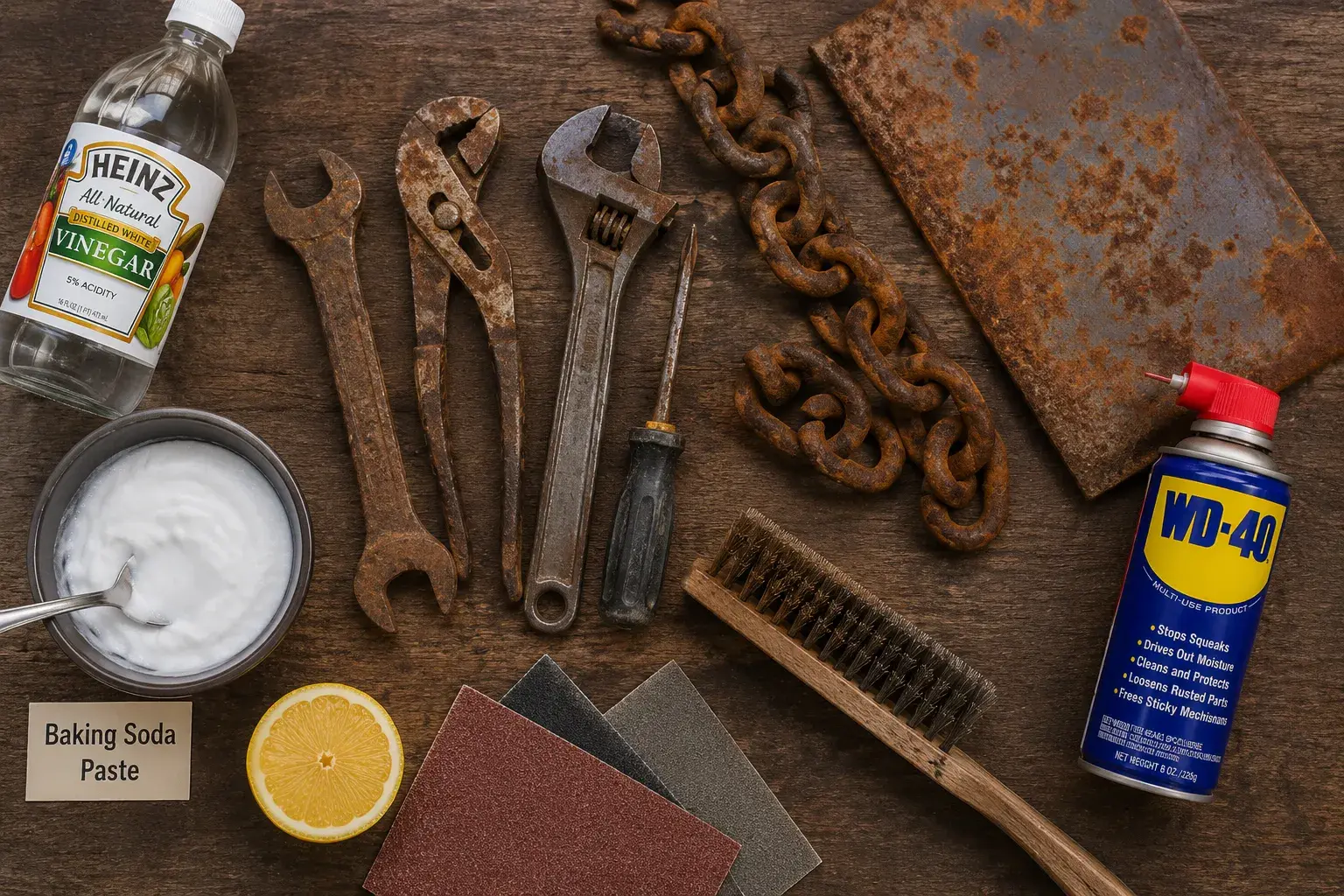
Rust can be found in many places, such as kitchen knives, gardening tools, car parts, and industrial equipment, and it can affect all of these items.The method used to remove rust depends on how severe the rust is and what the metal part will be used for.
This guide provides a wide range of practical solutions, ranging from simple home remedies like vinegar and baking soda, to more mechanical and chemical approaches for dealing with moderate rust, and even professional techniques such as sandblasting and electrolysis.Whether you’re a do-it-yourself person or involved in industrial maintenance, you’ll find a suitable method here and learn how to prevent rust from coming back.
What Causes Rust on Metal
Rust forms when iron or steel is exposed to oxygen and moisture.This chemical reaction creates iron oxide, which weakens the metal.Salt, humidity, and acid can make this process happen faster.

Items like outdoor tools, car components, and uncoated steel are especially prone to rust.Surface rust begins as a thin orange layer.If left unchecked, it can develop into deep scaling or pitting.
The severity of rust determines which method to use.
Light discoloration can be handled at home, while heavy corrosion that changes the shape of the metal usually requires industrial equipment.
Catching rust early makes repairs easier.
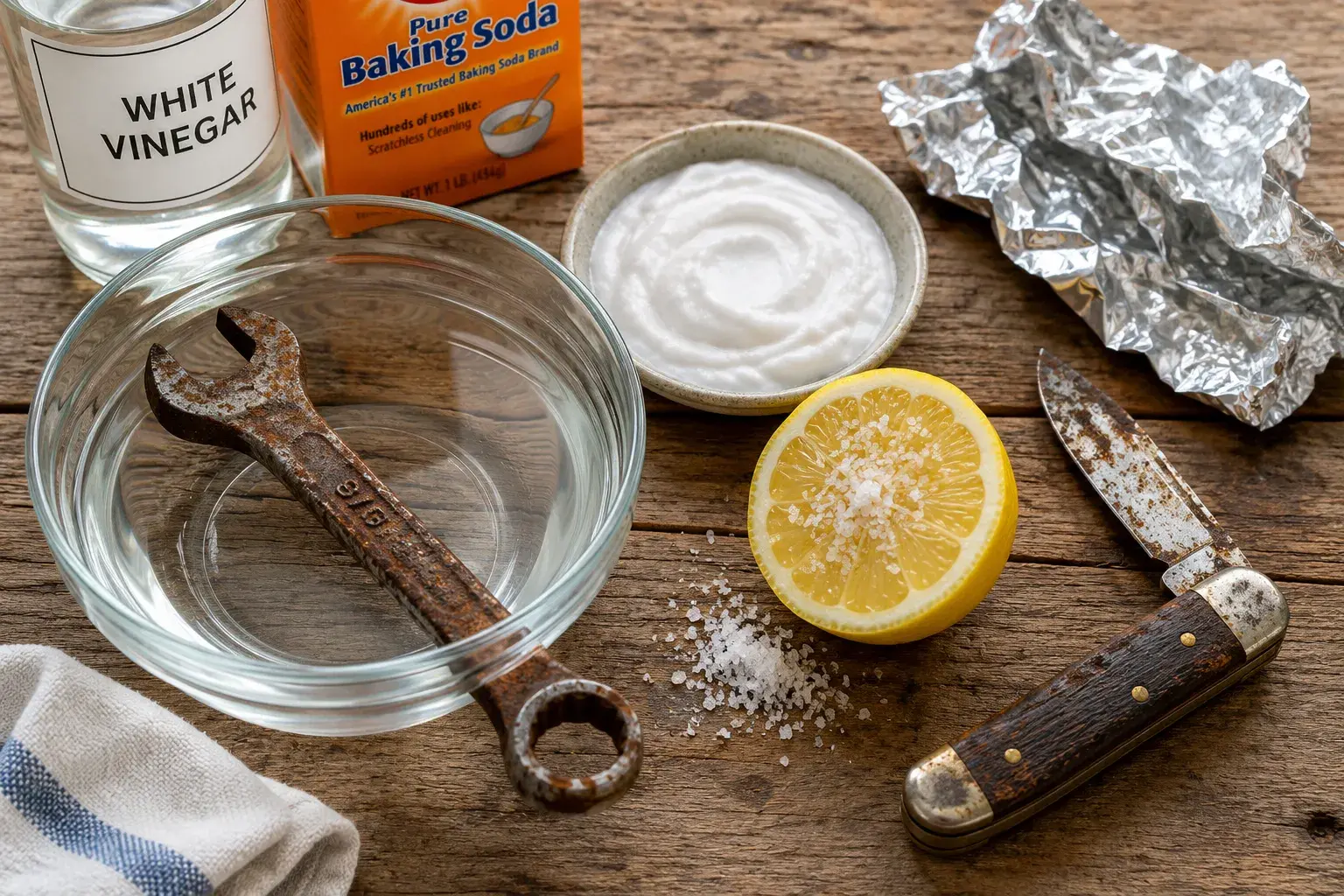
How to remove rust from metal at home

White Vinegar Method
Place small rusty items in white vinegar.
Let them soak for two to four hours, or overnight for tougher spots.
The acetic acid in vinegar helps dissolve the rust.
For larger pieces, soak a cloth in vinegar and wrap the rusty area.
Scrub with a stiff brush, rinse with water, and dry thoroughly.
This method works well on hand tools, hinges, and small hardware.
Baking Soda Paste
Mix baking soda with a little water to form a thick paste.
Apply it to the rusted surface and leave it for an hour or two.
The paste gently lifts the rust without damaging the base metal.
Use a toothbrush or scouring pad to scrub it off, then rinse and dry.
This method is effective for kitchen knives, decorative items, or thin metal parts where gentleness is needed.
Lemon and Salt Method
Sprinkle salt on the rust spot, then add fresh lemon juice.
The citric acid in the lemon reacts with the rust, while the salt acts as a mild abrasive.
Let it sit for about two hours, then scrub and rinse the area thoroughly.
This combination works best on flat surfaces like blades, brackets, or small steel plates.
Aluminum Foil Scrubbing
Crinkle a piece of aluminum foil and dip it in water or a small amount of vinegar.
Rub the rusty area in a circular motion.
The foil is harder than rust but softer than steel, so it removes oxidation without causing deep scratches.
This trick is especially useful for chrome-plated parts, bicycle rims, or tool handles where maintaining the original finish is important.
How to Remove Moderate Rust Using Tools and Chemicals
When rust has built up but hasn’t severely damaged the metal, it’s time to use manual tools or chemical removers.
Sandpaper and Wire Brush
For rust that feels rough, start with coarse sandpaper (80–120 grit) and gradually move to finer grits (220–400) to smooth the surface.
A wire brush, either handheld or attached to a drill, can quickly remove flaking rust and old paint.
Use sandpaper for flat areas and a wire brush for irregular shapes, threads, or corners.
Always wear gloves and eye protection when doing this.
Commercial Rust Removers
Phosphoric acid-based gels or sprays convert rust into a water-soluble compound.
Apply the product, wait the recommended time, then scrub and rinse the surface.
These removers are effective in hard-to-reach areas like around bolts, joints, or stamped metal parts.
Follow the manufacturer’s safety instructions and ensure good ventilation.
WD-40 Treatment
WD-40 isn’t a chemical rust remover, but it can loosen light to moderate rust and protect bare metal after cleaning.
Spray it onto the surface, let it sit for a few minutes, then scrub with a wire brush or fine steel wool.
Wipe away any residue and apply a new protective layer.
It’s a quick fix for tools, hinges, and moving parts that need both cleaning and lubrication.
How to remove paint and rust from metal
When rust is deep, widespread, or has affected the metal’s dimensions, industrial methods are necessary for reliable results.
Sandblasting (Abrasive Blasting)
Sandblasting uses high-pressure abrasive media to strip rust, paint, and scale from the surface, leaving it bare.
It’s the fastest way to clean large structures, tank exteriors, and machinery frames.
The process leaves a slightly rough surface, which is ideal for painting or powder coating.
It requires compressed air and containment, making it best suited for workshops or on-site blasting crews.
Acid Pickling
Acid pickling immerses parts in heated acid, often sulfuric or hydrochloric acid, to dissolve rust and mill scale.
It is suitable for small to medium-sized batches, such as fasteners, brackets, and stampings.
Metal fabrication shops use this method for consistent, hands-free cleaning.
It requires strict safety measures and proper wastewater treatment.
Electrolysis Cleaning
Electrolysis uses a low-voltage electric current, an electrolyte solution, and a sacrificial anode to remove rust.
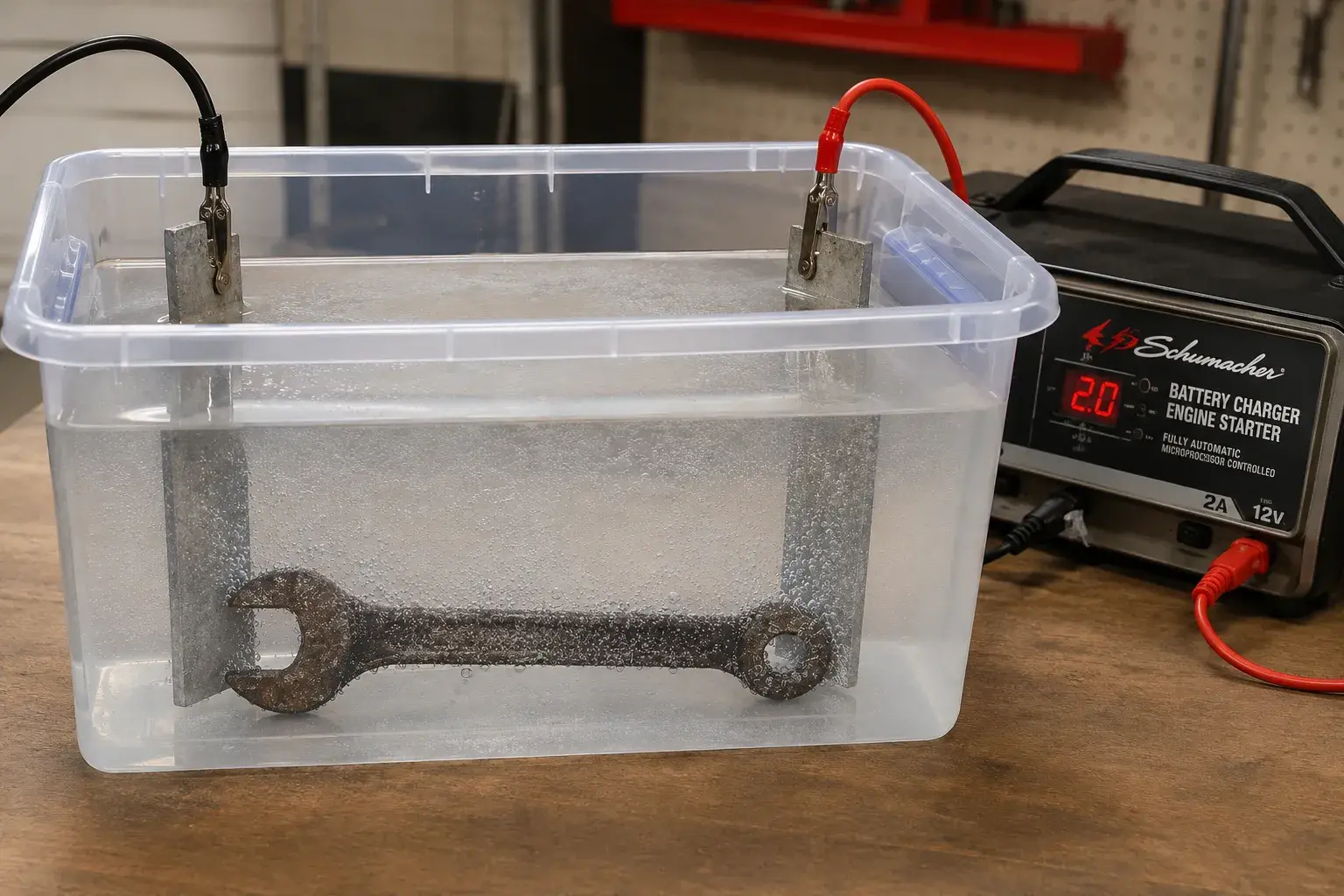
The rust is drawn to the anode while the base metal remains intact.
This method is ideal for precision parts, threaded components, or historical restorations where material loss must be avoided.
It is slower but extremely gentle and accurate.
Mechanical Grinding and Machining Removal
When rust has caused heavy pitting or surface damage, mechanical grinding with angle grinders or machining off a thin layer restores the metal’s dimensions.
This method is used for pump housings, flanges, and seal surfaces that must meet tight tolerances.
It is a last resort before scrapping, and skilled operators are needed to avoid removing too much material.
How to Prevent Rust on Metal
Prevention is the most cost-effective way to manage rust.Choose methods that match the type of metal and its environment.

Anodizing
Anodizing is an electrochemical process for aluminum that creates a thick, hard oxide layer.
This layer resists corrosion and wear.
It is commonly used in architectural profiles, electronic housings, and consumer goods where lightweight metal needs long-term protection.
Powder Coating
Powder coating involves applying a dry powder that is cured with heat to create a tough, even finish.
It seals steel and iron against moisture and impact.
You’ll often see this on outdoor furniture, automotive frames, and industrial equipment.
It outperforms wet paint in terms of chip resistance and durability.
Galvanizing
Hot-dip galvanizing involves dipping steel into molten zinc to form a protective coating.
If the coating is scratched, the zinc corrodes instead of the steel, offering continued protection.
It is standard for structural beams, guardrails, and fasteners used outdoors or underground.
Passivation
Passivation treats stainless steel with a mild acid bath to remove free iron and enhance the natural chromium oxide layer.
This restores the metal’s self-protecting properties after machining or welding.
It is used in food processing equipment, medical devices, and marine hardware to prevent rust spots.
DIY vs Industrial Rust Removal: How to Choose
The right method depends on the severity of rust, the function of the part, and the consequences of failure.
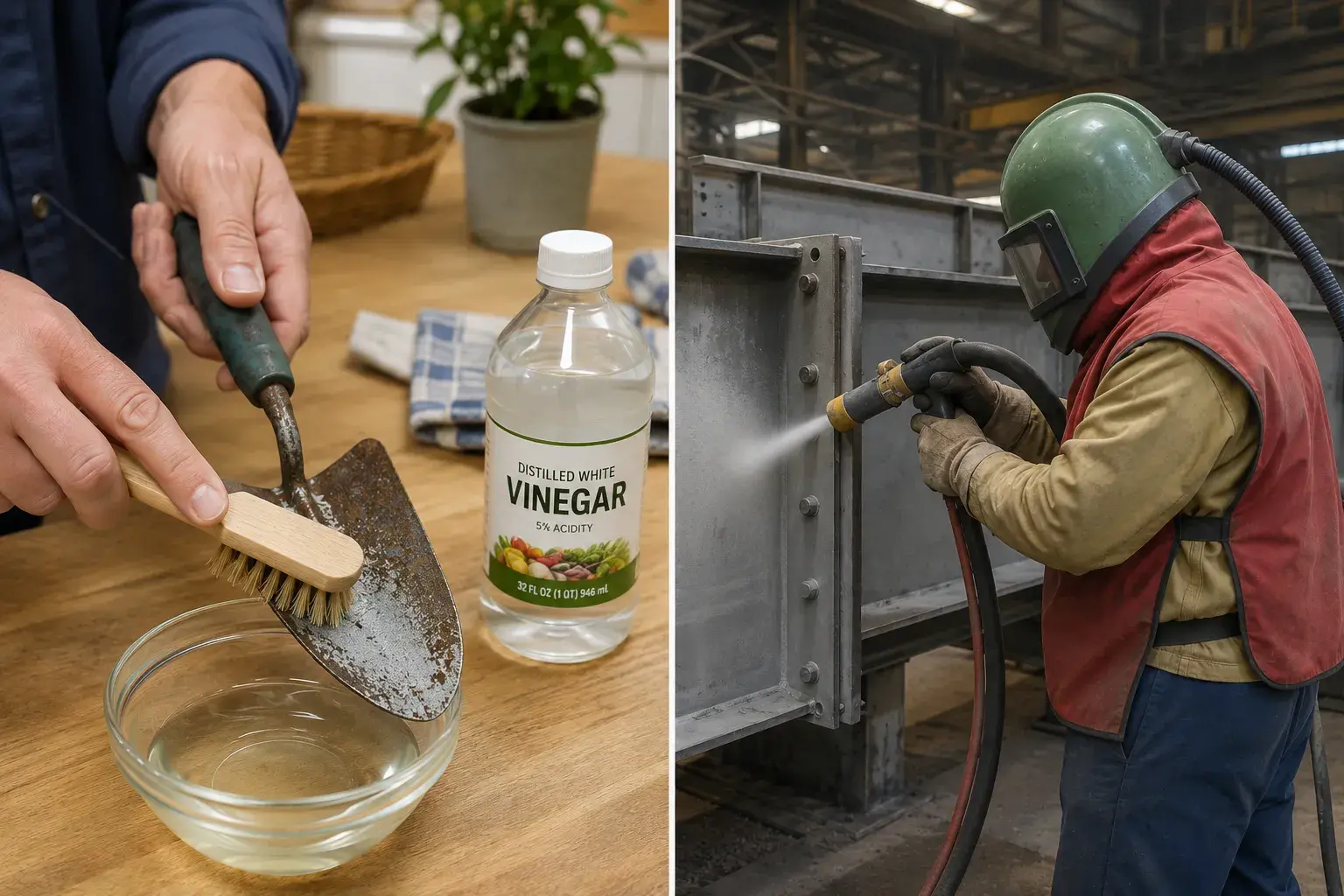
Light, even rust on non-critical items can often be removed with vinegar, baking soda, or light sanding.
Moderate rust on tools or car parts typically responds to wire brushing and a commercial remover.
When rust is deep, widespread, or affects structural steel, industrial methods save time and provide consistent results.
If the part has tight tolerances, such as threads, bearing seats, or sealing faces, DIY methods can risk changing dimensions.
In such cases, electrolysis or controlled machining is safer.
Think about what happens if the repair fails.
A rusty garden trowel may not be a big risk, but a rusty hitch pin or machine shaft could be dangerous.
When Rust Problems Require Engineering Solutions
Sometimes, rust isn’t just a cleaning issue.If the metal has lost significant thickness, its load-bearing capacity may be compromised.In pressure vessels, pipelines, or lifting equipment, corrosion can create safety hazards.
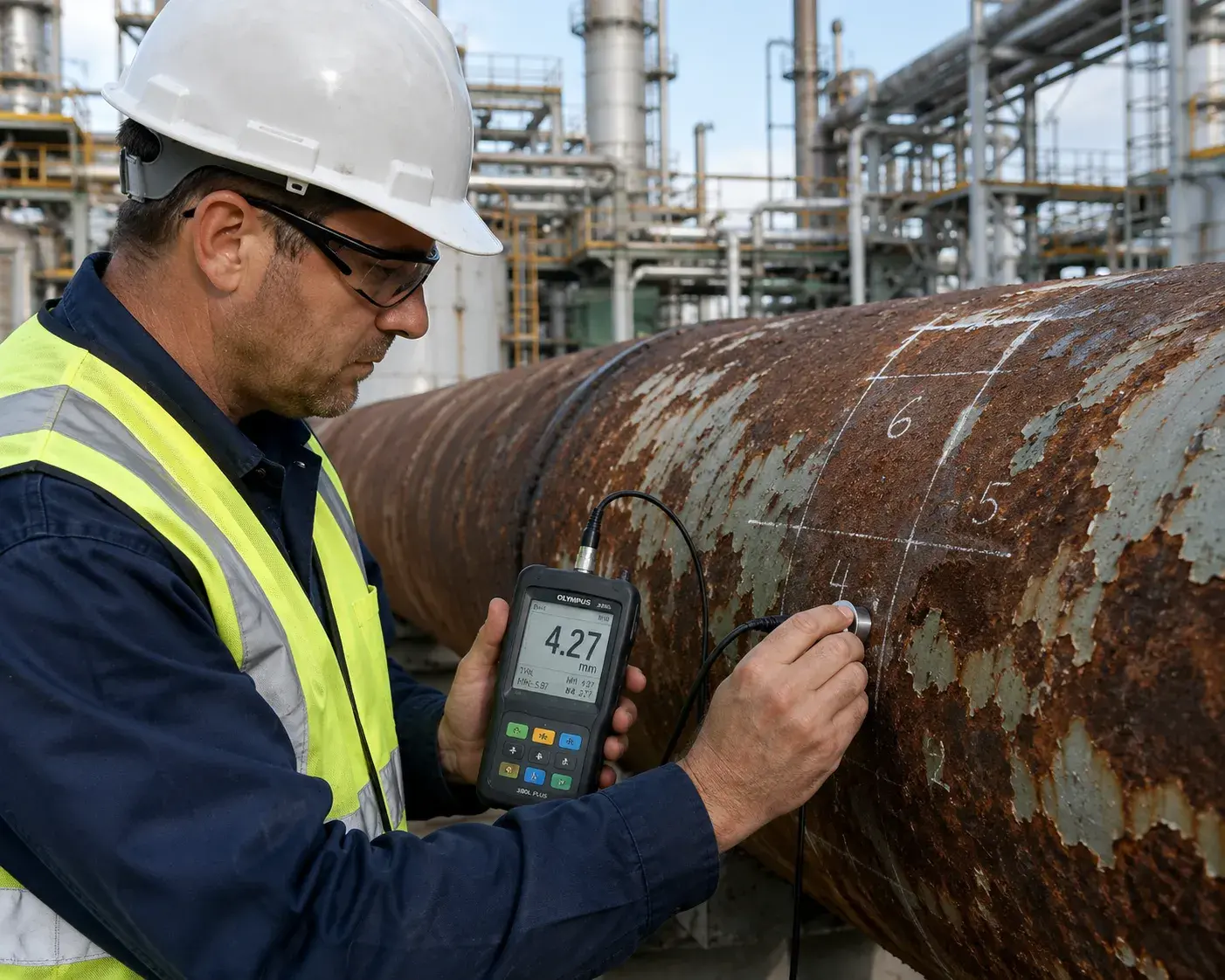
Nondestructive testing and engineering assessments become necessary.
Repeated rust on the same component often points to material selection issues or inadequate surface treatment.
In these cases, switching to a more corrosion-resistant alloy or upgrading the coating system—such as with passivation, hot-dip galvanizing, or specialist paint systems—breaks the rust cycle.
Don’t keep treating symptoms when the root cause is an environmental or material mismatch.

Conclusion
Light rust can be easily removed with household items.
Moderate rust usually requires tools or chemical removers.
Deep or structural rust calls for industrial methods and, at times, expert judgment.
No matter which method fits your situation, pairing it with the right prevention—from a simple oil wipe to a full coating system—stops rust from returning and extends the life of your metal parts.
Frequently Asked Questions
Yes, Coca-Cola and similar sodas contain phosphoric acid, which can dissolve light rust when you soak the item for a few hours or overnight. However, the sticky residue requires thorough cleaning afterward, and it’s less effective than white vinegar or dedicated rust removers.
Apply a penetrating oil such as PB Blaster or a 50/50 mix of acetone and automatic transmission fluid. Let it soak for at least 15–30 minutes. If the fastener still won’t move, apply heat with a torch or use an impact driver. The goal is to break the rust bond without stripping the head.
Yes, bare metal starts rusting again within hours in humid conditions. Always apply a protective coating immediately after rust removal — even a thin layer of oil, primer, or paint will block moisture and prevent flash rusting.
Surface rust removal has almost no effect on thickness. However, deep rust that caused pitting has already removed metal. Abrasive methods like sanding or grinding remove additional material, so use gentle techniques on parts where thickness is critical.
If the pan is made of cast iron or carbon steel, light rust can be scrubbed off completely and the pan re-seasoned with oil. It is then safe to use. For badly pitted or enameled cookware where the protective layer is damaged, replace the item to avoid food contact with exposed reactive metal.
A pressure washer alone will not remove bonded rust; it only blasts away loose paint, dirt, and flaking scale. You can use a wet sandblasting attachment or add an abrasive medium to the water stream, but standard high-pressure water will leave rust firmly attached to the metal.



