
Not all parts require 5 axis CNC machining. For simple flat parts, brackets, or standard structural components, three-axis or four-axis machining is usually sufficient. However, when parts feature complex surfaces, multi-angle features, deep cavities, hidden areas, or strict positional accuracy requirements, five-axis machining is often a more efficient and cost-effective solution.
What types of parts are suitable for 5-axis CNC machining?
Many engineers do not directly consider the number of machining axes during the design phase; instead, they determine the machining method based on the part’s structure.
The following scenarios are typically the most common applications for 5-axis machining.
Complex Curved Parts
When a part’s surface consists of numerous continuous curved surfaces, three-axis machines typically require the use of very long cutting tools for machining.
Machining with long tools can easily lead to:
- Tool vibration
- Surface texture
- Dimensional errors
- Reduced machining efficiency
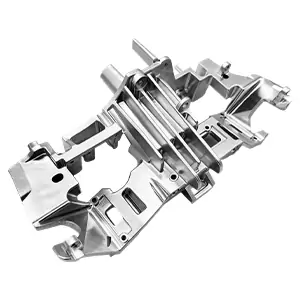
Five-axis machines can adjust the tool angle to ensure the tool always maintains the optimal cutting posture, thereby achieving better surface quality and machining accuracy.
Common parts include:
- Aerospace structural components
- Impellers
- Turbine blades
- Medical implants
- Robotic joint components
Multiple machining angles
Some parts require drilling, milling slots, or machining inclined surfaces at different angles.
For example:
- Inclined holes
- Angled mounting surfaces
- Multi-sided positioning structures
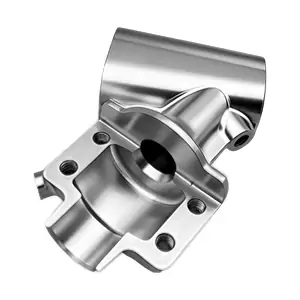
For 3-axis machines, this typically requires repeated disassembly, re-clamping, and re-alignment.
In contrast, 5-axis machining can complete machining at multiple angles in a single setup by rotating the worktable or tilting the spindle.
This not only saves time but also prevents the accumulation of errors caused by repeated clamping.
Deep Cavities and Deep Grooves
Machining deep cavities has always been a challenge in 3-axis machining.
When cavities are deep, extra-long tools are often required to reach the bottom.
Long tools result in:
- Reduced tool rigidity
- Increased vibration
- Poorer surface finish
- Shorter tool life
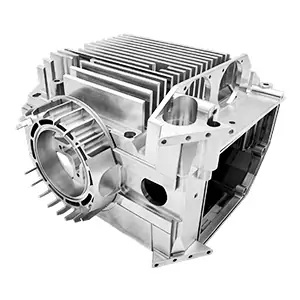
Five-axis machining allows the tool to be tilted into the machining area, enabling the use of shorter, more rigid tools to complete the operation.
This is one of the key reasons why many molds and aerospace parts opt for five-axis machining.
Undercuts or Hidden Areas
Some parts contain areas that traditional tools cannot approach vertically.
For example:
- Undercut features
- Hidden slots
- Complex internal contours
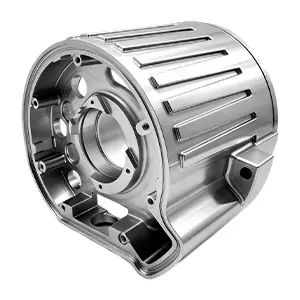
For these features, three-axis machines are often unable to machine them directly.
By adding rotational freedom, five-axis machining allows the tool to approach the workpiece from different directions, enabling the machining of complex areas.
High-Precision Positioning Requirements
For many precision parts, dimensional tolerances are not the most challenging aspect.
The real challenges lie in:
- Positioning accuracy
- Coaxiality
- Perpendicularity
- Parallelism
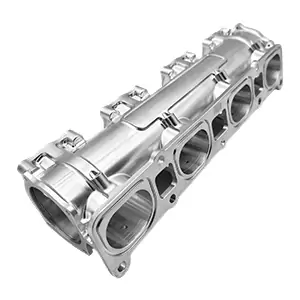
If a part requires multiple setups to complete all machining operations, each repositioning introduces errors.
One of the greatest advantages of 5-axis machining is the ability to complete more operations in a single setup, thereby significantly improving the positional accuracy between features.

7 Signs That Your Part May Require 5-Axis Machining
If your part exhibits multiple characteristics listed below, 5-axis machining is typically worth considering as a priority.
1. The part requires multiple flips during machining
When a part requires repeated disassembly, flipping, and re-alignment to complete all machining features, it not only increases machining time but also leads to cumulative errors. 5-axis machining typically allows more operations to be completed in a single setup, thereby improving efficiency and accuracy.
2. Multiple Angled Holes or Beveled Features
If a part features numerous inclined holes, angled surfaces, or machining features oriented in different directions, traditional 3-axis machining often requires custom fixtures or frequent adjustments to the workpiece position. Five-axis machining can directly adjust the tool angle to complete the machining, making the process more efficient.
3. Complex free-form surface structures
Free-form parts such as impellers, aerospace structural components, robot parts, or complex mold cavities place high demands on tool orientation. Five-axis machines can consistently maintain the appropriate cutting angle, resulting in superior machining quality and surface finish.
4. Requires the Use of Extra-Long Tools
When machining deep pockets, three-axis machines typically require longer tools to reach the bottom. Long tools are prone to vibration and tool deflection, whereas five-axis machining can reduce tool overhang by tilting the tool, thereby improving machining stability.
5. High Surface Quality Requirements
For medical devices, optical equipment, display components, or high-end mechanical parts, surface quality often directly impacts product performance and appearance. Five-axis machining reduces tool chatter marks and tool change marks, resulting in a more uniform and refined surface finish.
6. Strict Positioning Tolerance Requirements
If parts have high requirements for hole positioning accuracy, concentricity, positional accuracy, or perpendicularity, errors caused by multiple setups may be difficult to control. By reducing the number of repositioning operations, five-axis machining makes it easier to ensure the precision relationships between critical dimensions.
7. Need to shorten the overall production cycle
For R&D prototypes, small-batch pilot production, or projects with tight deadlines, reducing setup and changeover times is often more important than increasing cutting speeds. Five-axis machining can complete complex parts in fewer operations, thereby effectively shortening delivery cycles.
If your part meets two or more of these criteria, it is worth considering whether to use five-axis CNC machining. Although the equipment costs for five-axis machining are higher, for complex parts, it often reduces overall manufacturing costs by minimizing the number of setups, improving machining accuracy, and shortening production cycles.
Need Expert Machining Advice?
Send us your CAD file or drawing and receive professional machining recommendations within 24 hours.
Upload Your DrawingWhen is three-axis or four-axis machining sufficient?
5 axis machining isn’t a one-size-fits-all solution.
For many parts with simple geometries, using five-axis machining can actually increase costs.
| Part Type | Typical Features | Recommended Machining Process | Reason |
|---|---|---|---|
| Plate Parts | Flat surfaces, holes, simple contours | 3-Axis Machining | Simple structure with no rotary axis required, offering the lowest machining cost. |
| Mounting Brackets | Multiple holes, mounting surfaces | 3-Axis Machining | Most features can be completed with a single setup or simple repositioning. |
| Flange Parts | Round profiles, standard hole patterns | 3-Axis Machining | Simple toolpaths allow 3-axis machining to meet typical accuracy requirements. |
| Shaft Parts | Cylindrical shapes, keyways, flats | 4-Axis Machining | The rotary axis allows multiple sides to be machined in one setup, reducing repositioning. |
| Cylindrical Grooved Parts | Outer grooves, evenly spaced holes | 4-Axis Machining | Continuous workpiece rotation improves machining efficiency and feature consistency. |
| Multi-Sided Structural Parts | Machining features on several sides | 4-Axis Machining | Multiple side features can be completed in one setup with fewer manual operations. |
| Parts with Angled Holes | Multi-angle drilling and tapping | 5-Axis Machining | The tool angle can be adjusted directly, reducing the need for custom fixtures. |
| Deep Cavity Parts | Deep slots, deep pocket structures | 5-Axis Machining | Tilting the tool helps reduce long-tool vibration and improves machining stability. |
| Impellers | Complex curved blades | 5-Axis Machining | Simultaneous machining is needed for complex blade surfaces and flow channel geometry. |
| Aerospace Components | Complex profiles, lightweight structures | 5-Axis Machining | It improves machining accuracy while reducing errors from multiple setups. |
| Medical Components | High-precision surfaces and complex geometries | 5-Axis Machining | It helps meet demanding surface finish and tight tolerance requirements. |
| Complex Mold Cavities | Deep cavities, undercuts, complex surfaces | 5-Axis Machining | It improves tool accessibility and helps achieve better surface quality. |
Therefore, when selecting a machining method, one should evaluate the part’s structure and machining requirements rather than blindly pursuing a higher number of axes.
How do we help customers determine whether 5-axis machining is necessary?
In practice, not all parts require 5-axis machining.
Many customers are unsure whether to choose 3-axis, 4-axis, or 5-axis machining when submitting their drawings.
Our engineering team evaluates the part’s structure, dimensional tolerances, material, and production volume to provide the most suitable machining solution.
For parts that can be completed using 3-axis or 4-axis machining, we will not forcefully recommend 5-axis machining simply to inflate the quote.
Our goal is to help customers achieve more reasonable machining costs and delivery times while ensuring quality.
At last
When parts feature complex surfaces, multi-angle features, deep cavities, hidden areas, or strict positional tolerances, five-axis CNC machining is typically the best choice.
However, for simple flat parts, brackets, or standard structural components, three-axis and four-axis machining often suffice and are more cost-effective.
Not Sure If Your Part Requires 5-Axis Machining?
Send us your CAD file or drawing. YuanYi engineers will review your part and recommend the most cost-effective machining solution—whether it's 3-axis, 4-axis, or 5-axis CNC machining.
Get a Free QuoteFrequently Asked Questions
Not necessarily. While 5-axis machining offers greater flexibility and can machine complex geometries more efficiently, many simple parts can be produced accurately and economically using 3-axis or 4-axis machining. The best choice depends on the part design, tolerance requirements, and production volume.
Parts with complex curved surfaces, multiple machining angles, deep cavities, undercuts, or tight positional tolerances are often good candidates for 5-axis machining. If you’re unsure, a machining supplier can review your drawing and recommend the most suitable process.
The hourly machining rate is usually higher than 3-axis or 4-axis machining. However, for complex parts, 5-axis machining can reduce setups, shorten production time, and improve accuracy, which may lower the overall manufacturing cost.
Typical examples include aerospace components, impellers, turbine blades, medical devices, mold cavities, robotic components, and other parts with complex geometries or multiple machining angles.
Yes. Our engineering team reviews part geometry, tolerances, materials, and production requirements to recommend the most cost-effective machining solution. In many cases, we can suggest whether 3-axis, 4-axis, or 5-axis machining is the best option before production begins.



