

Bronze is not always more expensive than copper.
Pure copper can cost more than some common bronze alloys, while certain bronze grades—especially those containing more tin, nickel, or other costly alloying elements—can be more expensive than copper.
The real answer depends on the specific material grade, product form, quantity, market price, and machining requirements.
Bronze vs Copper Price: Quick Answer
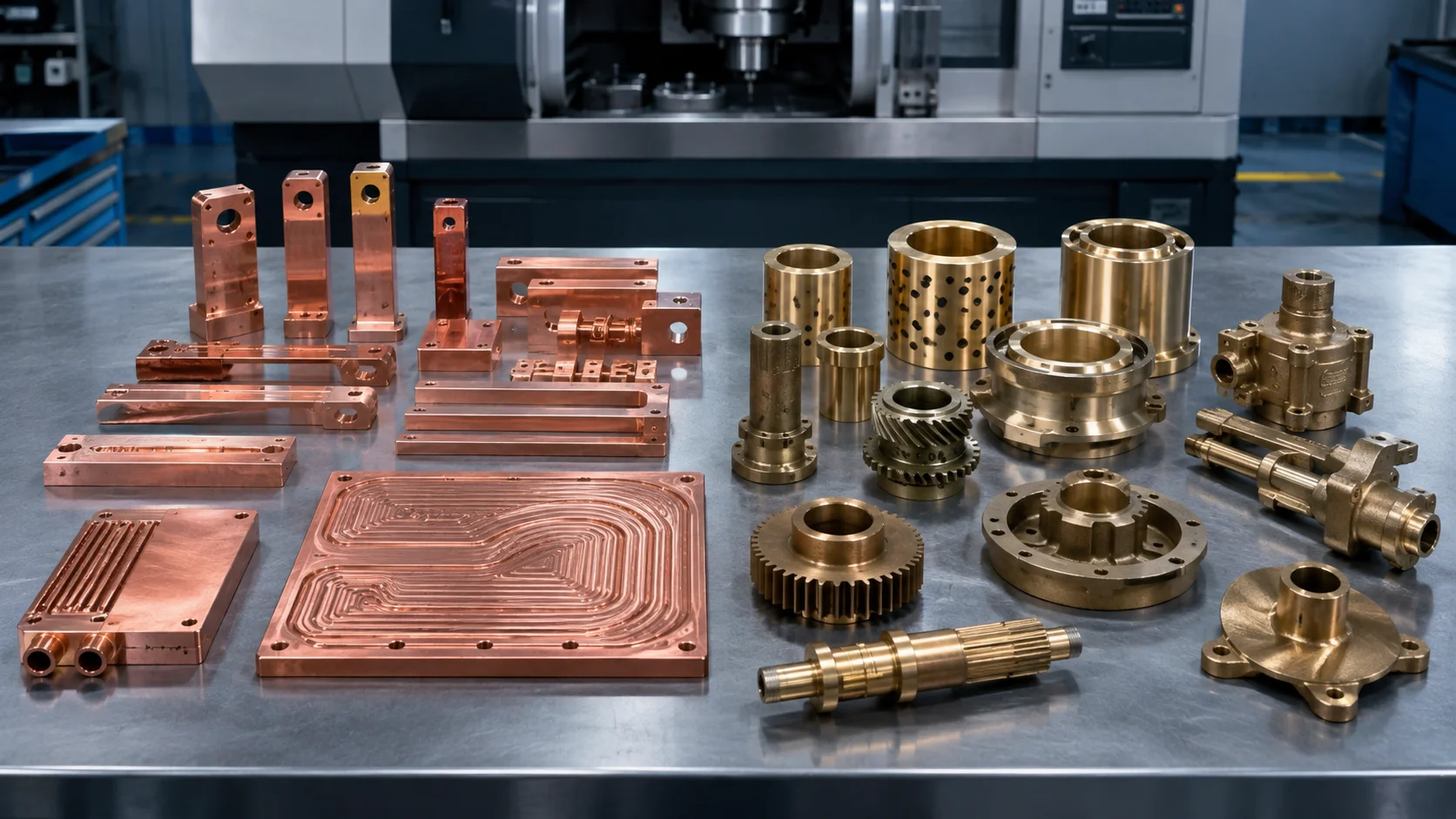
There is no fixed rule saying bronze always costs more than copper.
Here is a simple comparison:
| Factor | Copper | Bronze |
|---|---|---|
| Material type | Mostly pure copper | Copper-based alloy |
| Main cost driver | Copper market price and purity | Copper plus alloying elements |
| Typical price level | Can be relatively high | Varies greatly by alloy |
| Specialty grades | High-purity and oxygen-free copper can cost more | Tin bronze and specialty bronze can cost more |
| Finished CNC part cost | Can rise because of difficult machining | Often depends strongly on the bronze grade |
The most important point is that you should compare specific grades rather than simply comparing “copper” with “bronze.”
For example, C110 copper, phosphor bronze, aluminum bronze, and bearing bronze all have different material prices and machining behavior.Why Can Bronze Be More Expensive Than Copper?
Bronze is mainly made from copper mixed with other elements. Traditional bronze commonly contains tin, while other grades may contain aluminum, silicon, nickel, phosphorus, or other alloying elements.
These additions can increase the material cost.
Alloying Elements Add Cost
Some alloying metals are relatively expensive.
Tin is one of the clearest examples. A bronze alloy with a higher tin content may cost more than a lower-cost copper grade because the supplier must account for both copper and tin prices.
Other specialty bronze grades may contain nickel or other elements that also increase material cost.
This is why two bronze alloys can have very different prices even though both are called “bronze.”
Bronze Requires Alloy Production
Copper can be supplied in relatively pure grades, while bronze must be produced by carefully controlling the alloy composition.
Manufacturers need to control melting, mixing, casting, and material consistency.
For common grades, this added processing may not create a huge price difference. For specialty alloys, however, it can contribute to a higher material price.
Some Bronze Grades Are Specialty Materials
Bronze is a broad material family rather than one single metal.
Common examples include:
- phosphor bronze;
- aluminum bronze;
- silicon bronze;
- bearing bronze;
- nickel aluminum bronze.
Some of these alloys are designed for demanding conditions such as heavy wear, seawater exposure, sliding contact, or high mechanical loads.
Those properties usually come at a higher cost.
When Can Copper Be More Expensive Than Bronze?
Copper can be more expensive than bronze in some cases, especially when you are comparing high-purity copper with a common bronze alloy.
Grades such as C110 copper and oxygen-free copper contain a very high percentage of copper. Their prices are closely tied to the market price of copper, which can be relatively high because copper is heavily used in electrical systems, construction, renewable energy, EVs, and industrial equipment.
By comparison, some bronze grades replace part of the copper with other elements. That does not automatically make the alloy more expensive.
In other words:
Adding another metal to copper does not always increase the final material price.
The actual price depends on the alloy composition and the cost of each element at the time of purchase.
Material form also matters. Copper sheet, plate, bar, tube, and custom-sized stock can all have different pricing. The same is true for bronze.
So if you are buying material for production, compare the exact grade, size, and form instead of relying on a general copper-versus-bronze price rule.
What Affects Bronze and Copper Prices?
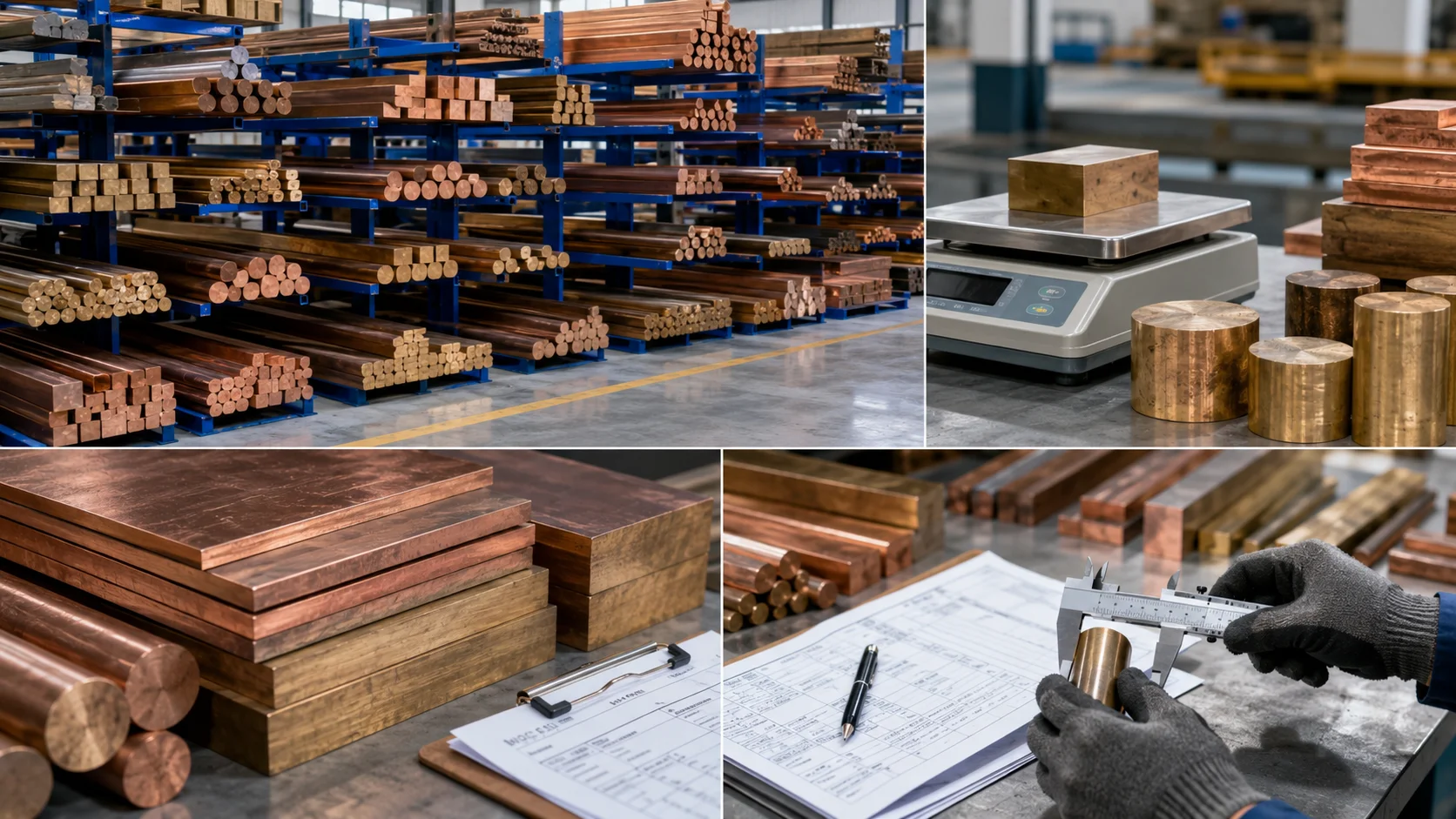
Metal prices can change quite a lot, so a useful comparison needs to consider more than just the material name.
| Factor | Why It Matters |
|---|---|
| Alloy grade | Different copper and bronze grades can have very different prices |
| Copper content | High copper content can increase raw material cost |
| Alloying elements | Tin, nickel, aluminum, and other additions affect bronze pricing |
| Material form | Bar, plate, sheet, tube, and cast stock are priced differently |
| Stock size | Large or uncommon dimensions may cost more |
| Order quantity | Small orders often have a higher unit price |
| Supplier inventory | Poor availability can increase lead time and cost |
| Market price | Copper, tin, nickel, and other metal prices fluctuate |
| Certification | Material certificates or special specifications may add cost |
For example, a commonly stocked copper bar may be cheaper to purchase than an uncommon bronze size even if the bronze alloy itself is not particularly expensive.
The opposite can also happen.
This is why buyers should request quotes based on the actual grade, dimensions, quantity, and specification needed for the part.Bronze vs Copper CNC Machining Cost
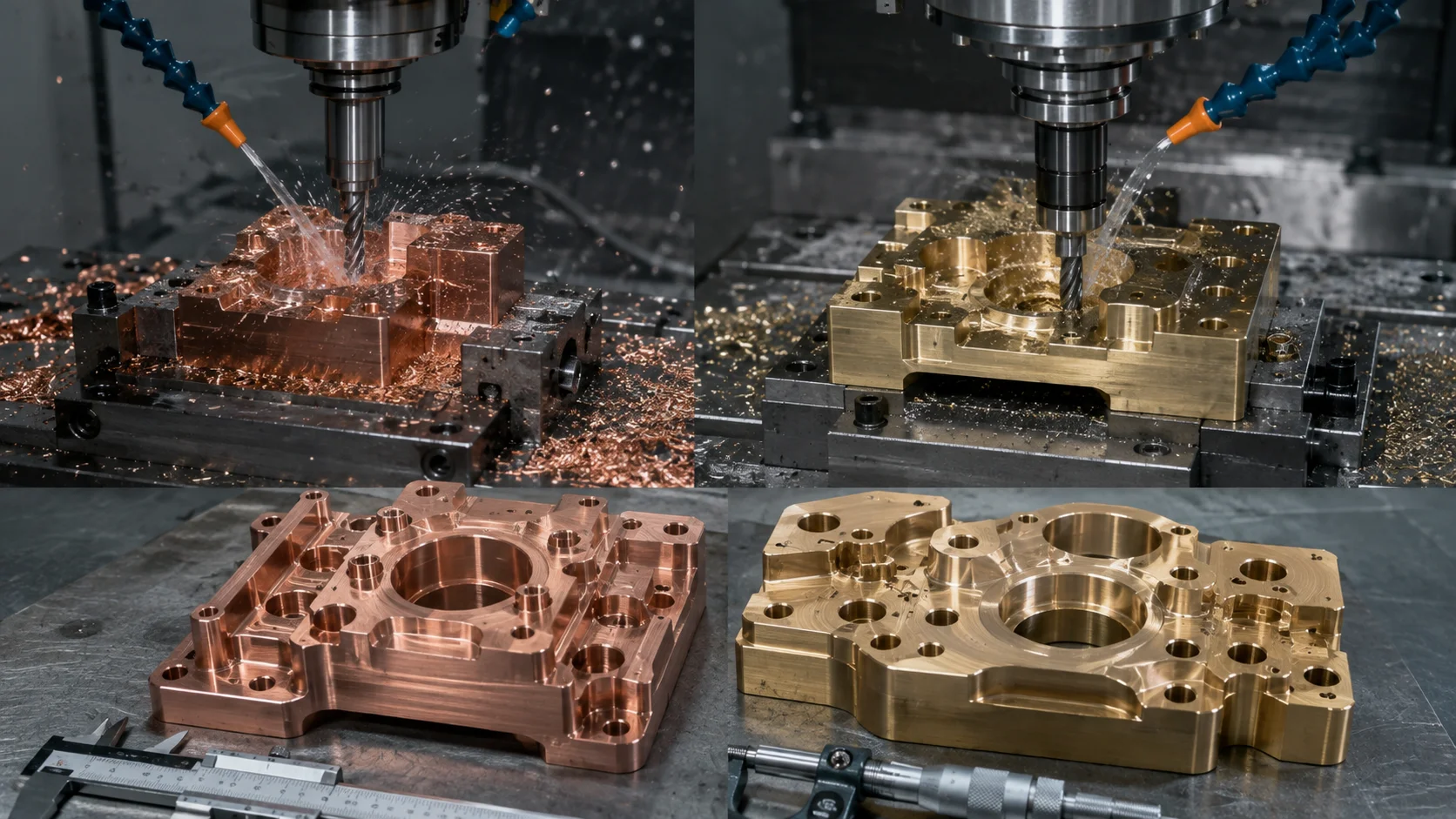
If you are buying finished CNC parts, raw material price does not tell you the whole story.
A simple way to think about the final part cost is:
Material + Setup + Machining Time + Tooling + Finishing + Inspection
Copper can be challenging to machine even though it is relatively soft.
Pure copper tends to be ductile and can produce long or sticky chips. Depending on the grade and geometry, this may cause:
- burr formation;
- poor chip evacuation;
- tool loading;
- additional heat around the cutting zone;
- slower cutting parameters;
- extra deburring work.
These issues can increase machining time.
Some bronze grades are harder, but they may machine more predictably than pure copper. Certain bearing bronzes, for example, can produce more manageable chips and stable machined surfaces.
That means a bronze blank can sometimes cost more per kilogram while the finished bronze part is similar in price—or even cheaper—to machine.
The reverse is also possible with hard or abrasive specialty bronze grades.
So for CNC purchasing, the better question is not only:
“Which material is cheaper?”
It is:
“Which material gives me the required performance at the lowest finished-part cost?”
Bronze vs Copper: Property Comparison
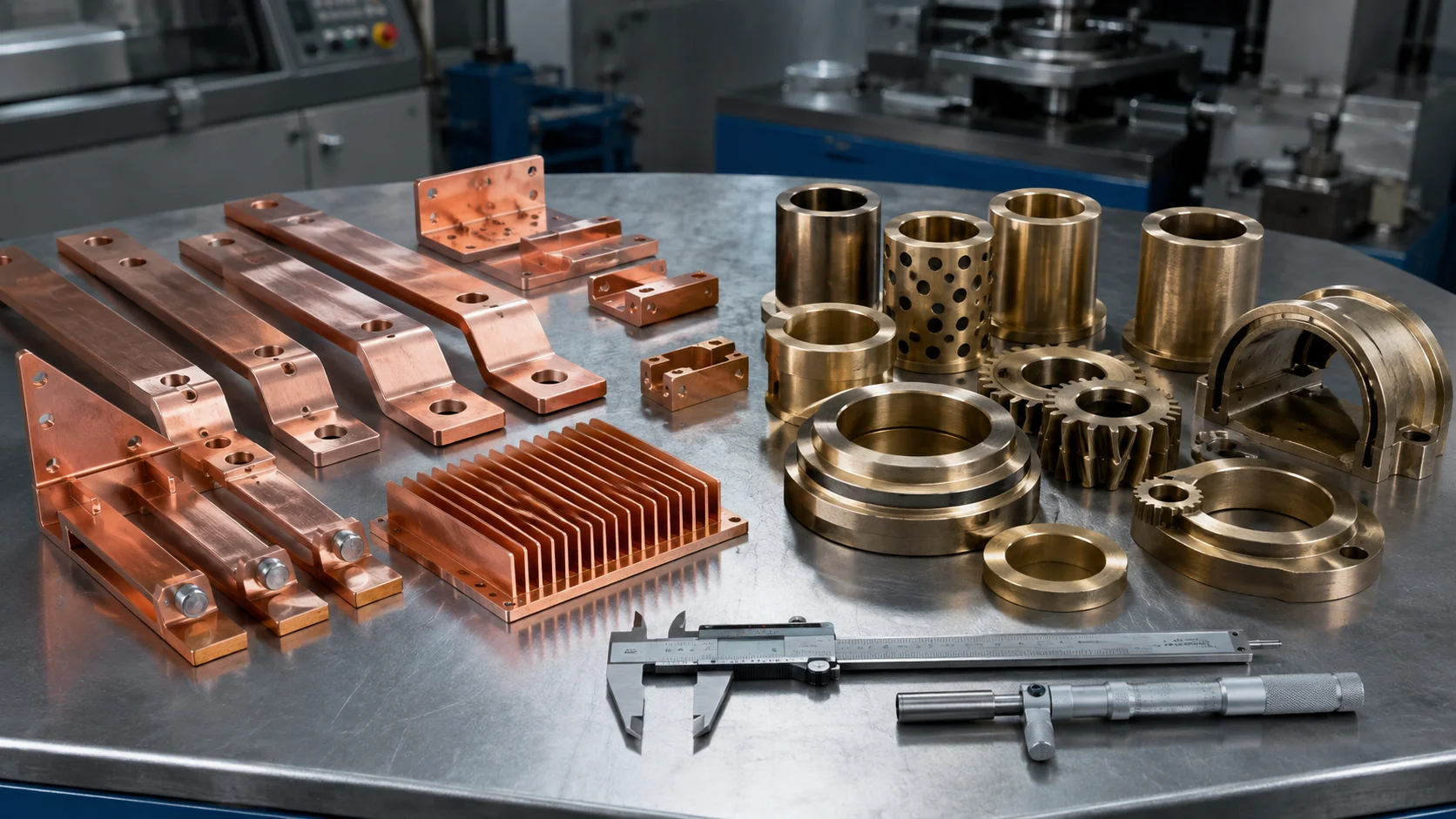
Price matters, but material performance should usually come first.
Copper and bronze can look similar, but they behave quite differently in real applications.
| Property | Copper | Bronze |
|---|---|---|
| Composition | Mostly copper | Copper alloy with tin, aluminum, silicon, nickel, or other elements |
| Electrical conductivity | Excellent | Much lower than pure copper |
| Thermal conductivity | Excellent | Lower than copper |
| Strength | Generally lower | Generally higher |
| Hardness | Softer | Usually harder |
| Wear resistance | Moderate | Usually better |
| Corrosion resistance | Good | Often better in marine and harsh environments |
| Machinability | Depends on copper grade | Depends strongly on bronze grade |
| Typical uses | Electrical and thermal parts | Bearings, bushings, gears, valves, and marine parts |
Copper is usually the better choice when conductivity is the main requirement.
Bronze is often more suitable when the part needs to handle friction, wear, repeated movement, or corrosive environments.When Should You Choose Copper?
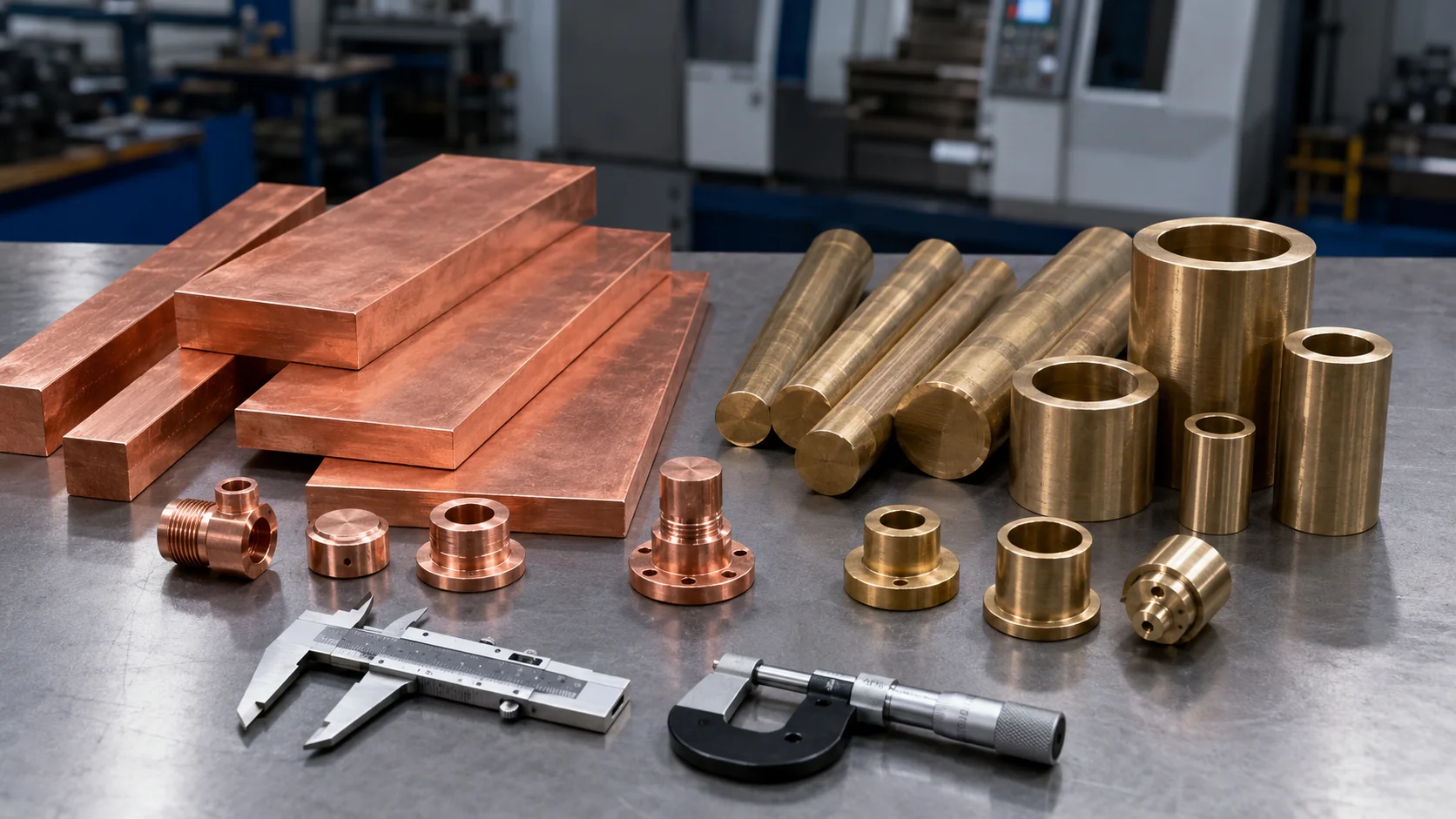
Choose copper when electrical or thermal performance matters more than wear resistance.
Typical applications include:
- electrical contacts;
- busbars;
- heat sinks;
- heat exchangers;
- conductive terminals;
- grounding components;
- thermal management parts.
For example, a bronze alloy may be stronger than copper, but it would usually be a poor replacement for a high-conductivity copper component.
In that case, saving a small amount on material would not make sense if the part could no longer meet its electrical requirements.
When Should You Choose Bronze?
Bronze is usually a better option when the part needs better wear resistance, strength, or corrosion resistance.
Typical applications include:
- bearings;
- bushings;
- gears;
- valve components;
- pump parts;
- marine hardware;
- sliding components;
- wear plates.
A bronze bushing is a good example.
Copper may be softer and offer excellent conductivity, but those properties are not very useful in a component that mainly needs to survive repeated sliding contact.
Bronze can cost more in some cases, but its longer service life may make it the more economical choice.
Is Bronze Worth the Extra Cost?
Sometimes, yes.
The cheapest raw material is not always the cheapest material to use over the full life of a part.
Suppose a copper component costs less initially but wears quickly and needs frequent replacement. A more expensive bronze alloy may last much longer and reduce downtime, maintenance, and replacement costs.
That makes the real comparison:
Purchase price vs. machining cost vs. service life
This is especially important for parts used in:
- rotating assemblies;
- sliding mechanisms;
- pumps;
- marine systems;
- industrial machinery.
If bronze provides better wear resistance or corrosion resistance in the actual working environment, paying more for the material can be justified.
The key is to choose the material based on what the part needs to do, not simply which metal has the lower price per kilogram.
How to Reduce the Cost of Bronze or Copper CNC Parts
There are several practical ways to reduce cost without changing the function of the part.
First, specify the exact material grade.
Writing only “copper” or “bronze” on a drawing can create unnecessary back-and-forth because these names cover many different alloys.
Second, avoid tighter tolerances than the part actually needs. Tight tolerances can increase machining time, inspection time, and scrap risk.
Using standard stock sizes can also reduce cost. Uncommon plate thicknesses, bar diameters, or custom stock may carry a higher material premium.
Part geometry matters as well. Deep pockets, thin walls, very small internal radii, and difficult-to-reach features usually increase CNC machining time.
For production orders, combining quantities can also help spread setup and programming costs across more parts.
Most importantly, compare finished-part quotations, not just raw material prices.
A slightly more expensive alloy may still produce the lower total part cost if it machines faster and performs better in service.
Bronze vs Copper: Which One Should You Choose?
Choose copper if your part depends on electrical conductivity or heat transfer.
Choose bronze if the part needs better wear resistance, higher mechanical strength, or stronger performance in sliding and corrosive environments.
If cost is your main concern, do not compare the materials by name alone. Compare the exact alloy grades and the total cost of producing the finished part.
For CNC projects, we usually recommend checking four things before making the final choice:
- required mechanical properties;
- electrical or thermal requirements;
- operating environment;
- finished machining cost.
This gives a much more useful answer than simply asking whether bronze or copper is cheaper.
Conclusion
So, is bronze more expensive than copper?
Not always.
Pure copper can be more expensive than some common bronze alloys, while phosphor bronze, aluminum bronze, nickel aluminum bronze, and other specialty grades may cost more because of their composition and production requirements.
The final cost also depends on material form, quantity, stock availability, and current metal prices.
For CNC parts, raw material price is only one part of the equation. Machining time, tooling, tolerances, finishing, and inspection can have just as much influence on the final quote.
Need Bronze or Copper CNC Parts?
YUANYI provides CNC machining for copper, bronze, brass, aluminum, stainless steel, and other engineering materials.
Send us your drawing, material grade, quantity, and tolerance requirements, and our engineering team can review the part and provide a machining quote.
Frequently Asked Questions
It depends on the bronze alloy and the local scrap market.
Scrap yards usually price copper and bronze separately based on composition, cleanliness, and current metal prices. Clean copper often has strong scrap value because of its high copper content, while some high-value bronze alloys may also receive good prices.
Bronze is often more expensive than common brass grades, especially when it contains significant amounts of tin, nickel, or other costly alloying elements.
However, the exact price still depends on the specific grade and product form.
Copper has a density of about 8.96 g/cm³.
Many common bronze alloys are in a similar range, often around 8.7–8.9 g/cm³, although the exact density depends on alloy composition.
In most practical parts, the weight difference is relatively small.
Bronze often lasts longer in applications involving friction, wear, sliding contact, or seawater exposure.
Copper may still be the better choice in electrical and thermal applications where conductivity matters more than wear resistance.
It depends on the grade.
Pure copper can be difficult to machine because it is ductile and tends to produce sticky chips and burrs.
Some bronze alloys machine more cleanly and predictably, while harder specialty bronze grades may require lower cutting speeds or more durable tooling.
For this reason, machinability should always be checked using the exact alloy rather than comparing copper and bronze as broad material categories.



