
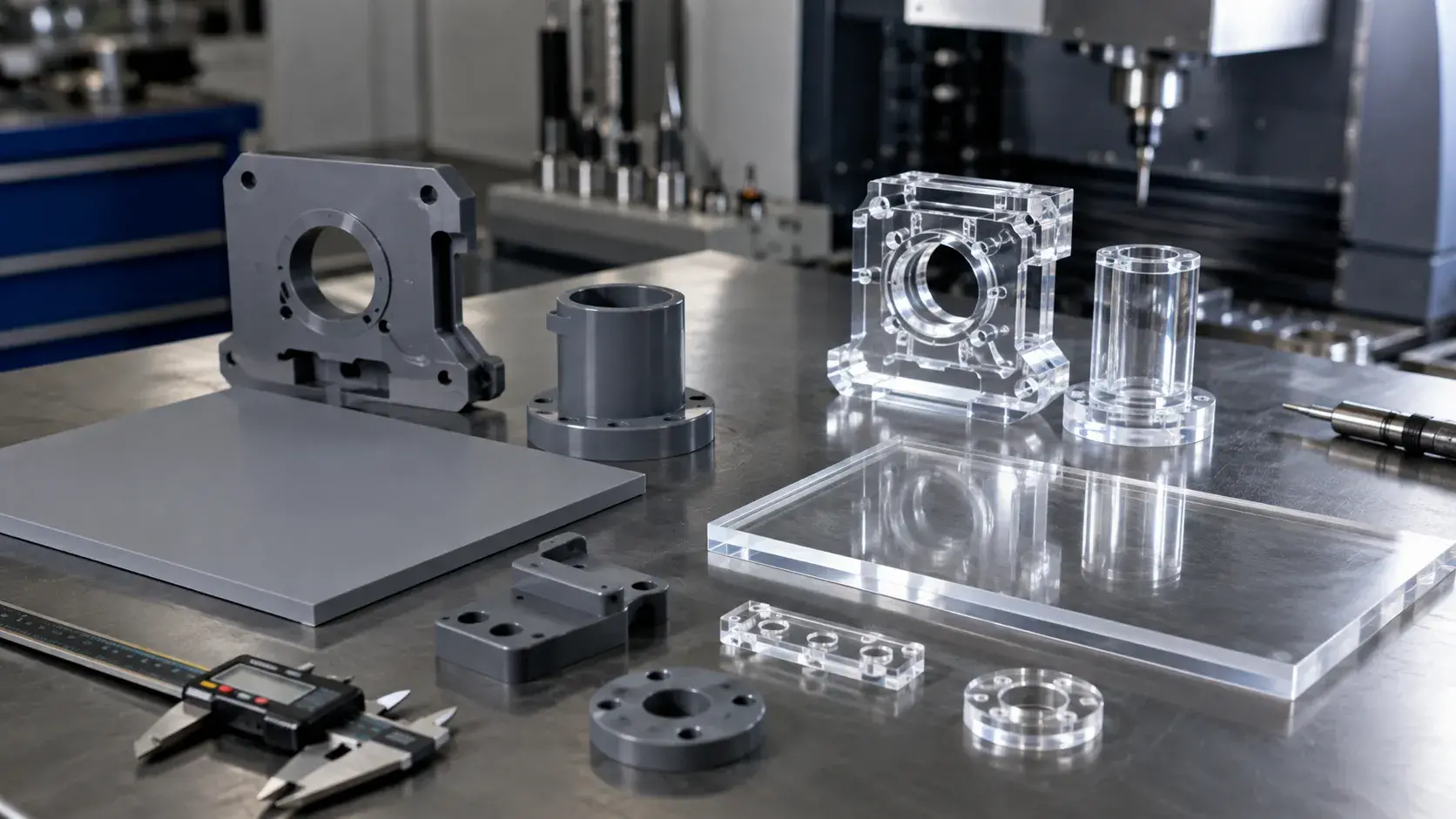
PVC vs Acrylic: Differences, Properties, and Applications

PVC vs Acrylic Material Comparison

When it comes to comparing PVC and acrylic, the real differences come down to transparency, chemical resistance, weather resistance, looks, and cost. PVC tends to be the more budget‑friendly option and holds up well against chemicals, while acrylic stands out with its much clearer transparency, better UV protection, and a more polished surface finish.

For industrial parts or CNC‑machined components, the right choice really depends on what you need them for. PVC is usually the go‑to for functional parts that will be exposed to chemicals or used in electrical settings. On the other hand, acrylic is a better fit for transparent covers, display panels, instrument windows, or any part where visual quality matters most.

What Is PVC?

PVC, or polyvinyl chloride, is a widely used thermoplastic known for its good chemical resistance, rigidity, electrical insulation, and relatively low cost.
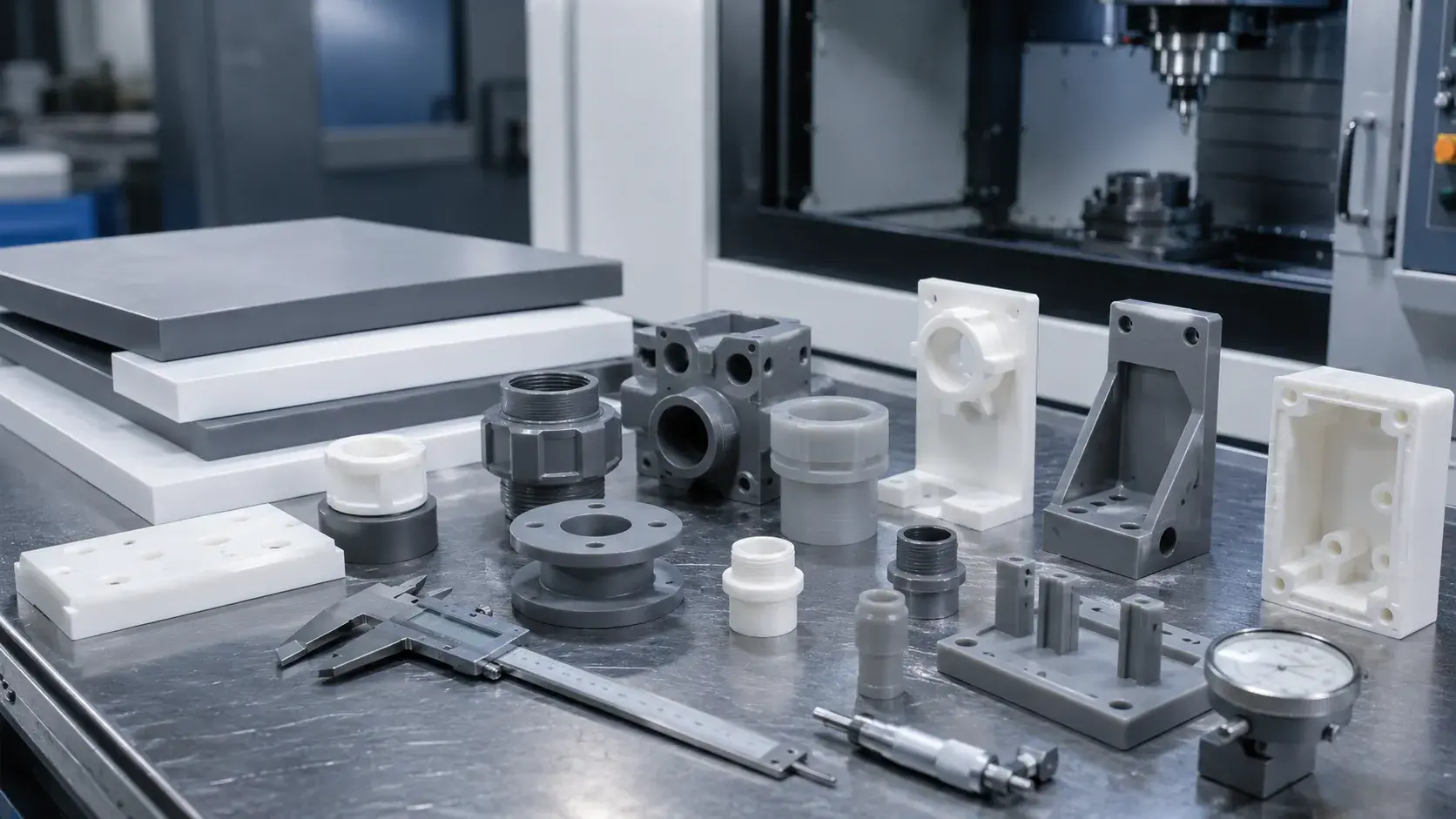
Rigid PVC Material and Machined Parts

PVC is available in both rigid and flexible forms, but rigid PVC is more commonly used for machined industrial components. It can be cut, drilled, milled, and turned to produce functional parts for equipment, electrical systems, fluid-handling systems, and chemical environments.

Compared with acrylic, PVC usually focuses more on functional performance than optical appearance.

Main Properties of PVC

PVC offers several useful properties for industrial applications:

  • good chemical resistance;
  • good electrical insulation;
  • relatively high rigidity;
  • low moisture absorption;
  • good corrosion resistance;
  • relatively low material cost;
  • good machinability for many CNC applications.

These properties make PVC plastic suitable for parts that need reliable performance without requiring high transparency or a polished appearance.

What Is Acrylic?

Acrylic is a transparent thermoplastic also known as PMMA, or polymethyl methacrylate. It is also commonly referred to by trade and generic names such as Plexiglass.
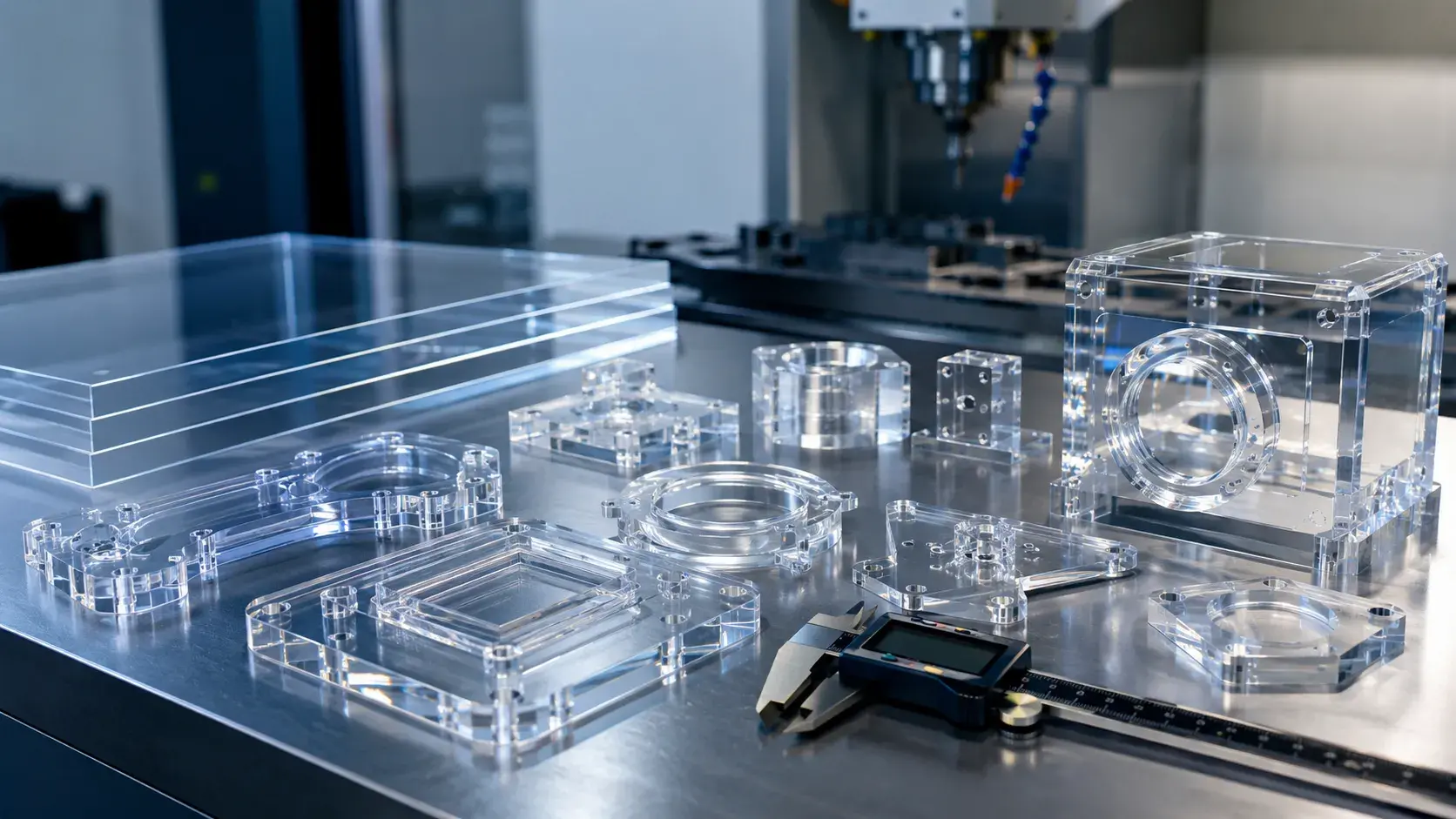
Acrylic PMMA Material and Machined Parts

Acrylic is best known for its excellent optical clarity, smooth surface, weather resistance, and ability to achieve a polished transparent finish.

Because of these characteristics, acrylic plastic is widely used for transparent machine covers, display components, lighting parts, instrument windows, medical equipment, and other parts where visibility and appearance are important.

Acrylic can also be CNC machined with good dimensional accuracy, although more care is required to avoid cracking, chipping, and excessive heat during cutting.

Cast Acrylic vs Extruded Acrylic

Acrylic is commonly available as cast acrylic and extruded acrylic.

Cast acrylic is generally preferred for precision machining because it tends to produce cleaner cuts, better edge quality, and more stable machining results. It is also well suited to parts that require polishing or a high-quality transparent finish.

Extruded acrylic is usually more economical and offers more consistent sheet thickness, but it can be more sensitive to heat during machining.

For CNC machined parts with tight dimensional requirements or high visual quality, cast acrylic is often the better choice.
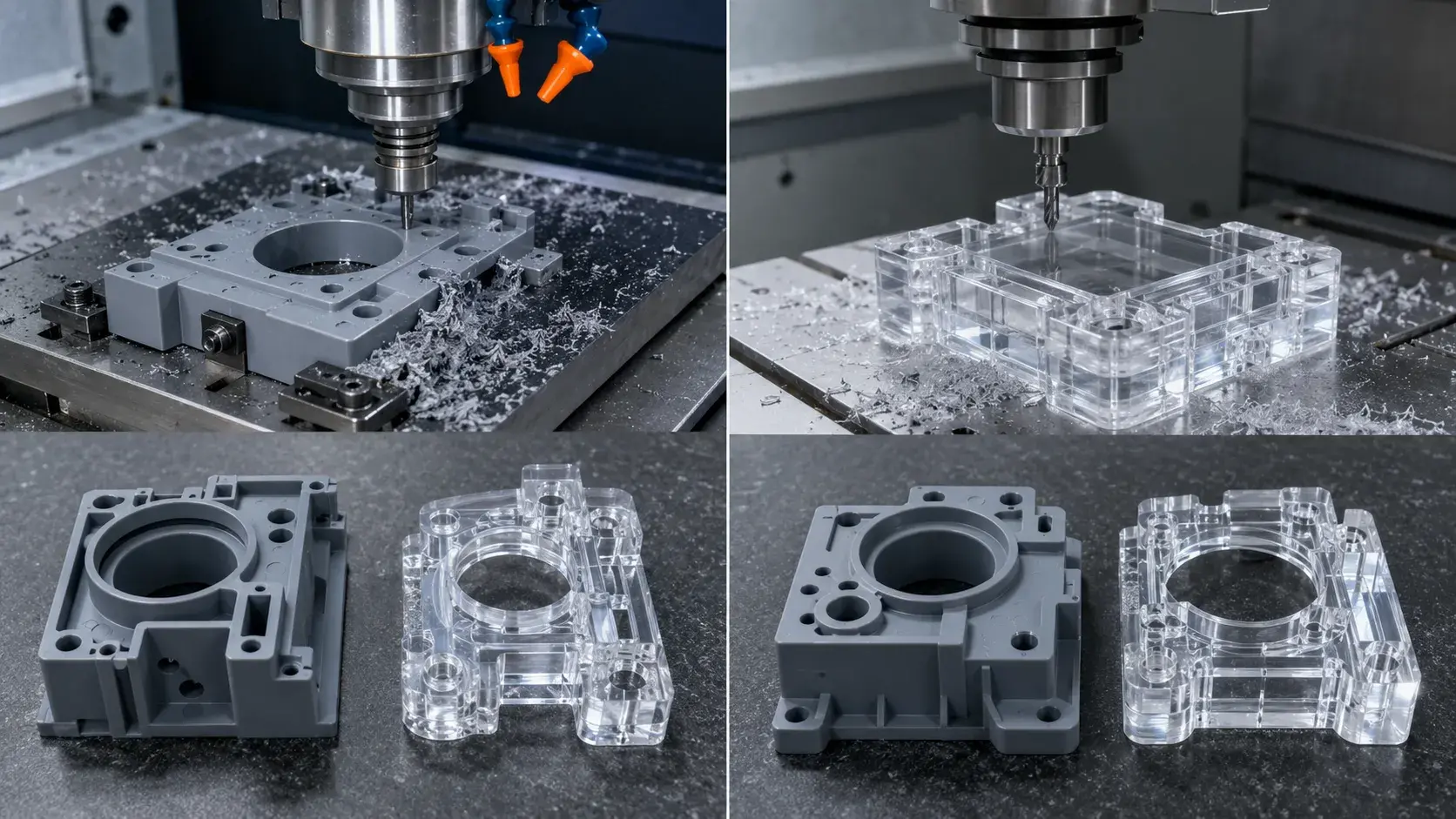
PVC vs Acrylic: Quick Comparison

PVC and acrylic are both widely used thermoplastics, but they perform very differently in real-world applications.

PVC is generally the better choice when chemical resistance, electrical insulation, durability, and cost are the main concerns. Acrylic, on the other hand, is preferred when transparency, appearance, UV resistance, and a polished surface matter more.

PropertyPVCAcrylic
TransparencyLow to moderateExcellent
RigidityGoodHigh
Impact ResistanceGoodModerate
Chemical ResistanceExcellentGood
UV ResistanceModerateExcellent
Weather ResistanceGoodExcellent
Moisture ResistanceExcellentExcellent
Surface AppearanceFunctionalSmooth and clear
MachinabilityGoodGood
Chipping RiskLowerHigher
PolishingLimitedExcellent
CostGenerally lowerGenerally higher
Best ForFunctional industrial partsTransparent and appearance-critical parts

The biggest difference is usually the role the material needs to play. If the part needs to handle chemicals, moisture, or electrical environments at a reasonable cost, PVC is often the more practical option.

If the part needs to stay clear, look polished, or perform well outdoors, acrylic is usually the better choice.

PVC vs Acrylic: Key Differences

Transparency and Appearance

Acrylic is the clear winner when transparency is important.

High-quality acrylic can offer excellent optical clarity, which is why it is often used for machine windows, transparent covers, displays, lighting components, and protective panels. It can also be polished to produce smooth, clear edges and an attractive surface finish.

PVC can also be produced in transparent or translucent forms, but it usually does not provide the same level of clarity as acrylic. In most industrial applications, PVC is selected more for its functional properties than for appearance.

So, if the project requires a clear part with a polished look, acrylic is usually the better option.

Strength and Impact Resistance

The question of whether PVC or acrylic is stronger depends on what kind of strength matters.

Rigid PVC has good toughness and can handle everyday impact well in many industrial environments. It is less likely than acrylic to chip during normal handling and is commonly used for functional parts where durability matters.

Acrylic is stiffer and can hold its shape well, but it is also more brittle. Sharp impacts, stress concentrations, or poorly machined edges can cause cracking or chipping.

For this reason, acrylic works best when rigidity, clarity, and appearance are more important than high impact resistance.

Chemical Resistance

PVC has very good resistance to many acids, alkalis, salts, and other chemicals, making it a common choice for industrial and chemical-handling applications.

It is often used for:

  • fluid-handling components
  • chemical equipment parts
  • electrical enclosures
  • laboratory components
  • corrosion-resistant industrial parts

Acrylic also offers reasonable resistance to many substances, but it can be more sensitive to certain solvents and cleaning chemicals.

If a part will regularly contact aggressive chemicals, PVC is usually the safer choice, although the exact chemical and operating conditions should always be checked before final material selection.

UV and Weather Resistance

Acrylic performs very well in outdoor environments.

It has excellent resistance to UV exposure and tends to maintain its transparency and appearance for long periods, which is one reason it is widely used for outdoor signs, windows, covers, and display panels.

PVC can also be used outdoors, especially when formulated with stabilizers, but prolonged UV exposure may cause discoloration or surface changes depending on the grade.

For transparent parts that will remain outdoors for long periods, acrylic is generally the better choice.

Heat Resistance

Both PVC and acrylic are thermoplastics, so neither is intended for very high-temperature environments.

PVC can soften or deform when exposed to elevated temperatures, while acrylic can also lose dimensional stability as temperatures rise.

The actual temperature limit depends on the material grade and operating conditions, so heat resistance should be checked carefully when the part will be exposed to continuous heat.

For applications involving higher temperatures, another engineering plastic may be more suitable than either PVC or acrylic.

Weight and Density

PVC and acrylic are both relatively lightweight compared with metals, and their density is fairly similar.

In most applications, the weight difference between the two materials is small enough that it does not become the main selection factor.

Instead, properties such as chemical resistance, transparency, impact behavior, and weather resistance usually have a much greater influence on the final choice.

Surface Finish and Appearance

Acrylic has a major advantage when surface quality matters.

It can be machined and polished to create smooth, glossy, and highly transparent surfaces. This makes it especially suitable for visible components, display parts, instrument windows, and transparent machine covers.

PVC can also produce a clean machined finish, but it is usually chosen for functional rather than decorative purposes.

If the finished part will be highly visible to the end user, acrylic generally offers a more premium appearance.

Cost

PVC is generally less expensive than acrylic, especially for common industrial grades.

That can make PVC attractive for larger components, production quantities, or applications where transparency and cosmetic appearance are not important.

However, material price is only part of the total cost. Acrylic parts may require additional care during machining or polishing, while PVC may need a specific grade to meet chemical, temperature, or outdoor requirements.

The better value depends on what the part actually needs to do—not simply which raw material costs less.

PVC vs Acrylic for CNC Machining

PVC vs Acrylic CNC Machining Both PVC and acrylic can be machined with CNC equipment, but they behave differently during cutting. PVC is generally easier to machine because it is less brittle and has a lower risk of edge chipping. Acrylic can also produce very accurate parts and excellent surface finishes, but it requires better control of cutting heat, tool sharpness, and feed rates to avoid cracking or melting.

CNC Machining PVC

Rigid PVC works well with common CNC processes such as milling, turning, drilling, and routing. Because PVC is softer than many engineering plastics, it can usually be cut efficiently with sharp tools. The main challenge is controlling heat. If the cutting speed is too high or chips are not removed properly, the material may soften and affect the surface finish. Good CNC machining practices for PVC usually include:
  • using sharp cutting tools
  • maintaining effective chip removal
  • avoiding excessive heat buildup
  • using suitable cutting speeds and feed rates
  • supporting thin sections to reduce vibration or deformation
With the right machining parameters, PVC can produce clean edges, stable dimensions, and reliable functional parts.

CNC Machining Acrylic

Acrylic is also well suited to CNC machining, especially when the part requires transparency, smooth surfaces, or a polished appearance. However, acrylic is more brittle than PVC, so poor machining conditions can lead to chipping, cracking, or damaged edges. Heat is another concern because excessive friction can soften or melt the material around the cutting area. For better results, acrylic machining usually requires:
  • very sharp cutting tools
  • controlled cutting speeds
  • proper chip evacuation
  • reduced heat buildup
  • careful workholding
  • appropriate finishing or polishing
When machined correctly, acrylic can achieve excellent dimensional accuracy and very smooth, clear surfaces.

Which Is Easier to Machine: PVC or Acrylic?

For most general CNC work, PVC is slightly easier to machine because it is less brittle and more forgiving during cutting. Acrylic requires more attention to tool condition and heat control, but it can produce a much better cosmetic finish when machined properly.
Machining FactorPVCAcrylic
General MachinabilityGoodGood
Chipping RiskLowModerate to High
Heat SensitivityModerateHigher
Cracking RiskLowHigher
Surface FinishGoodExcellent
Polishing PotentialLimitedExcellent
Tight-Tolerance MachiningGoodGood
Best UseFunctional partsClear and appearance-critical parts
If the project mainly requires a durable functional component, PVC is often easier to work with. If the part needs a clear or polished finish, acrylic is usually worth the extra machining care.

Common Applications of PVC and Acrylic

PVC and acrylic are used in many of the same industries, but they are usually chosen for different reasons.

PVC is more common in functional parts where chemical resistance, insulation, and cost matter. Acrylic is more suitable for parts that need transparency, visibility, or a cleaner appearance.
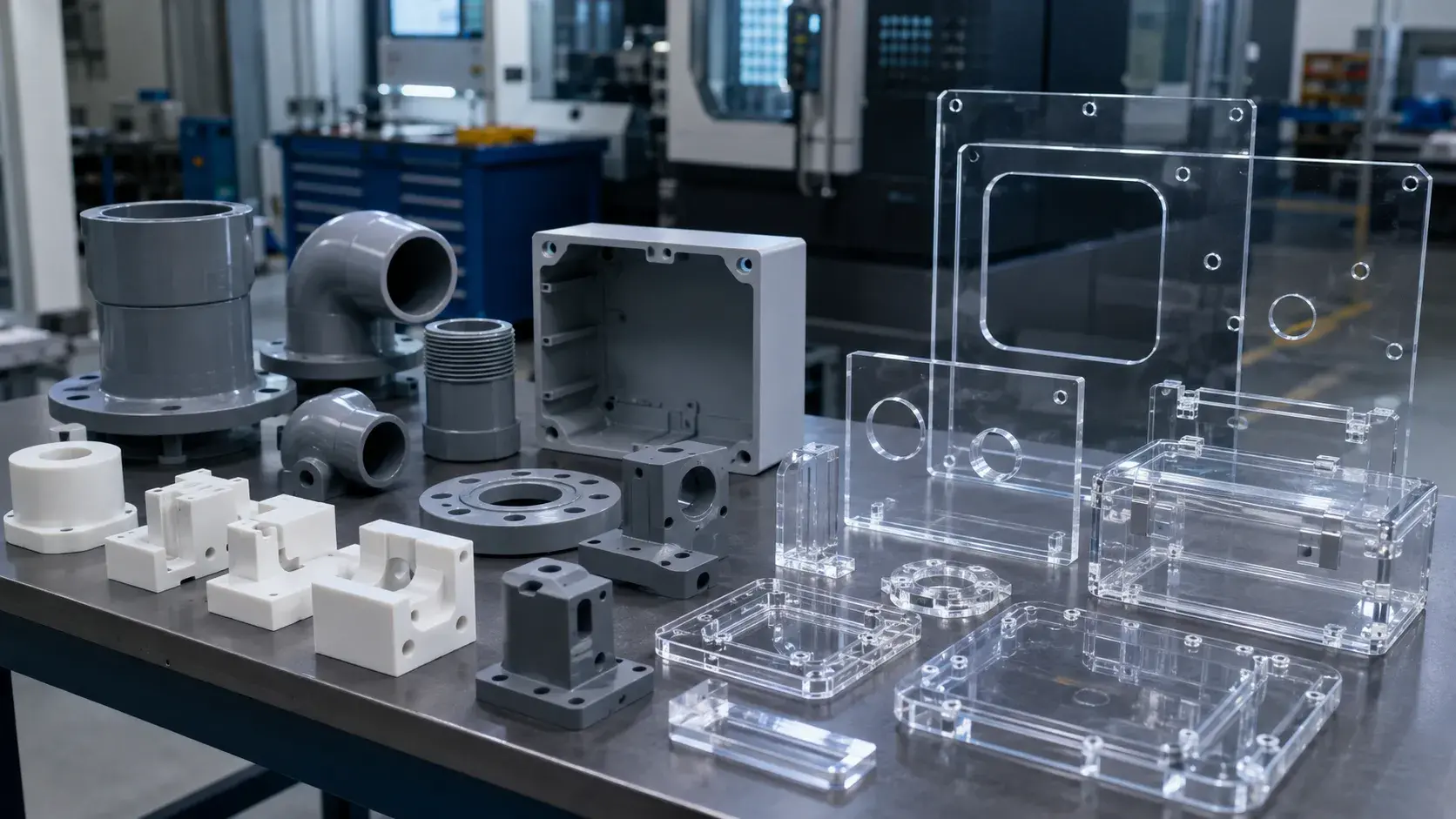
PVC and Acrylic Applications

Common Applications of PVC

Rigid PVC is often used for:

  • chemical processing components

  • electrical insulation parts

  • fluid-handling components

  • equipment housings

  • laboratory parts

  • corrosion-resistant machine components

  • protective covers and industrial panels

Its combination of chemical resistance, low moisture absorption, and relatively low cost makes it a practical option for many industrial environments.

Common Applications of Acrylic

Acrylic is commonly used for:

  • transparent machine covers

  • instrument windows

  • display panels

  • lighting components

  • medical equipment parts

  • protective screens

  • inspection windows

  • clear housings and enclosures

It is especially useful when the user needs to see through the part or when the finished component needs a smooth, polished appearance.


PVC vs Acrylic: Which Should You Choose?

There is no single material that is better for every application. The right choice depends on what the part needs to do.

Choose PVC If You Need:

  • strong chemical resistance

  • good electrical insulation

  • a lower-cost material

  • durable functional components

  • parts for wet or corrosive environments

  • a material that is relatively easy to machine

PVC is usually the more practical choice when appearance and transparency are not major requirements.

Choose Acrylic If You Need:

  • high transparency

  • good UV resistance

  • a smooth or polished surface

  • transparent covers or windows

  • good visual appearance

  • parts that will be used outdoors

  • clear CNC-machined components

Acrylic is generally the better option when optical clarity and appearance are important.

For example, a chemical-handling component inside industrial equipment may be better made from PVC, while a transparent machine guard or inspection window would usually be better suited to acrylic.

Need Help Choosing PVC or Acrylic for Your CNC Parts?

Not sure which plastic fits your part? Send us your drawing and requirements, and our engineering team can help review the material, machining process, tolerance, and surface finish.

CNC Machining PVC and Acrylic Parts

Material selection is only part of producing a reliable plastic component. Machining strategy, cutting tools, heat control, and workholding can all affect dimensional accuracy and surface quality.

PVC requires proper chip removal and temperature control to prevent softening during machining. Acrylic needs even more careful cutting conditions to reduce the risk of chipping, cracking, or melting around the edges.

For precision parts, an experienced CNC plastic machining supplier can help select the appropriate material grade and machining process based on the drawing, tolerance, surface finish, and application requirements.

Conclusion

When comparing PVC vs acrylic, the better material depends on the part’s function.

PVC is generally the better choice for cost-sensitive industrial parts that need chemical resistance, electrical insulation, and reliable functional performance. Acrylic is more suitable for parts that require transparency, UV resistance, polished surfaces, and a cleaner appearance.

For CNC machining, both materials can produce accurate parts, but they require different cutting strategies. PVC is generally more forgiving, while acrylic needs better control of heat, tool sharpness, and edge quality.

Frequently Asked Questions

Yes. In most cases, PVC is less expensive than acrylic, especially for common industrial grades. Acrylic usually costs more because it offers better transparency, weather resistance, and surface appearance.

It depends on the type of strength being compared. Acrylic is rigid and holds its shape well, but it is also more brittle. PVC generally offers better toughness and is less likely to chip or crack under impact.

Yes. Transparent PVC is available, but it usually does not provide the same optical clarity as acrylic. If high transparency and a polished appearance are important, acrylic is usually the better choice.

Yes. Plexiglass is a common name associated with acrylic, while the technical material name is PMMA, or polymethyl methacrylate.

Acrylic is generally better for long-term outdoor use because it offers strong UV and weather resistance. PVC can also be used outdoors, but its performance depends more on the specific grade and stabilizers used.

PVC is usually slightly easier to machine because it is less brittle and has a lower risk of chipping. Acrylic can also be machined accurately, but it requires more careful heat control and sharp cutting tools.

Yes. Acrylic can be CNC machined to good dimensional accuracy when the material, tooling, workholding, and cutting parameters are properly controlled.

Acrylic can crack or chip if it is machined with dull tools, excessive cutting forces, poor workholding, or too much heat. Proper CNC machining conditions can greatly reduce this risk.

Table of Contents
Discuss Your Complex Machining Requirements

Need Custom CNC Machined Parts?

From rapid prototypes to low-volume production, our engineering team can review your drawings and provide a manufacturing quote.

  • 24-Hour Quotation
  • DFM Engineering Support
  • No Minimum Order
  • ISO 9001 Certified
Request A Quote
Upload your drawing and get a quote within 24 hours.
