

A 5-axis CNC machine can machine a part from more directions compared to a standard 3-axis CNC machine.While a 3-axis machine can move in three directions—left to right, front to back, and up and down—a 5-axis machine can also rotate either the cutting tool or the workpiece.This capability allows for more efficient machining of complex shapes, angled holes, deep recesses, curved surfaces, and multi-sided parts, often requiring fewer setups.
For simpler parts, a 3-axis machine is usually sufficient.
However, when a part has multiple sides, intricate details, difficult angles, or hard-to-reach areas, a 5-axis machine becomes more advantageous.
Let’s explore what a 5-axis CNC machine is capable of and what it may not perform as effectively.
What Can a 5-Axis CNC Machine Do?
A 5-axis CNC machine is capable of machining multiple sides of a part during a single setup, or at the very least, it significantly reduces the need to flip and re-clamp the part multiple times.
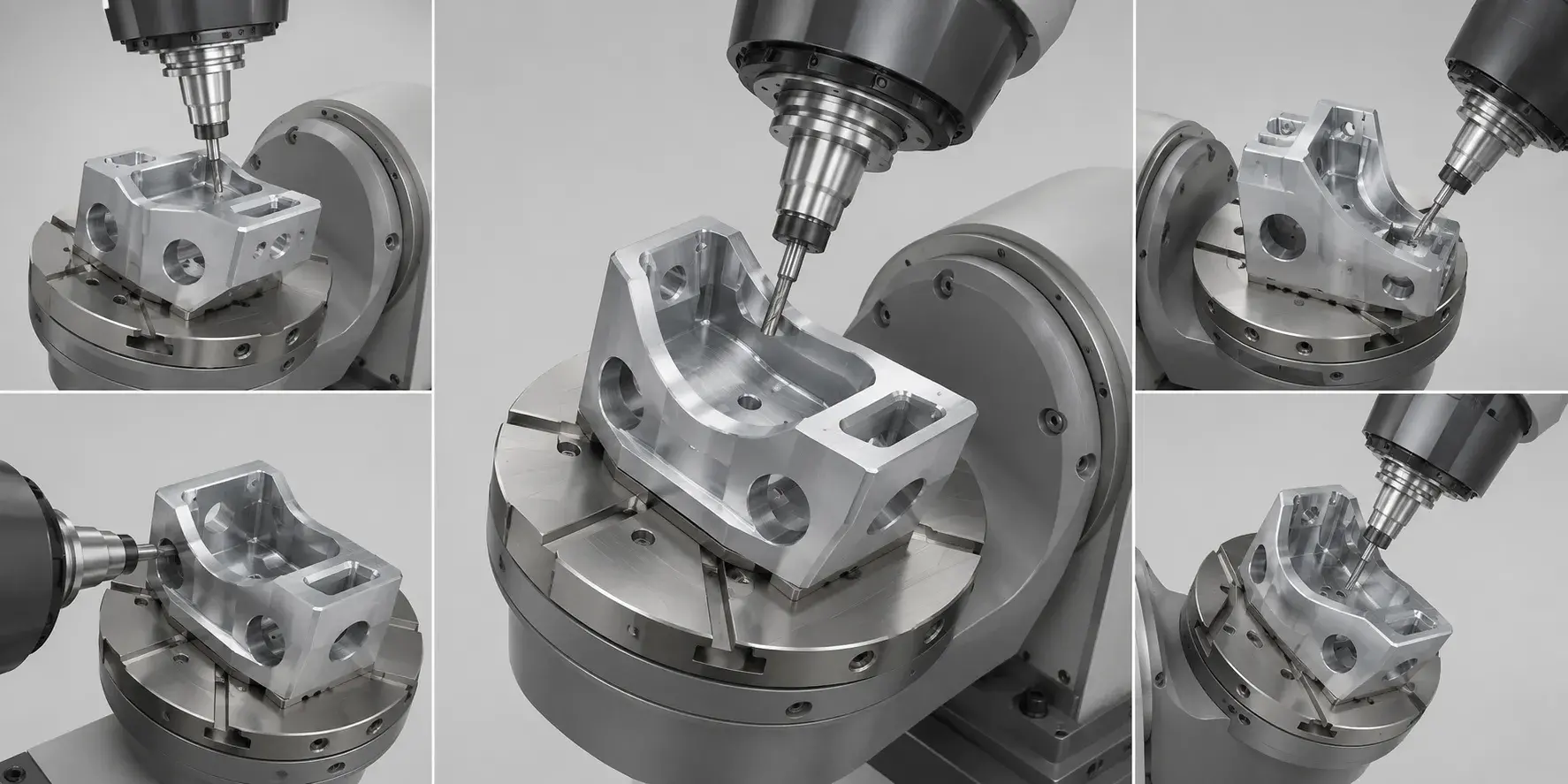
This is an important factor in actual production environments.
Each time a part is removed and re-clamped, there is a risk of small positioning errors.
For simple parts, these errors may not be significant.However, for precision parts that require tight tolerances, multiple angled surfaces, or precisely aligned holes, even small errors can accumulate over time and affect the final result.
With a 5-axis CNC machine, the cutting tool can approach the workpiece from various angles.
This allows the machine to efficiently and accurately cut features that would be challenging, time-consuming, or unstable to produce on a 3-axis machine.
Typical features that can be created using 5-axis CNC machining include:
- Angled holes
- Deep cavities
- Undercuts
- Curved surfaces
- Multi-faced components
- Complex aluminum housings
- Aerospace brackets
- Medical components
- Robotic arm parts
- Precision fixture components
The main advantage is not just about having more movement.
The true value lies in the improved ability to reach and machine difficult areas effectively.
Can a 5-Axis CNC Machine Cut Triangle Holes?
Yes, a 5-axis CNC machine can create triangle-shaped holes or triangular pockets.
However, there is an important detail that many people overlook.
A rotating cutting tool is cylindrical in shape.
Because of this, the internal corners of a triangle-shaped cut typically cannot be perfectly sharp.The tool leaves a small rounded edge in the corners.If your design allows for slightly rounded internal corners, CNC milling is usually capable of achieving this.But if your design requires three perfectly sharp internal corners, CNC milling alone might not be the most suitable method.
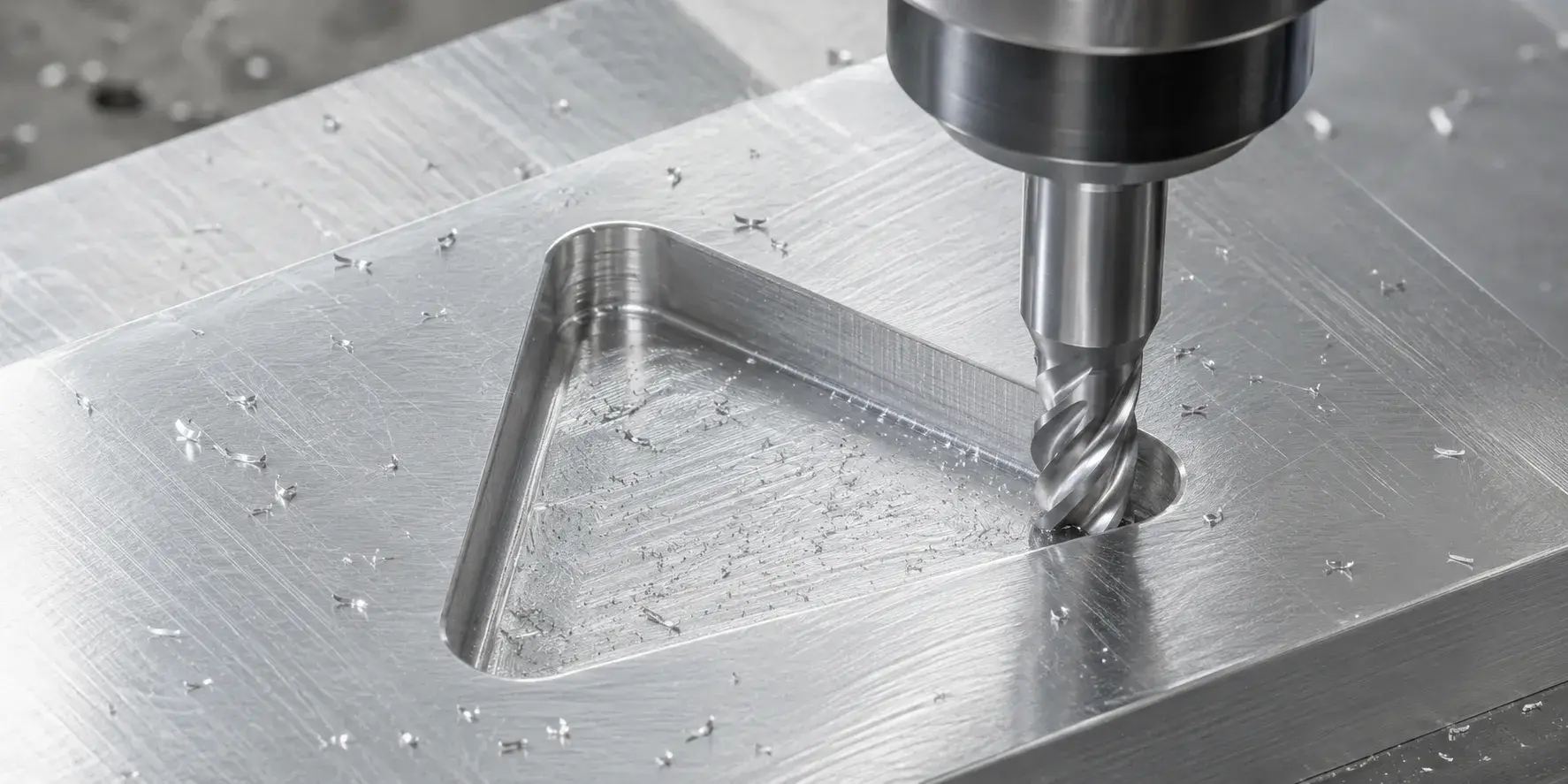
In such cases, you may need to make slight adjustments to the design, add corner relief, or consider alternative processes like EDM, broaching, or wire cutting, depending on the material and required tolerance.
That is why we always suggest reviewing the design before selecting a machining process.
A triangle-shaped hole may seem simple on a 2D drawing, but the real considerations are:
- How sharp do the corners need to be?
- How deep is the hole?
- What tolerance is required?
- What material are we working with?
For a shallow triangular pocket in aluminum, the task can be quite manageable.
However, for a deep triangular hole in hardened steel with sharp internal corners, the choice of process will be quite different.
Can a 5-Axis CNC Machine Cut Angled Holes?
Yes, this is one of the many situations where 5-axis machining proves to be very beneficial.
On a 3-axis CNC machine, the spindle typically moves toward the workpiece from a single direction.
If the hole is straight, there is no issue.However, if the hole is drilled at an angle, the setup becomes more complex.The operator may need to use a custom fixture, apply angled clamping, or perform multiple machining steps to achieve the desired result.
A 5-axis machine allows the tool to be tilted or the workpiece to be rotated to the exact required angle.
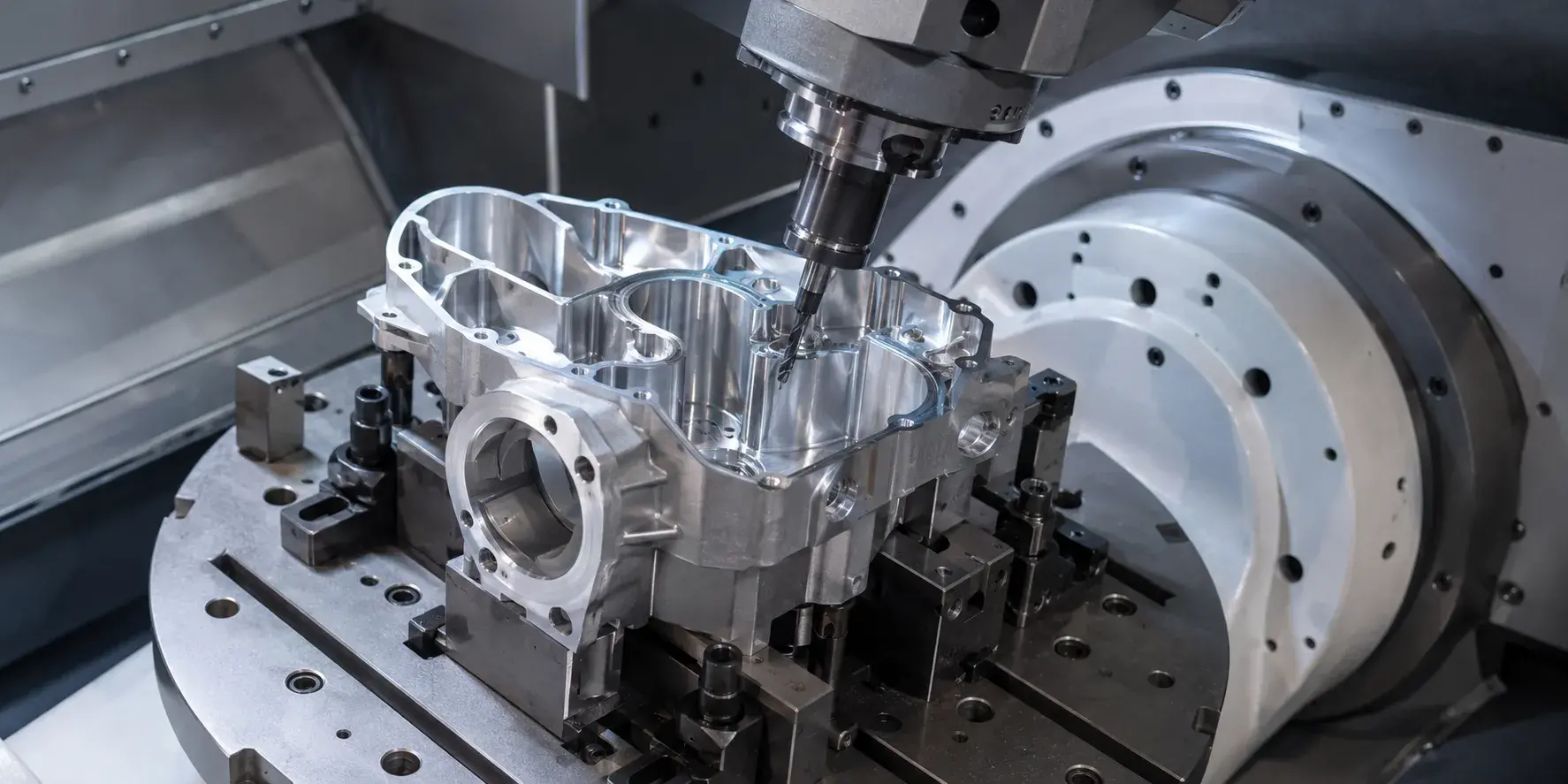
This makes it much easier to accurately machine angled holes, angled grooves, and features on the sides of a component.
This capability is especially useful for parts such as:
- Hydraulic blocks
- Aerospace brackets
- Medical implants
- Automotive housings
- Robotic joints
- Complex aluminum enclosures
In addition, for angled holes, 5-axis machining helps maintain better tool stability.
The tool can approach the surface in a more natural way, rather than being forced into an awkward or inefficient cutting position.
This subtle adjustment can lead to improved accuracy, better surface quality, and extended tool life.
Need Help With a Complex 5-Axis CNC Part?
Send us your CAD files and drawings. Our engineering team will review your part structure, machining risks, tolerance requirements, and recommend the right CNC machining solution.
Can a Horizontal Machining Center Perform 5-Axis Machining?
Yes, certain horizontal machining centers can be set up to perform 5-axis machining.
It is important to note that a horizontal machining center does not automatically qualify as a 5-axis machine.
Many horizontal machining centers operate in 3-axis or 4-axis configurations.However, with the addition of appropriate components such as a rotary table or extra rotary axes, a horizontal machining center can be adapted for 5-axis machining.
This configuration is especially beneficial for components that require efficient chip removal, machining from multiple sides, or access to deep internal features.
In actual production scenarios, the layout of the machine plays a significant role.
Although different types of 5-axis machines—such as vertical, horizontal, table-table, head-table, and gantry-style—may all be referred to as “5-axis,” they have distinct structural differences.
The most suitable machine for a particular application depends on factors like part size, weight, material type, required tolerances, and the direction of cutting.
For instance, a small medical titanium component and a large aluminum aerospace housing may both require 5-axis machining, but they might not be compatible with the same machine setup.
Can a 5-Axis CNC Machine Handle Complex Aluminum Parts?
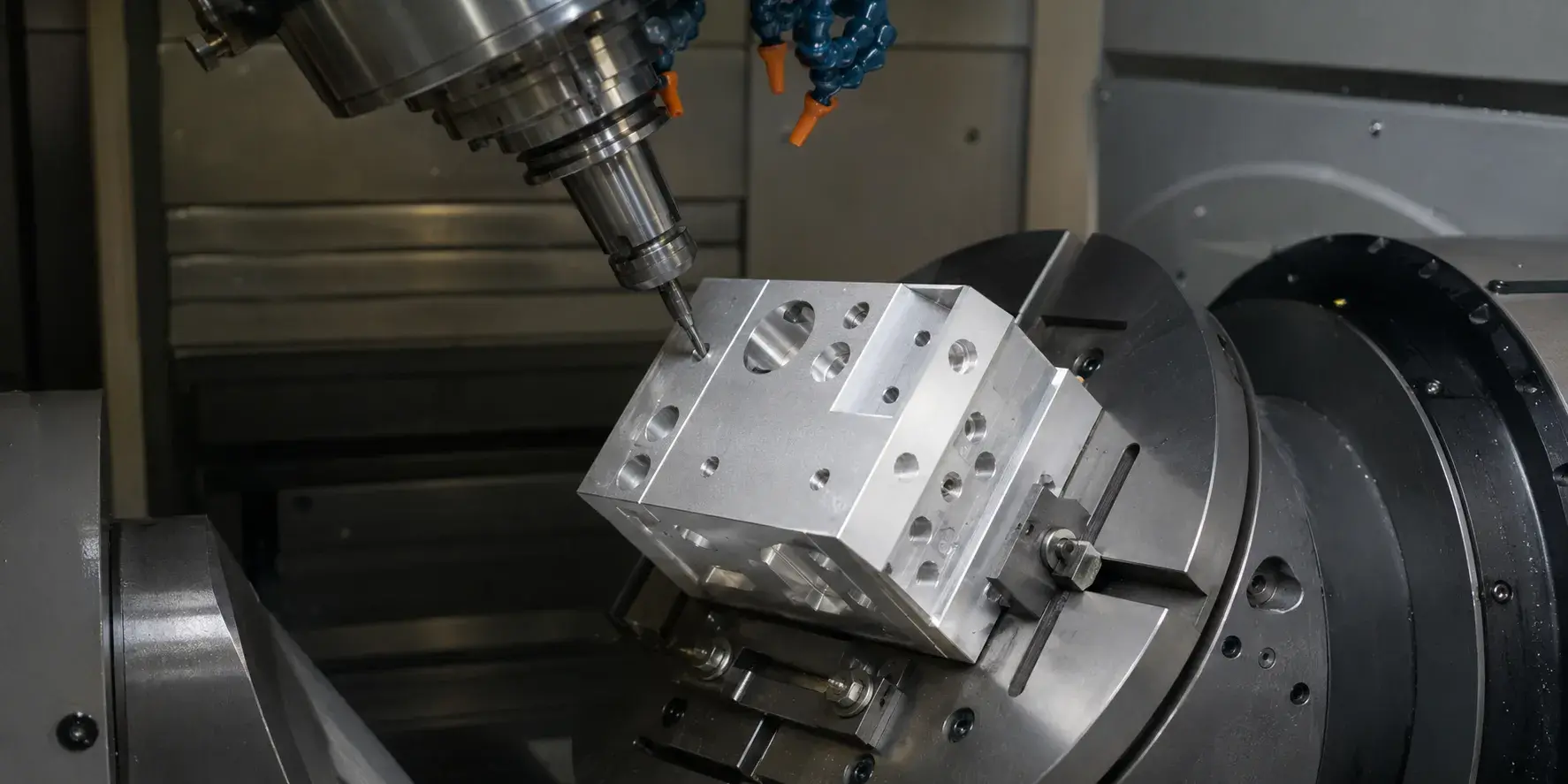
Yes, machining complex aluminum parts is one of the most common uses of 5-axis CNC technology.
Aluminum is a popular material because it is lightweight, easy to machine, and used in a wide range of industries.
However, creating complex aluminum parts can be challenging.
For example:
- Thin walls can bend or warp during the cutting process
- Deep cavities may require long cutting tools
- Undercuts can make it hard for tools to reach certain areas
- Multiple angled surfaces require precise positioning
- Large material removal can cause vibrations
- High surface finish standards may limit the types of tool paths used
A 5-axis CNC machine helps address many of these issues by improving tool access and reducing the need for multiple setups.
For instance, when machining a complex aluminum housing, the machine can rotate the part to directly reach side walls, pockets, and angled sections.
This can shorten the tool overhang and improve the stability of the cutting process.
However, the machine itself is not the only factor.
Successful 5-axis machining also depends on well-designed fixtures, appropriate tool selection, accurate CAM programming, proper cutting parameters, and thorough inspection.
A powerful machine with poor programming can still produce poor-quality parts.A difficult part requires not only the right equipment but also the right expertise and engineering experience.
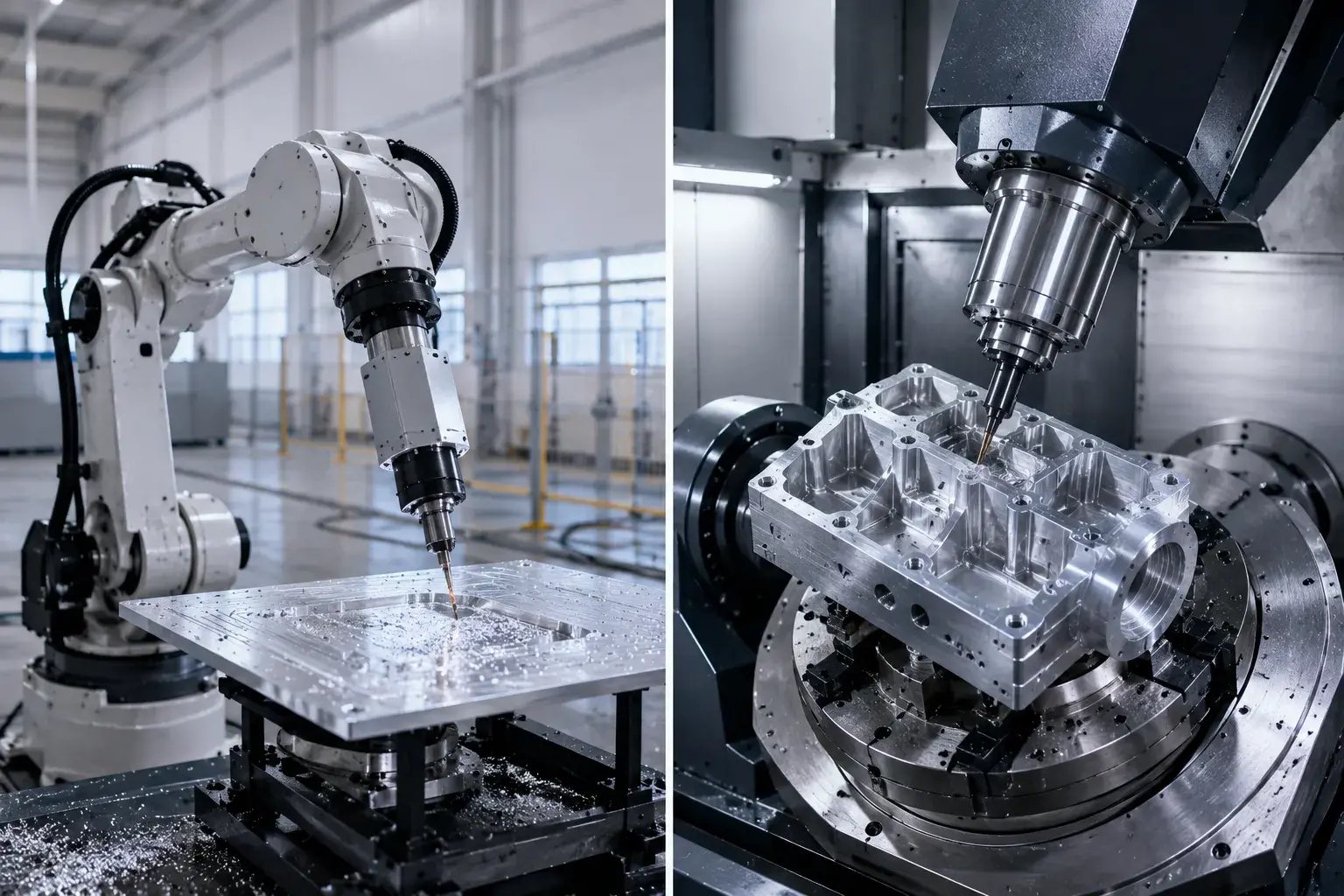
5-Axis CNC Machining Has Limitations
While 5-axis machining is highly capable, it is not a solution for every situation.
Some designs require adjustments to ensure they can be manufactured effectively.
For instance, achieving extremely sharp internal corners remains challenging with standard milling tools.Deep and narrow slots may require specialized cutting tools.Additionally, very thin walls can bend or warp even when the machine is precise.
There are also situations where using 5-axis machining is not the most cost-effective option.
If a part is simple, flat, and only needs to be machined from one or two sides, a 3-axis CNC milling process may be quicker and more economical.
It is not always wise to use 5-axis machining for every component.
A reliable machining supplier should not automatically suggest 5-axis machining just because it sounds advanced.
The key question should be:
Does this part actually require 5-axis machining?
If a 3-axis or 4-axis machining method can produce the part accurately at a lower cost, that may be the better option.
When Should You Choose 5-Axis CNC Machining?
You should consider using 5-axis machining if the part has complex geometry or if multiple setups could impact accuracy.
It is particularly beneficial when your part includes:
- Multiple machined faces
- Angled holes or angled surfaces
- Deep cavities
- Undercuts
- Complex curves
- Tight positional tolerances
- Thin walls
- High surface finish requirements
- Expensive material where minimizing waste is important
Another indication that 5-axis machining may be suitable is the number of setups required.
If a part needs to be clamped three or four times on a 3-axis machine, it might be worth exploring 5-axis machining as an alternative.Fewer setups typically lead to better consistency, reduced time spent on fixture preparation, and a lower chance of alignment errors.
How YUANYI Handles Complex 5-Axis CNC Parts
At YUANYI, we don’t typically look at a drawing and immediately conclude that it requires a 5-axis machining process.
Instead, we begin by analyzing the part’s structure.
We identify where the critical tolerances are, which features are difficult to access, whether the part might deform during machining, if the tool can enter safely, and if there is any risk of tool holder interference.
We also consider whether it is possible to reduce the number of setups without increasing the risk of machining issues.
For complex 5-axis parts, programming and simulation play a key role.
Before actual machining begins, we review toolpaths, tool holder clearance, movement of the rotary axes, fixture positioning, and potential collision areas.This is especially important when dealing with deep cavities, undercuts, or small internal features.
In some cases, solving a challenging part may require a shrink-fit toolholder, a smaller-diameter cutter, a specialized fixture, or an alternative machining sequence.
While these solutions may not appear remarkable at first glance, they often determine whether the final part is reliable or is plagued with problems.
Need Help With a Complex 5-Axis CNC Part?
Send us your CAD files and drawings. Our engineering team will review your part structure, machining risks, tolerance requirements, and recommend the right CNC machining solution.
Conclusion
A 5-axis CNC machine does more than just cut from five sides.
Its main benefit is allowing the cutting tool to access hard-to-reach areas in a more efficient and stable way.
This type of machine is great for creating angled holes, complex aluminum components, deep cavities, curved surfaces, and parts with multiple faces, all in fewer setups.
However, it’s not always the best option for every job.Simple parts may still be better made using 3-axis machining.
If your part has challenging geometry, tight tolerances, or features that are hard to reach, 5-axis machining could be a good choice.
At YUANYI, we assist customers by reviewing their designs, selecting the most appropriate machining method, and producing high-precision CNC parts from prototypes to small batch production.
Frequently Asked Questions
No. For simple parts, 3-axis machining is often faster and more cost-effective. 5-axis machining is better for complex parts, angled features, multi-face machining, and difficult tool access.
Yes. 5-axis CNC machining is often used for titanium parts, especially in aerospace and medical applications. The key is using the right cutting tools, cutting parameters, cooling method, and machine rigidity.
Not always. Some complex parts can be made with 3-axis or 4-axis machining using the right fixture. 5-axis is usually worth considering when tool access, setup accuracy, or angled features become difficult.
Sometimes, yes. The hourly rate may be higher, but 5-axis machining can reduce fixtures, setup time, and re-clamping errors. For complex parts, the total cost may be lower than using several 3-axis setups.
Common materials include aluminum, stainless steel, titanium, brass, copper, engineering plastics, and alloy steel. The actual result depends on machine rigidity, tool selection, cutting strategy, and tolerance requirements.



