

Inconel CNC machining is the process of manufacturing Inconel alloy parts using CNC milling, CNC turning, drilling, and multi-axis machining technologies. Due to Inconel’s excellent high-temperature resistance, corrosion resistance, and mechanical strength, it is widely used in industries such as aerospace, energy, oil and gas, and medical devices.
What is Inconel?
Inconel is a class of nickel-based superalloys.
Compared to ordinary steel or aluminum alloys, Inconel maintains excellent mechanical properties in extremely high-temperature environments, while also offering outstanding corrosion and oxidation resistance.
For this reason, Inconel is commonly used in high-temperature, high-pressure, and corrosive environments.
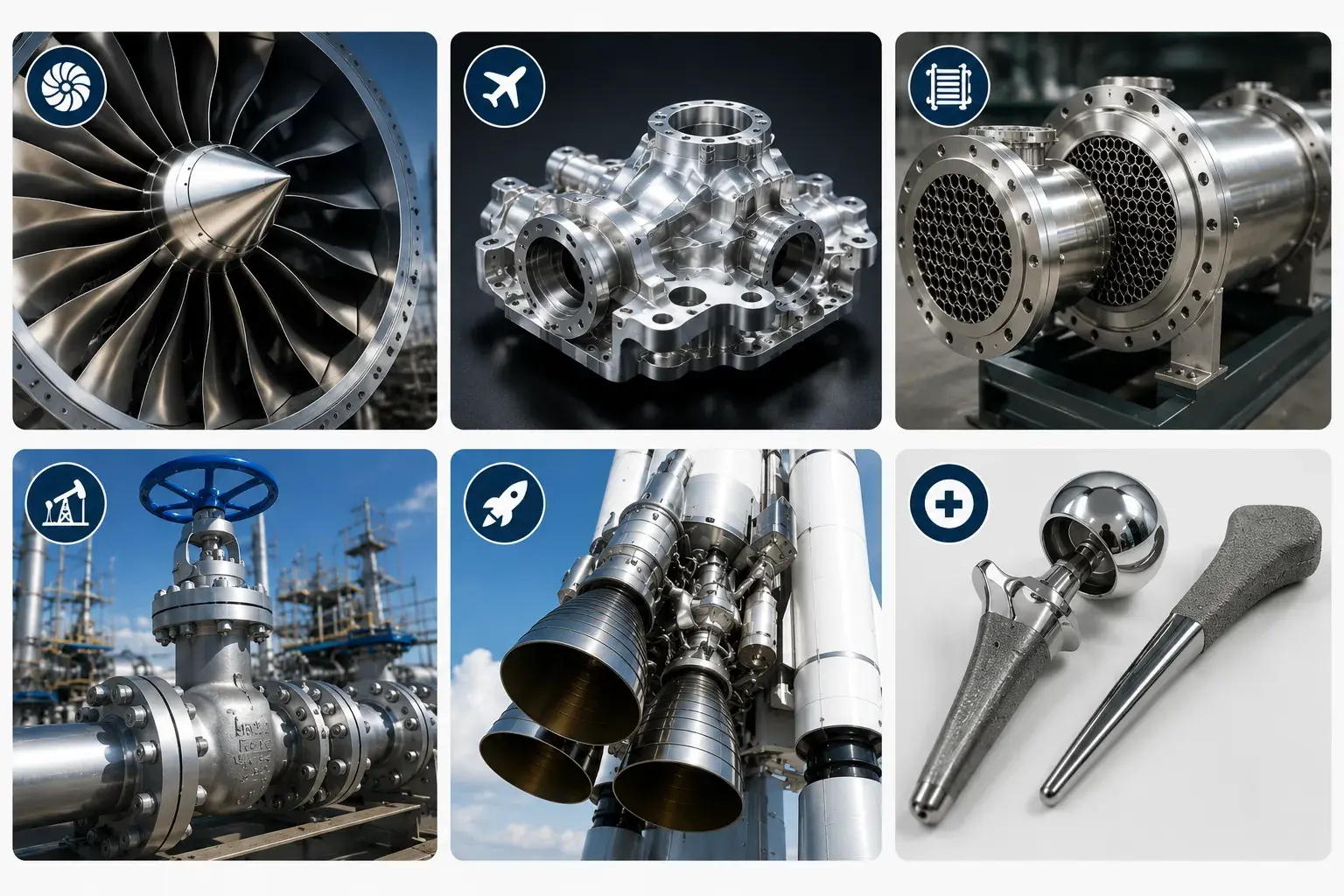
Typical applications include:
- Aviation engine components
- Turbine blades
- Oil and gas equipment
- Chemical processing equipment
- Nuclear power equipment
Medical devices
In the field of CNC machining, the two most common grades are Inconel 625 and Inconel 718.
Common Inconel Grades
Inconel 625
Inconel 625 offers excellent corrosion resistance and good weldability.
Key Features:
- Excellent resistance to seawater corrosion
- Good oxidation resistance
- High fatigue strength
Good weldability
Commonly used in:
- Offshore engineering equipment
- Chemical processing equipment
- Heat exchangers
- Offshore oil and gas platforms
Inconel 718
Inconel 718 is one of the most common nickel-based high-temperature alloys in the aerospace industry.
Compared to 625:
- Higher strength
- Better high-temperature resistance
- Better fatigue resistance
Widely used in:
- Aviation engine components
- Turbine discs
- Rocket propulsion systems
- High-temperature structural components
Many precision aerospace parts are manufactured using Inconel 718.
Why Is Inconel So Difficult to Machine?
Many engineers believe that:
Machining Inconel is more difficult than machining stainless steel and titanium alloys.
The main reasons are as follows.
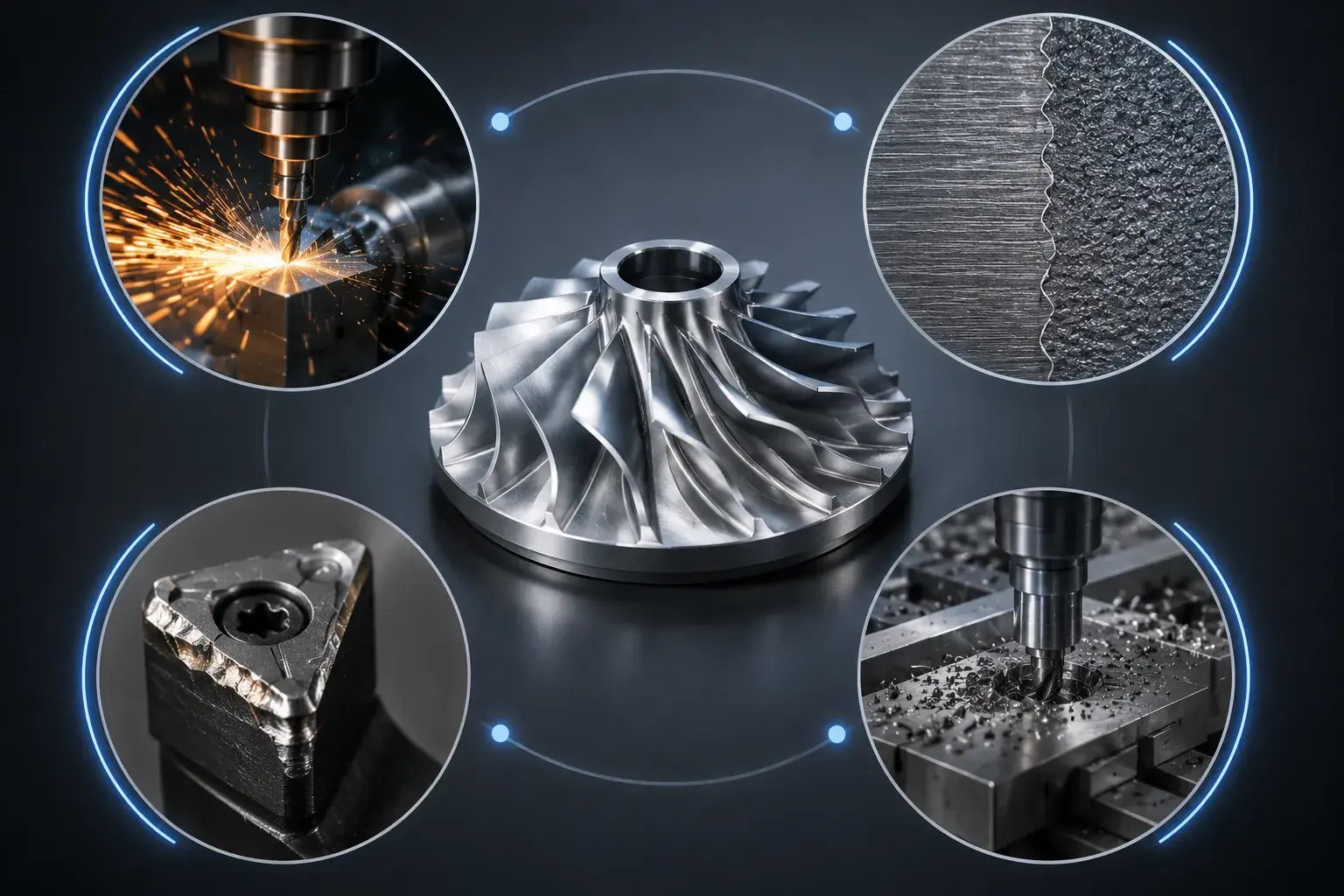
Severe Work Hardening
Inconel undergoes rapid work hardening during the cutting process.
Simply put, as the cutting tool cuts into the material, the surface becomes progressively harder.
If the cutting parameters are inappropriate or if the tool is rubbing against the material rather than cutting it, the material’s hardness will increase further.
This leads to:
- Increased tool wear
- Deteriorated surface quality
- Reduced machining efficiency
Therefore, when machining Inconel, it is essential to maintain stable cutting and avoid repeated friction.
Exceptional High-Temperature Resistance
For many metals, the material softens as the temperature rises.
However, Inconel retains high strength even in high-temperature environments.
This means:
Greater cutting forces are required during machining.
At the same time, more heat is generated.
This is also one of the key reasons why machining is more challenging.
Poor Thermal Conductivity
Inconel’s thermal conductivity is significantly lower than that of aluminum alloys and ordinary steel.
The large amount of heat generated during cutting cannot be dissipated quickly.
Heat accumulates in:
- The cutting edge
- The cutting zone
- The workpiece surface
This accelerates tool wear.
Rapid Tool Wear
Due to the combined effects of high temperature, high strength, and work hardening, tool life is often significantly shorter than when machining ordinary materials.
Common forms of wear include:
- Rear face wear
- Chip-out
- Crescent-shaped wear
- Tip chipping
Therefore, machining Inconel typically requires the use of high-performance tools and optimized cutting parameters.
Just how difficult is it to machine Inconel?
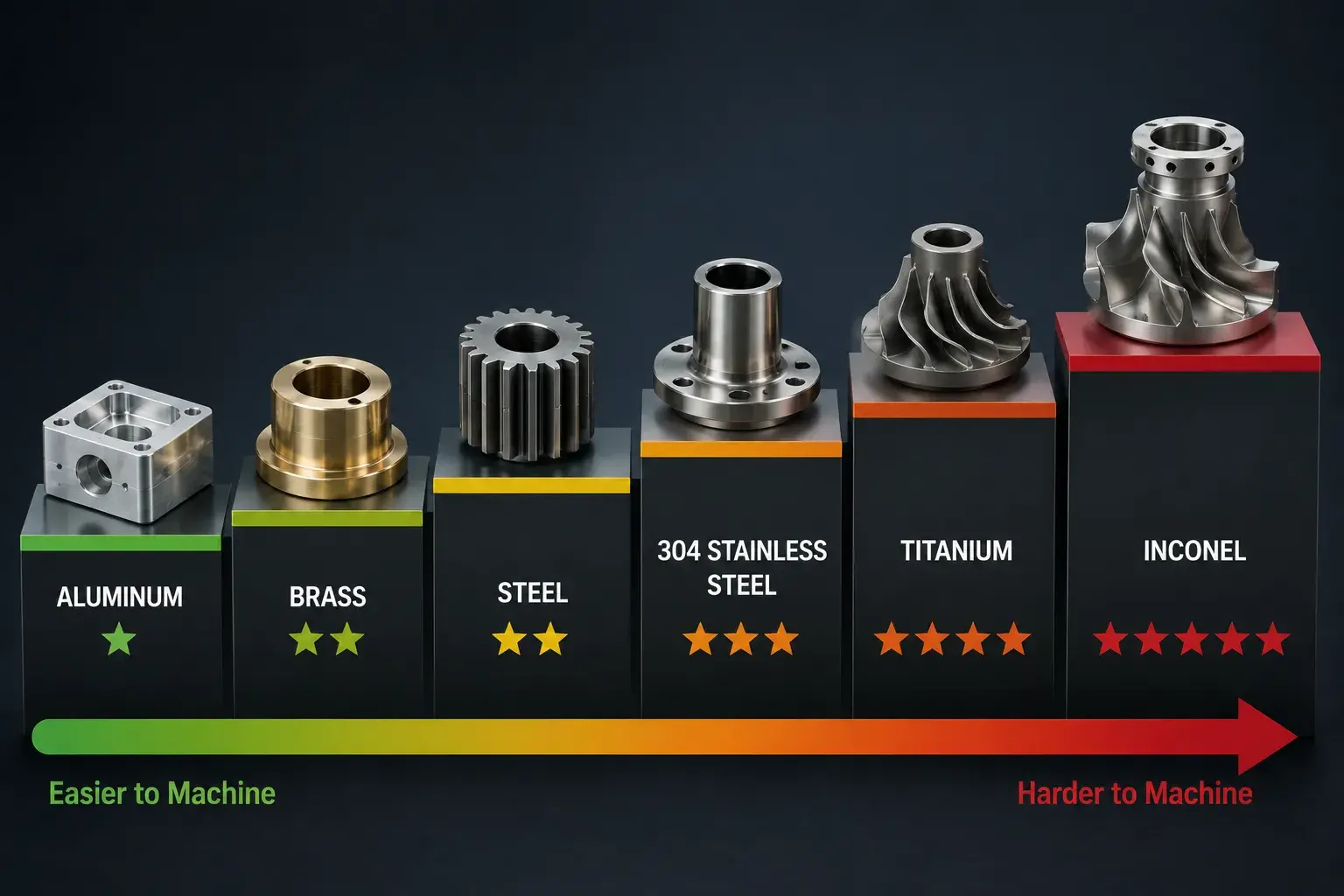
Below is a simple comparison of the difficulty levels involved in machining different materials.
| Material | Machining Difficulty |
|---|---|
| Aluminum 6061 | ★ |
| Brass | ★ |
| Mild Steel | ★★ |
| Stainless Steel 304 | ★★★ |
| Titanium Ti-6Al-4V | ★★★★ |
| Inconel 718 | ★★★★★ |
For many manufacturing companies, the ability to consistently machine Inconel parts typically indicates that they possess strong manufacturing capabilities and high-quality equipment.
What cutting tools are typically used for machining Inconel?
Successful machining of Inconel depends on the correct choice of cutting tools.
Common options include:
Coated carbide cutting tools
This is the most common choice.
They offer:
- Good wear resistance
- High toughness
- Suitability for most
- Inconel machining applications
Ceramic cutting tools
Suitable for high-speed rough machining.
Advantages:
- High heat resistance
- High machining efficiency
However, they require high machine rigidity.
High-Pressure Cooling Systems
In addition to the cutting tools themselves, high-pressure cooling is equally important.
High-pressure cooling can:
- Reduce cutting temperatures
- Improve chip evacuation
- Extend tool life
- Enhance machining stability
How Should One Choose Between Inconel and Titanium Alloys?
Many aerospace projects involve choosing between Inconel and titanium alloys.
Here is a brief comparison:
| Property | Inconel | Titanium |
|---|---|---|
| Strength | Very High | High |
| High-Temperature Resistance | Excellent | Good |
| Weight | Heavier | Lighter |
| Corrosion Resistance | Excellent | Excellent |
| Machining Difficulty | Very High | High |
| Cost | Higher | High |
Generally speaking:
If a part needs to operate in a high-temperature environment for extended periods, Inconel is usually the better choice.
If weight reduction is a priority, titanium alloys often offer greater advantages.
Which industries use Inconel-machined parts?
Aerospace
Many critical components in aircraft engines and gas turbines are manufactured from Inconel.
For example:
- Turbine blades
- Turbine discs
- Combustion chamber components
Energy Industry
Gas turbines and power generation equipment are often required to withstand high-temperature environments over long periods.
Inconel provides consistent performance.
Oil and Gas
Offshore platforms and downhole equipment are frequently exposed to corrosive environments.
Inconel’s excellent corrosion resistance makes it an ideal material.
Medical Devices
Some high-performance medical devices and implantable components are also made from Inconel.
How We Support Inconel CNC Machining Projects
At YUANYI, we have extensive experience in machining Inconel and can support the prototype development and mass production of high-temperature alloy parts such as Inconel 625 and Inconel 718. Leveraging our 3-axis, 4-axis, and 5-axis CNC machining capabilities, we can achieve machining tolerances as tight as ±0.005 mm and provide CMM inspection reports and comprehensive dimensional reports. Whether for aerospace, energy equipment, or oil and gas projects, our engineering team is able to provide professional DFM recommendations, quick quotes, and reliable manufacturing support.
Need Reliable Inconel CNC Machining?
Send us your CAD files or drawings. Our engineering team will review your Inconel part, provide DFM advice, and offer a fast quotation within 24 hours.
Get a Free QuoteConclusion
Inconel is a high-performance nickel-based superalloy widely used in the aerospace, energy, and oil and gas industries. Although it offers exceptional high-temperature and corrosion resistance, these very properties also make it one of the most challenging materials to machine.
By selecting the appropriate cutting tools, cutting parameters, and machining strategies—combined with advanced 3-axis, 4-axis, or 5-axis CNC machines—manufacturers can still consistently produce high-precision Inconel parts. For complex structures and high-performance applications, Inconel remains an irreplaceable material in many engineering projects.
Frequently Asked Questions
Yes. Modern CNC milling machines, CNC lathes, and 5-axis machining centers can successfully machine Inconel alloys. However, due to the material’s high strength, heat resistance, and work-hardening characteristics, proper tooling, cutting parameters, and machining experience are essential.
Inconel machining typically costs more than machining aluminum or stainless steel because of slower cutting speeds, increased tool wear, longer machining times, and higher inspection requirements.
Tolerance capabilities depend on part geometry and size. For most precision Inconel components, tolerances up to ±0.005 mm can be achieved using appropriate machining processes and inspection methods.
Yes. For complex Inconel components, 5-axis machining can reduce setup changes, improve dimensional accuracy, shorten machining time, and provide better access to difficult-to-reach features.
Yes. We support everything from single-piece prototypes and engineering validation parts to low-volume production and full-scale manufacturing. There is no minimum order quantity for most Inconel machining projects.
Most quotations can be provided within 24 hours after receiving your CAD files or drawings. For complex parts, our engineers may conduct a manufacturability review to ensure accurate pricing and lead time estimates.



