
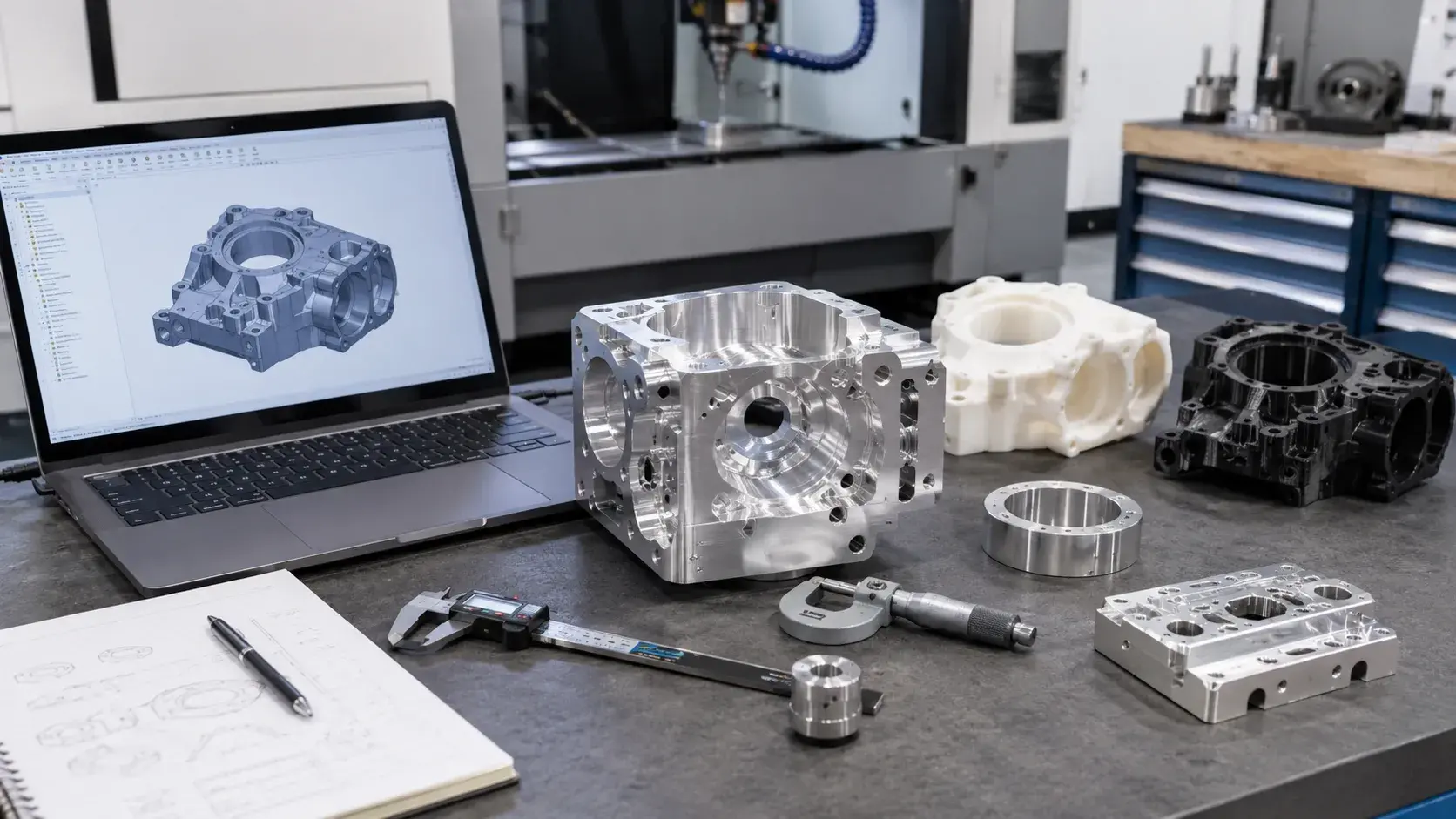
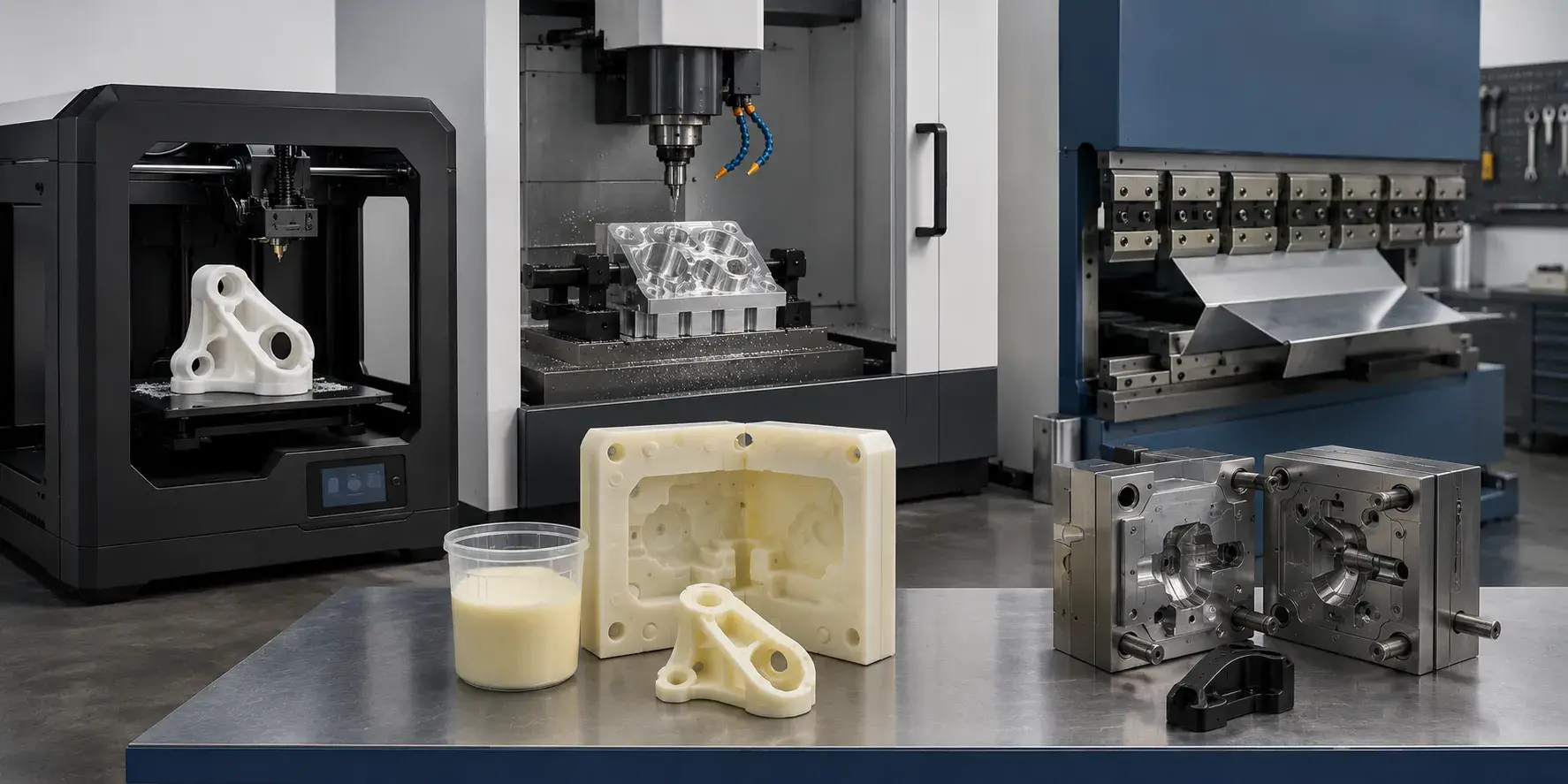
Rapid prototyping plays an important role in the development of products.It allows for the fast production of physical models before moving on to making molds or starting large-scale manufacturing.This process helps engineers check if their designs are solid and work as intended.
In many cases, using just 3D drawings isn’t enough.
Problems like how parts fit together, the exact placement of holes, the strength of materials, and the quality of the surface can be better understood through actual prototypes.
What is Rapid Prototyping?
Rapid prototyping, simply put, is the process of quickly manufacturing one or more physical prototypes that closely resemble the final product, based on CAD files or engineering drawings.
Its purpose is not direct mass production, but rather design validation, functional testing, assembly inspection, appearance verification, or customer sample evaluation. Through prototypes, engineers can more intuitively assess the feasibility of a product design, rather than waiting until the mold is completed or mass production begins to discover problems.
Rapid prototypes can include plastic housings, metal structural components, test fixtures, and functional parts, as well as small batches of parts used for trial assembly, certification, or market testing.
Rapid Prototyping vs Traditional Prototyping

Traditional prototyping typically involves a lengthy process and often relies on manual fabrication, simple jigs, or even the advance production of molds. If design changes are needed, both time and costs can be significant.
Rapid prototyping offers greater flexibility. It is typically manufactured directly from 3D CAD data and can be completed quickly using methods such as 3D printing, CNC machining, vacuum casting, and sheet metal fabrication.
The biggest difference between the two is that traditional prototyping is better suited for slow-paced, low-iteration development approaches, while rapid prototyping is better suited for the needs of modern product development—rapid validation, rapid modification, and rapid project advancement.
For engineering teams, rapid prototyping isn’t about “making a model just to see what it looks like”; rather, it’s about confirming as early as possible whether a design will actually work.
Advantages of Rapid Prototyping
Easily Realize and Explore Concepts
Rapid prototyping quickly turns CAD designs into physical objects, allowing engineers to more intuitively evaluate structure, dimensions, appearance, and user experience, and promptly identify design issues that are difficult to spot in computer models.
Communicate Ideas Effectively
Compared to drawings and renderings, physical prototypes make it easier for engineers, clients, procurement teams, and suppliers to understand the design intent, reduce communication errors, and more quickly confirm which details need modification or can move forward.
Save Cost and Time
Rapid prototyping can identify assembly, dimensional, and structural issues before tooling or mass production begins, avoiding costly rework later on and thereby saving overall development time and project costs.
Design Iteratively and Incorporate Changes Quickly
Rapid prototyping supports multiple rounds of design iterations. Engineers can quickly modify CAD files based on test results and produce new prototypes, bringing the product design closer to its final, production-ready state more quickly.
Test Thoroughly and Minimize Design Flaws
Rapid prototyping can be used not only for visual verification but also for assembly and functional testing. In particular, CNC-machined prototypes can be manufactured using actual materials, helping customers validate strength, fit, and real-world performance in advance.
Main Methods Used in Rapid Prototyping
| Method | Best For | Main Advantage | Limitation |
|---|---|---|---|
| 3D Printing | Concept models, complex shapes | Fast and flexible | Limited material strength |
| CNC Machining | Functional prototypes, real materials | High accuracy and strength | Higher cost for complex parts |
| Vacuum Casting | Small-batch plastic samples | Good for appearance samples | Material differs from injection molding |
| Sheet Metal Fabrication | Brackets, panels, enclosures | Fast for metal sheet parts | Limited to sheet structures |
| Rapid Tooling | Pre-production plastic parts | Closer to injection molding | Requires tooling cost |
3D Printing
3D printing is suitable for quickly producing visual models, concept prototypes, and plastic prototypes with complex shapes. Its advantages include speed and high design flexibility, making it ideal for validating form and structural concepts early in product development.
However, if parts require the strength of real materials, high-precision assembly, or long-term functional testing, standard 3D printing may not be the best choice.
CNC Machining
CNC machining involves cutting parts from metal or plastic materials using computer-numerically controlled (CNC) machine tools. It utilizes genuine engineering materials, offers high machining precision, and ensures consistent surface quality.
For prototypes made from materials such as aluminum, stainless steel, brass, copper, titanium, POM, PEEK, and PC, CNC machining is ideal for functional testing, assembly verification, and small-batch trial production.
Vacuum Casting
Vacuum casting is commonly used for producing small quantities of plastic parts. It is suitable for creating visual samples, display pieces, and small-batch plastic prototypes.
This method can simulate different colors, levels of transparency, and textures, but the material properties may differ from those of the final injection-molded part.
Sheet Metal Fabrication and Waterjet Cutting
For sheet metal parts—such as brackets, panels, enclosures, and mounting plates—sheet metal fabrication, waterjet cutting, or laser cutting can be used to rapidly produce prototypes.
This approach is suitable for validating sheet metal structures, hole placements, bend angles, and assembly relationships.
Rapid Tooling and Prototype Injection Molding
When the design is relatively stable and dozens or hundreds of plastic prototypes are needed, rapid tooling or prototype injection molding can be considered.
This process is closer to mass production and is suitable for validating materials, structures, and small-batch production results before formal mold making.
CNC Machining for Rapid Prototyping
CNC machining is a dependable method for creating rapid prototypes, especially when a part needs high precision, real engineering materials, and functional performance.
Unlike methods that build parts layer by layer, CNC machining shapes the final form directly from a block of metal or plastic.This results in a prototype that closely resembles the final production part in terms of strength, stability, surface quality, and how well it fits during assembly.
How CNC Rapid Prototyping Works
CNC rapid prototyping typically begins with a 3D CAD file.
Engineers examine the part’s design, material choice, tolerance requirements, how easily it can be machined, and the desired surface finish.They then generate a CAM program and toolpaths based on these factors.
Once the machining is complete, the part undergoes deburring, surface finishing, and a final inspection.Since no mold is needed, CNC machining is well-suited for making single prototypes and small batches of samples.
Materials Used for CNC Rapid Prototypes
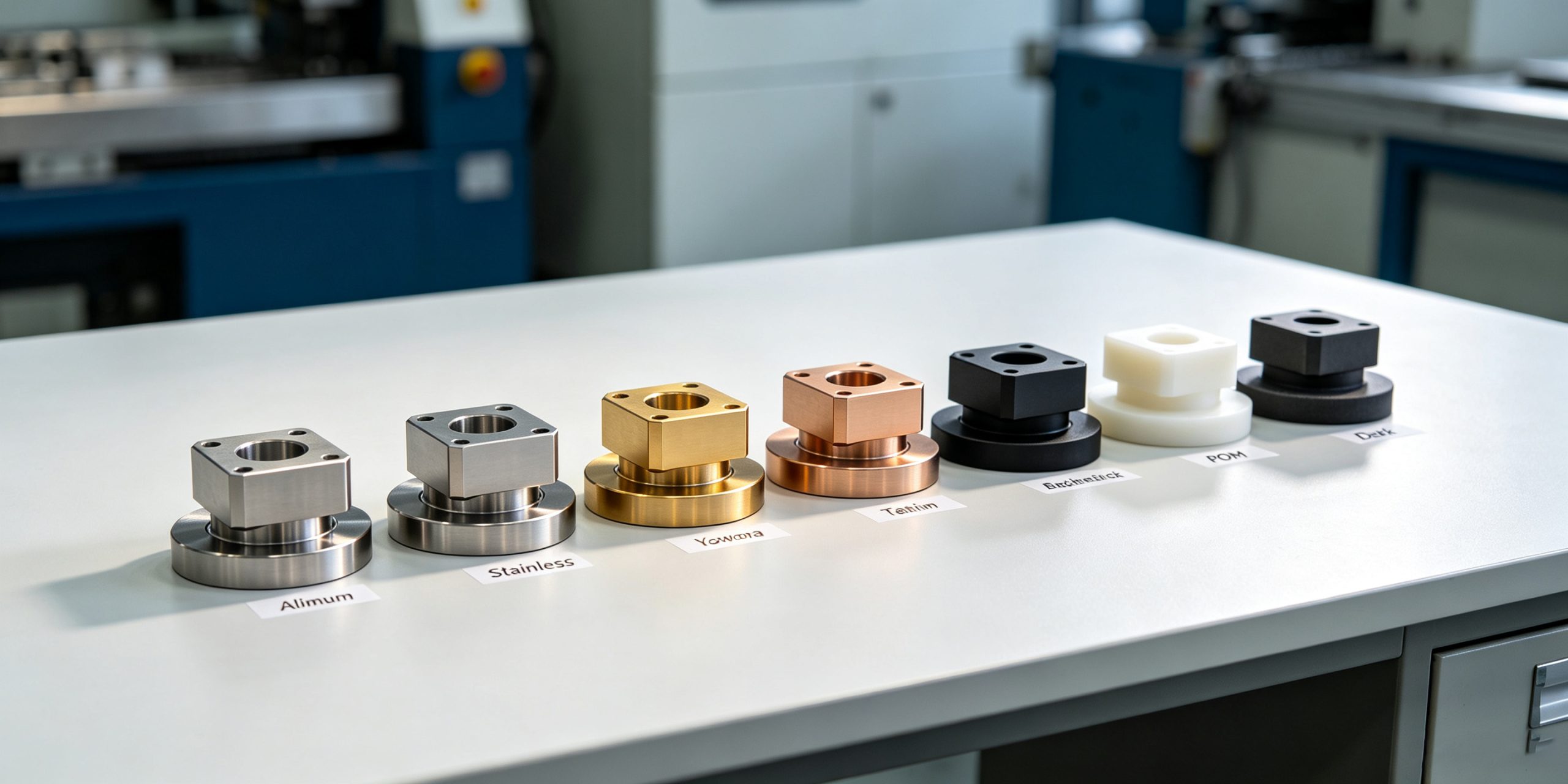
CNC machining can work with a variety of real engineering materials, such as aluminum alloys 6061 and 7075, stainless steel, brass, copper, titanium alloys, as well as plastics like POM, ABS, PC, nylon, and PEEK.
This variety allows engineers to test the strength, weight, corrosion resistance, heat resistance, and assembly performance of parts using materials that closely match those used in the final product.
Tolerances and Surface Finishes for CNC Prototypes
CNC prototypes can achieve consistent dimensional accuracy for key features like holes, threads, sealing surfaces, locating surfaces, and assembly fits.
They can also be treated with bead blasting, anodizing, polishing, plating, or black oxide coating.These treatments help the prototype closely resemble the final product in both its appearance and functionality.
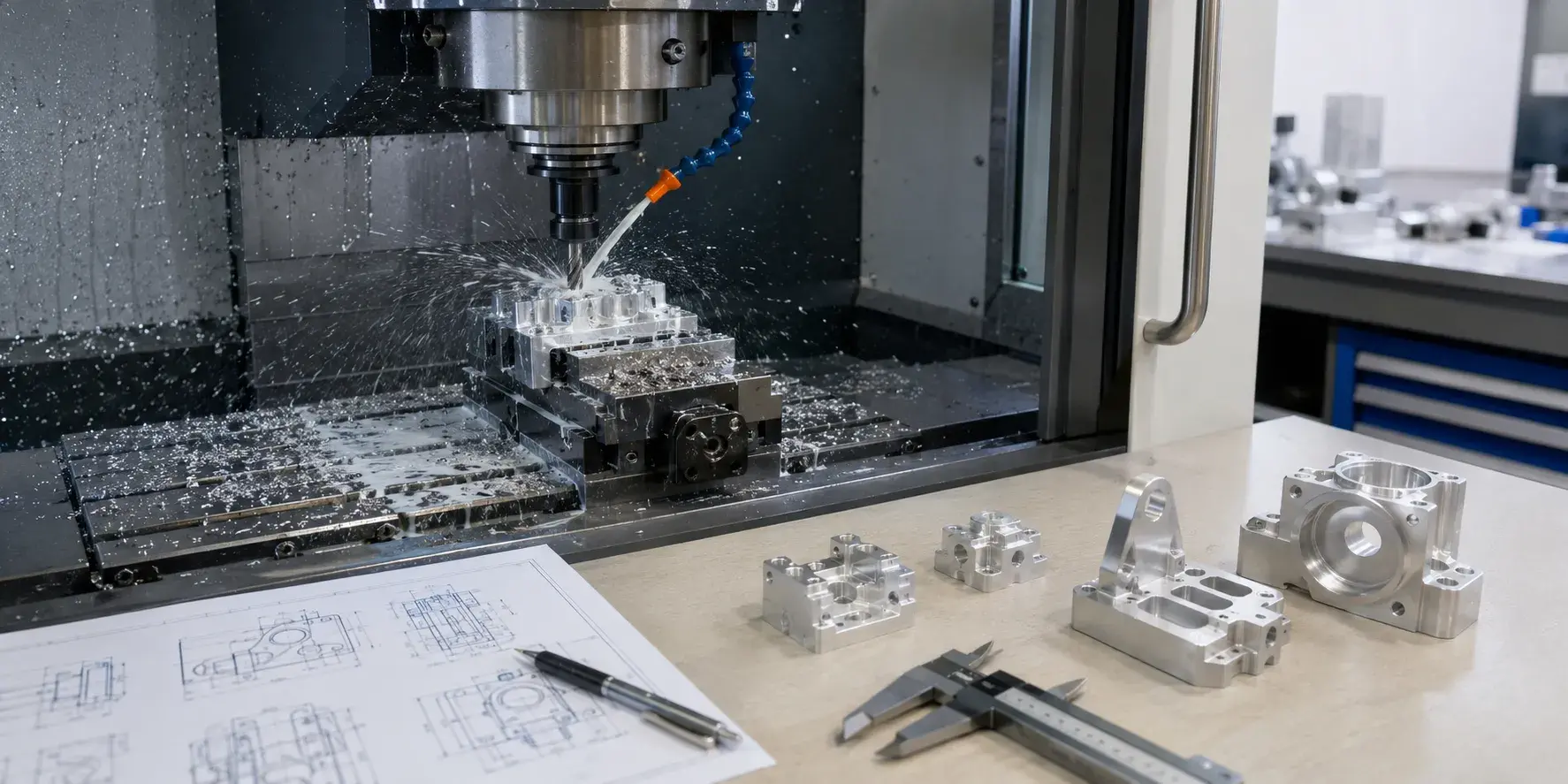
When Should You Use CNC Machining for Rapid Prototyping?

When You Need High Accuracy
If a part includes precision holes, bearing seats, threaded holes, locating features, or assembly mating surfaces, CNC machining makes it easier to achieve consistent dimensional control.
These types of prototypes are typically used directly for assembly testing, so dimensional accuracy is critical.
When You Need Real Engineering Materials
If test results must reflect the performance of the final material, prototypes should be made from the actual material.
For example, when it comes to metal structural components, heat sinks, moving parts, or engineering plastic parts, CNC machining provides more valuable insights than using simulated materials.
When You Need Functional Testing
When prototypes require strength testing, airtightness testing, motion testing, assembly testing, or validation under actual operating conditions, CNC-machined prototypes are typically more reliable.
This is because they can be made from real materials, with critical dimensions controlled according to engineering drawings.
When You Need Stronger Parts Than 3D Printing
Many 3D-printed prototypes are suitable for proof-of-concept testing of appearance and structure, but they are not necessarily suitable for load-bearing applications or long-term use.
If parts require higher strength, better temperature resistance, or more stable mechanical properties, CNC-machined metal or plastic prototypes are usually the better choice.
Applications of CNC Rapid Prototyping
CNC rapid prototyping is suitable for a wide range of industries that require high precision, real materials, and functional validation. Common applications include:
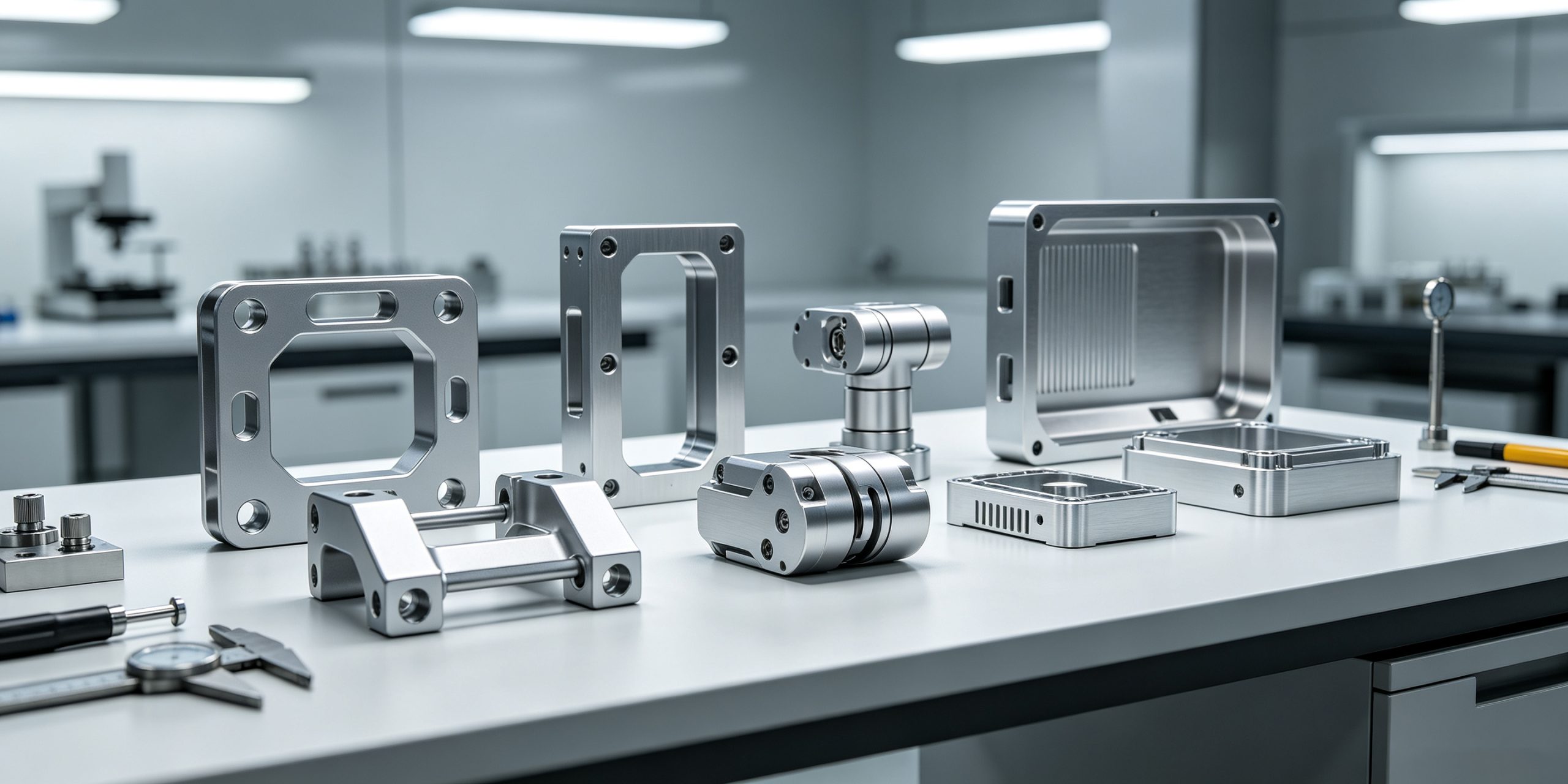
Automotive prototypes: Used for automotive brackets, fasteners, sensor mounts, test fixtures, heat sinks, and functional validation parts; ideal for in-vehicle testing and assembly validation prior to full-scale production.
Aerospace components: Used for prototypes made of aluminum, titanium, and stainless steel—such as brackets, housings, fasteners, and structural test parts—to help engineers validate lightweight designs and manufacturing feasibility.
Medical device parts: Used for surgical instrument components, device housings, fasteners, fixtures, and test assemblies, meeting the dimensional accuracy, surface quality, and material stability requirements for medical device prototypes.
Robotics and automation parts: Used for motor mounts, joint housings, grippers, sensor brackets, connecting plates, and mounting brackets, helping teams quickly complete assembly testing and structural optimization.
Electronics and industrial equipment components: Used for aluminum alloy housings, heat sinks, shielding covers, panels, tooling fixtures, and structural brackets, suitable for verifying appearance, heat dissipation, assembly, and functional performance.

Rapid Prototyping Examples
Functional Metal Prototype
For example, an aluminum structural component requires verification of hole locations, mating surfaces, and load-bearing capacity before mass production. By creating a functional metal prototype through CNC machining, engineers can directly assemble and test the part.
If deviations in hole locations, spatial interference, or insufficient structural strength are discovered, the design can be modified before formal production.
Plastic Housing Prototype
For electronic device or handheld tool housings, plastic prototypes can be machined from ABS, PC, POM, or acrylic to verify appearance, internal space, button placement, and assembly relationships.
These prototypes are more practical than simple display models because they can be used directly for assembly and customer approval.
Low-Volume Prototype Parts Before Production
For some projects, 5, 10, or several dozen prototype parts need to be produced before full-scale mass production begins, for customer testing, certification verification, or market trials.
CNC machining does not require mold making, making it ideal for this transitional phase characterized by low quantities and high standards. Once the design is confirmed, production can proceed to low-volume production.
Why Choose YUANYI for CNC Rapid Prototyping?
YUANYI offers precision CNC rapid prototyping services to international clients, supporting the creation of single prototypes, small batch production, and custom CNC machined components.
With over 13 years of experience in CNC machining, we assist customers in reviewing design concepts, selecting appropriate materials, managing critical tolerances, and choosing the right surface finish for either testing or final application.
For prototype projects, we offer no minimum order quantity, quick quotations, fast turnaround times, and precise machining with tight tolerances.
We can achieve accuracy as fine as ±0.005mm, depending on the part’s shape and design specifications.
Before shipping, every prototype is thoroughly checked for dimensions and appearance to ensure it meets the customer’s requirements and is suitable for assembly, functional testing, or sample approval.
How to Start a CNC Rapid Prototyping Project with YUANYI
Starting a CNC rapid prototyping project with YUANYI is simple. Send us your design files and requirements, and our engineering team will review the project, confirm the manufacturing details, and arrange machining, inspection, and delivery.
Upload CAD Files
Send your 3D CAD files such as STEP, STP, IGES, or X_T, together with drawings if critical tolerances are required.
DFM Review & Quote
Our engineers review the part structure, material, tolerances, machining difficulty, and surface finish requirements.
Confirm Details
Confirm the material grade, quantity, key dimensions, tolerance requirements, surface treatment, and delivery schedule.
Machining & Delivery
We arrange CNC machining, deburring, surface finishing, inspection, packaging, and delivery for testing or sample approval.
Conclusion
Rapid prototyping helps engineering teams validate designs faster, reduce development risks, and move from concept to production with more confidence. For high-precision functional prototypes that require real materials, CNC machining is one of the most reliable options.
If you need CNC machined prototypes for testing, assembly validation, or low-volume production, send your CAD files to YUANYI for a fast quotation and DFM review.
FAQ About Rapid Prototyping
Yes. CNC machining is ideal for high-precision prototypes made from real materials that are suitable for functional testing—particularly for metal and engineering-grade plastic prototypes.
Not necessarily. 3D printing is well-suited for early-stage visual models and proof-of-concept designs, whereas CNC prototyping is better for functional testing, assembly verification, and testing with actual production materials.
The choice depends primarily on the intended use of your prototype.
Typically, 3D CAD files (such as STEP, STP, IGES, or X_T formats) are required. If the part has specific requirements regarding critical tolerances, threads, surface finishes, or inspection criteria, providing 2D drawings alongside the 3D files is recommended.
Yes. YUANYI has no minimum order quantity (MOQ) requirement; we can machine single prototypes, as well as support small-batch sample runs and subsequent low-volume production.
Lead times depend on part complexity, material, quantity, tolerances, and surface finish requirements. Standard prototype projects can usually be scheduled quickly, while complex parts require more time for machining and inspection.
Common materials include aluminum, stainless steel, brass, copper, titanium, POM, PEEK, Nylon, PC, ABS, and more.
If you are unsure about material selection, our engineering team can provide recommendations based on your application requirements.
Yes. Since CNC prototypes are machined from real engineering-grade materials, many parts can be used directly for assembly testing, strength testing, motion testing, and customer sample validation.
Yes. YUANYI can transition from single-unit prototype machining to low-volume production, helping customers move seamlessly from design validation to small-batch manufacturing.



