
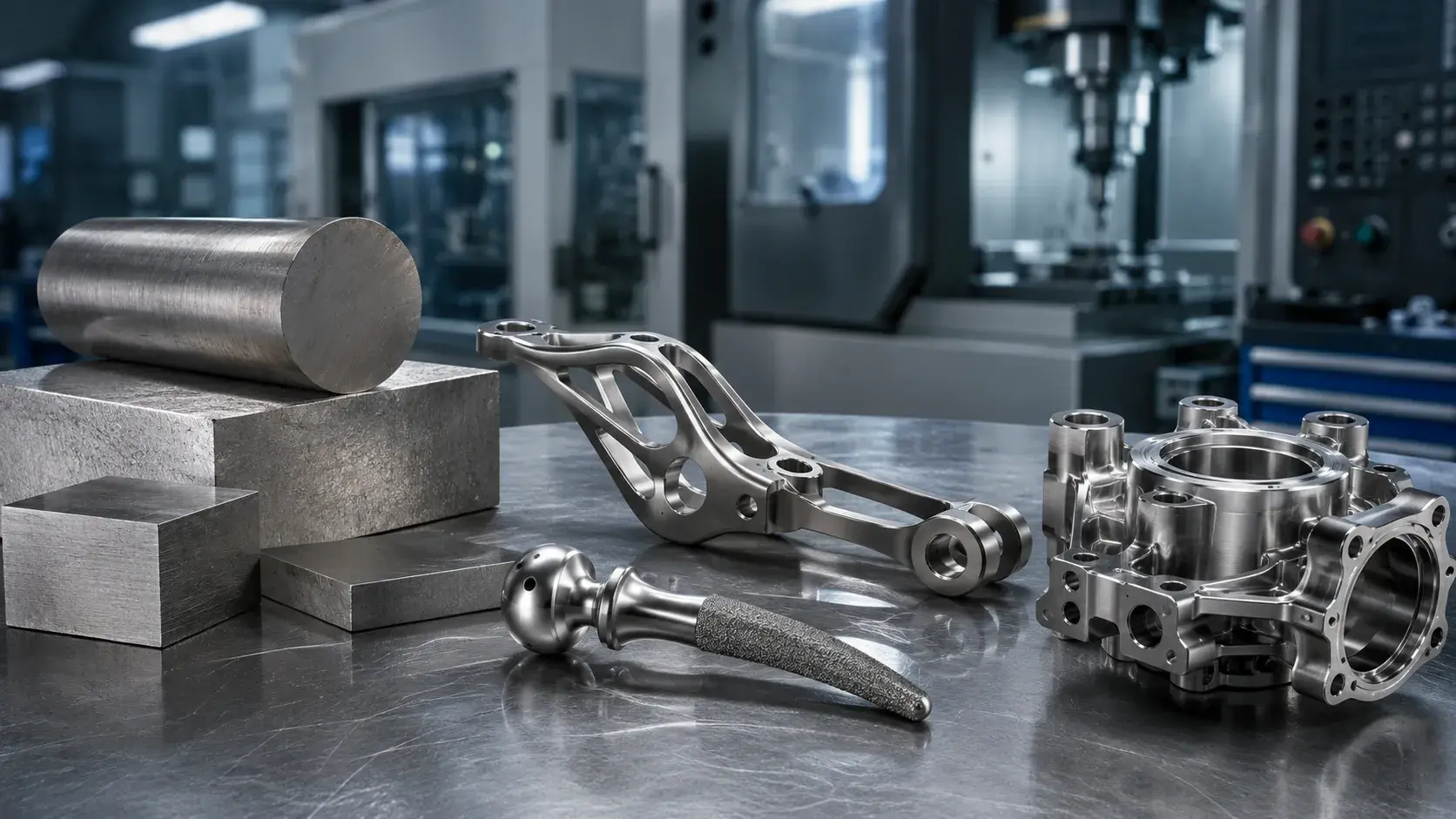
Titanium is a light yet strong metal that is highly resistant to corrosion and offers a great balance between strength and weight.It is commonly used in various industries such as aerospace, medical, automotive, and precision manufacturing.

What Is Titanium?
Titanium is a chemical element represented by the symbol Ti and has an atomic number of 22.It is a transition metal that belongs to Group 4 on the periodic table.
Titanium occurs naturally in minerals such as ilmenite and rutile.
Using industrial methods, titanium can be processed into forms that are useful for commercial purposes, including pure titanium and titanium alloys.
Unlike many other common metals, titanium has several beneficial properties:
- It is strong yet lightweight.
- It resists corrosion very well.
- It performs well under high temperatures.
- It is compatible with living tissues.
Because of these features, titanium is used in situations where the performance of the material is more important than its cost.
Is Titanium Magnetic?
The answer is: titanium is generally considered a non-magnetic metal.
Titanium is a weakly paramagnetic material, which means it has a very small reaction when placed in a magnetic field.
Unlike strongly magnetic metals like iron, nickel, and cobalt, titanium does not attract common magnets under normal conditions.
This property makes titanium appropriate for use in situations where magnetic interference should be kept to a minimum.
Key Properties of Titanium
Titanium has gained significance as an engineering material due to its unique combination of light weight, strong structure, resistance to corrosion, and long-lasting performance.
High Strength-to-Weight Ratio
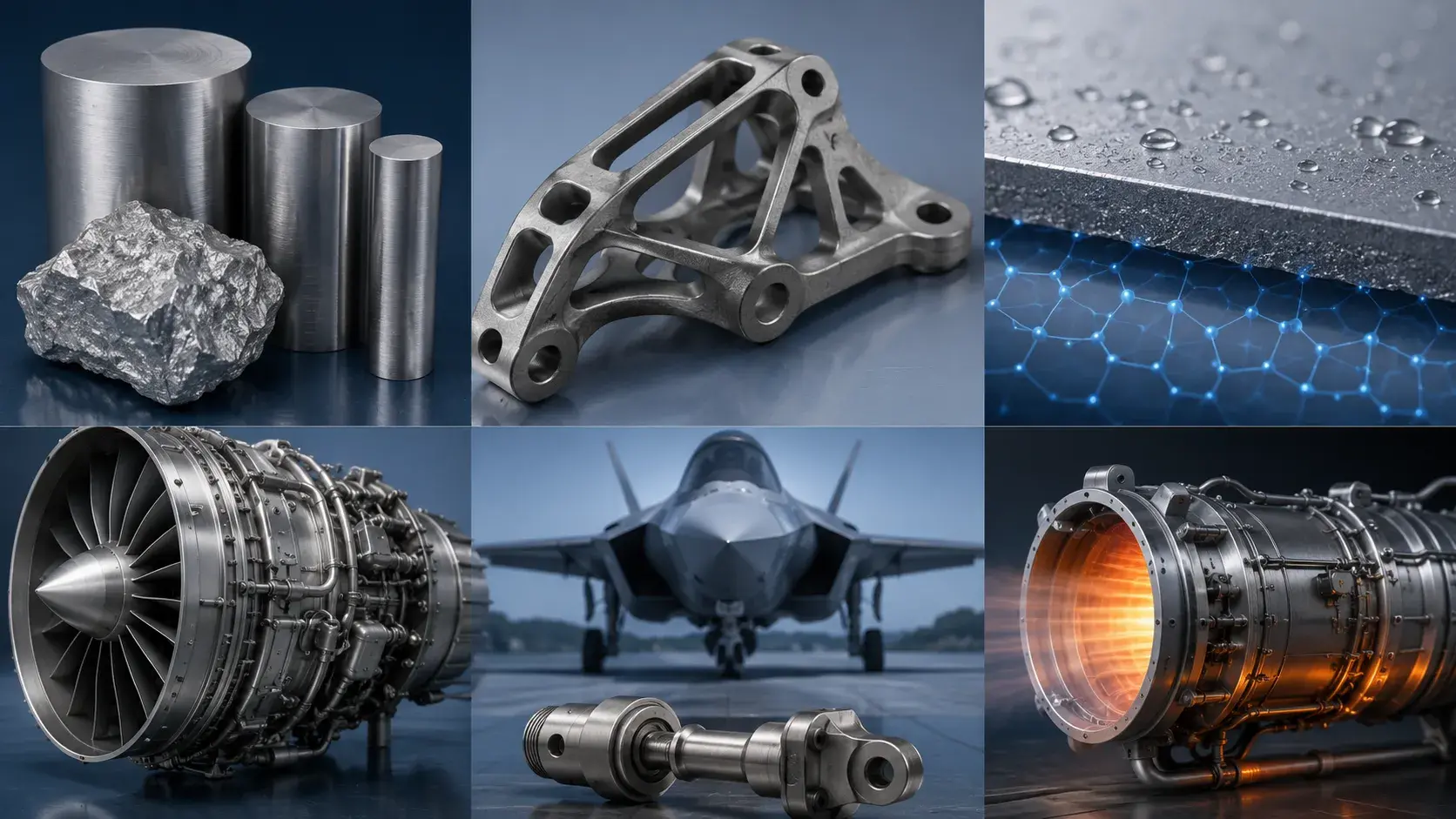
One of the main benefits of titanium is its high strength-to-weight ratio.
It offers strong mechanical properties while being significantly lighter than other metals.
Titanium is about 40% lighter than steel, yet it retains strong structural integrity.This characteristic allows engineers to decrease the weight of parts without compromising their performance.
Common uses include:
- Aircraft structural parts
- Aerospace brackets
- Motorsport components
- High-performance mechanical parts
In industries where reducing weight enhances efficiency, titanium offers advantages that are not easily matched by other metals.
Excellent Corrosion Resistance
Titanium naturally develops a stable oxide layer on its surface.
This protective layer stops further corrosion and ensures that titanium components work well even in tough environments.
Titanium is commonly used in:
- Marine equipment
- Chemical processing systems
- Medical implants
- Aerospace applications
Unlike many other metals, titanium can keep its performance over a long time without needing extra protective coatings.
High Temperature Performance
Titanium retains its mechanical properties even at high temperatures.
Because of this, titanium alloys are often used in situations where materials must endure heat and mechanical stress.
Applications include:
- Aircraft engine parts
- Turbine systems
- High-performance industrial equipment
- Biocompatibility
Titanium is one of the most commonly used metals in medical fields because it is very compatible with the human body.
Common uses include:
- Dental implants
- Bone implants
- Surgical tools
- Components of medical devices
The combination of strength, corrosion resistance, and biocompatibility makes titanium hard to replace in medical manufacturing.
Common Titanium Alloys and Grades
Pure titanium is known for its strong resistance to corrosion, but it may not be strong enough for certain demanding uses.To enhance its mechanical properties, manufacturers add other elements to form various titanium alloys.
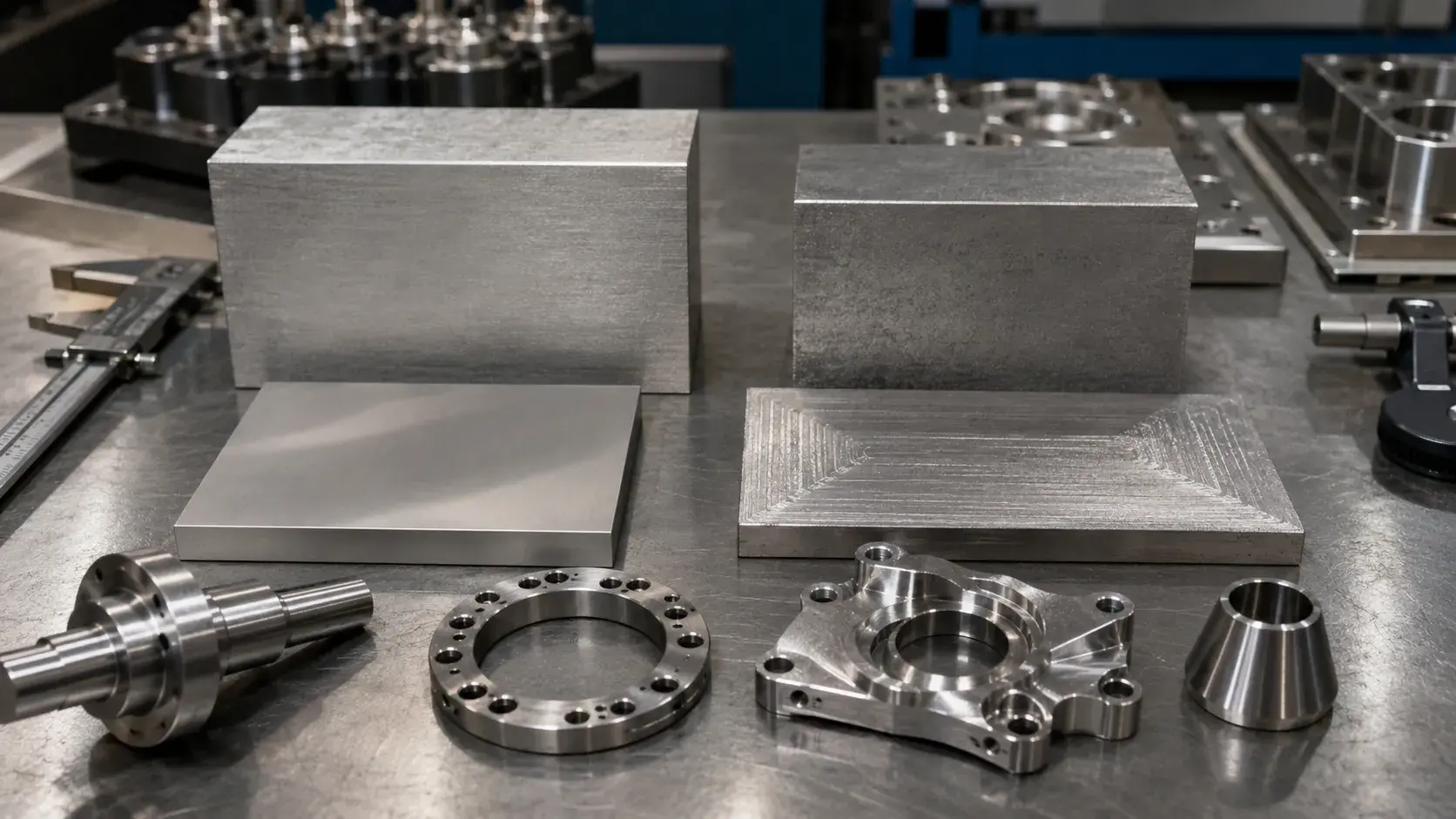
In engineering, the most frequently used titanium grades are commercially pure titanium Grade 2 and Grade 5, which is also known as Ti-6Al-4V.
Each of these grades has its own benefits, making them suitable for different applications based on the required strength, corrosion resistance, and other specific needs.
| Titanium Grade | Main Characteristics | Common Applications |
|---|---|---|
| Grade 2 Titanium | Commercially pure titanium with excellent corrosion resistance, good ductility, and high chemical stability. | Chemical processing equipment, marine components, heat exchangers, and industrial piping. |
| Grade 5 Titanium (Ti-6Al-4V) | The most widely used titanium alloy, offering high strength, excellent fatigue resistance, and a strong strength-to-weight ratio. | Aerospace components, medical implants, motorsport parts, and high-performance mechanical components. |
| Other Titanium Alloys | Specialized alloys developed for specific requirements such as higher temperature resistance or improved mechanical performance. | Aerospace systems, advanced industrial equipment, and specialized engineering applications. |
Titanium vs Aluminum vs Stainless Steel: Material Comparison
Titanium, aluminum, and stainless steel are three common engineering materials used in today’s manufacturing industry.Each has its own set of benefits, which make them suitable for different applications based on factors like strength needs, weight constraints, resistance to corrosion, and production methods.
The selection of the appropriate material depends on the specific use case.
Aluminum is typically chosen for its light weight and ease of machining.Stainless steel is often preferred for its durability and reliability in various industrial settings.Titanium, on the other hand, is selected when there is a need for high strength, excellent corrosion resistance, and superior performance in demanding environments.
| Property | Titanium | Aluminum | Stainless Steel |
|---|---|---|---|
| Weight | Lightweight with high strength | Very lightweight | Heavier than titanium and aluminum |
| Strength | Very high strength-to-weight ratio | Moderate to high depending on alloy | High strength and durability |
| Corrosion resistance | Excellent, even in harsh environments | Good with natural oxide protection | Excellent for many industrial applications |
| Machining difficulty | High due to heat generation and strength | Easy to machine | Moderate depending on grade |
| Typical applications | Aerospace, medical, high-performance components | Electronics, automotive, general CNC parts | Industrial equipment, structures, machinery |
In general:
- Choose aluminum when lightweight design and cost-effective machining are the priority.
- Choose stainless steel when durability and corrosion resistance are required.
- Choose titanium when maximum performance, lightweight strength, and long-term reliability are essential.
Titanium Machining: Why Is Titanium Difficult to Machine?
Although titanium provides excellent engineering advantages, it is considered one of the more challenging metals for machining.
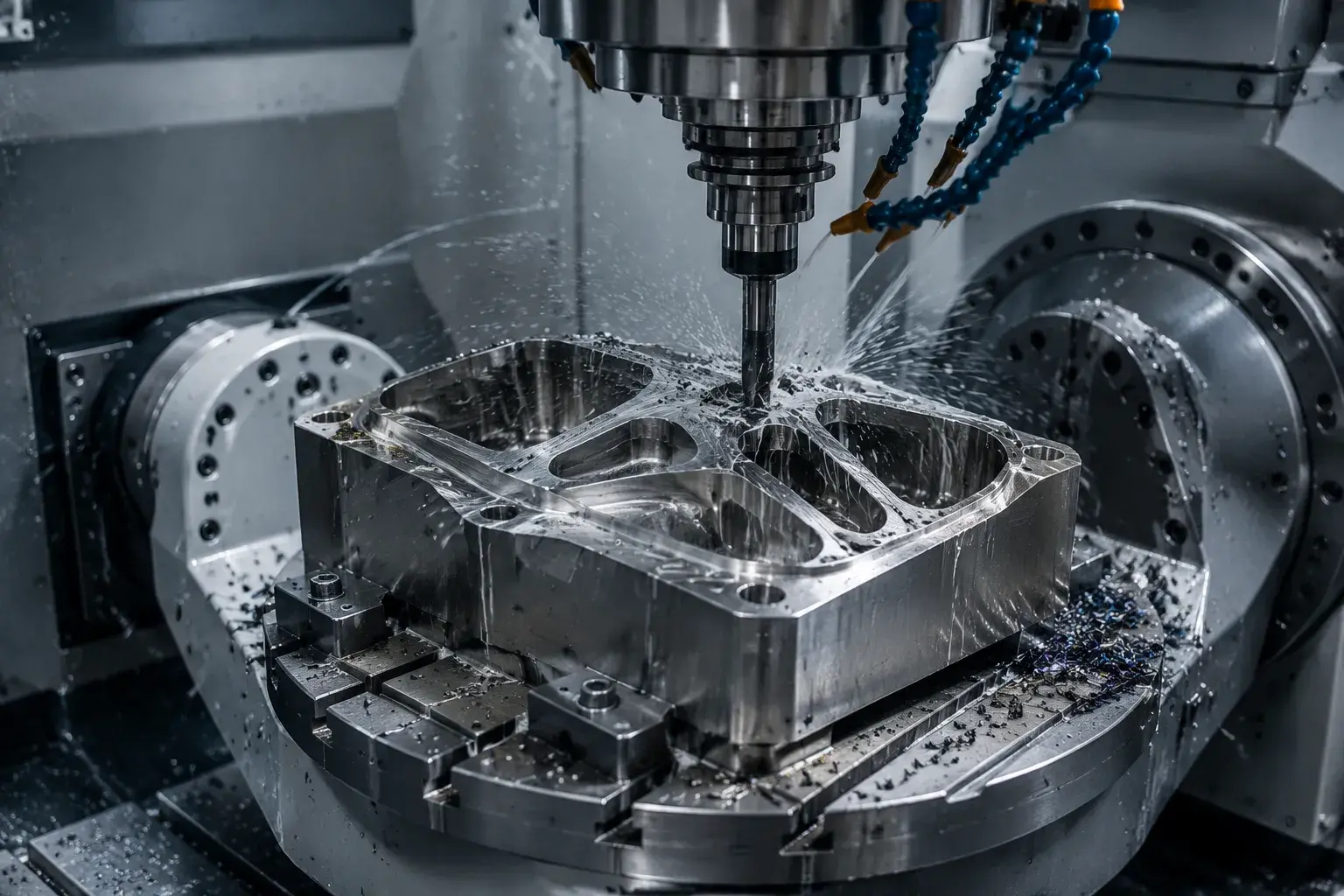
Compared with aluminum, titanium requires more careful control of cutting conditions and tooling because of its unique physical properties.
Low Thermal Conductivity
Titanium has relatively low thermal conductivity, meaning it does not transfer heat away from the cutting area efficiently.
During machining, heat tends to remain concentrated near the cutting edge, which can cause:
- Faster tool wear
- Reduced tool life
- Poor surface quality
High Strength and Toughness
Titanium maintains high mechanical strength even at elevated temperatures.
This creates higher cutting forces during machining and requires:
- Strong machine rigidity
- Stable workholding
- Suitable cutting tools
Work Hardening Behavior
Titanium can become harder during machining if cutting conditions are not properly controlled.
Improper machining may result in:
- Increased cutting forces
- Tool damage
- Reduced surface quality
CNC Machining Applications of Titanium
Because of its outstanding properties, titanium is widely used for components that require strength, durability, and reliability.
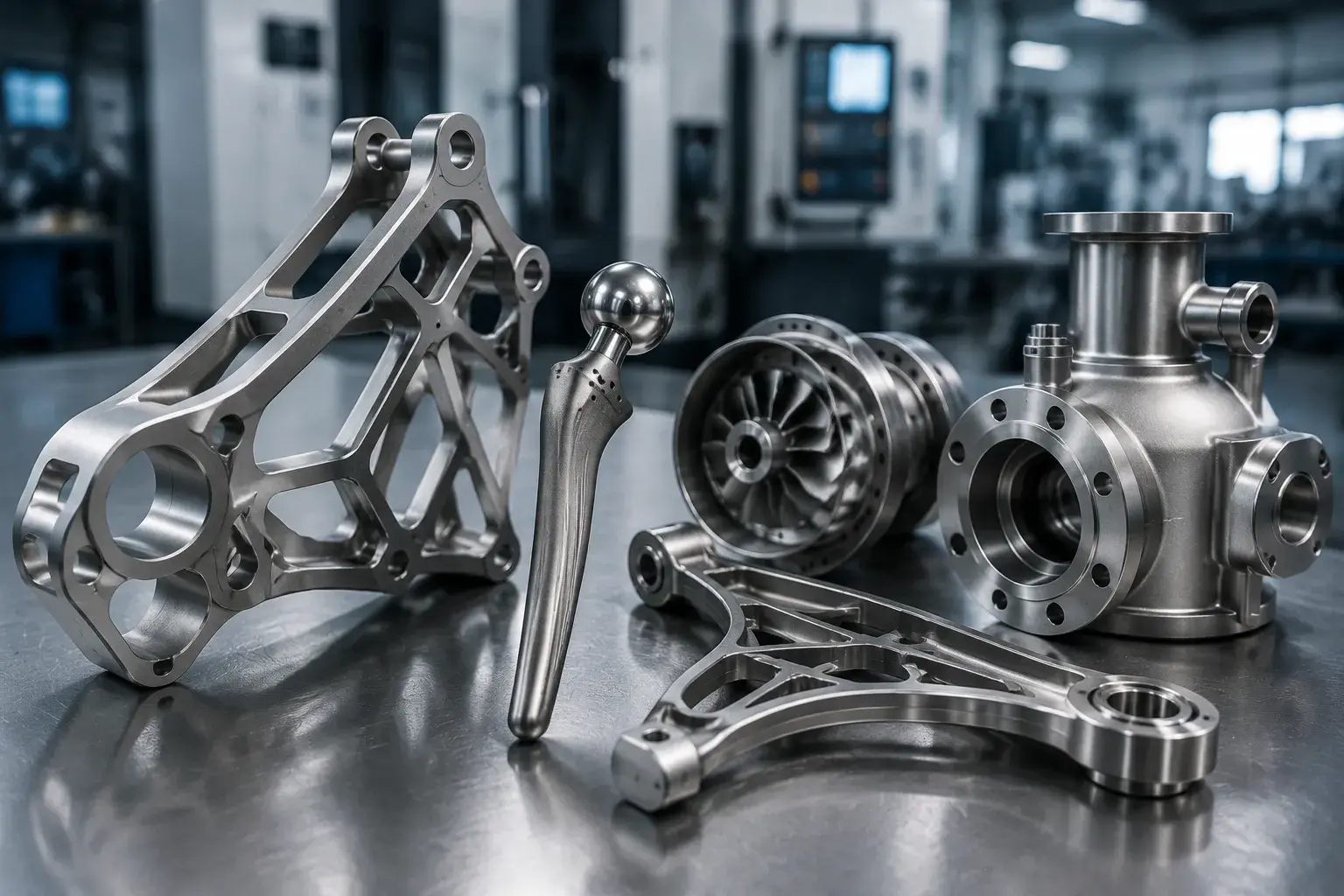
Aerospace Titanium Components
Aerospace is one of the largest application areas for titanium.
Common titanium components include:
- Aircraft brackets
- Structural supports
- Engine components
- Lightweight aerospace fittings
Titanium helps reduce aircraft weight while maintaining excellent mechanical performance.
Medical Titanium Components
Titanium is widely used in medical manufacturing because of its excellent biocompatibility.
Applications include:
- Dental implants
- Bone implants
- Surgical instruments
- Medical device components
Its corrosion resistance and compatibility with the human body make titanium one of the most important materials in medical applications.
Automotive and Motorsport Applications
In high-performance automotive applications, titanium is selected for its lightweight strength.
Typical uses include:
- Engine components
- Suspension parts
- Exhaust systems
- Racing components
Reducing weight while maintaining strength helps improve vehicle performance.
Industrial and Chemical Applications
Titanium is also used in industries where corrosion resistance is critical.
Applications include:
- Chemical processing equipment
- Marine systems
- Heat exchangers
- Energy equipment

Need Custom Titanium Parts?
YUANYI provides precision CNC titanium machining services for aerospace, medical, and high-performance applications, delivering complex titanium components with reliable quality.
Get a Free QuoteConclusion
Titanium is a high-performance metal recognized for its strong strength-to-weight ratio, resistance to corrosion, and long-lasting durability.Grade 5 titanium, also known as Ti-6Al-4V, is commonly used in aerospace, medical, and precision engineering applications where high performance is required.
Although titanium is harder to machine compared to materials like aluminum or steel, modern CNC machining techniques allow manufacturers to create precise and intricate titanium parts suitable for demanding uses.
Frequently Asked Questions About Titanium
Titanium is generally considered a non-magnetic metal. It is weakly paramagnetic and does not attract common magnets like iron, nickel, or cobalt.
Yes. Titanium generally provides higher strength and better performance in extreme environments compared with aluminum. However, aluminum is easier to machine and usually more cost-effective.
Titanium has a higher strength-to-weight ratio than stainless steel, meaning it can provide similar performance at a lower weight. However, specific strength depends on the alloy being compared.
No. Titanium does not rust like iron or steel. Its natural oxide layer provides excellent corrosion resistance and protects the material from many harsh environments.
Yes. Titanium can be CNC machined using appropriate tooling, cutting parameters, and machining strategies. Because titanium is difficult to process, manufacturers need experience with CNC titanium machining to achieve accurate and reliable results.



